
Are Yellow-Banded Millipedes Poisonous? Safety, Toxins, and Human Risk Guide
Quick Facts
Toxic Status: Produces Defensive Chemicals
Danger to Humans: Low
Can It Bite?: No
Chemical Defense: Cyanide-Based Compounds
Risk to Pets: Mild to Moderate if Consumed
Best Practice: Observe Without Handling
Yellow-Banded Millipede Toxicity and Safety Overview
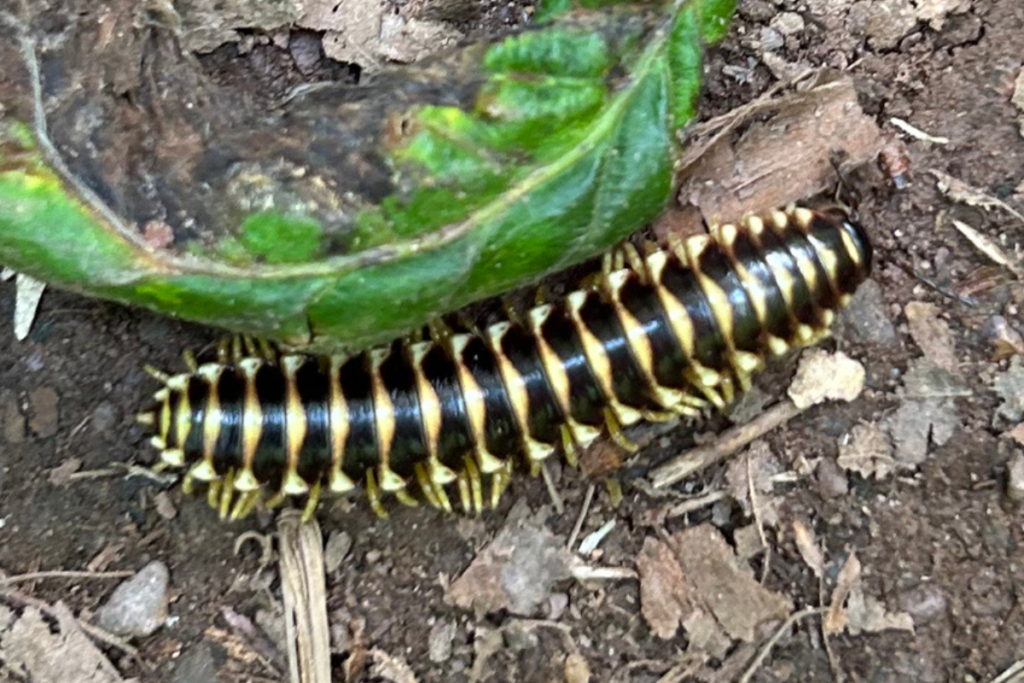
The Yellow-Banded Millipede (Apheloria sp.) is one of the most recognizable millipedes in eastern North America due to its striking black-and-yellow coloration. People who encounter this species often wonder whether the bright markings indicate danger. Because many animals with bold colors possess chemical defenses, questions about toxicity are common among hikers, gardeners, and wildlife enthusiasts.
Across its range, this millipede can be found moving through woodland environments where it occasionally becomes visible on trails, leaf litter, or fallen logs. Its vivid coloration immediately stands out against the forest floor and serves as an important clue about its survival strategy. For many observers, the appearance alone raises concerns about whether the animal is poisonous or capable of causing harm.
The answer is more nuanced than a simple yes or no. Yellow-Banded Millipedes do produce defensive chemicals that can discourage predators, but they are not dangerous in the same way as venomous snakes, spiders, or stinging insects. Their defenses are designed primarily to make predators avoid them rather than to injure large animals.
Understanding how these defenses work helps separate fact from misconception. Many people assume brightly colored arthropods are highly dangerous, yet the Yellow-Banded Millipede presents relatively little risk when left undisturbed. Learning the difference between toxicity, venom, and defensive secretions provides a clearer picture of what this species is actually capable of.
Yellow-Banded Millipede Poisonous Defenses Explained
The Yellow-Banded Millipede is considered chemically defended because it can release compounds from specialized glands located along its body. These substances are produced as a protective measure against predators and are not used for hunting or attacking other animals. The chemicals function as a warning system that makes the millipede an undesirable target.
Among the compounds produced are cyanide-related chemicals, which sound alarming when first mentioned. However, the amounts released by a single millipede are extremely small and intended to discourage predators such as birds, reptiles, and small mammals. For humans, the exposure level from casual observation is generally insignificant.
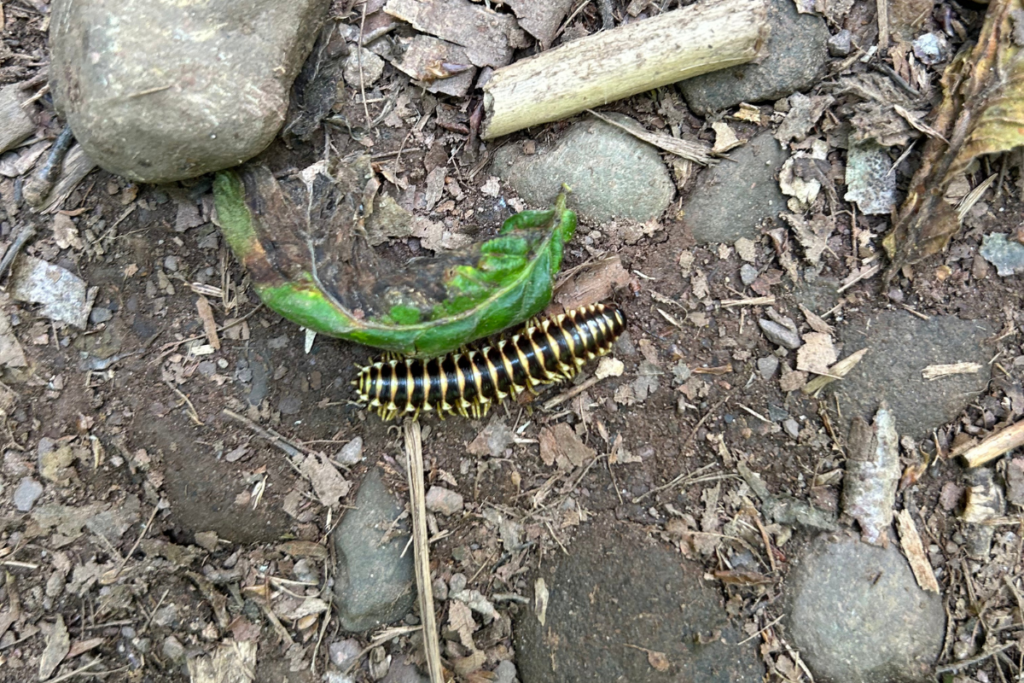
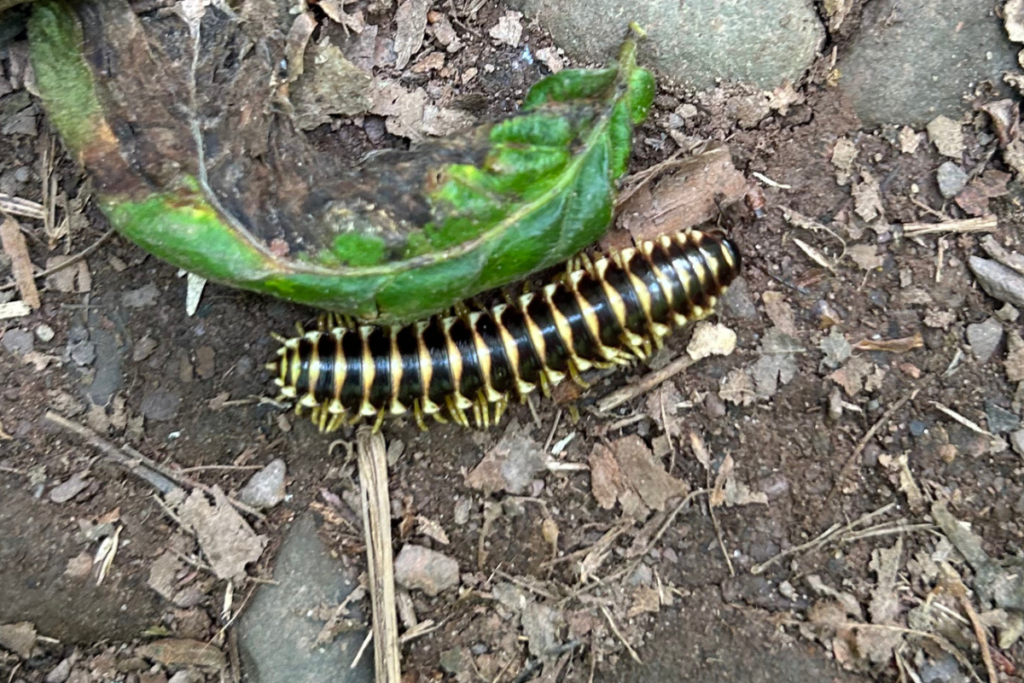
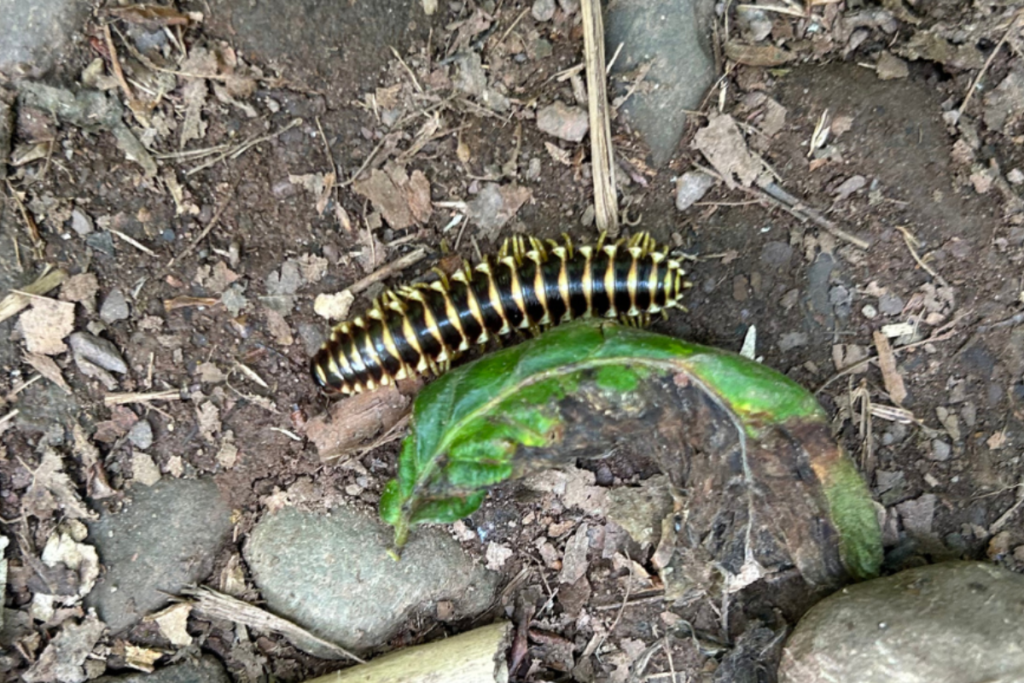
The bright yellow bands serve as a visual signal associated with these chemical defenses. This form of warning coloration is found throughout nature, appearing in animals ranging from poison dart frogs to certain insects and caterpillars. The coloration essentially advertises that the animal possesses a defense worth avoiding.
Unlike truly poisonous animals that can cause serious medical emergencies through contact or consumption, the Yellow-Banded Millipede occupies a much lower risk category. Most encounters result in no adverse effects at all. The chemicals become relevant primarily when the animal is handled, crushed, or disturbed enough to activate its defensive response.
These defenses have proven highly successful over evolutionary time. Predators that experience the unpleasant chemicals often learn to avoid similarly colored millipedes in the future. This learned avoidance reduces predation pressure and helps the species survive without relying on speed, strength, or aggressive behavior.
Yellow-Banded Millipede Risks to Humans and Pets
For humans, the Yellow-Banded Millipede is generally considered harmless when observed respectfully. It cannot bite, sting, or inject venom into a person. Most encounters involve nothing more than watching the animal move across the forest floor before it disappears beneath natural cover.
Handling the millipede may occasionally result in mild skin irritation if defensive chemicals are released. Sensitive individuals can experience temporary redness, itching, or slight discomfort after contact. Washing hands after handling wildlife is typically sufficient to prevent any lingering issues.
Contact with the eyes presents a greater concern than skin exposure. If defensive secretions are accidentally transferred from the hands to the eyes, irritation and discomfort may occur. This is one reason wildlife professionals recommend avoiding unnecessary handling of millipedes and many other invertebrates.
Pets may show curiosity toward these brightly colored animals. Dogs, cats, or other animals that attempt to eat a Yellow-Banded Millipede can experience drooling, mouth irritation, or temporary digestive upset due to the unpleasant chemicals. Serious outcomes are uncommon, but preventing consumption remains the safest approach.
The risk level can be compared to touching a plant that causes mild skin irritation rather than encountering a truly dangerous venomous animal. Respectful observation carries virtually no risk, while direct contact may produce minor and temporary effects. This distinction helps place the species in proper perspective for people concerned about safety.
Yellow-Banded Millipede Survival Strategy and Warning Coloration
The chemical defenses of the Yellow-Banded Millipede are only one part of a broader survival strategy. Its bold coloration functions as a warning signal that predators can recognize before making contact. This allows the animal to avoid many dangerous encounters without needing to actively defend itself.
When threatened, the millipede often adopts passive defensive behaviors rather than aggressive ones. It may curl its body, reduce movement, or remain still while relying on its protective coloration and chemical deterrents. These responses help minimize attention while keeping defensive systems available if needed.
A useful comparison can be made to warning labels on hazardous products. The label itself does not cause harm, but it communicates important information that encourages avoidance. In a similar way, the yellow bands communicate that the millipede possesses defenses capable of creating an unpleasant experience for predators.
Predators that ignore the warning may receive a memorable lesson through exposure to defensive chemicals. Birds, reptiles, and small mammals often learn to associate the coloration with an unpleasant taste or odor. Over time, this learning process benefits future millipedes because predators become less likely to attack similar-looking individuals.
The combination of warning coloration and chemical protection allows the Yellow-Banded Millipede to survive without relying on speed or physical aggression. Rather than outrunning danger or fighting back, it discourages attacks before they happen. This strategy has helped make the species one of the most recognizable and successful chemically defended millipedes in eastern North America.
Popular Searches About Banded Millipedes
Explore Banded Millipede Guide
Explore More Wildlife

Support Encounters World
Help support wildlife photography and get behind the scenes discoveries on Patreon.