Red Lionfish Habitat Guide: Where Red Lionfish Live and Thrive
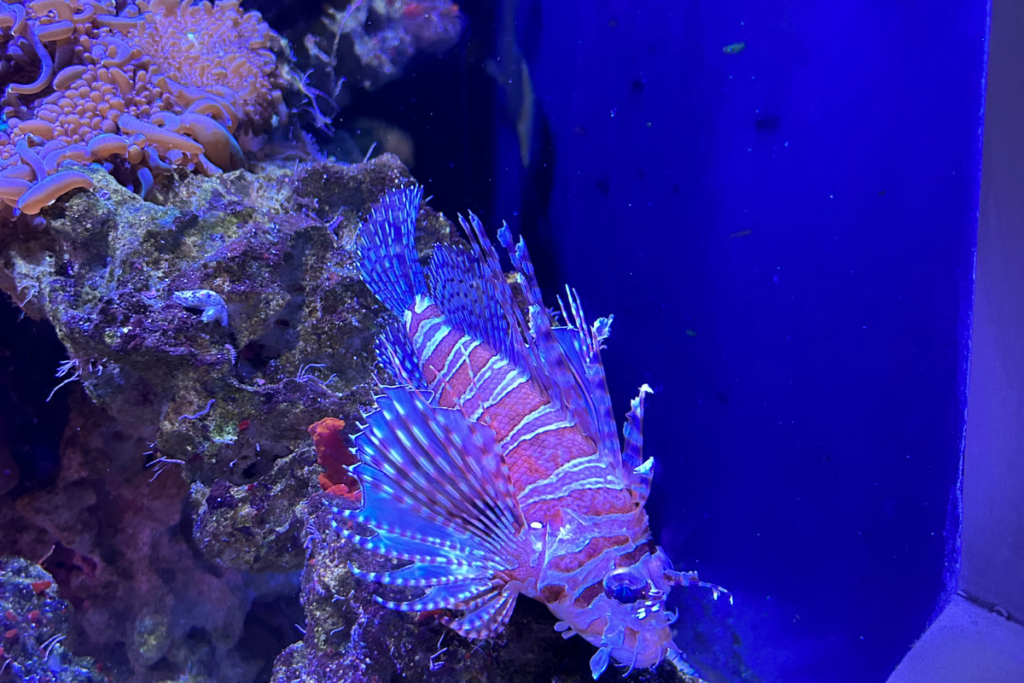
Quick Facts
Primary Habitat: Coral Reefs
Secondary Habitat: Rocky Outcrops, Lagoons, and Artificial Structures
Climate Preference: Tropical and Subtropical Waters
Environment Type: Marine Coastal Ecosystems
Elevation / Depth Range: Surface to Over 300 Feet (0–100+ m)
Geographic Distribution: Indo-Pacific Native Range; Invasive Throughout the Western Atlantic and Caribbean
Introduction: Red Lionfish Habitat Across Tropical Oceans
The red lionfish is one of the most recognizable reef fish in tropical marine ecosystems. Known for its dramatic fins, striped body pattern, and venomous spines, this species inhabits warm coastal waters across a remarkably broad geographic range. Its striking appearance often makes it a focal point for divers and underwater photographers.
Native populations occur throughout large portions of the Indo-Pacific region, where lionfish have existed alongside local reef communities for thousands of years. In these areas, they occupy numerous marine environments and have become an established component of reef ecosystems. Their range extends across vast stretches of ocean connected by tropical currents and island chains.
Outside their native distribution, red lionfish have gained global attention because of their rapid expansion throughout the western Atlantic Ocean, Caribbean Sea, and Gulf of Mexico. Their ability to establish populations far from their original range demonstrates a remarkable level of environmental flexibility compared to many reef-associated fish.
Whether observed on a remote tropical reef or near a populated coastline, red lionfish are typically associated with complex underwater environments that provide shelter and feeding opportunities. Their widespread distribution highlights their ability to occupy a variety of marine settings while maintaining a consistent presence within warm ocean ecosystems.
Red Lionfish Habitat Overview Across Their Global Range
Red lionfish occupy a surprisingly diverse collection of marine environments throughout their native and invasive ranges. Rather than being restricted to a single ecosystem type, they can be found throughout coastal regions where underwater structure creates suitable living conditions. This broad distribution has contributed significantly to their ecological success.
Many reef fish remain strongly tied to specific locations or environmental requirements, but lionfish display greater flexibility than numerous comparable species. They occur around island systems, continental coastlines, protected bays, and offshore habitats. This adaptability allows populations to establish themselves across extensive geographic areas.
In their native Indo-Pacific range, lionfish occur from eastern Africa through Southeast Asia and into parts of the western Pacific Ocean. Throughout these regions they occupy interconnected marine habitats that support a wide range of reef-associated organisms. Their presence is often consistent across multiple environmental zones within the same coastal region.
The invasive Atlantic population provides perhaps the clearest example of their adaptability. Since becoming established outside their native range, lionfish have successfully colonized thousands of miles of coastline. Compared to many introduced marine species that remain localized, lionfish have demonstrated an unusual ability to spread across multiple countries, island chains, and ocean basins while maintaining stable populations.
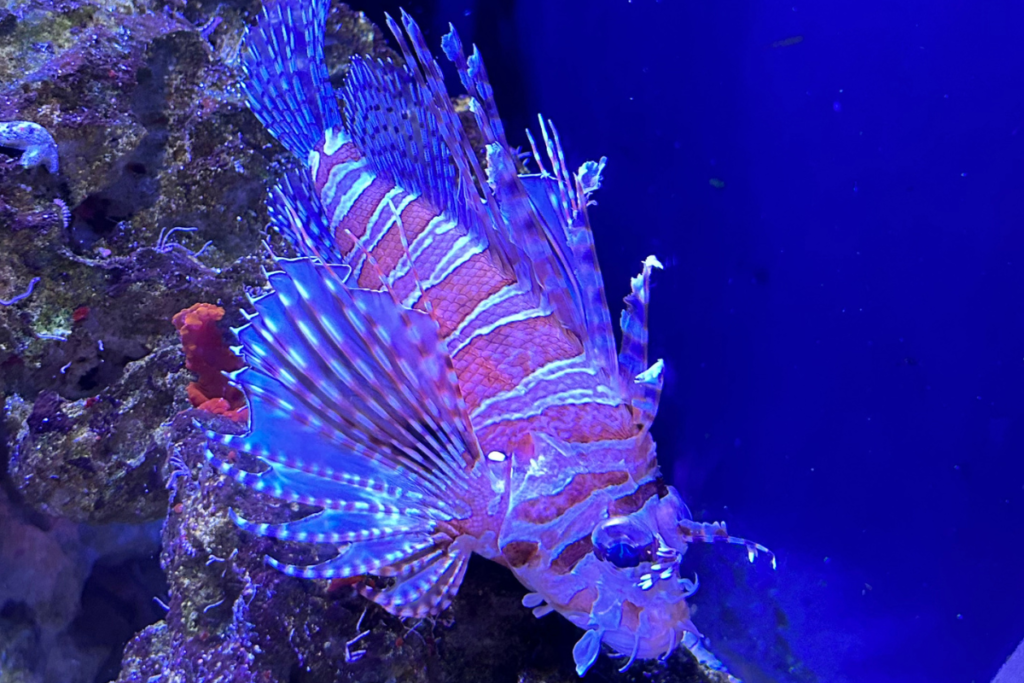
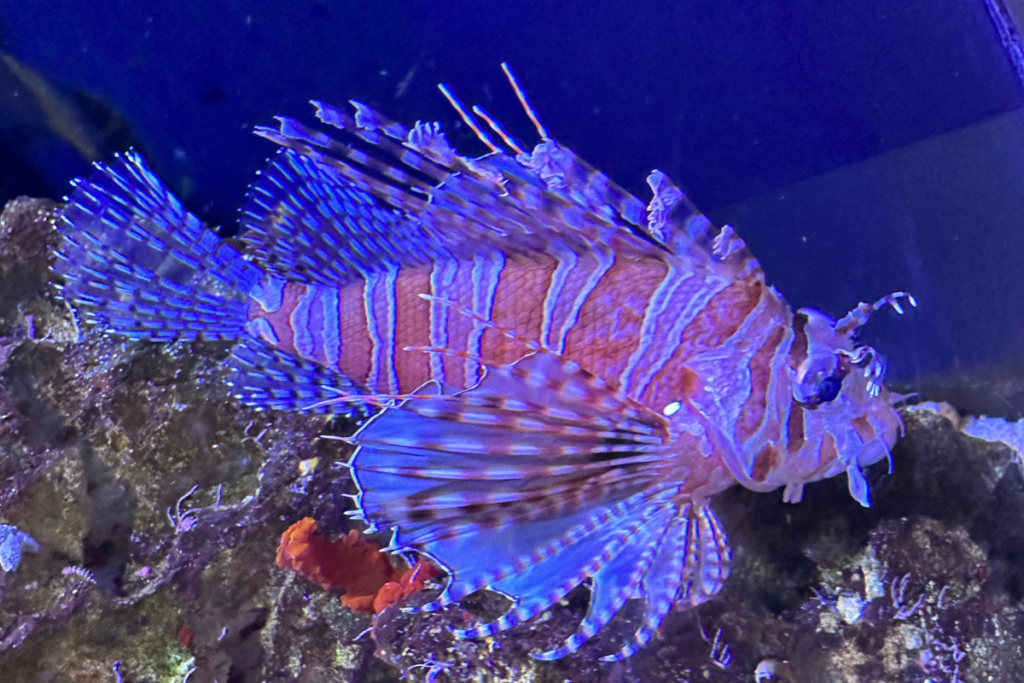
Coral Reefs, Lagoons, and Coastal Structures Used by Red Lionfish
Coral reefs represent the most widely recognized habitat occupied by red lionfish. Reef systems provide abundant shelter, numerous hiding locations, and a high concentration of potential prey species. The intricate structure created by coral formations offers protection while also allowing lionfish to move efficiently between open water and cover.
Lagoons form another important habitat category. These relatively sheltered marine environments often contain calmer waters and a mixture of seagrass, sandy areas, and scattered reef formations. Lionfish commonly utilize these locations because they combine structural complexity with reliable food resources. In some regions, juveniles are encountered more frequently in lagoon systems than on exposed reefs.
Rocky outcrops and underwater ledges also support lionfish populations. These habitats provide crevices, overhangs, and shadowed spaces that closely resemble conditions found on natural reefs. Areas with fractured rock formations often create numerous hiding opportunities, making them attractive environments for both adult and juvenile fish.
Human-made structures have become increasingly important habitat features as well. Shipwrecks, artificial reefs, bridge pilings, and submerged debris can all support lionfish populations. These environments function similarly to natural underwater structures by creating shelter and attracting smaller fish. In invasive regions, lionfish are frequently observed utilizing artificial habitats, demonstrating their ability to thrive in environments altered by human activity.
Environmental Conditions That Support Red Lionfish Populations
Warm water temperatures are among the most important environmental factors influencing red lionfish distribution. They are primarily associated with tropical and subtropical marine regions where temperatures remain relatively stable throughout the year. Unlike cold-water species that experience seasonal extremes, lionfish generally inhabit waters that remain favorable for growth and survival across extended periods.
Water clarity also plays a significant role in suitable habitat conditions. Many lionfish populations occur in areas where sunlight penetrates deeply into the water column. Clear tropical waters support productive reef ecosystems and allow the development of complex marine communities that provide food and shelter. Similar conditions can be observed in famous reef destinations throughout the Caribbean and Indo-Pacific.
Structural complexity is another defining characteristic of lionfish habitat. Environments containing crevices, caves, overhangs, and layered underwater formations tend to support higher concentrations of individuals. These features create numerous protected spaces while also increasing overall biodiversity. Comparable patterns can be seen in other reef ecosystems where species richness rises alongside habitat complexity.
Depth tolerance further contributes to the species’ success. Although many observations occur in relatively shallow coastal waters frequented by divers, lionfish are capable of occupying significantly deeper environments. Populations have been documented from near-surface habitats to depths exceeding 300 feet. This broad depth range allows them to exploit environmental conditions unavailable to some reef fish, helping explain their ability to establish and maintain populations across diverse marine landscapes.
Popular Searches About Red Lionfish
Explore Red Lionfish Guide
Explore More Exhibits

Support Encounters World
Help support wildlife photography and get behind the scenes discoveries on Patreon.