
Yellow-Banded Millipede Behavior: Activity Patterns, Movement, and Survival Strategies
Quick Facts
Activity Type: Primarily Nocturnal
Social Structure: Solitary but often found near others in suitable conditions
Territorial Behavior: Non-Territorial
Movement Style: Steady, coordinated crawling
Communication Method: Chemical cues and physical contact
Defense Strategy: Defensive secretions and warning coloration
Yellow-Banded Millipede Behavior and Daily Life Overview
The Yellow-Banded Millipede (Apheloria sp.) is a forest-floor invertebrate that spends much of its life hidden beneath leaves, logs, and other natural debris. Found throughout portions of eastern North America, this species is frequently encountered in mature woodlands where moisture remains relatively stable throughout the year. Although its bright coloration makes it easy to notice when exposed, much of its daily activity occurs away from direct observation.
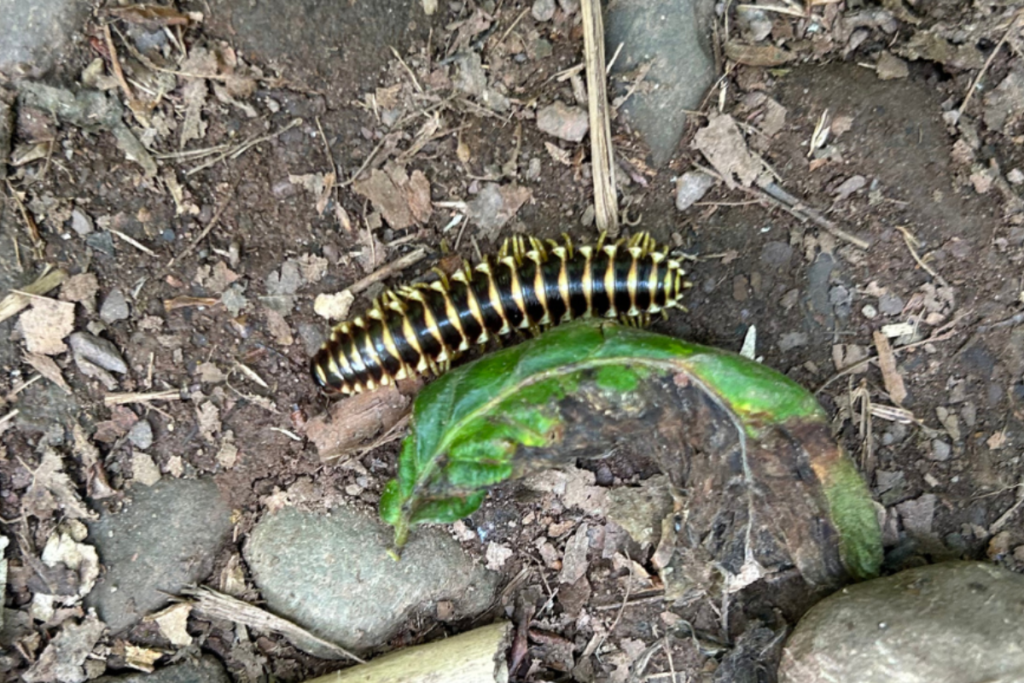
A person walking through a forest after rainfall may occasionally notice one of these millipedes crossing an open patch of ground. Its glossy black body and vivid yellow markings create a striking contrast against brown leaves and dark soil. Encounters are often brief, yet they reveal a creature that appears purposeful and constantly aware of its surroundings.
From a behavioral perspective, the Yellow-Banded Millipede presents an interesting balance between caution and persistence. It is not particularly aggressive, nor is it highly reactive compared to many insects. Instead, it tends to follow a measured approach to daily life, relying on consistency and predictable responses rather than sudden actions.
When undisturbed, the species often appears calm and methodical. Its behavior can be compared to a slow-moving train traveling along a predetermined route, maintaining progress without unnecessary changes in direction. This predictable nature helps make the Yellow-Banded Millipede one of the easier forest invertebrates to observe and study in the field.
Yellow-Banded Millipede General Behavioral Tendencies
The overall behavior of the Yellow-Banded Millipede is best described as deliberate and energy-efficient. Unlike animals that constantly investigate every movement around them, this species typically focuses on maintaining a steady routine. Its actions often appear calculated, with little wasted effort or abrupt changes in activity.
Observers frequently notice that the millipede remains attentive to nearby disturbances while continuing its current task. Rather than immediately stopping at every sound or vibration, it evaluates conditions and responds only when necessary. This creates the impression of an animal that balances caution with persistence.
Compared to many insects that rely on rapid escapes or unpredictable movements, the Yellow-Banded Millipede behaves in a far more controlled manner. A grasshopper may leap away instantly, while a beetle might suddenly take flight. The millipede generally chooses a slower and more measured response, reflecting a behavioral strategy built around stability rather than speed.
Its adaptability becomes especially noticeable during changing environmental conditions. Periods of increased moisture often encourage more visible activity, while dry conditions may result in reduced movement and longer periods spent concealed. This flexibility allows the species to remain successful across a variety of woodland environments without dramatically altering its overall behavior.
When left alone, the millipede often appears focused on maintaining a steady course rather than exploring every available area. The behavior resembles someone walking along a familiar hiking trail with a destination in mind. Although obstacles may require adjustments, the overall objective remains consistent and direct.
Yellow-Banded Millipede Movement and Activity Patterns
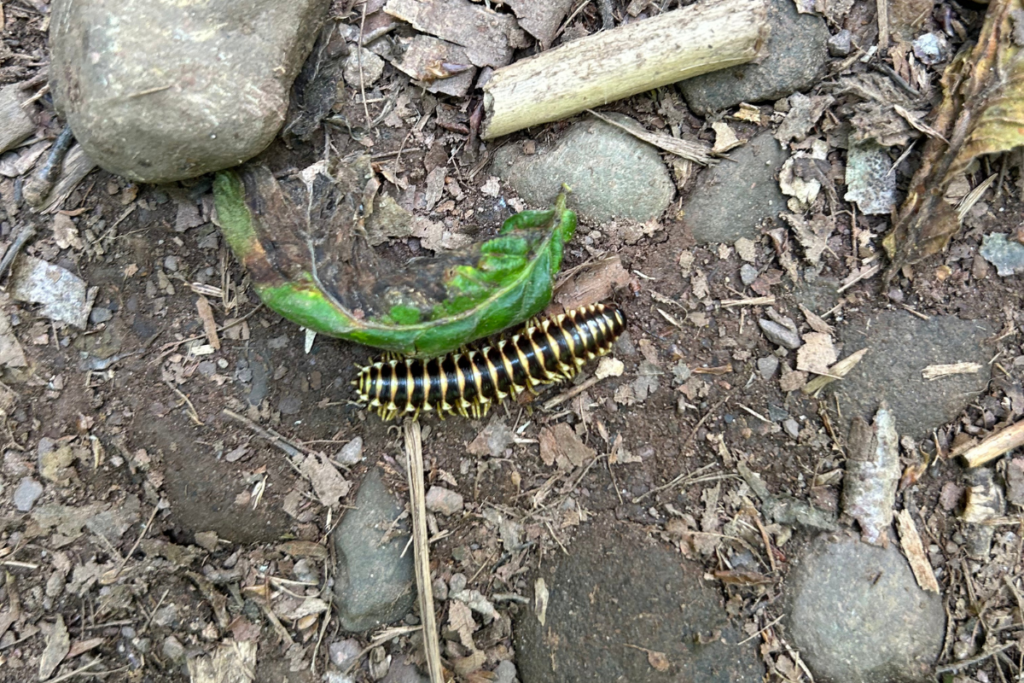
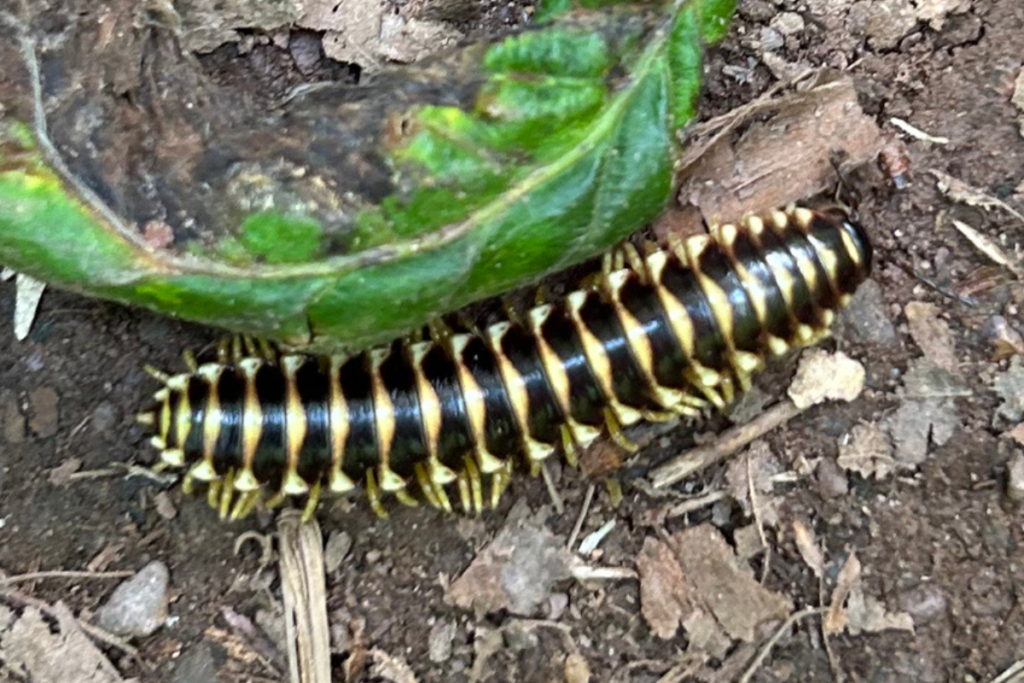
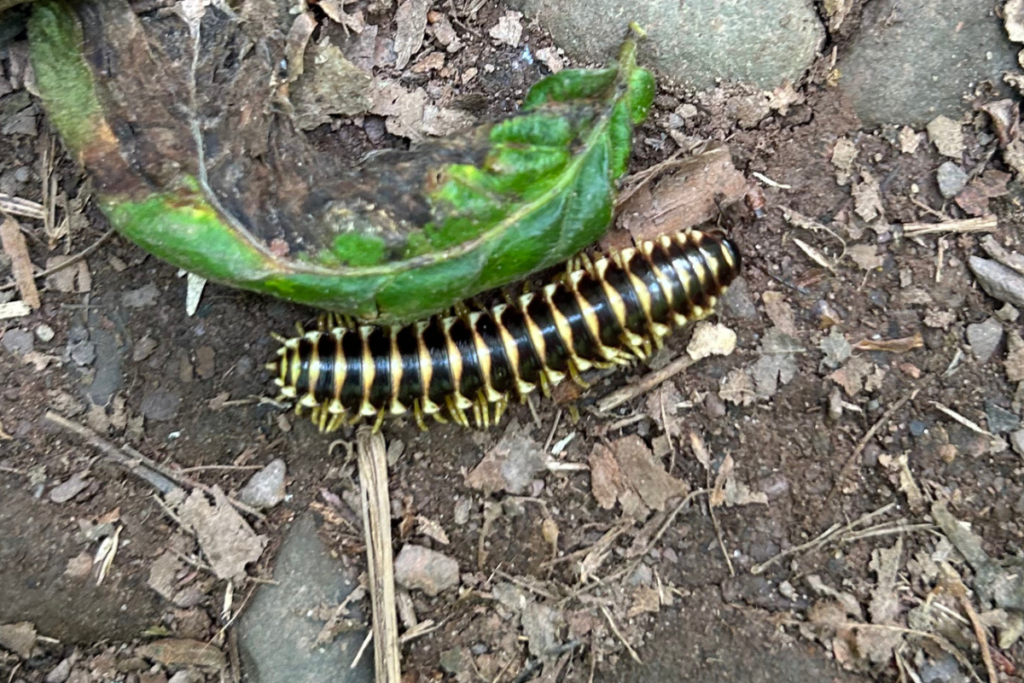
Movement in the Yellow-Banded Millipede is one of its most distinctive characteristics. The coordinated action of dozens of legs creates a smooth, wave-like motion that appears almost mechanical. Watching the animal travel across the forest floor can resemble observing a conveyor belt operating beneath a segmented body.
Most activity occurs during nighttime hours or periods of increased humidity. Cooler temperatures and higher moisture levels reduce the risk of dehydration and create favorable conditions for movement. As a result, individuals are often more visible after rainstorms or during damp evenings than during hot, dry afternoons.
The species rarely relies on bursts of speed. Instead, it maintains a steady pace that allows continuous forward progress over long periods. While not fast by human standards, its movement is surprisingly efficient, enabling it to cover considerable distances relative to its body size. A millipede crossing several yards of forest floor is undertaking a journey comparable to a person traveling a significant distance on foot.
Seasonal changes also influence activity levels. During warmer months, movement tends to increase as environmental conditions become more favorable. Colder periods generally result in reduced activity, with individuals spending more time sheltered and conserving energy until temperatures improve.
The mechanics of movement reveal remarkable coordination. Each pair of legs contributes to a synchronized sequence that produces a flowing visual effect from front to back. Unlike the erratic darting seen in many arthropods, the Yellow-Banded Millipede advances with consistency, creating one of the smoothest movement patterns found among forest invertebrates.
Energy conservation plays an important role in this strategy. By avoiding unnecessary acceleration and maintaining a controlled pace, the millipede reduces energy expenditure while still accomplishing its daily movements. This efficient approach helps support long-term survival within environments where resources and conditions can fluctuate throughout the year.
Yellow-Banded Millipede Interaction and Survival Responses
Despite its striking appearance, the Yellow-Banded Millipede is not a confrontational animal. Interactions with other organisms are generally passive, and direct conflict is avoided whenever possible. Its survival strategy centers on deterrence and protection rather than physical confrontation.
When encountering potential danger, the first response is often a change in posture or movement. The millipede may pause, alter its direction, or seek shelter beneath nearby cover. These initial reactions allow it to reduce exposure without immediately resorting to more advanced defensive measures.
If a threat continues to approach, the animal possesses additional survival tools. One common response involves curling or positioning the body in a way that protects more vulnerable areas. This defensive posture can reduce the effectiveness of attacks while buying valuable time for the millipede to escape or remain unnoticed.
Chemical defense provides another important layer of protection. The bright yellow markings serve as a visual warning that the animal is not entirely defenseless. Many predators learn to associate these colors with unpleasant experiences, reducing the likelihood of repeated attacks. This warning system functions much like caution signs placed around hazardous areas, communicating information before direct contact occurs.
Interactions among Yellow-Banded Millipedes are generally limited. They do not defend territories, establish hierarchies, or form organized groups. Multiple individuals may occur within the same area when conditions are favorable, but these gatherings are usually the result of shared environmental preferences rather than social cooperation.
A practical example of the species’ survival instincts can be seen when a wandering individual crosses an exposed trail. If vibrations from approaching footsteps are detected, the millipede often alters its behavior almost immediately. Rather than continuing directly into potential danger, it may redirect its path toward cover, demonstrating an instinctive response that helps increase its chances of survival. Through a combination of awareness, defensive adaptations, and efficient decision-making, the Yellow-Banded Millipede remains well-equipped for life on the forest floor.
Popular Searches About Banded Millipedes
Explore Banded Millipede Guide
Explore More Wildlife

Support Encounters World
Help support wildlife photography and get behind the scenes discoveries on Patreon.