
Yellow-Banded Millipede Diet: Food Sources, Feeding Habits, and Foraging Behavior
Quick Facts
Diet Type: Detritivore
Main Food Sources: Decaying leaves, rotting wood, fungi, and organic debris
Feeding Time: Primarily Nighttime and Moist Conditions
Foraging Method: Ground-Level Grazing and Organic Matter Collection
Seasonal Diet Changes: Food availability shifts throughout the year
Predatory Adaptations: None; specialized for decomposition
Yellow-Banded Millipede Feeding Ecology and Dietary Overview
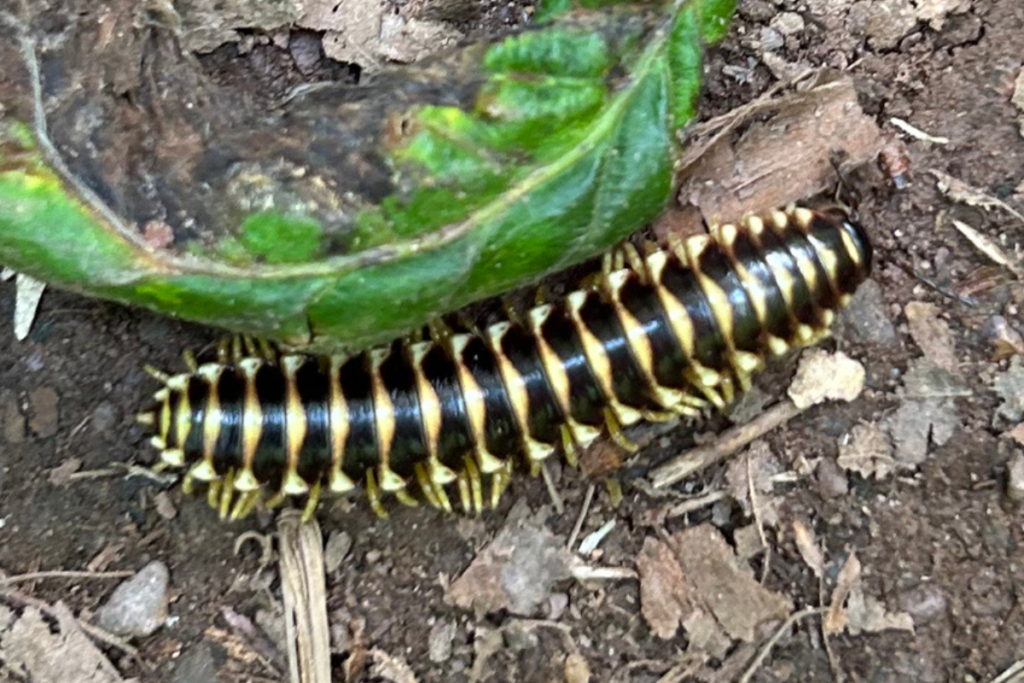
The Yellow-Banded Millipede (Apheloria sp.) is a colorful forest invertebrate found throughout portions of eastern North America. Although its bright warning coloration often attracts attention, its true ecological importance comes from its role as a decomposer. Rather than hunting prey or feeding on living plants, this species helps recycle nutrients that would otherwise remain trapped within dead organic material.
Across its range, the Yellow-Banded Millipede is associated with environments where natural debris accumulates over time. Forests continuously produce leaves, fallen branches, bark fragments, and other plant material that gradually breaks down. These natural processes create feeding opportunities that support large communities of decomposer organisms.
Unlike predators that depend on capturing moving prey, the Yellow-Banded Millipede relies on resources that are constantly being produced by the ecosystem. This feeding strategy provides a dependable source of nutrition throughout much of the year. As a result, the species occupies an important position within the forest food web.
Its dietary role can be compared to a recycling facility within a city. Just as recycling centers process materials that would otherwise accumulate as waste, millipedes help convert organic debris into smaller particles that can be reused by the ecosystem. This process contributes to nutrient cycling and supports long-term forest health.
Yellow-Banded Millipede Diet Overview and Feeding Preferences
The Yellow-Banded Millipede is classified as a detritivore, meaning it primarily consumes decaying organic matter. This feeding strategy differs significantly from herbivores that feed on living plants or carnivores that hunt animals. Instead, the species focuses on material that has already begun the natural process of decomposition.
Its diet remains relatively consistent throughout much of its range because suitable food sources are commonly available wherever decomposition occurs. While local conditions may influence which materials are most abundant, the overall feeding strategy remains similar from one region to another. This consistency allows the species to occupy a stable ecological niche across a broad geographic area.
Compared to some decomposers that specialize on a narrow range of materials, the Yellow-Banded Millipede can utilize several forms of organic matter. This flexibility provides an advantage when certain resources become temporarily less abundant. The species is not dependent on a single food source, allowing it to take advantage of whatever suitable material is available.
Although adaptable within the decomposer category, the Yellow-Banded Millipede remains highly specialized in the type of food it consumes. It does not switch to predatory behavior or actively feed on healthy vegetation when conditions change. Instead, it remains focused on processing dead and decaying material, a role it has successfully filled for countless generations.
Yellow-Banded Millipede Natural Food Sources in the Wild
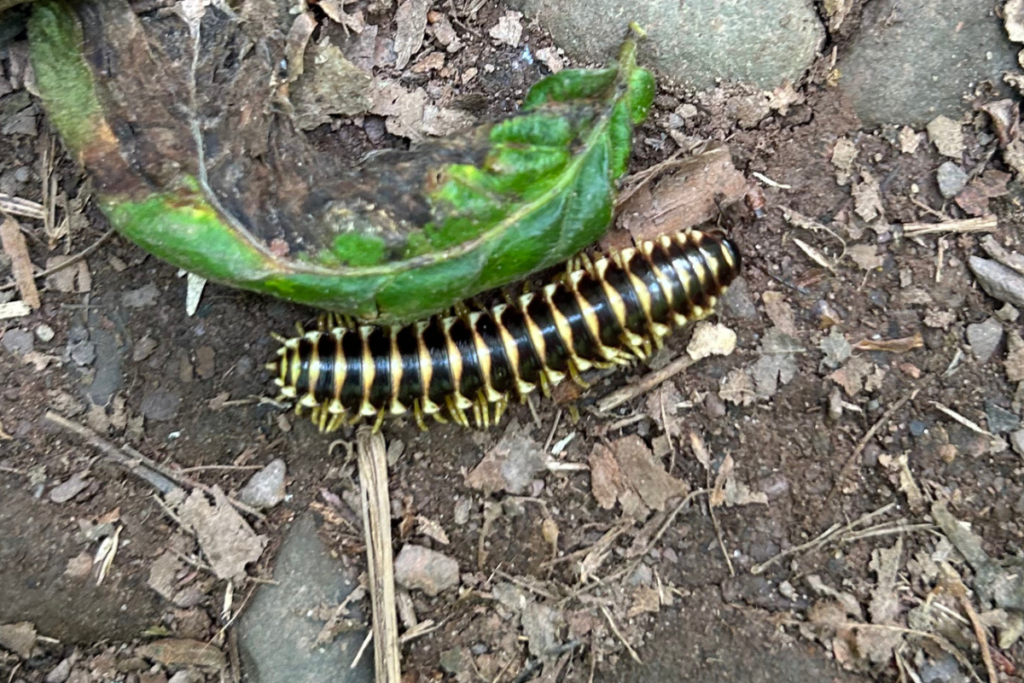
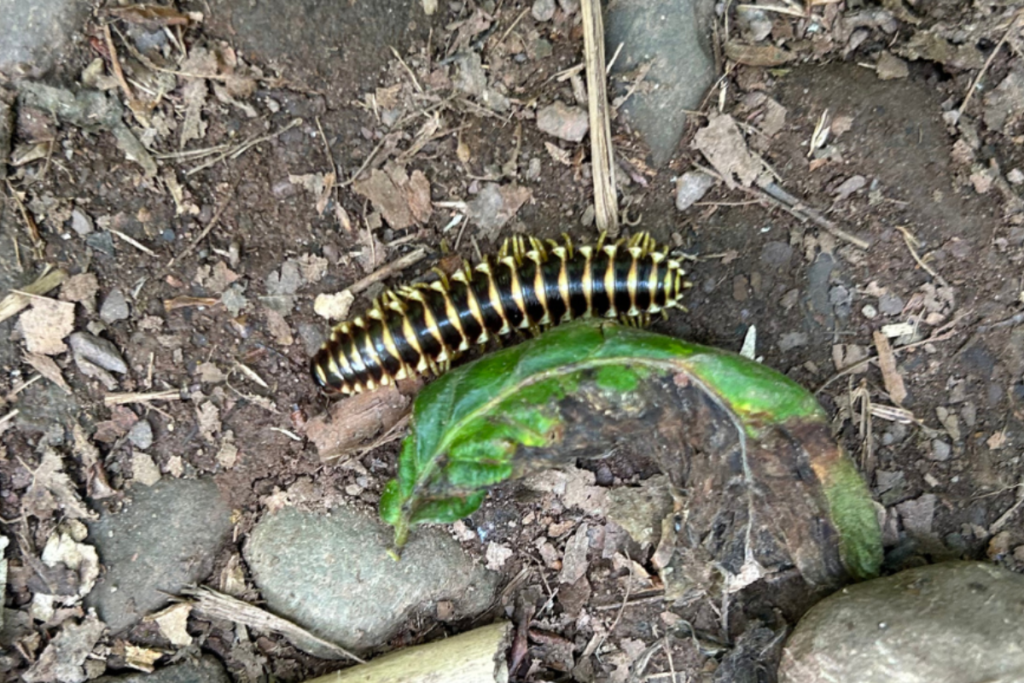
Decaying leaves represent one of the most important food sources for the Yellow-Banded Millipede. Forests produce tremendous quantities of leaf litter every year, and as these leaves soften and break down, they become easier to consume. Layers of partially decomposed leaves often provide a rich and dependable source of nutrition.
Rotting wood also contributes significantly to the species’ diet. Fallen branches, aging logs, and decomposing bark gradually become suitable feeding material as fungi and microorganisms begin breaking them down. The millipede benefits from this process because partially decomposed wood is easier to digest than freshly fallen timber.
Various fungi are consumed as well, particularly those associated with decomposition. Fungal growths frequently develop on damp wood and organic debris, creating additional feeding opportunities. These resources provide nutrients that help support growth, maintenance, and reproduction throughout the animal’s life.
Food selection can vary according to availability and environmental conditions. During autumn, recently fallen leaves may become increasingly important as fresh organic material enters the ecosystem. At other times of the year, older leaf litter, decaying wood, and fungal material may dominate the diet. This seasonal variation ensures that the species has access to resources throughout changing environmental conditions.
Yellow-Banded Millipede Feeding Behavior and Survival Strategies
The Yellow-Banded Millipede gathers food through slow and methodical exploration of the forest floor. Rather than searching for prey, it moves through layers of organic material while evaluating potential feeding opportunities. This steady approach allows it to locate suitable food without expending large amounts of energy.
Sensory structures located near the head help the millipede investigate its surroundings. As it travels across leaf litter and decomposing debris, it can detect materials that have reached an appropriate stage of breakdown. Once a suitable food source is located, feeding occurs directly on the organic material itself.
Its feeding strategy can be compared to a person browsing through a large library rather than looking for a single book. Numerous potential food sources are available at any given time, and the millipede selectively utilizes those that provide the greatest nutritional value. This flexibility reduces dependence on any single resource and improves long-term survival.
Periods of reduced food availability are addressed through efficiency rather than aggressive competition. Organic matter continues to accumulate naturally within forest ecosystems, creating a constantly renewing supply of resources. By specializing in materials that many animals ignore, the Yellow-Banded Millipede avoids direct competition with most other wildlife while maintaining its important role as one of nature’s recyclers.
Popular Searches About Banded Millipedes
Explore Banded Millipede Guide
Explore More Wildlife

Support Encounters World
Help support wildlife photography and get behind the scenes discoveries on Patreon.