
Painted Turtle Behavior Guide: Daily Activity, Movement, and Survival Behaviors of Chrysemys picta
Quick Facts
Activity Type: Diurnal
Social Structure: Mostly solitary but commonly gathers in basking groups
Territorial Behavior: Limited territorial behavior outside nesting areas
Movement Style: Smooth swimming with slow land movement
Communication Method: Body posture, movement, and physical interaction
Defense Strategy: Diving, shell protection, camouflage, and rapid escape into water
Introduction to Painted Turtle Behavior in Freshwater Wetlands
The Painted Turtle is a calm and highly recognizable freshwater turtle found throughout much of North America. Frequently observed resting on logs or slowly swimming through shallow water, the species displays a relaxed but alert personality that blends naturally into wetland environments. Painted Turtles are common in ponds, marshes, lakes, and slow-moving waterways where sunlight reaches exposed basking surfaces. Their tendency to gather visibly above the water makes them one of the easiest freshwater reptiles to observe in the wild.
Across their range, Painted Turtles are active mainly during warmer daylight hours when sunlight allows them to regulate body temperature efficiently. On quiet mornings, multiple turtles may line up together on logs, rocks, or partially submerged branches. Some remain perfectly still for long periods, while others slowly reposition themselves to absorb more sunlight. This combination of stillness and subtle movement gives the species a calm and patient appearance.
Even while resting, Painted Turtles remain highly aware of nearby activity. A turtle basking peacefully may suddenly slide into the water the moment it detects movement along the shoreline. Their reactions are often immediate and instinctive, especially in heavily visited areas where predators or disturbances may appear without warning. Despite their quiet nature, they constantly monitor their surroundings while exposed above the water.
The behavior of Painted Turtles changes throughout the year as temperatures shift between seasons. Warm spring and summer conditions bring increased basking and aquatic activity, while colder periods reduce visible movement significantly. In many wetlands, the presence of basking turtles becomes one of the defining signs of seasonal warmth returning to freshwater habitats. Their slow, deliberate lifestyle reflects strong adaptation to aquatic environments shaped by changing temperatures and sunlight availability.
General Painted Turtle Behavioral Tendencies and Temperament
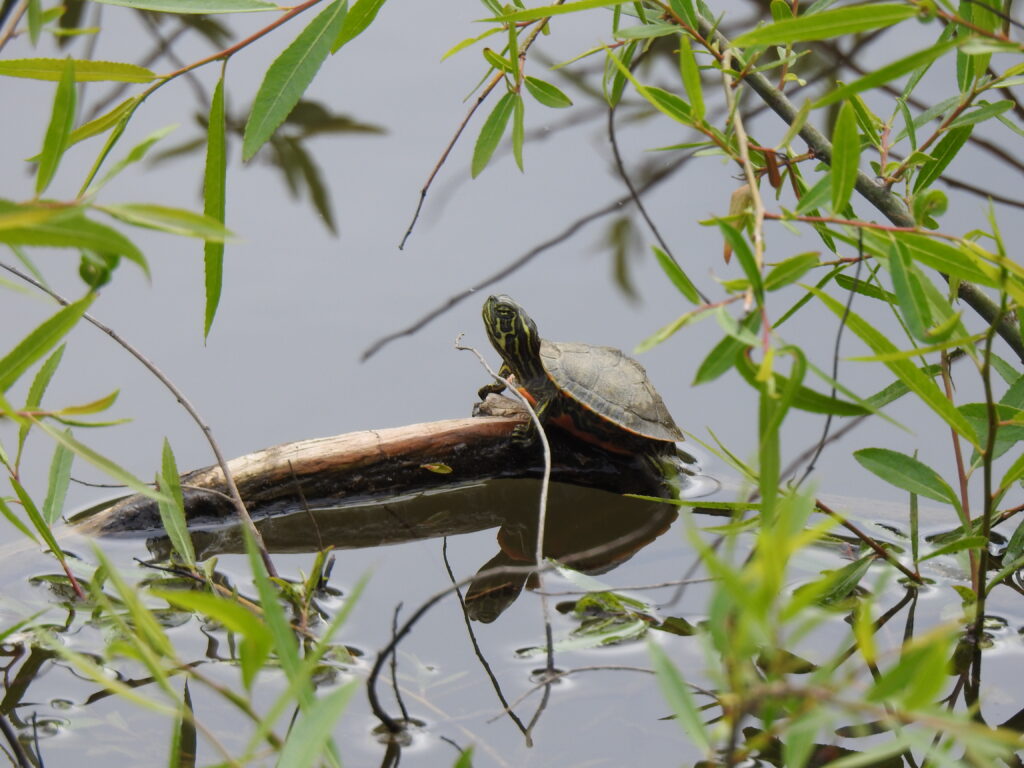
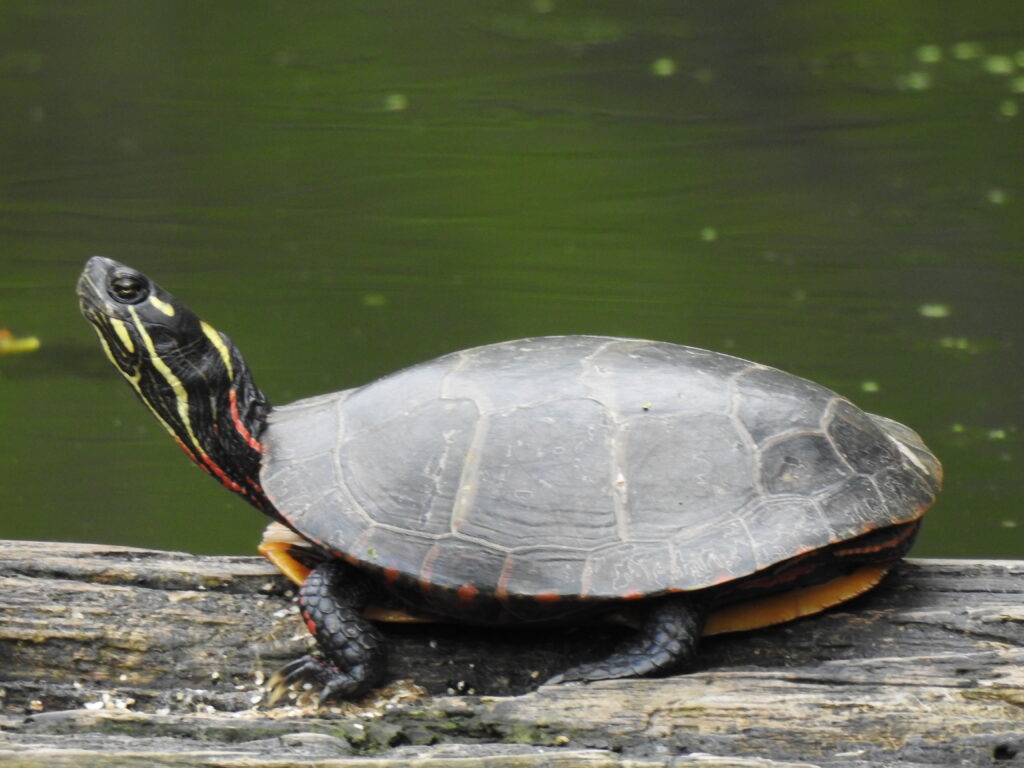
The overall behavior of the Painted Turtle is typically calm, cautious, and energy-efficient. Unlike highly active reptiles that roam continuously, Painted Turtles spend much of their time resting quietly while conserving energy. Basking behavior dominates much of their visible daily routine, especially during sunny weather. When undisturbed, individuals may remain motionless for extended periods with legs stretched outward and heads raised toward the sunlight.
Their behavior can resemble floating driftwood brought to life only occasionally by subtle movement. A basking turtle may appear completely still before slowly turning its head or shifting position slightly. These gradual adjustments help regulate body temperature without wasting unnecessary energy. Compared to mammals or birds that constantly move while resting, Painted Turtles display a slower and more deliberate style of activity.
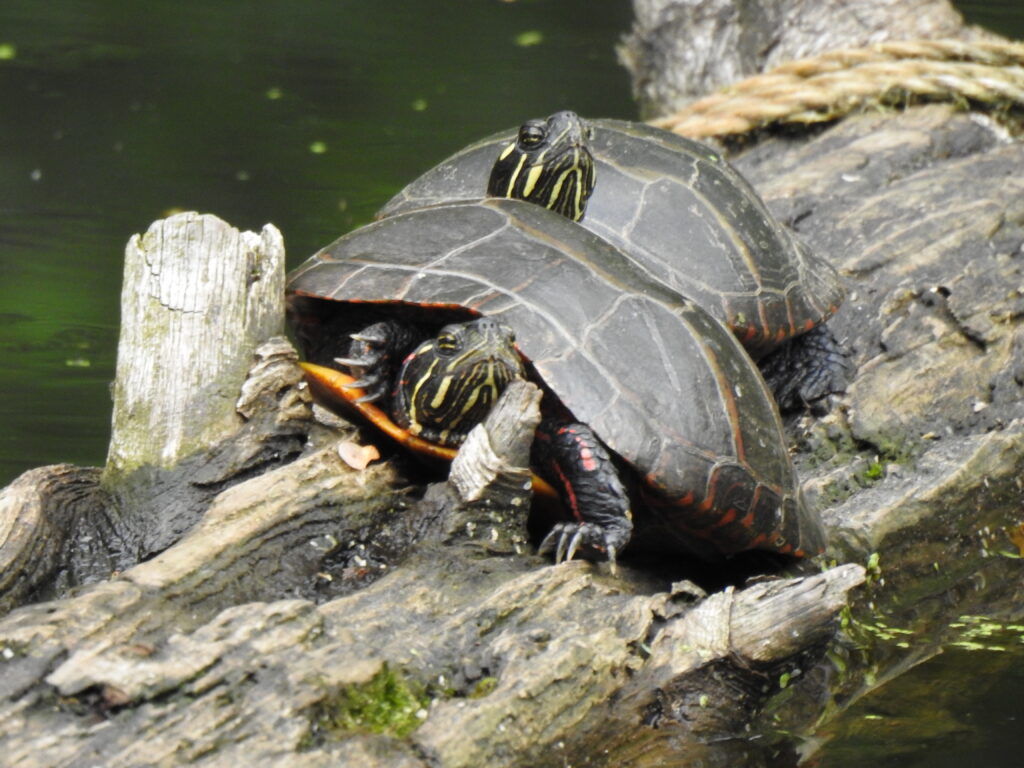
Painted Turtles are generally non-aggressive toward one another, though competition for basking space sometimes occurs in crowded areas. Larger individuals may push smaller turtles away from preferred resting spots on logs or rocks. Even so, groups commonly share basking surfaces peacefully, forming rows of turtles positioned side by side above the water. This loose social tolerance allows multiple turtles to use limited basking areas efficiently.
The species also shows strong adaptability to changing environmental conditions. Painted Turtles living in heavily visited parks often become less reactive to distant human presence than individuals from isolated wetlands. Some turtles tolerate nearby movement as long as disturbances remain slow and predictable. Despite this flexibility, sudden motion or loud noise usually triggers immediate retreat into the water, reflecting the species’ naturally cautious instincts.
Painted Turtle Movement and Daily Activity Patterns
The Painted Turtle is most active during daylight hours when temperatures are warm enough to support efficient body function. Early morning activity often begins with turtles emerging onto logs or rocks to bask under direct sunlight. As the day warms, movement increases both in the water and along shoreline areas. Activity usually slows again during cooler evening hours as temperatures begin dropping.
In water, Painted Turtles move with smooth and controlled swimming motions. Their webbed feet paddle steadily while the streamlined shell allows them to glide quietly beneath the surface. Compared to the jerky movements of some amphibians, turtle swimming appears balanced and almost effortless. The motion resembles a small underwater aircraft gliding through calm water with minimal resistance.
On land, movement becomes slower and more deliberate. Painted Turtles walk with careful alternating steps while carrying the weight of the shell close to the ground. Although they can move surprisingly quickly when startled, their normal pace is measured and cautious. During nesting periods, females may travel farther across land, but most daily activity remains closely tied to the water’s edge.
Seasonal changes strongly influence activity patterns throughout the year. During colder months, Painted Turtles become far less visible and spend extended periods inactive beneath water or mud. Spring warmth gradually increases basking frequency and surface movement as body temperatures rise. Summer often produces peak visible activity, especially during sunny afternoons when multiple turtles gather together above the water on exposed logs and rocks.
Painted Turtle Interaction and Survival Responses
The Painted Turtle survives largely through caution, rapid escape behavior, and environmental awareness. One of its most recognizable defensive reactions occurs when basking turtles suddenly slide into the water after detecting movement nearby. This escape response happens extremely quickly despite the species’ generally slow appearance. A log covered in resting turtles can empty almost instantly after a single disturbance along the shoreline.
Painted Turtles rely heavily on water as protection from danger. When threatened, they usually dive beneath the surface and disappear into vegetation, mud, or darker water. Their shell coloration also helps camouflage them against submerged logs and murky pond bottoms. Once underwater, many individuals remain completely motionless until they believe danger has passed.
Interactions between turtles are generally peaceful, though competition occasionally develops around limited basking space. Larger turtles often secure the most elevated or sunlit positions while smaller individuals remain near the edges of logs. Some turtles slowly climb over one another while repositioning themselves, creating stacked basking groups in crowded wetlands. Despite this contact, aggressive conflict is relatively uncommon compared to many territorial reptiles.
Painted Turtles also possess strong survival instincts related to seasonal environmental change. During cold conditions, they reduce activity dramatically and conserve energy for long periods. This ability to withstand extended low-temperature conditions allows them to survive in northern climates where winters become severe. Their combination of caution, adaptability, and efficient energy use has helped the species remain widespread across freshwater ecosystems throughout North America.
Popular Searches About Painted Turtle
Explore Painted Turtle Guide
Explore More Wildlife

Support Encounters World
Help support wildlife photography and get behind the scenes discoveries on Patreon.