Bugleweed Habitat: Where It Grows and Environmental Conditions (Ajuga reptans)
Quick Facts
Primary Habitat: Garden, Woodland edge, Disturbed ground
Soil Type: Loamy, well-drained, adaptable to clay
Soil pH Preference: Slightly acidic to neutral
Moisture Level: Moist
Climate Zone: Temperate
USDA Hardiness Zone: 3–9
Elevation Range: Lowland to moderate elevations
Light Requirements: Full sun to partial shade, shade tolerant
Location Observed: Pennsylvania
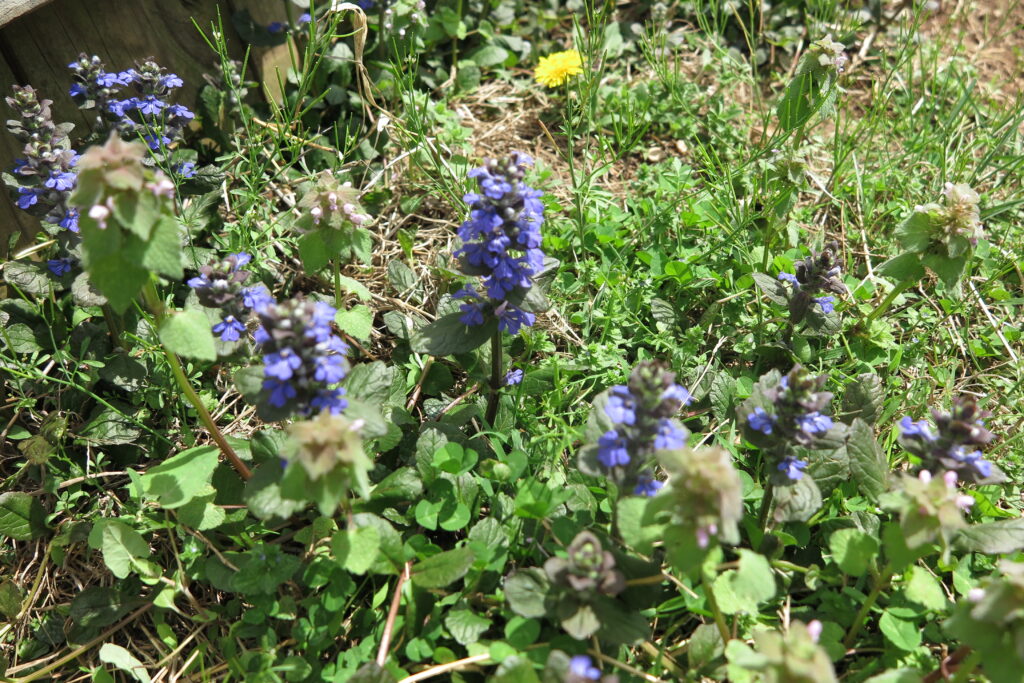
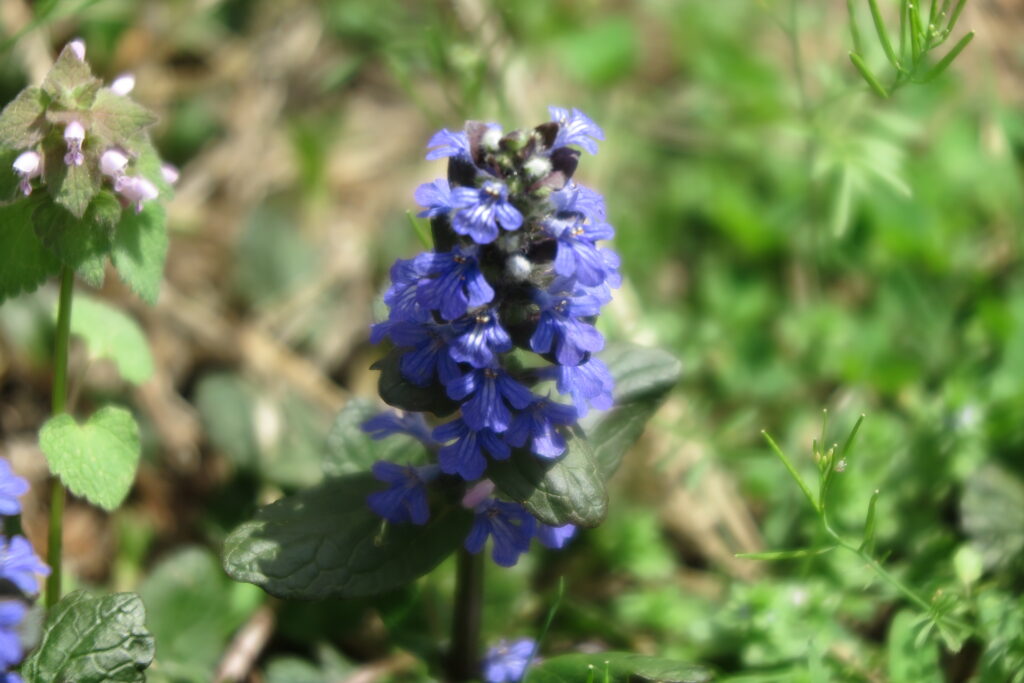
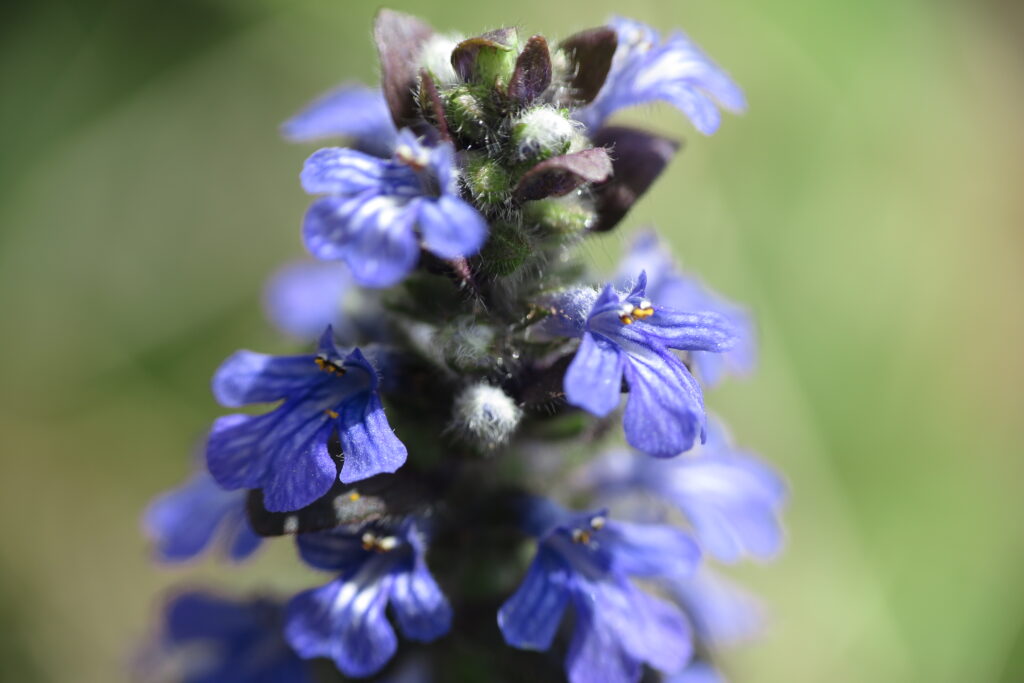
Bugleweed (Ajuga reptans) is a low-growing perennial plant known for its dense ground cover and striking blue-purple flower spikes. Its ability to spread across the ground while producing upright blooms gives it a distinct visual presence that stands out in both naturalized and managed environments.
Native to Europe and parts of western Asia, bugleweed has been widely introduced to other regions, where it is commonly found beyond its original range. Its adaptability has allowed it to establish itself in a variety of landscapes, making it a familiar species in many temperate areas.
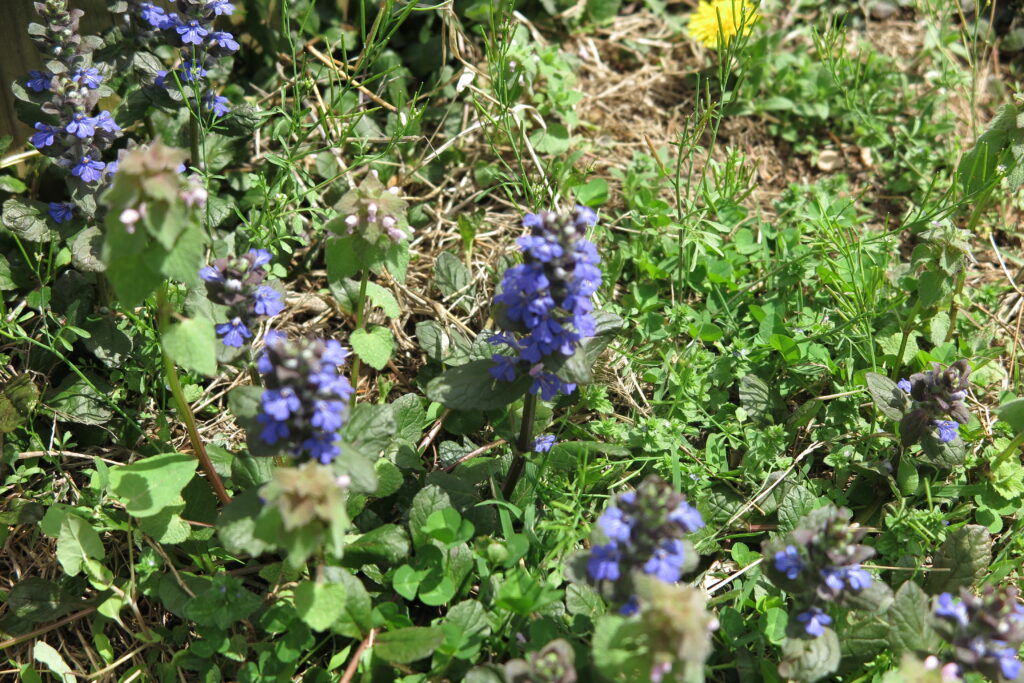
When observed in the field, bugleweed forms a carpet-like layer of foliage, punctuated by vertical spikes of color during its flowering period. This combination of horizontal coverage and upright structure creates a layered scene that is both visually structured and naturally integrated into its surroundings.
Bugleweed Overview: Habitat Range and Environmental Preferences
Bugleweed is associated with environments that provide stable ground conditions and moderate moisture. It does not require extreme or specialized settings, instead favoring areas where conditions remain relatively consistent throughout the growing season. These environments allow it to establish a continuous presence without significant disruption.
Across its natural and introduced range, bugleweed is commonly found in temperate regions that experience seasonal variation. It is well-suited to climates where temperatures fluctuate throughout the year, maintaining its presence as conditions shift between warmer and cooler periods.
The plant demonstrates a notable level of environmental flexibility within these regions. It can occupy a range of settings that share similar underlying characteristics, including moderate moisture and accessible soil structure. This adaptability allows it to persist in both naturalized and human-influenced landscapes.
Overall, bugleweed favors environments that balance stability with moderate variability. Its ability to remain consistent across different settings highlights its resilience and contributes to its widespread presence in areas where suitable conditions exist.
Bugleweed Habitat: Natural Landscapes and Where It Grows
Bugleweed is commonly found in garden environments, where it is often used as a ground cover due to its spreading nature and dense foliage. In these settings, it forms continuous patches that fill open spaces, creating a uniform layer of vegetation. These cultivated areas provide the stable conditions that support its presence.
Beyond gardens, bugleweed can also be found along woodland edges and lightly shaded areas. These transitional zones offer a balance between open space and protective cover, allowing the plant to establish itself without direct exposure to harsh conditions. The presence of surrounding vegetation contributes to a more stable environment.
It is also observed in disturbed ground, including areas where soil has been altered or vegetation has been cleared. In these locations, bugleweed can take advantage of available space, establishing itself where competition may be reduced. Its ability to adapt to these conditions allows it to persist beyond strictly managed landscapes.
While less common in fully wild ecosystems, bugleweed may appear in semi-natural areas where conditions resemble those of cultivated environments. In these cases, it blends into the surrounding vegetation while maintaining its characteristic ground-covering form.
Bugleweed Environmental Conditions: Soil, Moisture, and Climate Needs
The environmental conditions that support bugleweed are centered around balanced soil composition and consistent moisture. It performs best in loamy soils that provide both structure and nutrient availability, though it can tolerate variations including heavier clay soils as long as they are not excessively compacted.
Moisture plays a key role in maintaining the plant’s presence. Bugleweed prefers soils that remain evenly moist, avoiding extremes of dryness or saturation. This moderate moisture level supports the health of its foliage and allows it to maintain a dense, continuous ground layer.
Light exposure is another important factor, with the plant showing flexibility across a range of conditions. It can grow in full sun, but also adapts well to partial shade and shaded environments. This range of tolerance allows it to establish itself in diverse settings where light availability may vary.
Climate conditions further influence its success, particularly in temperate regions where seasonal changes are predictable. The plant is well-adapted to these cycles, maintaining its structure through varying temperatures and adjusting to seasonal shifts. Together, soil, moisture, light, and climate create the conditions necessary for bugleweed to establish and persist over time.