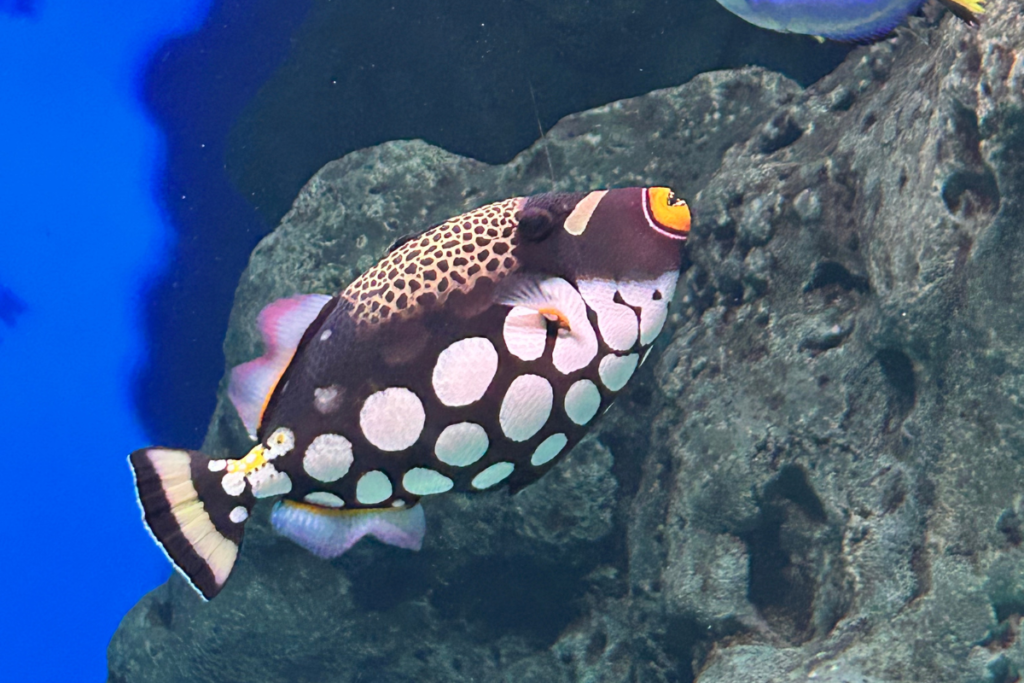
Clown Triggerfish (Balistoides conspicillum): Identification, Behavior, and Habitat Guide
Quick Facts
Scientific Name: Balistoides conspicillum
Common Name: Clown Triggerfish
Location: Marine (saltwater)
Average Size: 12–20 inches (30–50 cm)
Lifespan: 8–15 years (can be longer in captivity)
Global Range: Indo-Pacific (Indian Ocean to western Pacific Ocean)
Conservation Status: Least Concern
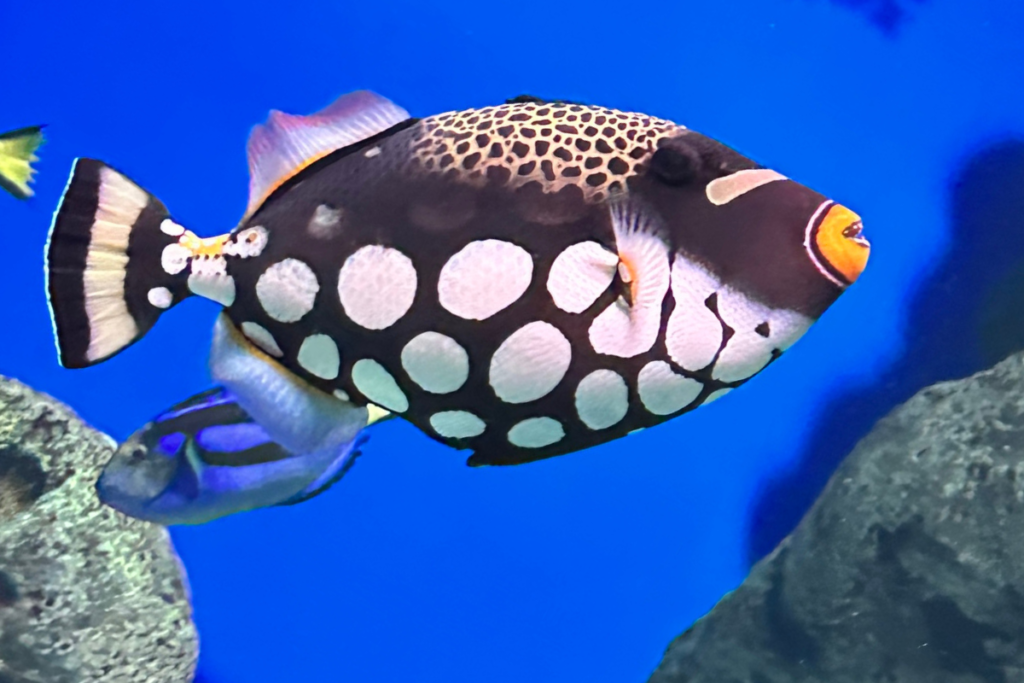
Notable Feature: Bold white spots, honeycomb upper pattern, and bright yellow/orange lips
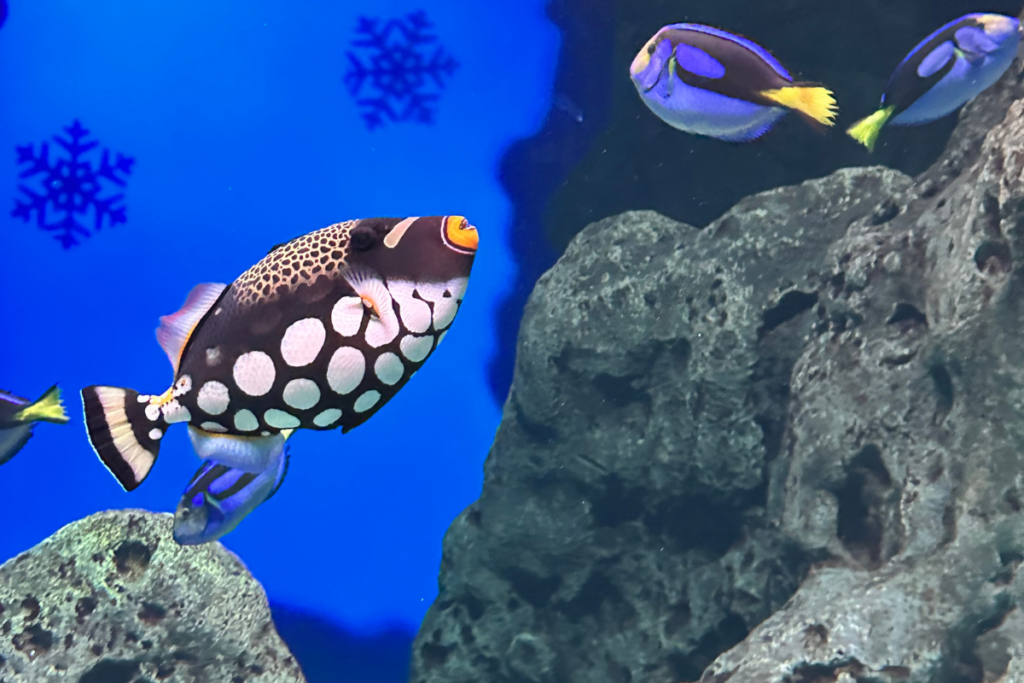
Location Observed: Atlanta Georgia Aquarium, USA (Exhibit)
The clown triggerfish (Balistoides conspicillum) is one of the most visually recognizable reef fish in the world, known for its striking contrast of bold white spots, dark coloration, and vivid yellow-orange markings. Its appearance is so distinct that it often stands out immediately among other marine species.
This fish is native to the Indo-Pacific region, where it inhabits tropical ocean waters across a broad geographic range. It is commonly associated with coral reef systems, where complex structures provide both visual contrast and environmental support.
When observed in clear water or within a controlled exhibit, the clown triggerfish moves with a calm yet deliberate presence. Its slow, controlled motion and unmistakable patterning create a strong visual impact, making it a standout species in any setting.
Clown Triggerfish Overview: Appearance, Range, and Key Characteristics
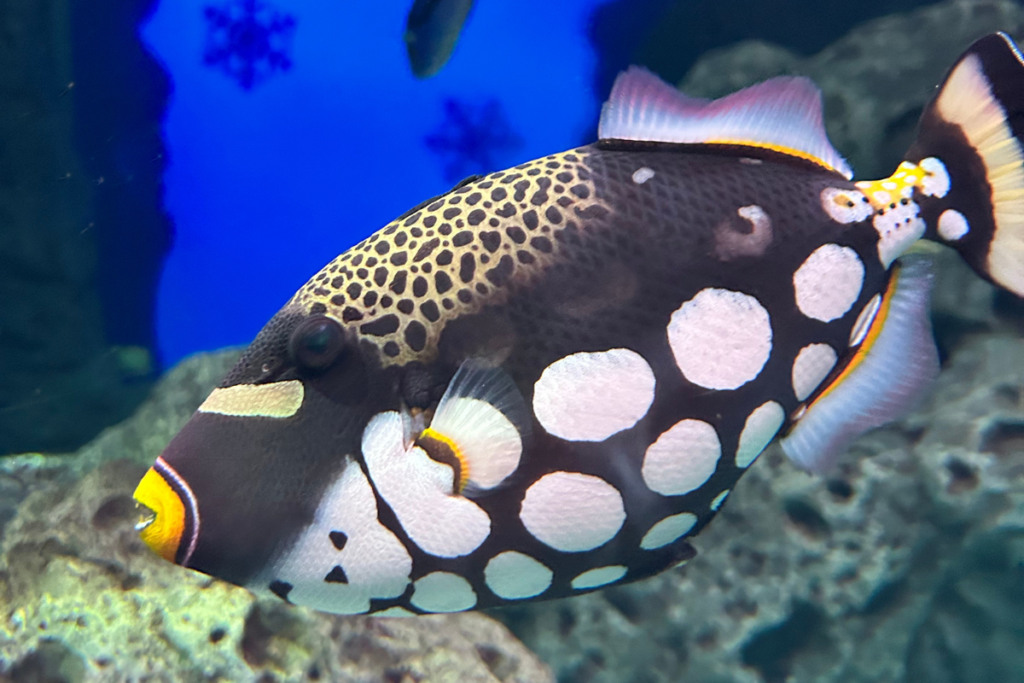
The clown triggerfish has a compact, deep-bodied form that is built for control rather than speed. Its laterally compressed shape allows it to move efficiently through structured environments, maintaining precision in tight spaces. This body design contributes to its ability to navigate complex surroundings with ease.
Coloration is the defining feature of this species. The lower half of the body is covered in large, circular white spots against a dark background, while the upper region displays a honeycomb-like pattern. The head is highlighted by bright yellow-orange lips, giving the fish a distinctive and recognizable “masked” appearance.
Across its global range, the clown triggerfish maintains consistent visual characteristics. While minor variations may occur, the overall pattern remains stable, allowing for easy identification regardless of location. This consistency contributes to its recognition as one of the most iconic reef fish.
In terms of adaptability, the species is capable of maintaining its form and behavior in both natural and controlled environments. Its strong physical structure and defined traits allow it to remain stable across varying conditions, reinforcing its resilience as a marine species.
Clown Triggerfish Behavior: Movement, Territory, and Activity Patterns
The clown triggerfish is known for its deliberate and controlled movement style. Rather than relying on speed, it uses precise fin motions to hover, turn, and adjust its position in the water. This gives it a steady, almost calculated presence as it moves through its surroundings.
Territorial behavior is a defining trait. This species often establishes and defends a specific area, showing assertiveness toward other fish that enter its space. This behavior becomes more pronounced as the fish matures, contributing to its reputation as a dominant reef inhabitant.
Activity patterns are generally consistent throughout the day. The clown triggerfish remains active, frequently exploring its environment, inspecting surfaces, and interacting with objects around it. Its behavior reflects a high level of awareness and responsiveness to its surroundings.
While not vocal in the traditional sense, triggerfish can produce subtle sounds by grinding their teeth or manipulating internal structures. These sounds are typically associated with stress or defense, adding another layer to their behavioral complexity.
Clown Triggerfish Habitat: Environment and Living Conditions
The clown triggerfish is most commonly found in coral reef environments, where structural complexity defines the landscape. These areas provide a mix of open water and sheltered spaces, allowing the fish to move freely while maintaining access to protection.
Reef systems offer an ideal balance of visibility and cover. Clear water conditions support navigation and interaction, while crevices and rocky formations provide areas for retreat. This combination creates a stable environment suited to the species’ needs.
Warm tropical waters are essential for its survival. The species thrives in regions where temperatures remain consistent, supporting metabolic stability and overall health. These conditions are typically found in shallow to mid-depth reef zones.
The presence of hard structures such as coral and rock plays a critical role. These features not only define the environment but also create a framework that supports the fish’s movement and spatial awareness. Together, these elements form a habitat that aligns perfectly with the clown triggerfish’s physical and behavioral traits.