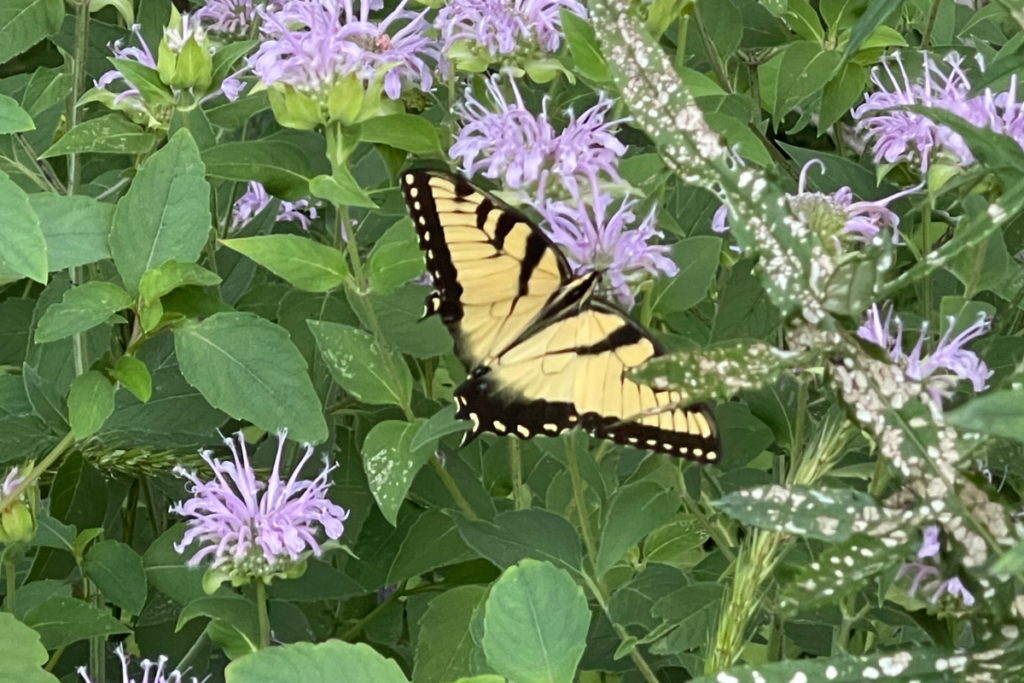
Eastern Tiger Swallowtail Butterfly (Papilio glaucus) Overview – Identification, Size, and Key Features
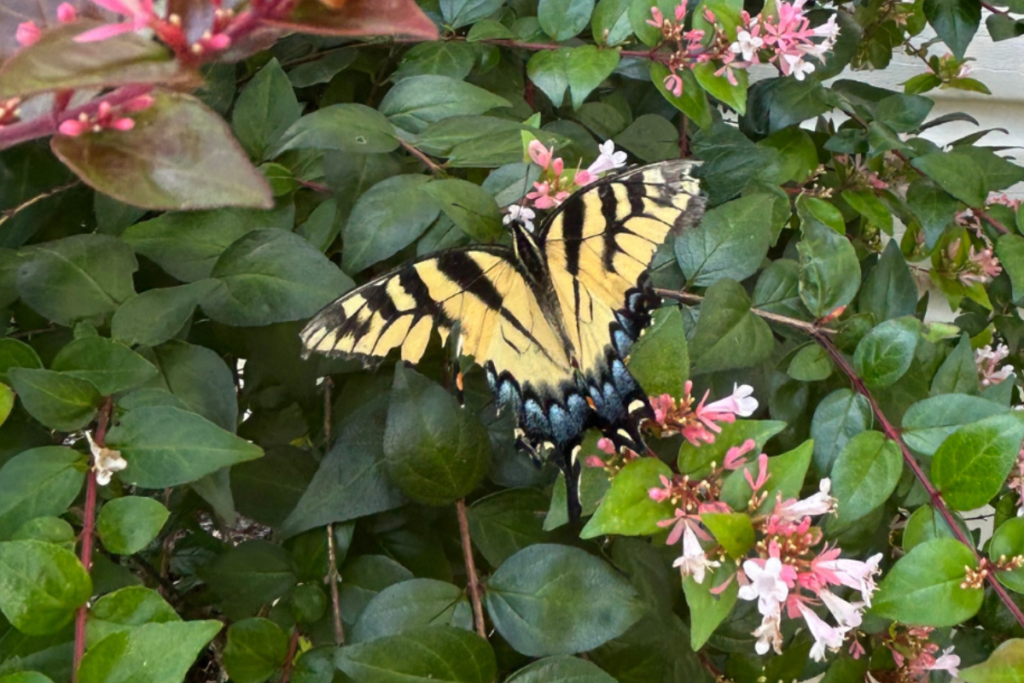
Quick Facts
Scientific Name: Papilio glaucus
Common Name: Eastern Tiger Swallowtail
Location: Eastern North America
Average Size: 3.5–5.5 inches (wingspan)
Lifespan: 2–4 weeks (adult stage)
Global Range: Eastern United States, parts of Canada, and northern Mexico
Conservation Status: Least Concern
Notable Feature: Bold yellow wings with black tiger-like striping and tail-like extensions
Location Observed: Pennsylvania, USA
Field Observation
During observation, this butterfly moved continuously from flower to flower without pausing, maintaining a steady rhythm in its flight. It appeared focused on locating nectar sources, rarely stopping as it transitioned directly between blooms. This constant motion gave the impression of a highly efficient and purposeful search pattern.
The Eastern Tiger Swallowtail (Papilio glaucus) is one of the most recognizable butterflies in North America, known for its striking yellow wings marked with bold black stripes. Its large size and smooth, gliding flight make it stand out immediately when seen drifting through open spaces or near flowering plants. This species is often one of the first large butterflies people notice due to its bright coloration and frequent presence in both natural and developed areas.
This butterfly is widely distributed across the eastern half of the United States, extending into southern Canada and parts of northern Mexico. It thrives across a broad range of climates, from cooler northern regions to warmer southern zones. Because of this wide distribution, it has become one of the most familiar butterfly species throughout its range, appearing in both rural landscapes and suburban environments.
Seeing an Eastern Tiger Swallowtail in the wild often feels like a fleeting but memorable moment. Its wings catch the light in a way that highlights their bold contrast, making it easy to spot even from a distance. Whether moving through a forest edge or passing over a garden, its presence adds a sense of motion and color to the surrounding environment.
Despite how common it may be in some areas, each sighting still feels unique. The combination of size, color, and graceful movement creates an unmistakable visual impression that draws attention without effort. It is a species that many people recognize instantly, even without prior knowledge of butterflies.
Eastern Tiger Swallowtail Appearance and Physical Overview
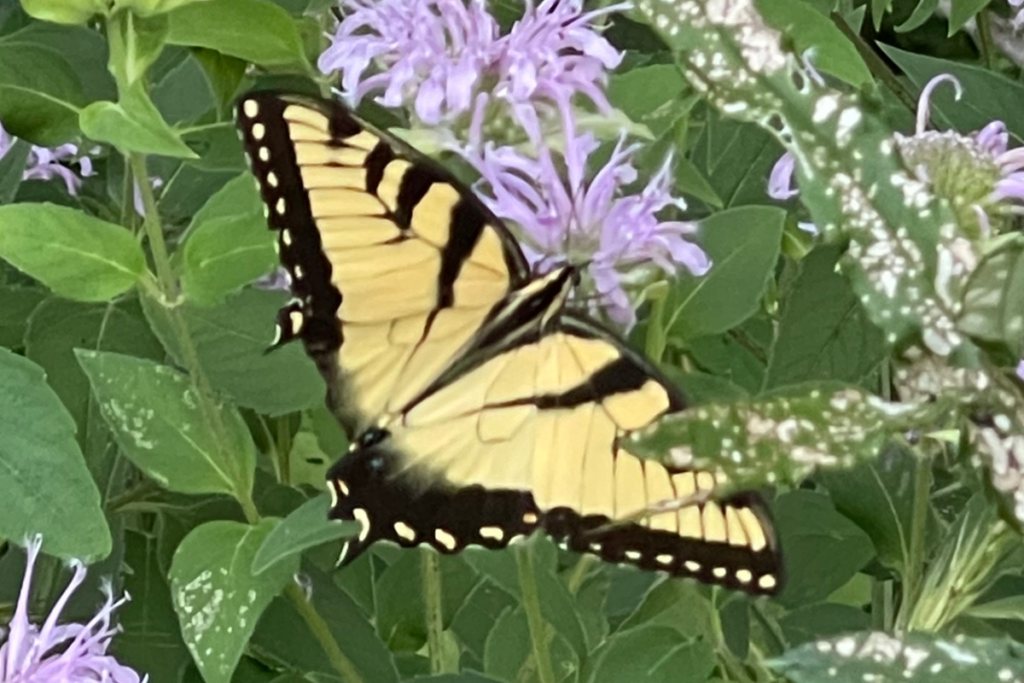
The Eastern Tiger Swallowtail is a large butterfly with a wingspan that can reach up to five and a half inches, making it one of the biggest commonly seen butterflies in its range. Its wings are primarily bright yellow, crossed by bold black stripes that resemble the pattern of a tiger, giving the species its name. These markings are clean and defined, creating a strong contrast that remains visible even at a distance.
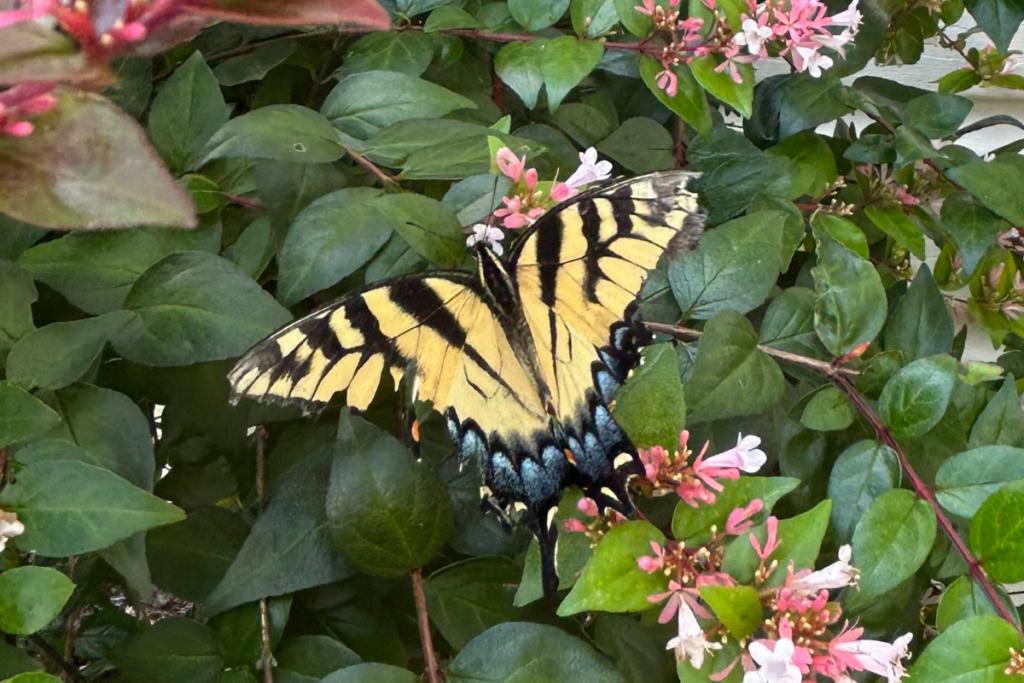
Along the outer edges of the wings, a thick black border frames the yellow interior. Within this border are small, lighter-colored spots that form a subtle pattern around the wing margins. The hindwings feature a noticeable blue shading near the lower edge, adding another layer of color that becomes more visible when the butterfly is at rest with its wings open.
One of the most distinctive features of this species is the presence of tail-like extensions on the hindwings. These elongated points give the butterfly a more complex silhouette compared to species with rounded wing edges. When viewed from certain angles, these tails can appear delicate, almost like small ribbons trailing behind the wings.
In the wild, the Eastern Tiger Swallowtail often appears larger than expected, especially when seen close-up. Its wingspan can be comparable to the width of an adult’s hand, which adds to its visual impact. When sunlight hits its wings, the yellow coloration can appear almost glowing, making it stand out sharply against green foliage or darker backgrounds.
Defining Traits of the Eastern Tiger Swallowtail Butterfly
The bold striping pattern of the Eastern Tiger Swallowtail is one of its most defining characteristics. Unlike many butterflies that rely on subtle patterns or muted tones, this species uses high contrast to create a strong visual identity. The black stripes run vertically across the wings, creating a pattern that is both simple and highly effective for recognition.
Another notable feature is the variation between individuals, particularly between males and females. While many individuals display the classic yellow-and-black pattern, some females can appear much darker overall, sometimes almost entirely black. This variation can make them resemble other butterfly species at a glance, adding an extra layer of complexity to identification.
The body of the Eastern Tiger Swallowtail is relatively slender compared to its large wings, which enhances its overall shape. The thorax and abdomen are typically darker, helping to anchor the bright coloration of the wings. The antennae are long and gently curved, extending forward in a way that complements the butterfly’s streamlined appearance.
Compared to similar species like the Western Tiger Swallowtail, this butterfly tends to have slightly different striping patterns and coloration intensity. These differences can be subtle but are noticeable when viewed side by side. The combination of size, pattern, and tail extensions makes the Eastern Tiger Swallowtail one of the easiest butterflies to identify once its key traits are understood.
Role of the Eastern Tiger Swallowtail in the Ecosystem
The Eastern Tiger Swallowtail plays an important role in maintaining the balance of natural ecosystems. As a highly visible species, it contributes to the movement of pollen between flowering plants, supporting plant reproduction and diversity. This process helps sustain plant communities that provide food and shelter for a wide range of other organisms.
In the broader food web, this butterfly serves as a link between plant life and higher-level predators. While it is often admired for its beauty, it also represents a source of energy within the ecosystem. Its presence supports various species that rely on insects as part of their diet, contributing to the overall stability of ecological systems.
Beyond its direct ecological roles, the Eastern Tiger Swallowtail also acts as an indicator of environmental health. Healthy populations often reflect the availability of suitable plant life and stable environmental conditions. When these butterflies are commonly seen, it can suggest that the surrounding ecosystem is functioning well and supporting biodiversity.
Additionally, this species contributes to human appreciation of nature. Its bright coloration and graceful flight make it one of the most recognized butterflies, helping to connect people with the natural world. This connection can encourage conservation awareness and a greater understanding of the importance of preserving diverse ecosystems.