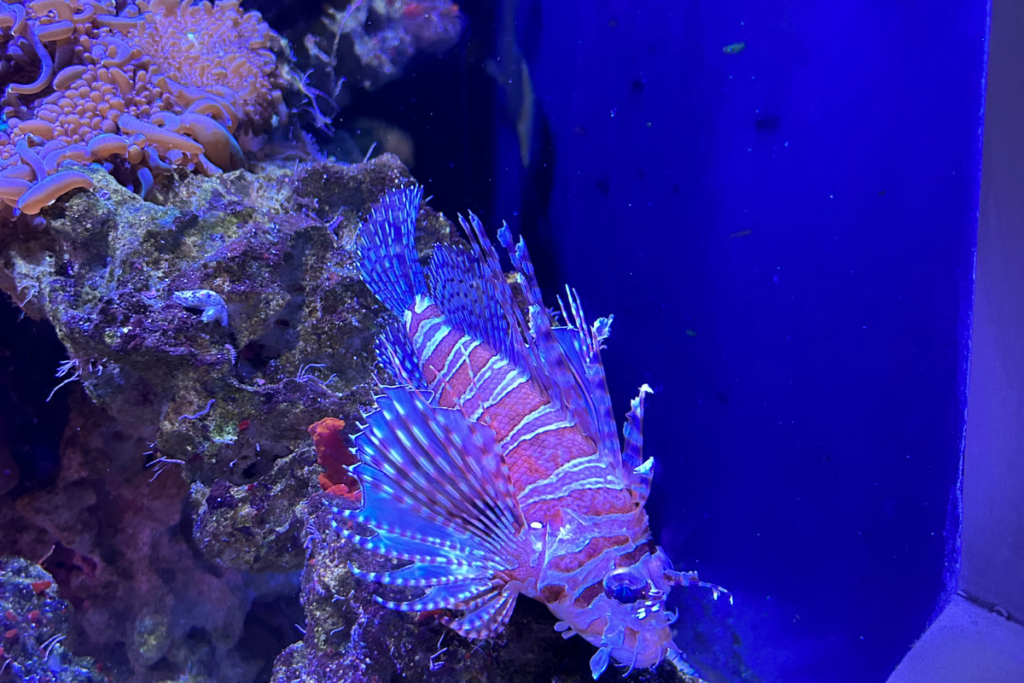
Red Lionfish Behavior – Movement, Territorial Traits & Survival Strategies
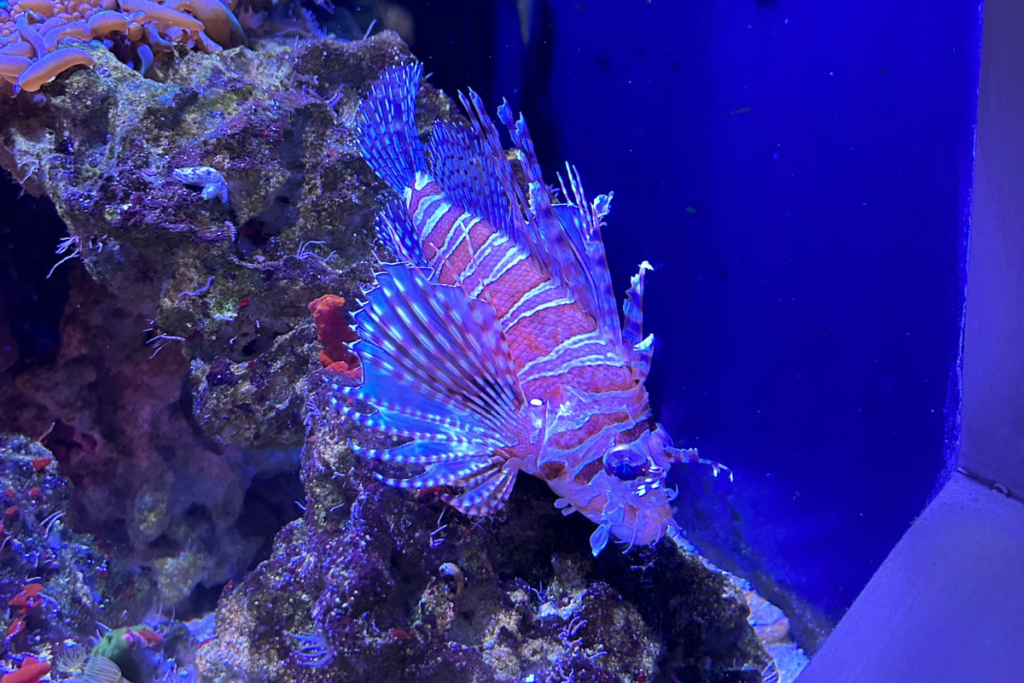
Quick Facts
Scientific Name: Pterois volitans
Common Name: Red Lionfish
Activity Type: Crepuscular (most active at dawn and dusk)
Social Structure: Primarily solitary; occasionally loose aggregations
Territorial Behavior: Mildly territorial; maintains personal space around structure
Movement Style: Slow, hovering movement with controlled fin adjustments
Communication Method: Visual signaling through fin display and posture
Defense Strategy: Venomous spines, intimidation display, and minimal movement
Location Observed: Atlanta, Georgia, USA (exhibit)
The Red Lionfish (Pterois volitans) is a marine species known for its calm, deliberate movements and striking visual presence. Beneath its flowing fins lies a behavioral system built on control, patience, and calculated response.
Naturally found throughout the Indo-Pacific region, this species occupies warm marine environments where it operates with minimal effort and maximum efficiency. In both native and expanded ranges, its behavior remains consistent.
Imagine a reef scene where motion is subtle and controlled. Suspended in place, the lionfish drifts with near stillness, its fins extended outward as it slowly adjusts position in response to its surroundings.
Red Lionfish Behavior Overview – General Patterns & Activity Traits
The Red Lionfish exhibits behavior centered around conservation of energy. Rather than constant movement, it relies on stillness and subtle positioning to maintain control within its environment.
Movement tendencies are slow and precise. Each adjustment is intentional, allowing the fish to remain balanced in the water column without unnecessary effort.
Activity levels are generally low but purposeful. While it may appear inactive, the lionfish remains aware and responsive, capable of shifting behavior instantly when needed.
Adaptability contributes to its success. The species can maintain its behavioral patterns across different marine environments, demonstrating consistency regardless of location.
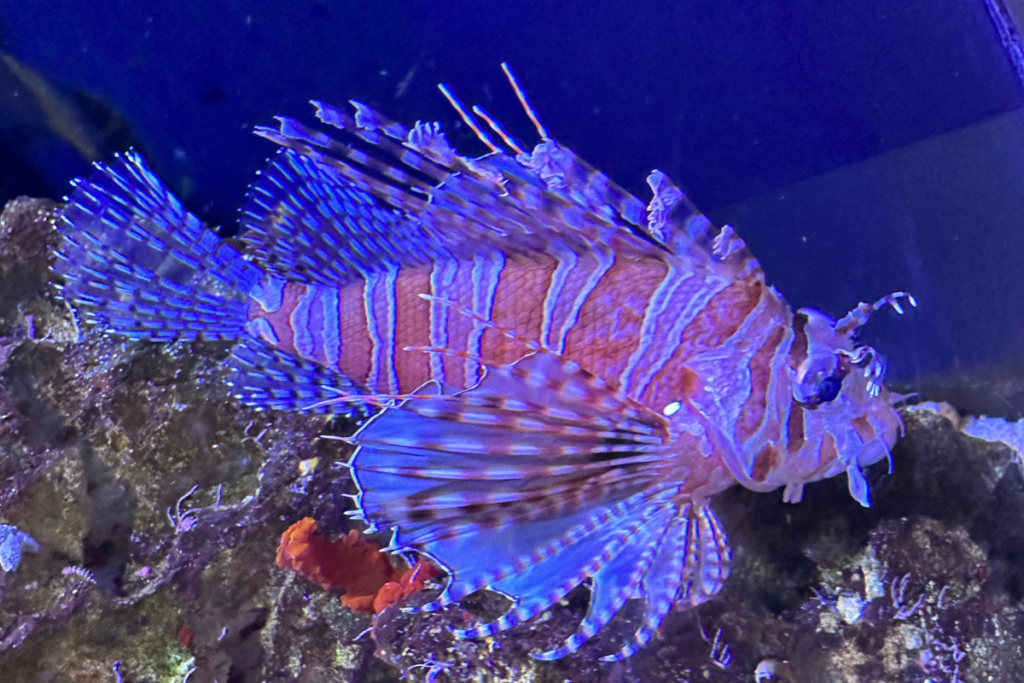
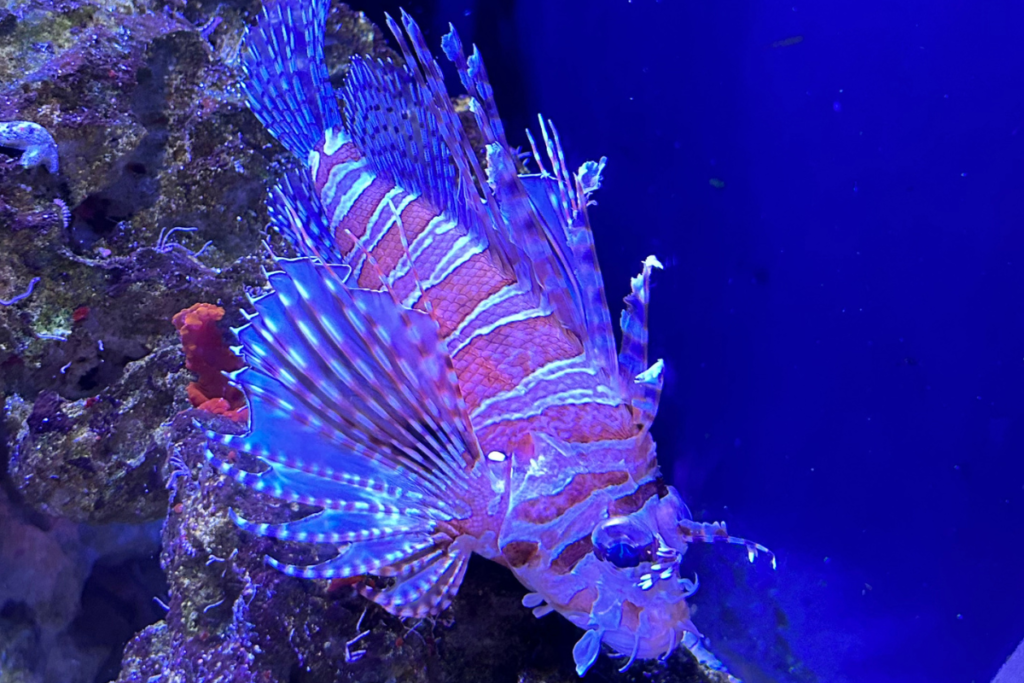
Red Lionfish Behavior – Movement, Territoriality & Communication
Movement is characterized by hovering and controlled drifting. The lionfish uses its large fins to stabilize itself, allowing it to move with minimal visible effort.
Territorial behavior is subtle. Individuals maintain space around themselves, particularly near preferred areas, but do not engage in constant aggression.
Communication is primarily visual. Fin expansion, body orientation, and slow directional changes signal intent and presence to other organisms.
Rather than relying on speed or pursuit, the lionfish uses positioning and display to influence interactions within its surroundings.
Red Lionfish Interaction & Survival Behavior – Defense, Response & Strategy
When faced with potential threats, the Red Lionfish relies on its venomous spines as a primary defense. Its posture changes, with fins fully extended to appear larger and more intimidating.
Social structure is typically solitary, reducing competition and allowing individuals to maintain control over their immediate space.
Feeding-related behavior is based on precision and timing. The lionfish remains still until an opportunity arises, then responds quickly with a short, controlled movement.
Survival strategies emphasize efficiency. By minimizing unnecessary movement and relying on both visual deterrence and physical defense, the Red Lionfish maintains a strong presence within its environment while conserving energy.