
White-Tailed Deer Antler Fragment Overview | Shed Antler Overview, Structure & Habitat
Quick Facts
Bone Type: Shed Antler Fragment
Likely Animal: White-Tailed Deer
Common Name: White-Tailed Deer Antler Fragment
Scientific Name: Odocoileus virginianus
Bone Category: Antler
Side of Body: Unknown
Age Class: Adult
Condition: Weathered, Fragmented
Key Identification Features: Visible burr near base, curved beam-like structure, dense bone material, weathered outer surface, broken tip
Size Estimate: Approximately 8–12 inches
Location Observed: Pennsylvania, USA
Field Observation
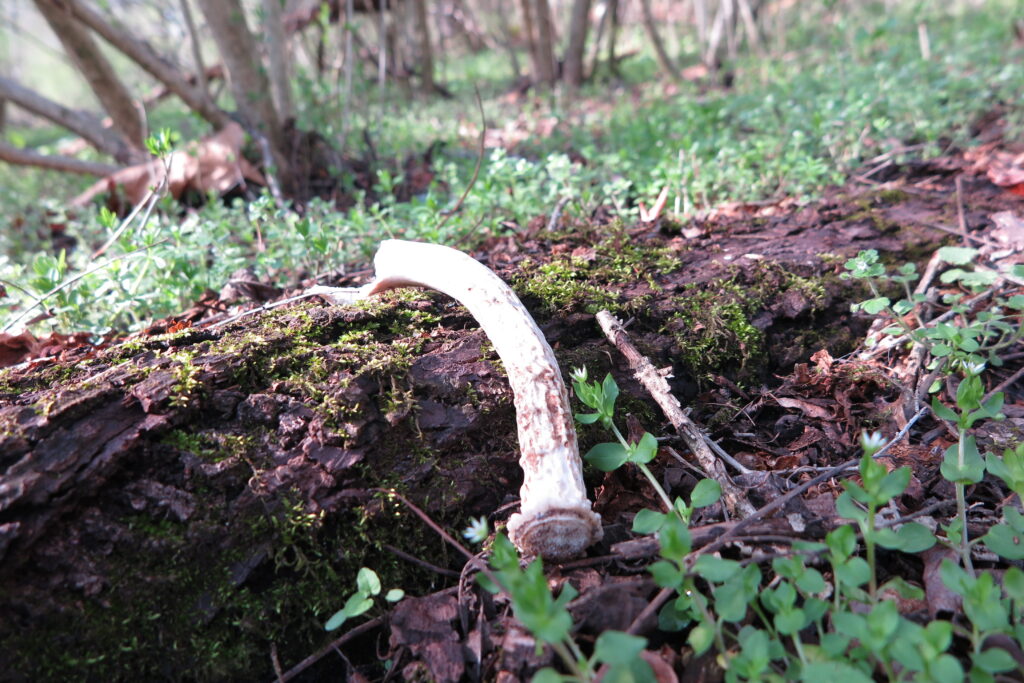
While exploring a wooded area, I spotted a pale object resting on a fallen tree from a distance and discovered it was a white-tailed deer antler fragment upon closer inspection. The fragment was mostly intact but broken at the tip, with numerous grooves visible across the surface and signs of animal chewing along several edges. Despite its age and weathering, it remained remarkably clean and retained much of its original shape.
White-Tailed Deer Antler Fragment Overview and Field Identification
A white-tailed deer antler fragment is a detached portion of a buck’s antler that has become separated through natural shedding, breakage, or long-term weathering. The specimen shown here appears to be part of a shed antler, retaining a portion of the burr and lower beam. These characteristics provide valuable clues when identifying antler remains found in natural environments.
White-tailed deer are among the most widespread large mammals in North America. Their range spans forests, agricultural regions, wetlands, grasslands, and suburban landscapes throughout much of the continent. Because bucks shed and regrow antlers annually, fragments can occasionally be encountered long after the original antler has been discarded.
Unlike many skeletal remains, antler fragments often attract attention because of their unusual shape. The curved profile, dense bone texture, and distinctive burr create a form that immediately stands out from sticks, roots, and other natural debris found on the forest floor.
Discoveries frequently occur along trails, near fallen logs, beside streams, or within areas heavily used by deer. Weathering, scavenger activity, and seasonal leaf movement may gradually expose pieces that were previously hidden beneath vegetation or leaf litter.
Recognizing a White-Tailed Deer Shed Antler Fragment
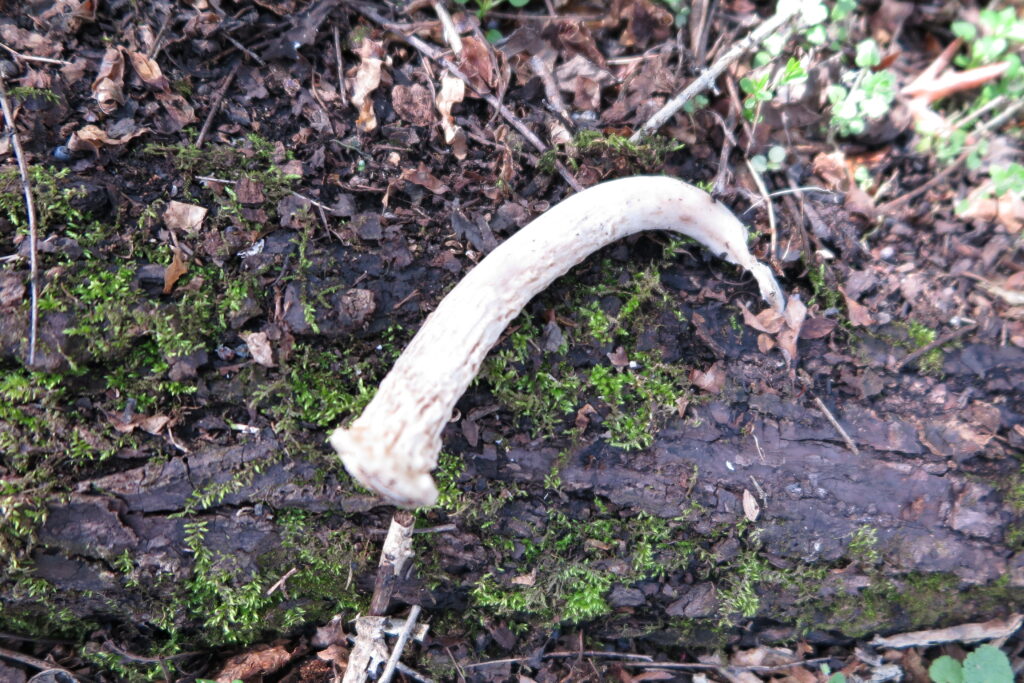
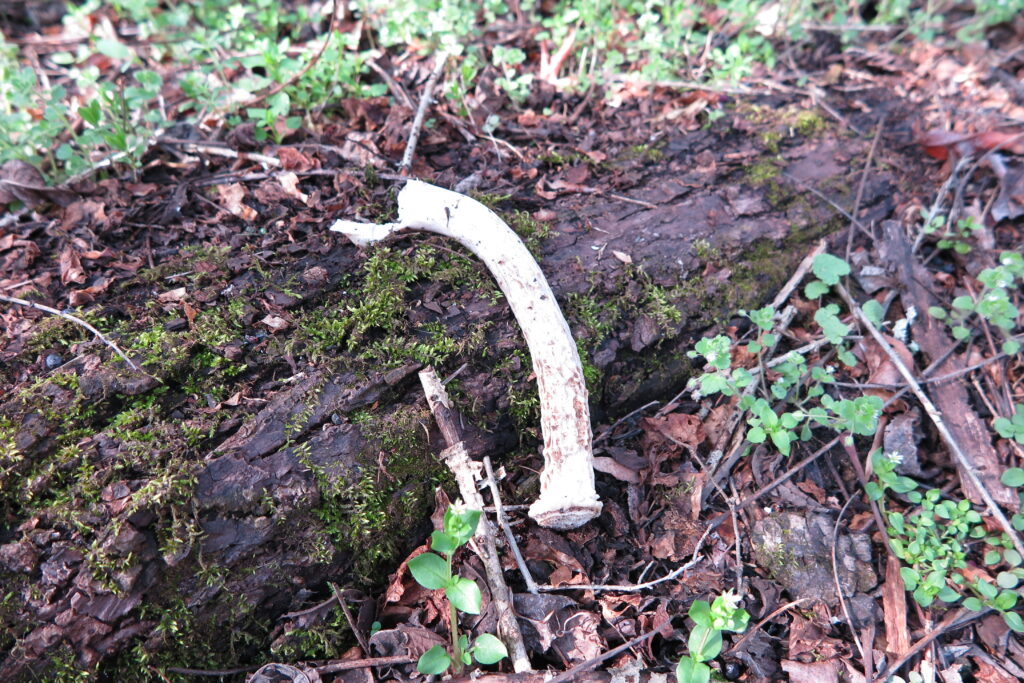
At first glance, this antler fragment resembles a curved hook or handle resting on the forest floor. The smooth arching profile immediately separates it from ordinary bone fragments, while the visible burr near the base provides one of the strongest identifying features. Even after years of exposure, the overall shape remains recognizable.
The fragment displays a gentle curve characteristic of portions of the antler beam. Rather than appearing straight or rod-like, the structure follows a natural arc that reflects the original growth pattern of the antler. This curvature is common in white-tailed deer antlers and often survives long after smaller features have weathered away.
One of the most noticeable elements is the burr located at the lower end. The burr forms a rough, ring-like structure where the antler once connected to the pedicle on the skull. When present, this feature can help distinguish antler remains from ordinary skeletal bones or broken branches.
Weathering has altered the surface coloration, giving the fragment a pale appearance. Small pits, roughened areas, and worn textures indicate prolonged exposure to the elements. Despite this weathering, the specimen retains enough detail to clearly identify it as a deer antler fragment.
White-Tailed Deer Antler Fragment Structure and Biological Function
Antlers are unique among mammalian skeletal structures because they are grown and shed repeatedly throughout an animal’s life. This fragment originated from a larger antler that was produced during a single growing season before eventually being shed by the buck. The annual cycle of growth and replacement makes antlers unlike permanent horns.
The structure of the fragment reveals the strength required of antlers during the breeding season. Dense bone tissue provides durability while maintaining a relatively lightweight design. This combination allows bucks to carry large antlers without placing excessive strain on the neck and head.
The curved beam section functions much like a support arm within the larger antler framework. Individual tines branch from the beam while forces generated during sparring are distributed throughout the structure. In this way, the antler operates similarly to a reinforced framework that balances strength and efficiency.
Antlers serve several purposes beyond simple display. During the rut, bucks use them for visual signaling, dominance interactions, and controlled contests with rivals. Their role can be compared to both a display structure and a lever system, helping communicate fitness while providing mechanical advantage during encounters with competing males.
Where White-Tailed Deer Antler Fragments Are Commonly Found
White-tailed deer antler fragments are most often discovered in wooded habitats where deer spend significant portions of the year. Mixed hardwood forests, forest edges, brushy corridors, and areas surrounding agricultural fields frequently produce antler finds. These environments provide both cover and food resources that attract deer populations.
Shed antlers and antler fragments are commonly found near bedding areas and travel routes. Bucks often lose antlers while moving through thick vegetation or crossing obstacles such as logs, fences, and stream banks. Once detached, the antlers may remain hidden until seasonal changes expose them.
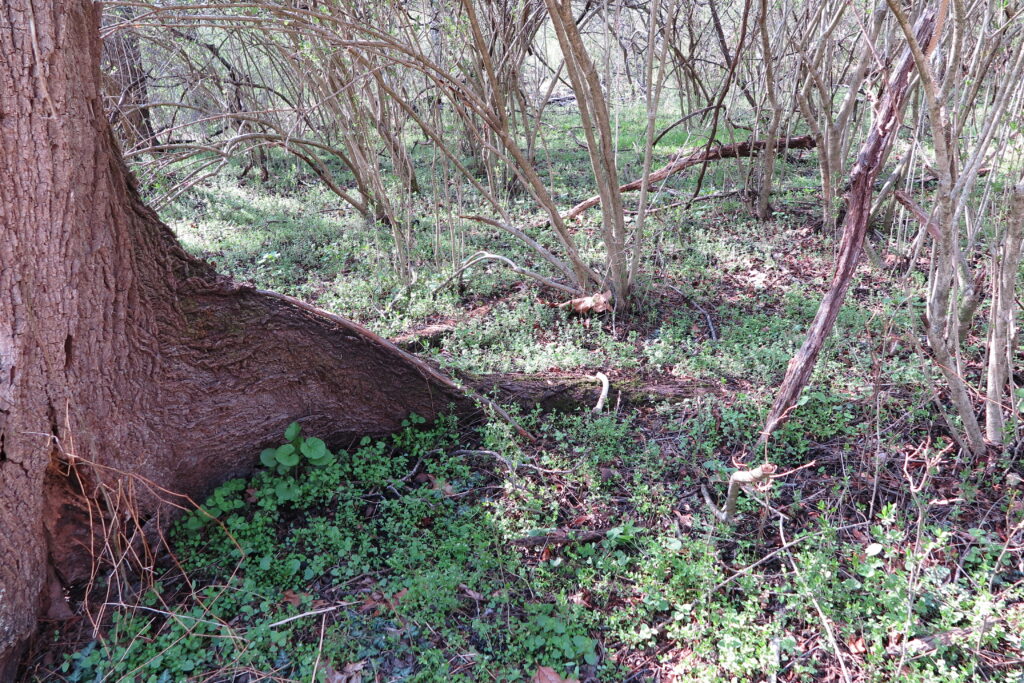
Forest floors containing fallen logs, moss, and decomposing leaf litter often create ideal conditions for preserving antler fragments. A weathered specimen may rest unnoticed for years before rainfall, erosion, or shifting vegetation reveals it. The antler shown here resting beside a decaying log represents a setting frequently encountered by hikers and wildlife enthusiasts.
Real-world discoveries frequently occur during spring exploration when vegetation remains relatively low and newly shed antlers become easier to spot. Trails, creek crossings, woodland clearings, and the edges of food plots are particularly productive locations. These areas concentrate deer activity and increase the likelihood of encountering antlers or antler fragments that have persisted on the landscape through multiple seasons.
Observation Location
Observed in Nixon Park Nature Center, Pennsylvania, USA
Popular Searches About Deer Antler Fragments
Explore Deer Antler Fragment Guide
Explore More Bones

Support Encounters World
Help support wildlife photography and get behind the scenes discoveries on Patreon.