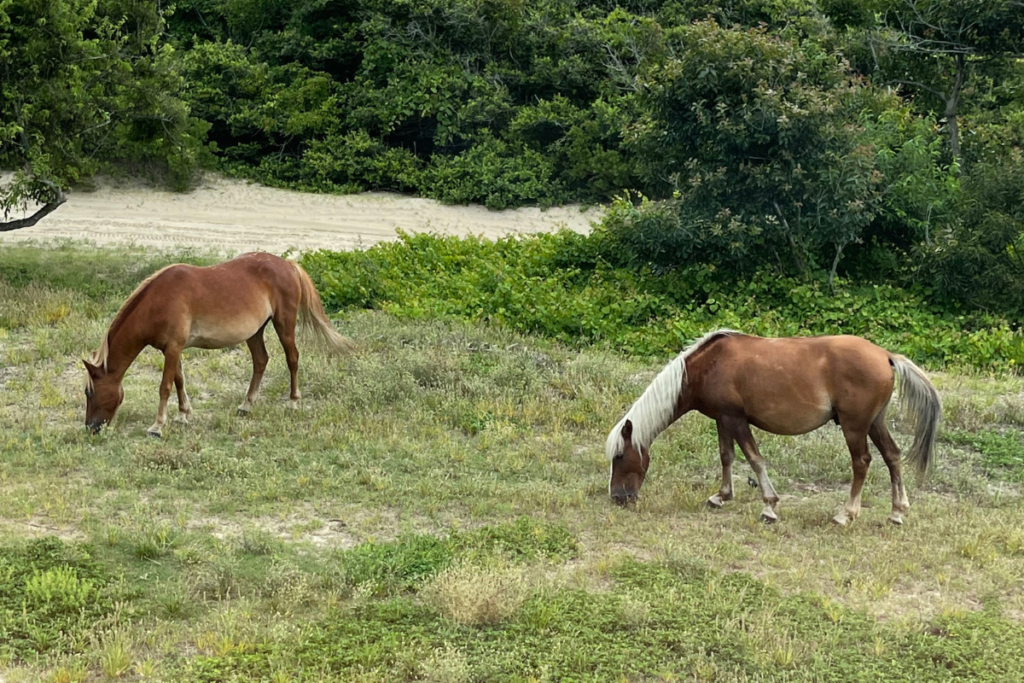
Wild Horses Behavior Guide (Equus ferus caballus) – Movement, Social Structure & Survival
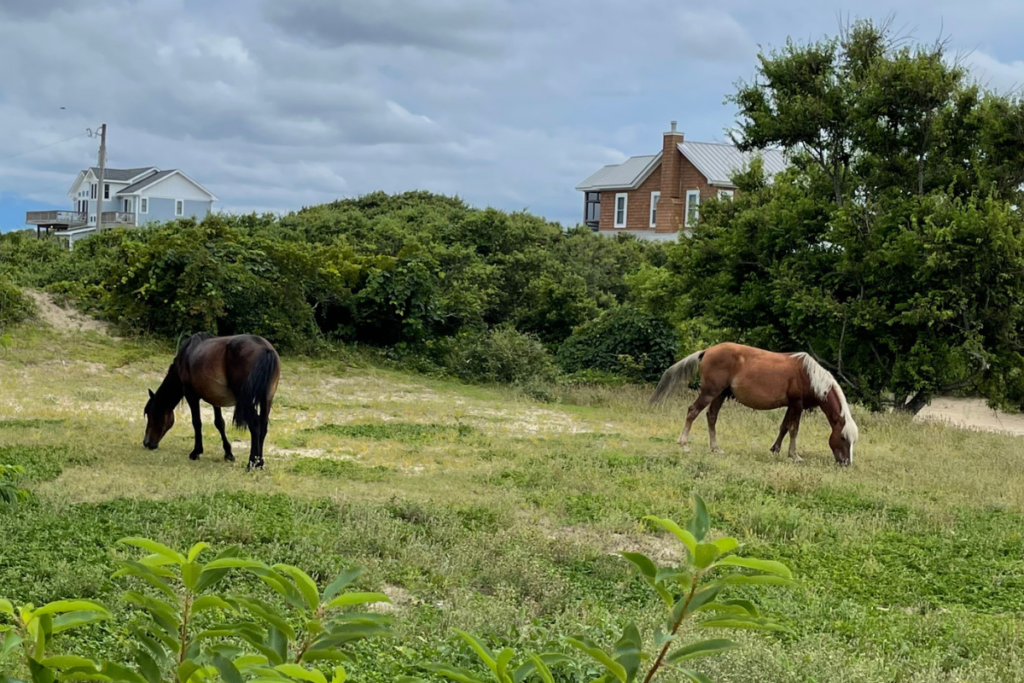
Quick Facts
Scientific Name: Equus ferus caballus
Common Name: Wild Horses (Feral Domestic Horse)
Activity Type: Crepuscular (most active at dawn and dusk)
Social Structure: Small bands led by a dominant stallion with mares and offspring
Territorial Behavior: Loose dominance-based hierarchy, not strictly territorial
Movement Style: Constant grazing movement with bursts of speed when needed
Communication Method: Vocalizations (neighs, nickers), body language, ear and tail positioning
Defense Strategy: Flight response, group cohesion, stallion defense behavior
Location Observed: Outer Banks, North Carolina
Wild horses, classified scientifically as Equus ferus caballus, represent a unique blend of domesticated ancestry and natural independence. Though commonly referred to as wild, these animals are technically feral, having descended from domesticated horses that now live freely without human care.
This species has spread across the globe through human influence, establishing populations in a wide range of environments. Today, feral horses can be found across multiple continents, where they display behavioral patterns shaped both by their domesticated origins and the demands of survival in unmanaged landscapes.
In this setting, the horses move with quiet purpose, heads lowered as they travel and interact in subtle, coordinated ways. Their behavior reveals a system of communication, awareness, and structure that allows them to function as cohesive groups despite the absence of human guidance.
Wild Horses Behavior Overview: Movement, Activity, and General Traits
Wild horses exhibit behavior that is both deliberate and efficient, shaped by the need to conserve energy while remaining alert. Much of their time is spent in slow, continuous motion, moving as they graze and navigate their surroundings. This steady pace allows them to cover ground without unnecessary exertion.
Activity levels tend to follow natural cycles rather than rigid schedules. Horses are most active during cooler parts of the day, adjusting their movement patterns to avoid physical stress. These rhythms are not fixed but instead shift based on environmental conditions, demonstrating a high level of behavioral flexibility.
Adaptability plays a central role in how these horses behave. They are capable of adjusting their routines, movement patterns, and interactions depending on available resources and external pressures. This ability to adapt has allowed feral populations to persist in areas that differ greatly from traditional domesticated settings.
Overall, their behavior reflects a balance between caution and efficiency. They are neither constantly active nor entirely stationary, instead maintaining a steady rhythm that supports survival while minimizing risk.
Wild Horses Behavior Patterns: Movement, Territoriality, and Communication
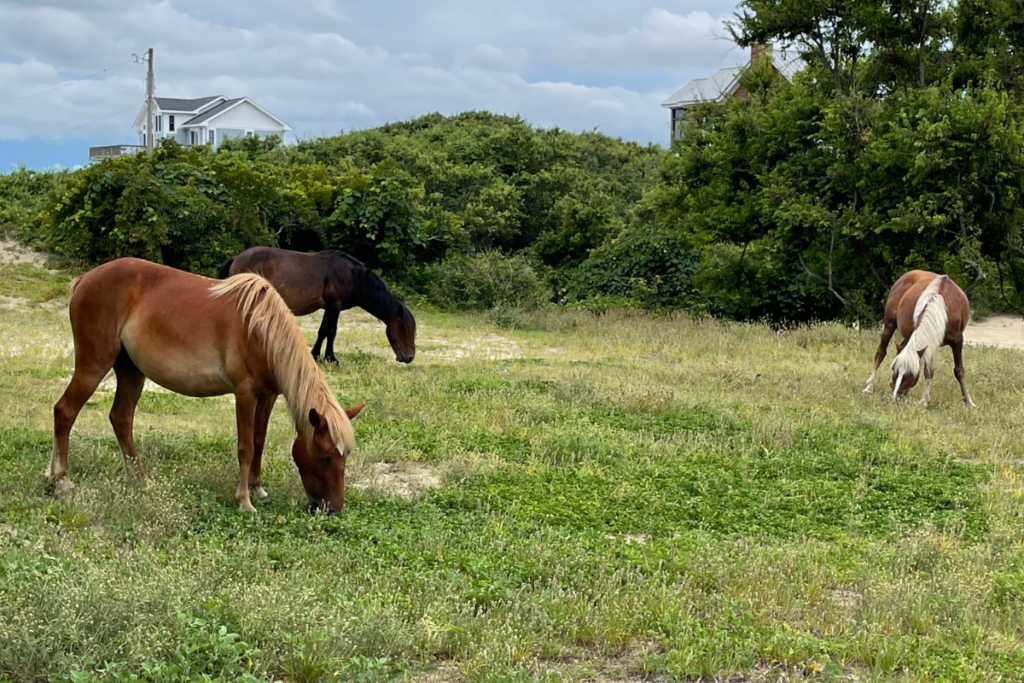
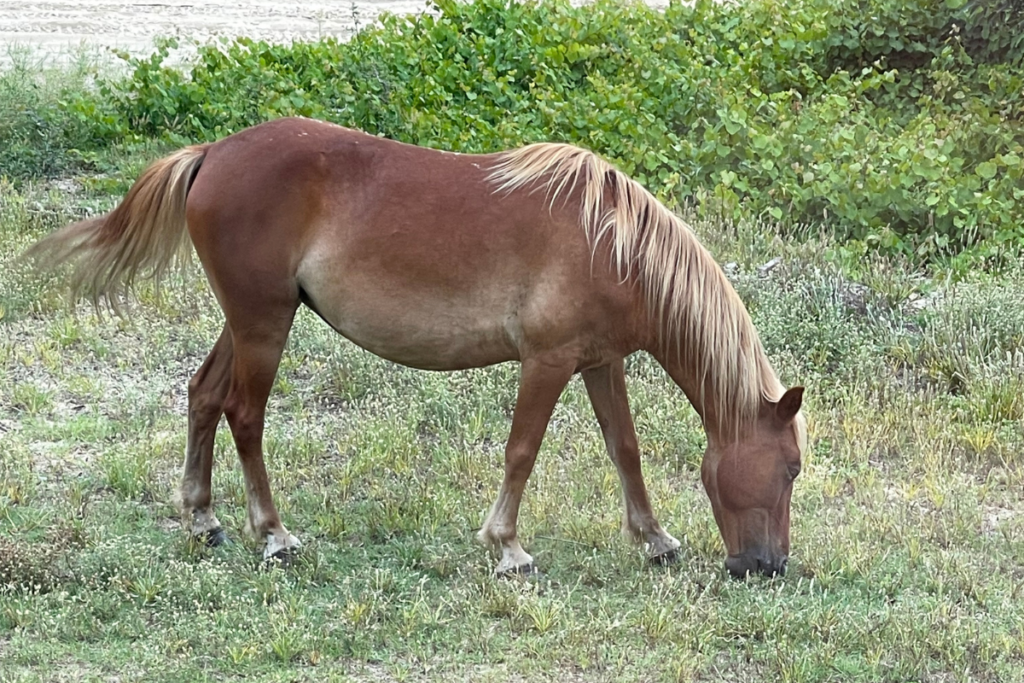
Movement among wild horses is purposeful and coordinated. Individuals within a group often travel together, maintaining spacing that allows for both independence and cohesion. While grazing, they shift gradually across the landscape, rarely remaining in one place for extended periods.
Territorial behavior is present but not rigidly defined. Instead of defending fixed boundaries, horses operate within a system of dominance and social order. A leading stallion may challenge rivals or display assertive behavior to maintain control of the group, but large-scale conflicts are typically avoided.
Communication is primarily non-verbal, relying heavily on body language. Ear positioning, head movement, and tail signals all convey information between individuals. Vocalizations such as neighs and snorts add another layer, often used to signal alertness or maintain contact within the group.
Activity patterns align closely with environmental cues. Horses tend to increase movement during dawn and dusk, while periods of rest occur during more intense conditions. These shifts allow them to maintain energy efficiency while remaining responsive to their surroundings.
Wild Horses Interaction and Survival Behavior: Social Structure and Defense
Social structure is one of the most defining aspects of wild horse behavior. Groups are typically organized into bands, with a dominant stallion, multiple mares, and younger individuals. This structure creates stability and ensures coordinated movement and protection.
When faced with potential threats, horses rely on a strong flight response. Their first instinct is to move away quickly, using speed and group coordination to avoid danger. The stallion may position himself between the group and the threat, displaying defensive behavior if necessary.
Interactions within the group are subtle but constant. Horses maintain awareness of each other through small movements and shifts in position. These interactions help reinforce social bonds and maintain order without the need for frequent aggression.
Feeding behavior, while continuous, is integrated into their overall movement and survival strategy. Rather than stopping completely, horses often graze as they move, allowing them to remain alert while still meeting their nutritional needs. This combination of awareness, movement, and group coordination defines their ability to survive independently.