Clown Triggerfish Habitat Guide: Where Clown Triggerfish Live in the Wild
Quick Facts
Primary Habitat: Coral Reef Systems
Secondary Habitat: Reef Slopes and Lagoon Areas
Climate Preference: Tropical Marine Waters
Environment Type: Coastal Ocean Ecosystems
Elevation / Depth Range: Surface to Approximately 250 Feet (76 m)
Geographic Distribution: Indo-Pacific Region
Introduction to Clown Triggerfish Habitat Across Tropical Oceans
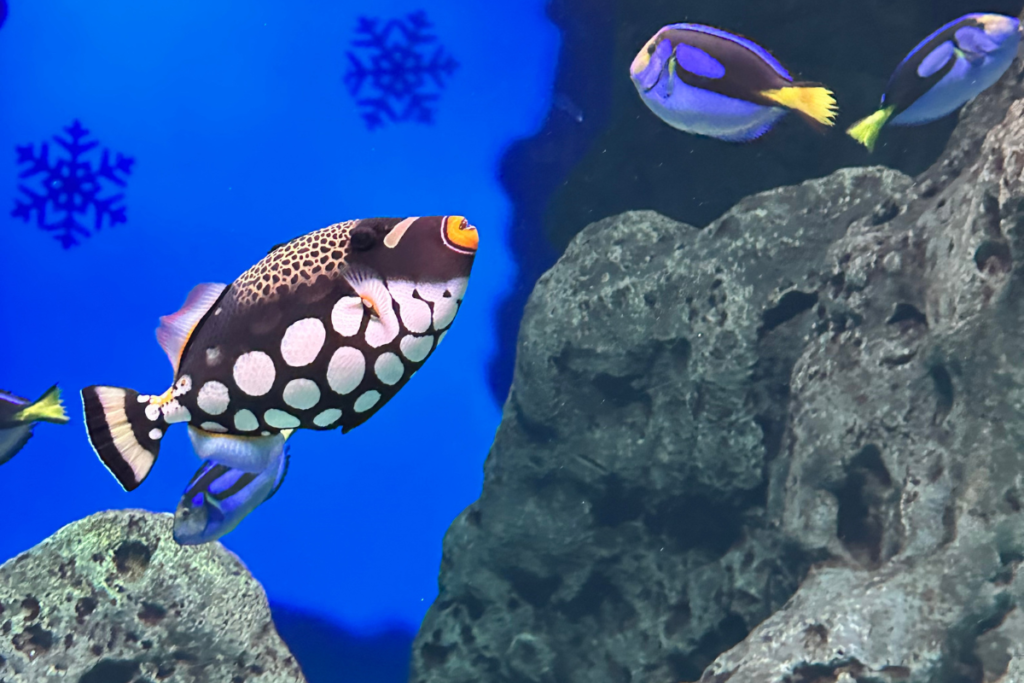
The Clown Triggerfish (Balistoides conspicillum) inhabits some of the most visually spectacular marine environments on Earth. This species occurs throughout portions of the Indo-Pacific region, where warm ocean waters support extensive reef ecosystems and remarkable biodiversity. Its range stretches across thousands of miles of tropical coastline and island chains.
From the western Indian Ocean to areas of the Pacific Ocean, Clown Triggerfish occupy regions known for clear water, abundant marine life, and complex underwater landscapes. These areas contain a mixture of environments that provide the resources necessary for the species to persist across a broad geographic range. Despite being distributed across a large area, the fish is most often associated with healthy tropical reef regions.
The waters inhabited by this species are frequently characterized by vibrant marine communities. Colorful corals, schools of fish, sea turtles, rays, and countless invertebrates often share the same general environments. Within these ecosystems, the Clown Triggerfish forms part of a larger network of marine species that contribute to overall reef diversity.
For observers exploring tropical seas, the appearance of a Clown Triggerfish often signals a thriving marine environment. The species is strongly associated with regions where ocean conditions remain stable and suitable for long-term reef development. Its presence helps illustrate the extraordinary variety found within tropical ocean ecosystems.
Clown Triggerfish Distribution and Habitat Overview
The Clown Triggerfish occupies a relatively broad distribution compared to many reef-associated fish. Populations occur across much of the tropical Indo-Pacific, allowing the species to inhabit numerous island groups, coastal regions, and offshore marine environments. This wide geographic reach contributes to its recognition throughout the marine world.
Although broadly distributed, the species remains closely tied to tropical ocean systems. Unlike highly migratory fish that travel across vast open-water regions, Clown Triggerfish are generally associated with marine environments that provide consistent structure and shelter. This relationship creates a more focused distribution pattern despite the species’ extensive range.
Compared to certain reef fish that are restricted to small geographic regions, the Clown Triggerfish demonstrates considerable adaptability within tropical marine settings. It can occupy environments surrounding remote islands, continental coastlines, and isolated reef systems. This flexibility allows populations to persist across a variety of oceanic landscapes.
The species is especially common in areas where reef development supports rich marine biodiversity. Regions containing numerous interconnected marine habitats often provide favorable conditions throughout much of the fish’s range. These areas support not only Clown Triggerfish but also thousands of other species that depend on tropical marine ecosystems.
While its distribution is extensive, the Clown Triggerfish is not a truly global species. It remains largely confined to warm tropical waters and does not naturally extend into temperate or polar oceans. This limitation highlights the importance of tropical marine environments for the species’ continued survival.
Clown Triggerfish Habitat Types and Marine Environments
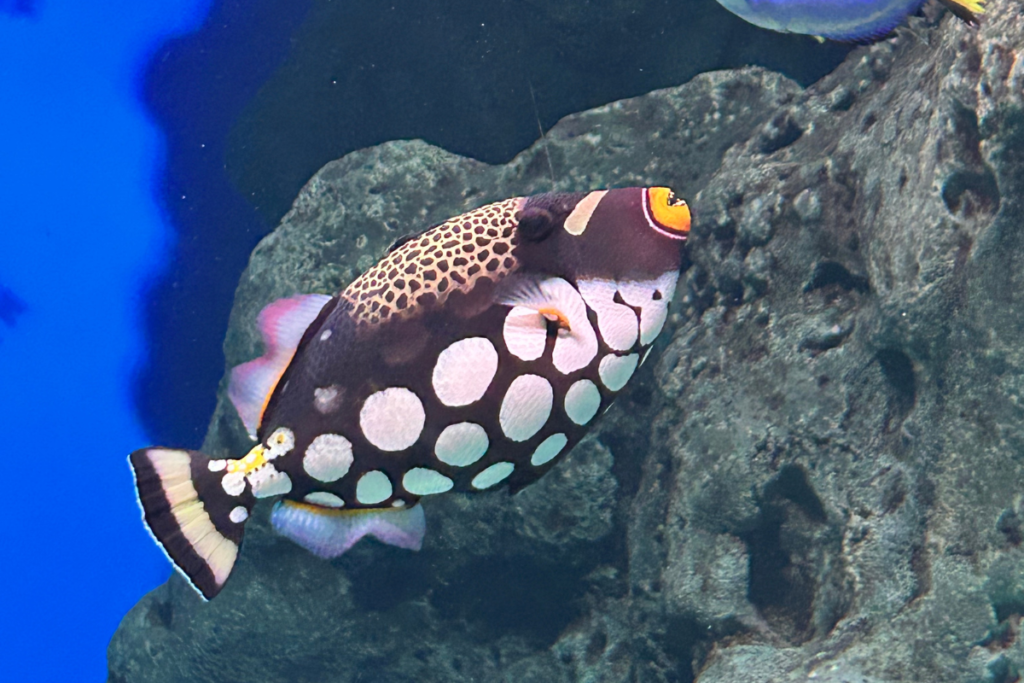
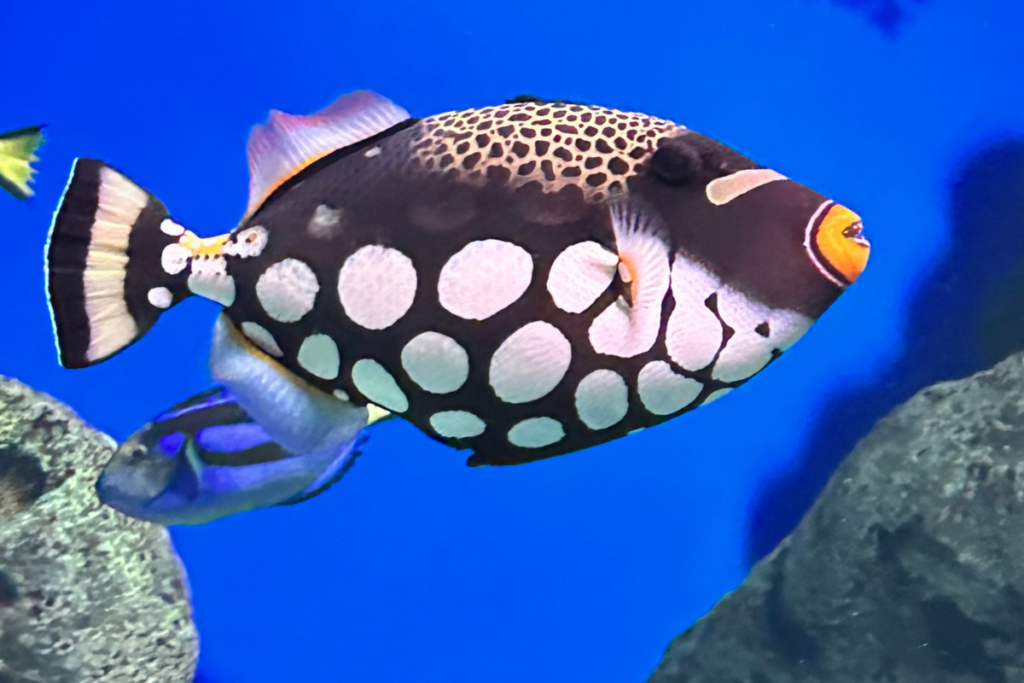
Coral reef systems represent the habitat most commonly associated with the Clown Triggerfish. These underwater structures create a three-dimensional environment filled with crevices, ledges, and open spaces. Such complexity supports a wide variety of marine life and provides suitable conditions for this distinctive fish.
Reef slopes are another important habitat category occupied by the species. These gradually descending areas connect shallower reef environments with deeper waters and often contain a mixture of coral growth and rocky structure. The transition between depth zones creates diverse conditions that support numerous marine organisms.
Lagoon environments also contribute to the habitat range of the Clown Triggerfish. Protected by surrounding reef formations, lagoons frequently contain calmer waters and varied underwater features. These environments may support different community compositions compared to more exposed reef areas.
In some regions, the species occurs around isolated reef formations separated from larger reef networks. These underwater structures function much like islands within the ocean, supporting localized marine communities. Clown Triggerfish can thrive in such settings when suitable environmental conditions are present.
Habitat variation may also occur between outer reef sections and more sheltered interior zones. Some locations provide stronger water movement and greater exposure, while others remain relatively protected. This range of habitat types allows the species to occupy different portions of tropical reef ecosystems without being limited to a single environmental category.
Environmental Conditions Supporting Clown Triggerfish Populations
Warm tropical temperatures are among the most important environmental requirements for the Clown Triggerfish. The species is typically found in waters that remain relatively stable throughout the year, avoiding the dramatic seasonal temperature fluctuations common in temperate oceans. Consistent warmth supports the biological processes necessary for reef development and marine biodiversity.
Water clarity is another defining feature of many locations inhabited by this species. Tropical reef environments often possess exceptionally clear conditions that allow sunlight to penetrate significant depths. The resulting visibility can resemble looking through a large aquarium window, revealing extensive underwater landscapes.
Depth also plays a role in habitat suitability. Clown Triggerfish are commonly observed from relatively shallow reef zones to moderately deeper areas where reef structures continue to provide environmental complexity. These depth ranges offer varying light levels, temperatures, and physical features while remaining within suitable tropical conditions.
The physical structure of the environment is equally important. Areas containing coral formations, rocky outcrops, and irregular underwater terrain create a diverse marine landscape. Such environments support numerous ecological processes and contribute to the overall stability of reef ecosystems.
Seasonal changes within tropical oceans are generally less dramatic than those experienced in many terrestrial environments. Instead of severe winters or extreme temperature swings, tropical marine habitats often experience more subtle shifts related to rainfall patterns, water movement, and storm activity. These relatively stable conditions help maintain the reef ecosystems upon which Clown Triggerfish populations depend throughout their range.
Popular Searches About Clown Triggerfish
Explore Clown Triggerfish Guide
Explore More Exhibits

Support Encounters World
Help support wildlife photography and get behind the scenes discoveries on Patreon.