
Eastern Newt Behavior (Notophthalmus viridescens) – Activity, Movement, and Survival Patterns

Quick Facts
Activity Type: Primarily diurnal (red eft), more variable in aquatic adult stage
Social Structure: Solitary
Territorial Behavior: Minimal, non-territorial
Movement Style: Slow, deliberate walking or smooth aquatic gliding
Communication Method: Chemical signaling (pheromones)
Defense Strategy: Toxic skin secretions and warning coloration
The Eastern Newt (Notophthalmus viridescens) is a small amphibian found across much of eastern North America, where it appears in both forested landscapes and freshwater environments. It is commonly encountered by hikers, naturalists, and casual observers, often noticed due to its bright coloration or slow, steady movement. Despite its widespread presence, its behavior can seem subtle and easily overlooked without careful observation.
In natural settings, this species often gives the impression of calmness and patience. Individuals are frequently seen moving at an unhurried pace or remaining still for extended periods. This quiet presence contrasts with more active amphibians, making the Eastern Newt feel almost deliberate in its actions rather than reactive or erratic.
Observers may encounter different behavioral impressions depending on the life stage. A bright orange juvenile might be seen walking across damp ground in daylight, while an adult may be found in water, moving more fluidly. These differences create a varied experience for those observing the species, even within the same general area.
Overall, the Eastern Newt presents a behavior style that feels measured and controlled. It does not rely on speed or sudden bursts of energy in most situations. Instead, it interacts with its surroundings in a steady, consistent way that reflects a balance between movement and stillness.
Eastern Newt Behavioral Tendencies and General Activity
The Eastern Newt is generally a low-energy, slow-moving amphibian that appears calm and composed in most situations. When undisturbed, it often moves gradually or remains stationary, blending into its surroundings without drawing attention. This relaxed demeanor makes it seem more like a passive presence than an actively roaming animal.
Unlike highly alert species that react instantly to every disturbance, the Eastern Newt shows a more measured response. It may pause, slightly adjust its position, or continue moving without urgency. This behavior can be compared to a person walking through a quiet environment without feeling threatened—aware, but not constantly reacting.
Its activity level can vary depending on environmental conditions, but it rarely displays frantic or unpredictable motion. Even when transitioning between locations, it maintains a consistent pace. This steady movement pattern helps conserve energy and reduces unnecessary exposure to potential threats.
When left undisturbed, the Eastern Newt may spend extended periods resting. It often appears comfortable remaining in one place, especially in moist conditions where it can maintain hydration. This balance between movement and stillness defines its overall behavioral style.

Eastern Newt Movement Style and Daily Activity Patterns
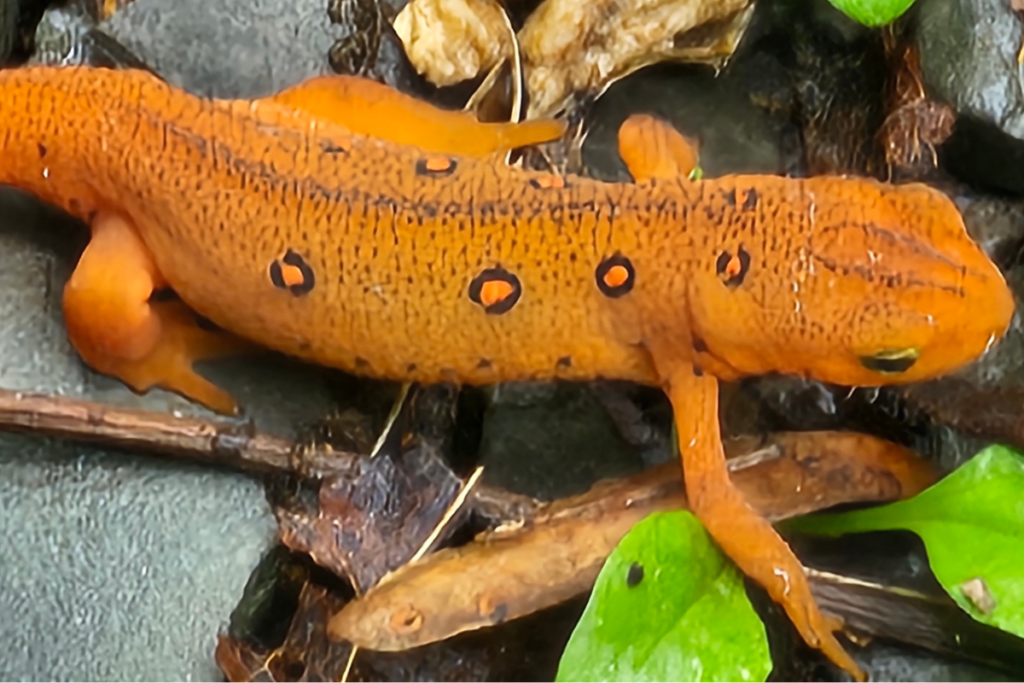
The movement of the Eastern Newt is best described as slow, deliberate, and controlled. On land, it walks with a steady, almost careful pace, placing each limb with intention. This motion resembles a slow crawl rather than a quick scurry, similar to how a small toy might be gently pushed forward step by step.
In aquatic environments, its movement shifts to a smoother, more fluid style. It glides through the water using subtle tail motions, creating a gentle, wave-like propulsion. This contrasts with the sharper, more energetic swimming seen in some other amphibians, giving the Eastern Newt a more graceful appearance underwater.
Activity patterns vary depending on life stage and environmental conditions. The bright orange juvenile stage is often active during the day, making it one of the more visible salamanders in daylight hours. Adults may show more flexibility, being active during both day and night depending on temperature and moisture levels.
Seasonally, activity tends to increase during warmer and wetter periods. During dry or cold conditions, movement becomes less frequent, and individuals may remain hidden or inactive for longer stretches. This ability to adjust activity levels helps the species conserve energy and maintain stability throughout changing conditions.
Eastern Newt Interaction and Survival Behavior
When it comes to survival, the Eastern Newt relies more on deterrence than escape. Its bright coloration, especially during the juvenile stage, serves as a warning signal to potential predators. This visual cue indicates that the animal is not a safe or appealing target, reducing the likelihood of attack.
If approached or disturbed, the Eastern Newt does not typically flee at high speed. Instead, it may pause, remain still, or move slowly away from the threat. This reaction can seem unusual compared to animals that rely on rapid escape, but it reflects confidence in its defensive adaptations.
In situations where contact is unavoidable, the newt’s skin produces toxic compounds that discourage predators. This chemical defense is effective enough that many predators learn to avoid the species after a single encounter. As a result, the Eastern Newt often does not need to rely on aggressive or evasive behavior to survive.
Social interaction among individuals is minimal, as this species tends to live independently. Encounters between individuals are generally brief and neutral, without signs of territorial conflict. This solitary nature allows each newt to operate independently, reducing competition and maintaining a stable presence within its environment.