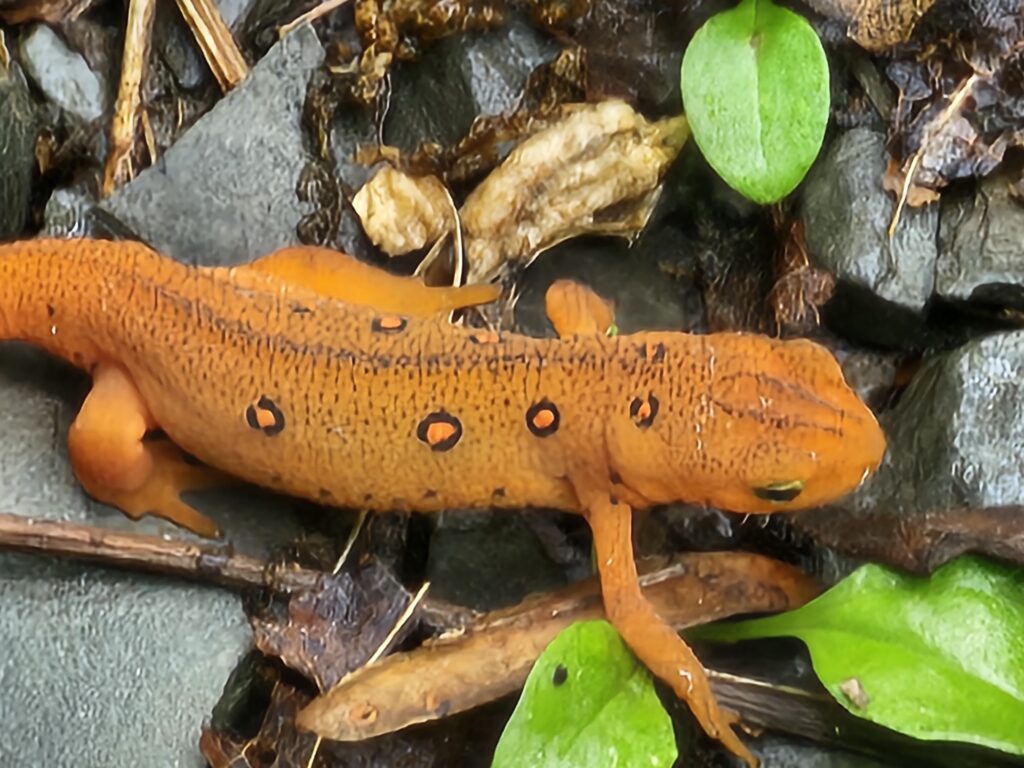
Eastern Newt Habitat (Notophthalmus viridescens) – Where It Lives Across North America
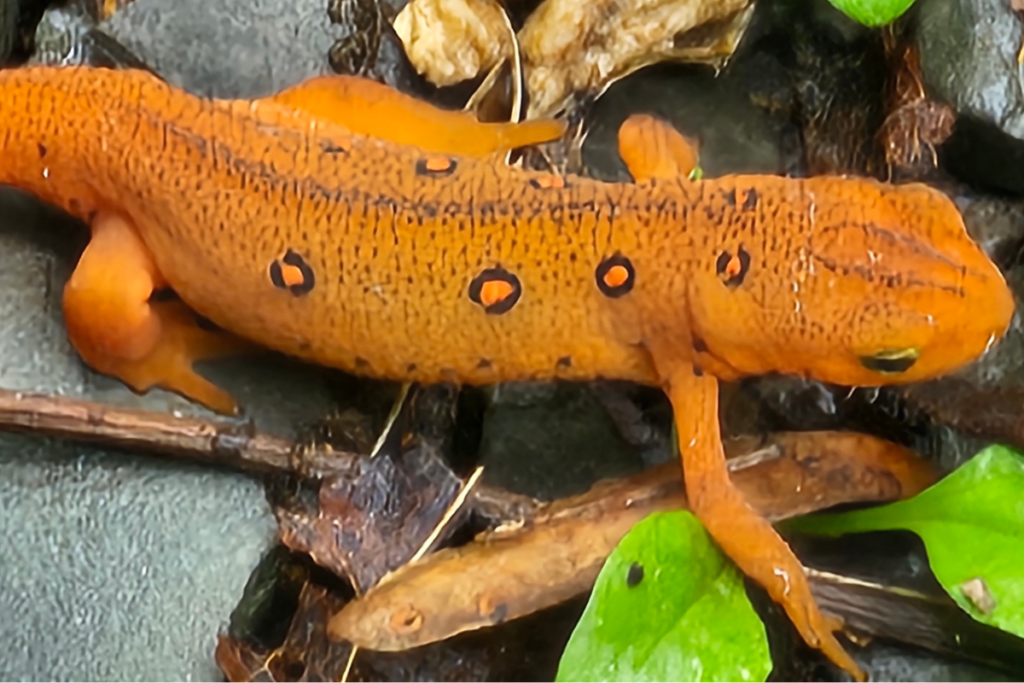
Quick Facts
Primary Habitat: Freshwater ponds, lakes, and slow-moving streams
Secondary Habitat: Moist forests, woodland edges, and leaf litter
Climate Preference: Temperate, humid climates
Environment Type: Mixed terrestrial and aquatic environments
Elevation / Depth Range: Lowland to moderate elevations; shallow freshwater zones
Geographic Distribution: Eastern United States and southeastern Canada
The Eastern Newt (Notophthalmus viridescens) is a widely distributed amphibian found throughout much of eastern North America. It occupies a range that stretches from southeastern Canada down through the eastern United States, appearing in both inland and coastal regions. This broad presence places it in a variety of landscapes, each contributing to how the species persists across such a large area.
Across its range, the Eastern Newt is commonly encountered in areas where land and water meet or exist in close proximity. It is often associated with environments that offer a balance between these two elements, allowing it to transition between different settings over time. This dual connection gives the species a flexible presence that can shift depending on conditions.
From a distance, the environments it occupies may appear quiet and undisturbed, often characterized by natural vegetation and seasonal changes. These locations typically support a wide range of plant and animal life, creating complex ecosystems. Within these systems, the Eastern Newt exists as a small but consistent presence.
Rather than being limited to a single type of setting, this species can be found across multiple environmental contexts within its range. This adaptability allows it to remain present in areas where other amphibians may be more restricted. As a result, the Eastern Newt is one of the more recognizable amphibians across eastern North America.
Eastern Newt Habitat Range and Distribution Overview
The Eastern Newt is distributed widely across eastern North America, making it one of the most geographically expansive salamanders in the region. Its range includes much of the eastern United States and extends into parts of southeastern Canada. This broad distribution allows it to occupy a variety of landscapes, from inland forests to regions closer to coastal environments.
Unlike species that are restricted to narrow ecological zones, the Eastern Newt demonstrates a notable ability to exist across different environmental regions. It can be found in both densely vegetated areas and more open landscapes, as long as certain baseline conditions are met. This flexibility gives it an advantage over species that rely on highly specific habitat requirements.
In comparison to more specialized amphibians, the Eastern Newt shows a wider tolerance for variation in its surroundings. While some salamanders are limited to a single type of forest or wetland, this species can be present in multiple habitat categories within its range. This makes it more frequently encountered by observers across different environments.
Its widespread presence also means that populations can exist in isolated pockets as well as continuous stretches of habitat. This distribution pattern contributes to its overall stability as a species. Even when conditions change in one area, populations in other regions can remain unaffected.
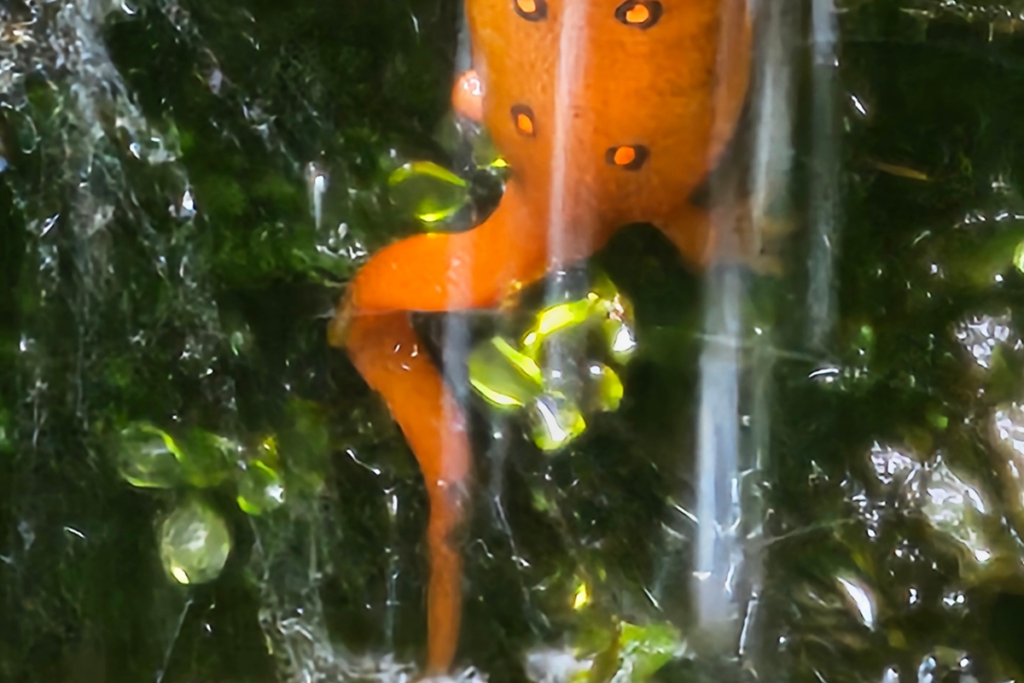
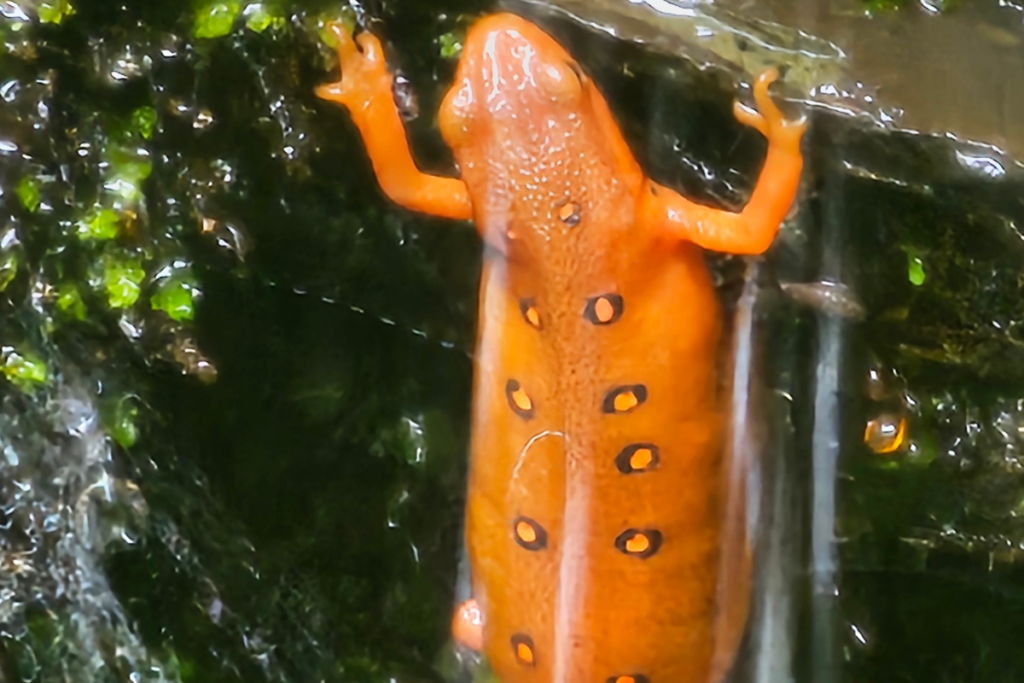
Eastern Newt Habitat Types Across Its Range
The Eastern Newt occupies a variety of habitat types, each playing a role in supporting different stages of its life cycle. Freshwater environments such as ponds, lakes, and slow-moving streams are among the most important settings. These areas provide space for aquatic stages, where individuals are commonly found in shallow zones.
Beyond water-based environments, the Eastern Newt is also present in terrestrial settings. Moist forests, particularly those with dense leaf litter, offer suitable conditions for individuals that spend time on land. These wooded areas provide cover and maintain the humidity levels needed for survival.
Wetlands represent another key habitat type, combining features of both land and water. Marshes, swamps, and similar environments create transitional zones where the species can move between different settings. These areas often support a higher concentration of individuals due to the variety of conditions they provide.
The Eastern Newt can also be found in environments influenced by human activity, such as parklands or managed natural areas. While it tends to favor more natural settings, it is capable of existing in modified landscapes if essential conditions remain intact. This ability to occupy both natural and altered environments contributes to its overall resilience.
Environmental Conditions That Support Eastern Newt Habitat
The Eastern Newt thrives in environments with consistent moisture and moderate temperatures. Humid conditions are especially important, as they help maintain the amphibian’s skin and overall health. Areas that retain moisture, whether through rainfall, shade, or proximity to water, are particularly suitable.
Temperature plays a significant role in determining where the species can persist. It is most commonly found in temperate climates where seasonal changes occur but do not reach extreme levels. Warm summers support activity, while cooler periods may lead to reduced movement or periods of inactivity.
Terrain and vegetation also influence habitat suitability. Environments with a mix of ground cover, such as leaf litter, low plants, and natural debris, provide structure and protection. These features create a layered landscape that supports the species without requiring open or exposed conditions.
Seasonal variation further shapes the environments where the Eastern Newt is found. Wet periods can expand suitable areas, while dry conditions may limit availability. This dynamic relationship with environmental conditions highlights the importance of stable ecosystems in supporting the species across its range.