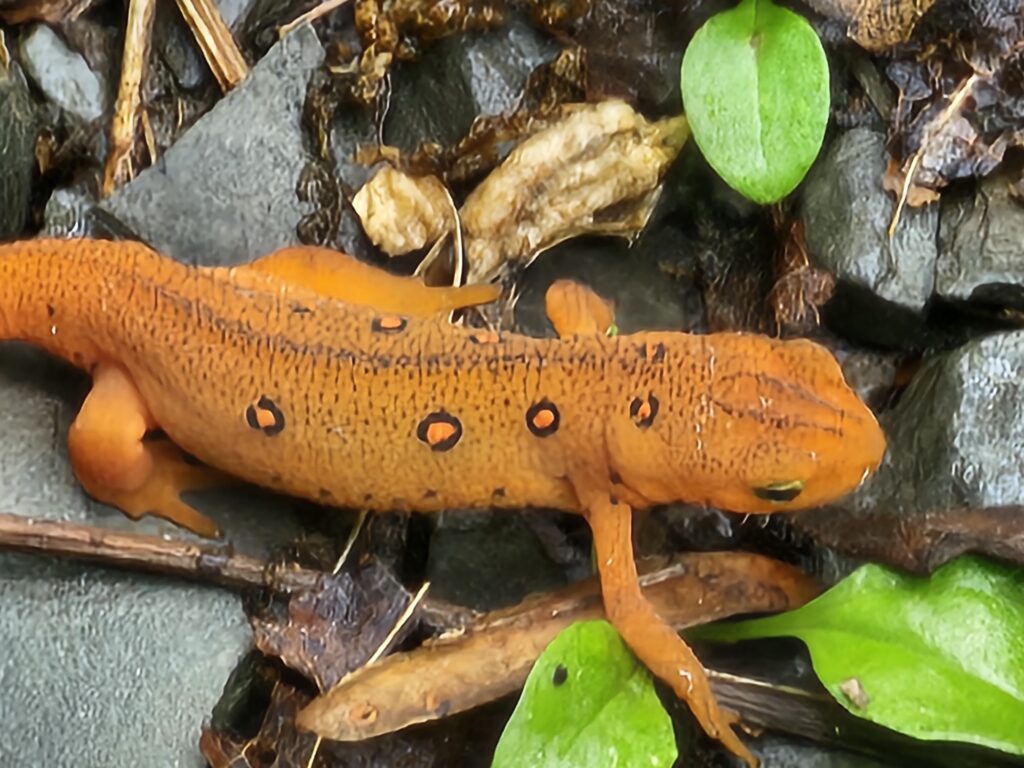
What Do Eastern Newts Eat? (Notophthalmus viridescens Diet Guide and Feeding Habits)
Quick Facts
Diet Type: Carnivore
Main Food Sources: Small invertebrates and aquatic organisms
Feeding Time: Day and night, depending on life stage
Foraging Method: Slow searching and close-range capture
Seasonal Diet Changes: Adjusts based on availability and life stage
Predatory Adaptations: Sensitive chemical detection and quick mouth capture
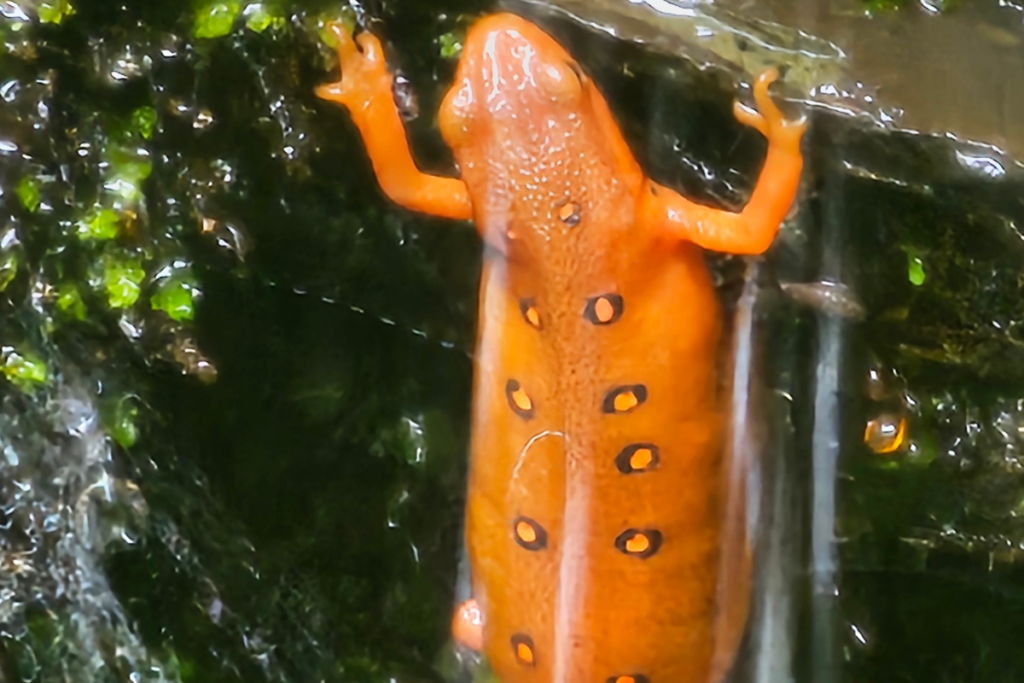
The Eastern Newt (Notophthalmus viridescens) is a small amphibian found across eastern North America, where it occupies both land and freshwater environments during different stages of its life. This wide distribution places it in a variety of ecosystems, each offering different feeding opportunities. Despite its modest size, it plays an active role as a predator within these systems.
In natural settings, the Eastern Newt is often observed in quiet, moisture-rich environments where small organisms are abundant. Whether moving across damp ground or present in shallow water, it exists in areas that support a steady supply of potential food. These conditions allow it to maintain a consistent feeding pattern throughout much of the year.
Unlike animals that rely on a single food source, the Eastern Newt is capable of feeding on a variety of small organisms. This flexibility allows it to adapt to different environments and seasonal changes without being limited to one type of prey. As a result, it remains successful across a broad geographic range.
The feeding habits of the Eastern Newt are subtle but effective, relying more on patience and precision than speed. It does not chase prey over long distances but instead takes advantage of close encounters. This approach reflects a balance between energy conservation and consistent access to food.
Eastern Newt Diet Overview and Feeding Tendencies
The Eastern Newt is a carnivorous amphibian that feeds primarily on small living organisms. Its diet is based on consuming animal matter rather than plant material, placing it firmly within the category of small-scale predators. Despite this classification, it does not specialize in a single prey type and instead shows flexibility in what it consumes.
Across its range, the species demonstrates an adaptable feeding strategy. It is capable of adjusting its diet depending on what is available in its immediate surroundings. This makes it more versatile than highly specialized predators that depend on one specific food source for survival.
Compared to some amphibians that focus on a narrow range of prey, the Eastern Newt behaves more like a generalist. This can be compared to a person eating a varied diet rather than relying on one type of food. Such flexibility allows it to maintain consistent feeding even when certain prey populations fluctuate.
Its feeding consistency is supported by its ability to remain active under a range of conditions. While some animals may experience dramatic shifts in food availability, the Eastern Newt can continue feeding by switching between available options. This adaptability contributes to its long-term survival and widespread presence.
Natural Food Sources of the Eastern North American Newt
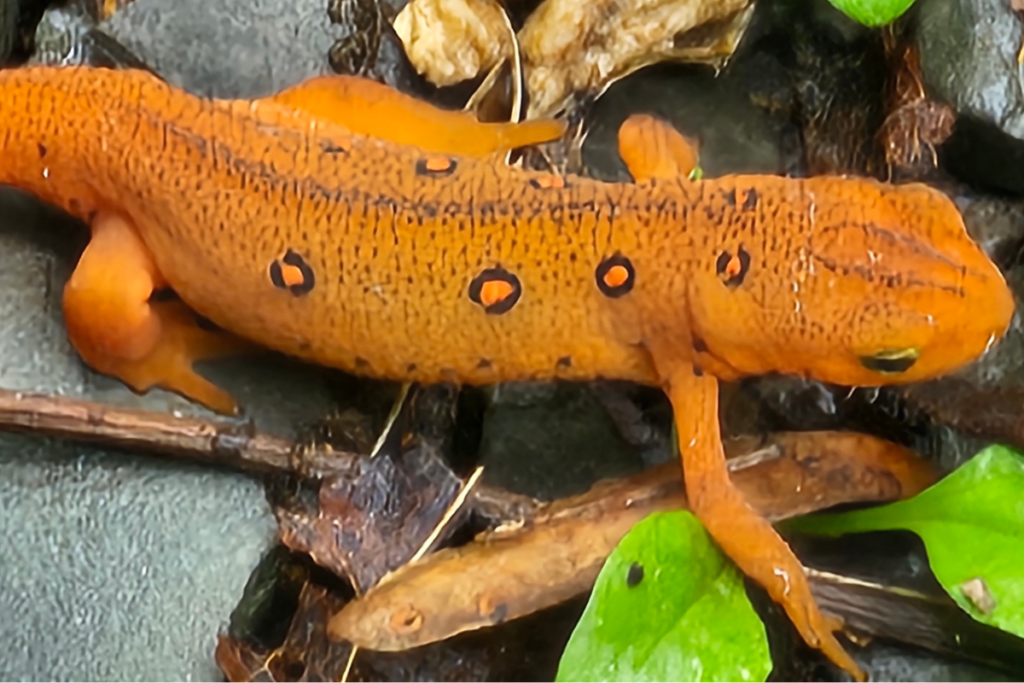
In the wild, the Eastern Newt feeds on a variety of small invertebrates that are readily available in its environment. Common food sources include insects, worms, and other tiny organisms that can be captured with minimal effort. These prey items provide the nutrients needed to support growth and daily activity.
In aquatic settings, the diet expands to include small water-dwelling organisms. Tiny crustaceans, insect larvae, and other microscopic or near-microscopic creatures become part of its feeding routine. These organisms are often abundant in shallow water, making them reliable food sources.
Diet can vary depending on life stage. Juvenile individuals that spend time on land may encounter different prey compared to aquatic adults. This shift allows the species to take advantage of different food sources throughout its development.
For example, small insect larvae are a commonly consumed food item in aquatic environments. These organisms are easy to capture and provide a concentrated source of energy. By feeding on such prey, the Eastern Newt maintains its energy levels without needing to expend large amounts of effort.
Eastern Newt Feeding Behavior and Survival Strategies
The Eastern Newt relies on a slow and methodical approach to feeding. Rather than actively chasing prey, it searches its surroundings and waits for opportunities to strike. This strategy allows it to conserve energy while still maintaining a steady intake of food.
When prey is detected, the newt uses a quick snapping motion of its mouth to capture it. This action is brief but effective, allowing it to secure food without prolonged effort. The movement is subtle and often goes unnoticed unless observed closely.
In situations where food is less abundant, the Eastern Newt adjusts by increasing its search area or taking advantage of smaller prey items. This flexibility helps it continue feeding even when conditions are not ideal. It does not rely on large or rare prey, which reduces the risk of starvation.
Competition for food is generally low due to its solitary nature and the abundance of small prey in its environment. By focusing on readily available organisms, the Eastern Newt avoids direct competition with larger predators. This approach supports its survival across a wide range of conditions.