Eastern Gray Squirrel Overview (Sciurus carolinensis) – Size, Appearance, and Key Traits
Quick Facts
Scientific Name: Sciurus carolinensis
Common Name: Eastern Gray Squirrel
Location: North America
Average Size: 16–20 inches (including tail)
Lifespan: 6–12 years in the wild
Global Range: Eastern and Central North America; introduced in parts of Europe
Conservation Status: Least Concern
Notable Feature: Large bushy tail used for balance and visual signaling
Location Observed: Pennsylvania, USA
Field Observation
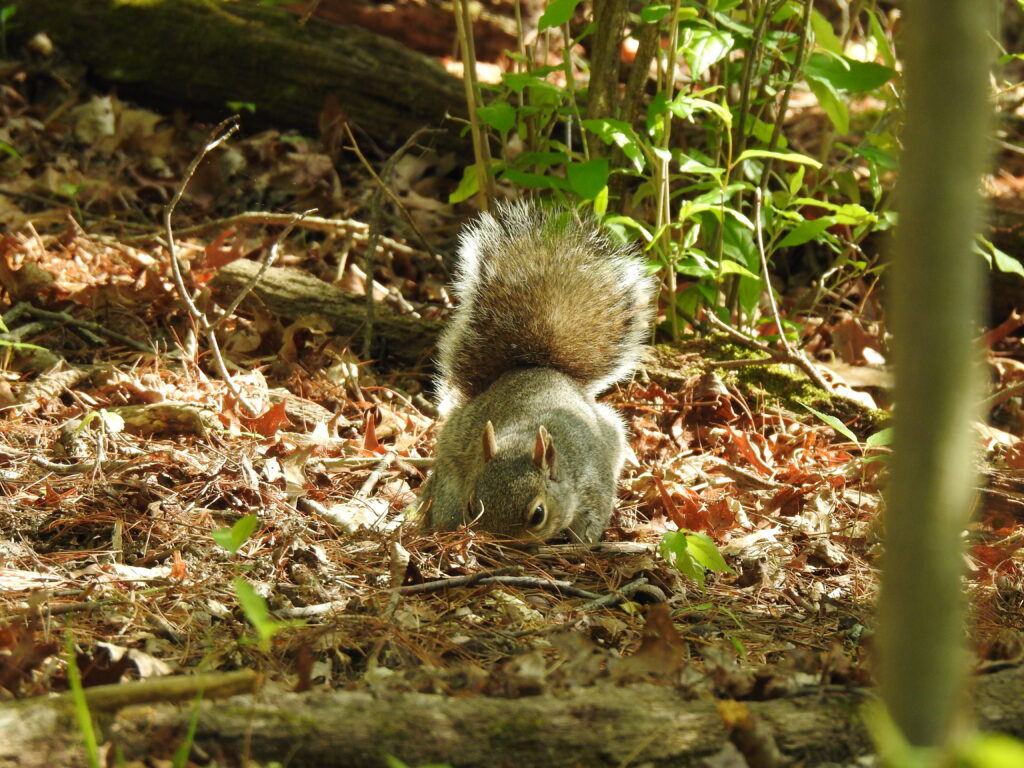
While observing this Eastern Gray Squirrel, it remained aware of its surroundings, cautious yet comfortable as it moved through the area. It spent time searching for food along the forest floor, occasionally climbing up and down nearby trees with quick, controlled movements. Between these moments, it would pause to stretch, appearing relaxed and settled within its environment.
Introduction to the Eastern Gray Squirrel Across Its Global Range
The Eastern Gray Squirrel (Sciurus carolinensis) is one of the most recognizable small mammals found throughout much of North America. Known for its upright posture and expressive face, this species often becomes one of the first wild animals people notice in wooded areas, parks, and neighborhoods. Its presence is so consistent that it has become closely associated with deciduous forests and urban green spaces alike.
Native to the eastern United States and parts of Canada, the Eastern Gray Squirrel has also been introduced to regions of Europe, where it has established thriving populations. It is commonly seen in environments where mature trees are present, particularly hardwood forests that provide seasonal changes and a visually rich backdrop. Whether in rural woodlands or suburban yards, its silhouette is instantly familiar.
In natural settings, these squirrels are often observed moving across the forest floor or pausing briefly among fallen leaves and branches. Their ability to appear suddenly, then disappear just as quickly, adds to their presence as a defining woodland species. Sunlight filtering through trees often highlights their fur, giving them a soft, almost silver appearance in certain conditions.
Despite their common status, Eastern Gray Squirrels represent a highly successful species that has adapted to a wide range of landscapes. Their widespread visibility and consistent activity make them a key part of everyday wildlife encounters, offering a glimpse into the small but active world of forest mammals.
Eastern Gray Squirrel Appearance and Physical Overview in the Wild
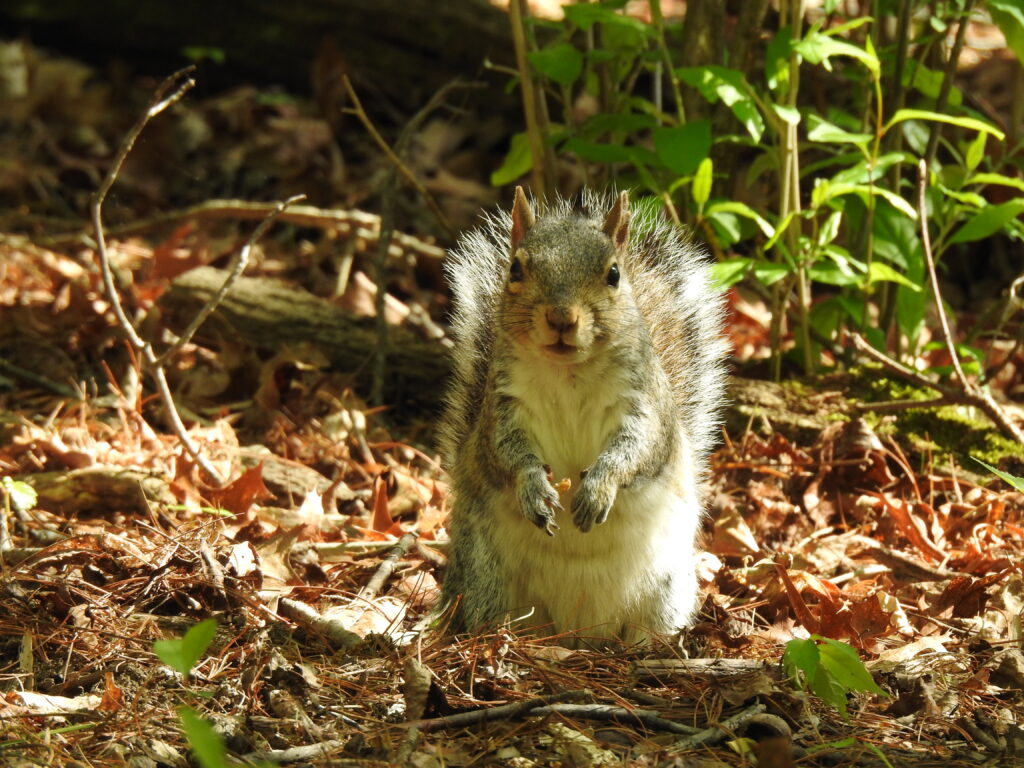
The Eastern Gray Squirrel has a compact yet slightly elongated body, with a total length that can reach up to about 20 inches when including its tail. The body itself is relatively small, often compared to the size of a standard water bottle, while the tail makes up nearly half of its overall length. This proportion gives the squirrel a balanced yet distinctive outline when viewed from a distance.
Its fur is primarily a mix of gray tones, often appearing layered with subtle hints of brown or silver depending on lighting. The underside contrasts sharply with a clean white or pale cream coloration, creating a clear visual divide along the body. In certain individuals, especially in urban areas, darker or even black color variations may appear, adding diversity to the species’ appearance.
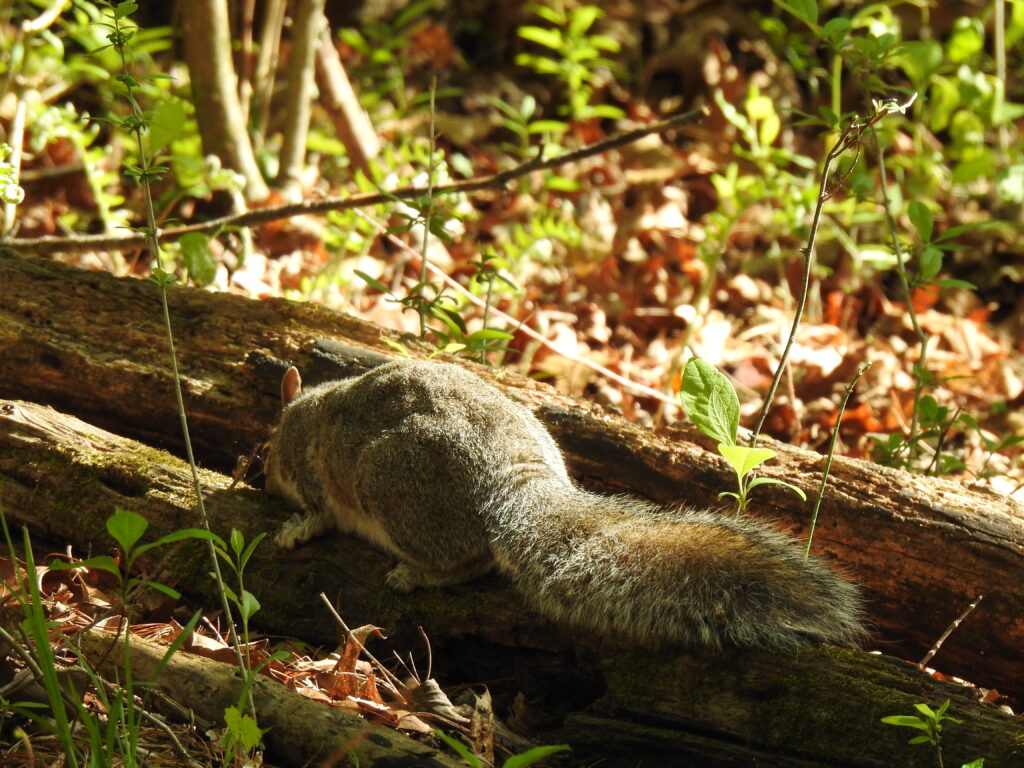
The tail is one of its most defining features, thick and full with long hairs that extend outward in all directions. When spread out, it resembles a feathered plume, catching light and movement in a way that makes it stand out against the forest floor. This tail often arches over the back or extends outward, giving the squirrel a larger visual presence than its body alone would suggest.
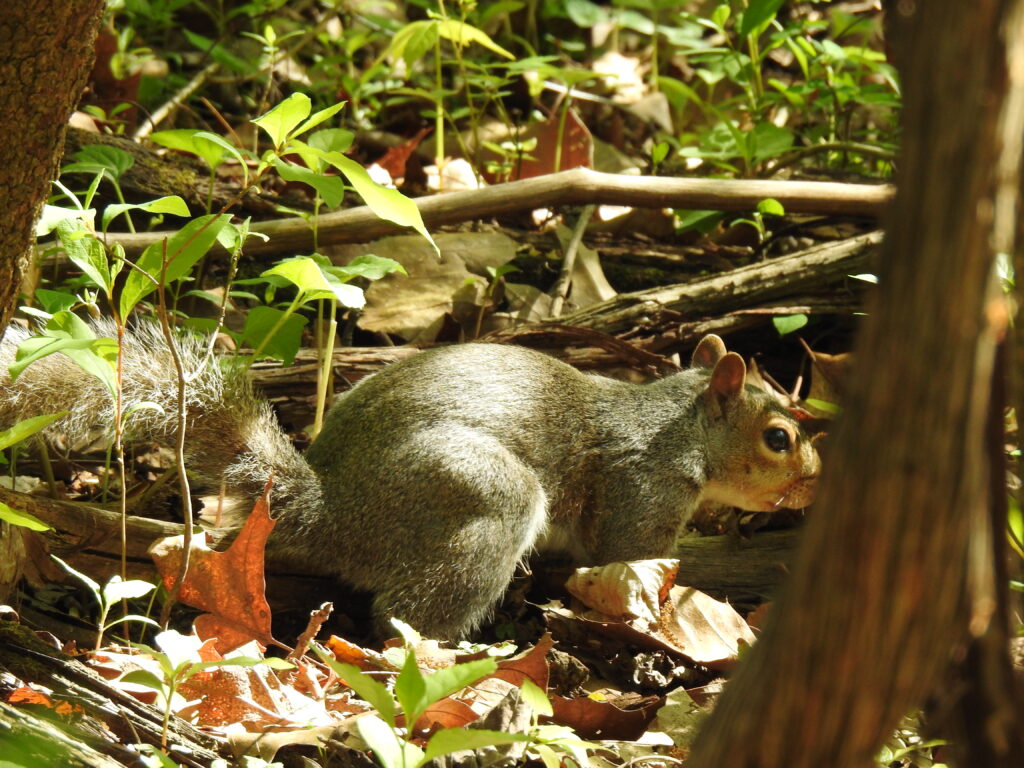
In natural settings, the Eastern Gray Squirrel blends well with leaf litter, tree bark, and shadowed ground cover. Its coloration allows it to remain subtle among fallen branches and seasonal debris, while still being visible when it moves into open light. This balance between camouflage and visibility makes it both easy to spot and surprisingly well-hidden at the same time.
Defining Eastern Gray Squirrel Characteristics and Identifying Features
One of the most noticeable characteristics of the Eastern Gray Squirrel is its proportionally large tail compared to its body size. This tail is not only long but also extremely full, giving it a rounded, almost cloud-like shape. Compared to other small mammals, this feature alone often makes identification immediate, even from a distance.
The head is relatively small with a rounded shape, featuring dark, prominent eyes that give the squirrel a constantly alert expression. Its ears are short and upright without the pronounced tufts seen in some other squirrel species. These subtle ear shapes help distinguish it from species like the American red squirrel, which often shows more defined seasonal ear tufts.
Its limbs are slender but well-developed, especially the hind legs, which appear slightly longer than the front. This gives the animal a natural crouched stance when on the ground and contributes to its ability to sit upright comfortably. When viewed in this position, it can resemble a small plush figure, especially when holding food or pausing momentarily.
Another defining feature is the texture of its fur, which appears dense yet soft, often catching highlights in sunlight. The layering of individual hairs gives the coat a slightly speckled appearance rather than a flat gray tone. This subtle detail, combined with its posture and tail shape, creates a distinct overall look that sets it apart from similarly sized rodents.
Eastern Gray Squirrel Role in the Ecosystem and Natural Balance
The Eastern Gray Squirrel plays an important role in maintaining forest ecosystems, particularly in relation to plant distribution and growth. As a common woodland species, it contributes to the movement of plant material across the landscape. Over time, this activity supports the natural spread of tree species and vegetation.
Within the broader food web, this squirrel serves as a mid-level species, connecting plant-based resources to larger predators. Birds of prey, foxes, and other carnivores rely on animals like the Eastern Gray Squirrel as part of their survival. This connection helps maintain balance within ecosystems by supporting both predator and prey populations.
Its presence also influences the structure of forest floors, as its regular movement disturbs leaves and soil in small but consistent ways. These subtle changes can affect how seeds interact with the ground and how nutrients cycle through the environment. While individually small, these repeated interactions create noticeable effects over time.
In both natural forests and developed areas, the Eastern Gray Squirrel remains a stable and consistent part of the ecosystem. Its adaptability allows it to persist even as landscapes change, ensuring that its ecological role continues. This combination of resilience and ecological importance makes it one of the most influential small mammals in its range.