Eastern Gray Squirrel Diet (Sciurus carolinensis) – What They Eat and How They Find Food
Quick Facts
Diet Type: Omnivore (primarily plant-based)
Main Food Sources: Nuts, seeds, fruits, buds, fungi, and occasional animal matter
Feeding Time: Daytime (peaks in morning and late afternoon)
Foraging Method: Ground searching, tree harvesting, and food caching
Seasonal Diet Changes: Shifts from fresh vegetation to stored and hard foods
Predatory Adaptations: Strong incisors, sharp memory for food storage, and opportunistic feeding
Introduction to Eastern Gray Squirrel Feeding Habits and Food Sources
The Eastern Gray Squirrel (Sciurus carolinensis) is a widespread species found throughout much of North America, where it is commonly observed gathering and consuming food during daylight hours. Its feeding habits are often one of the most visible aspects of its daily life, as it moves across the ground or pauses briefly while holding something in its front paws. These moments provide a glimpse into how central food gathering is to its routine.
Across its range, the Eastern Gray Squirrel encounters a wide variety of food opportunities shaped by seasonal change and regional differences. In forested areas, it interacts closely with plant life, while in suburban spaces, it adapts to additional food sources that may become available. This flexibility allows it to remain active and well-sustained in both natural and developed environments.
When seen in the wild, its feeding activity often appears deliberate and focused. It may spend extended time in one area before moving on, suggesting a pattern of searching and selection rather than random movement. Even brief pauses while eating reflect a controlled and purposeful approach to feeding.
These observations set the foundation for understanding how the Eastern Gray Squirrel approaches its diet. While it may seem simple at first glance, its feeding habits reflect a balance between opportunity, adaptation, and consistency across changing conditions.
Eastern Gray Squirrel Diet Overview and Feeding Flexibility
The Eastern Gray Squirrel is classified as an omnivore, though its diet leans heavily toward plant-based food sources. This broad classification reflects its ability to consume a range of materials depending on availability. Rather than relying on a single type of food, it adjusts its intake based on what is accessible at any given time.
Its feeding pattern is highly flexible, allowing it to thrive in environments where food availability changes throughout the year. Compared to more specialized animals, which depend on a narrow selection of resources, the Eastern Gray Squirrel can shift its diet with relative ease. This adaptability plays a major role in its success across both natural forests and human-influenced landscapes.
Across different regions, the composition of its diet may vary, but the overall pattern remains consistent. It tends to focus on widely available resources while occasionally incorporating less common items when needed. This balance between consistency and variation allows it to maintain a stable food intake without becoming dependent on any single source.
Even within a single environment, its diet can change over short periods of time. As certain food sources become more or less available, it adjusts accordingly without a noticeable disruption in activity. This ability to transition smoothly between resources highlights its role as a highly adaptable feeder within its ecosystem.
Natural Food Sources of the Eastern Gray Squirrel in the Wild
In natural environments, the Eastern Gray Squirrel relies heavily on a variety of plant-based food sources. Nuts such as acorns, hickory nuts, and walnuts are among the most important components of its diet, providing dense energy that supports its active lifestyle. These foods are often gathered directly from trees or collected from the ground after falling.
In addition to nuts, it regularly consumes seeds, fruits, and buds, which contribute to a more varied intake. Seasonal fruits can provide moisture and nutrients during warmer months, while buds and young plant growth offer alternative food sources when other options are limited. This diversity helps ensure that it has access to nutrition throughout different times of the year.
Fungi also play a role in its diet, particularly in forested environments where they grow in abundance. Mushrooms and other fungal growths can be consumed when encountered, adding another layer of variety. In some cases, the squirrel may even store these items for later use, treating them similarly to other gathered foods.
Although primarily plant-focused, the Eastern Gray Squirrel may occasionally consume small amounts of animal matter. This can include insects or other minor sources of protein when encountered. While not a dominant part of its diet, this opportunistic feeding behavior further expands its ability to adapt to available resources.
Eastern Gray Squirrel Feeding Behavior and Survival Strategies
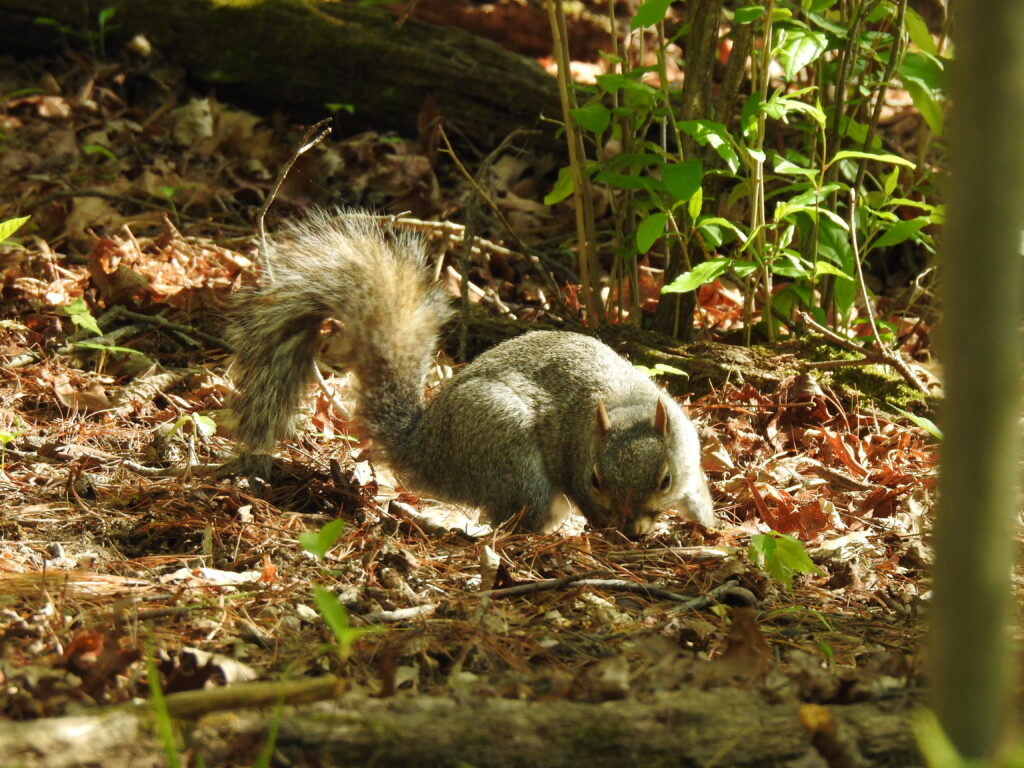
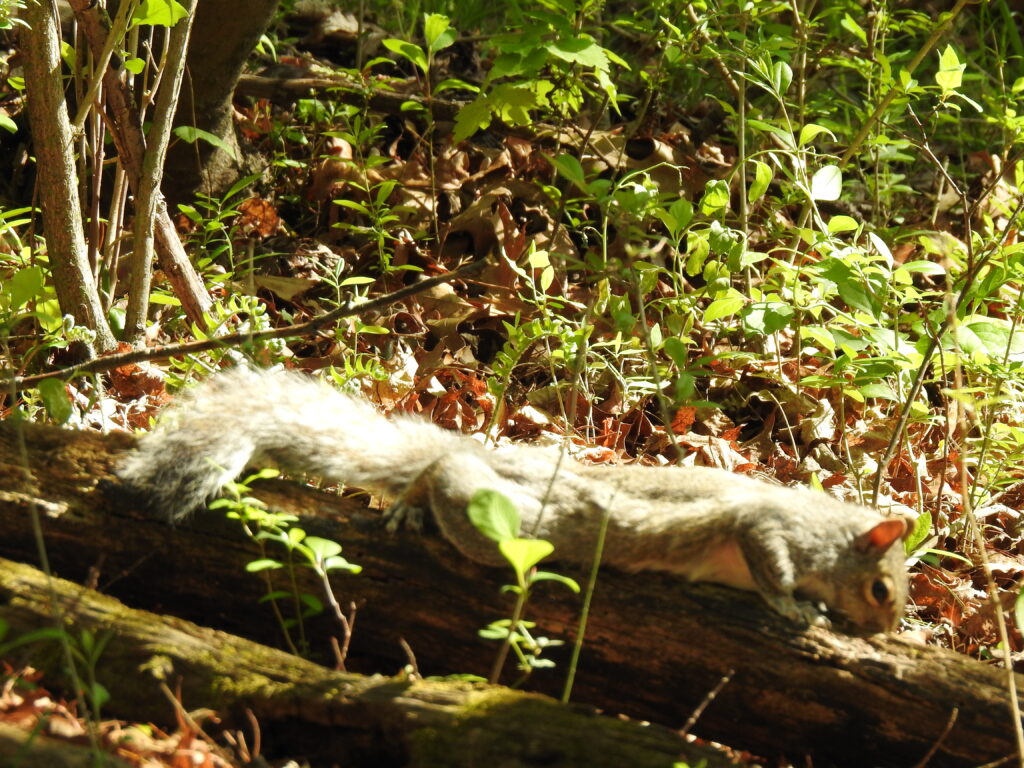
The Eastern Gray Squirrel uses a combination of searching, gathering, and storing behaviors to secure its food. It often forages along the ground, moving through leaf litter while pausing to investigate potential food sources. These movements are deliberate, with frequent stops that suggest careful selection rather than random searching.
One of its most notable feeding strategies is food caching, where it buries items for later consumption. This behavior allows it to store resources during times of abundance and retrieve them when food becomes scarce. Its ability to remember these locations, even after long periods, plays a critical role in its survival.
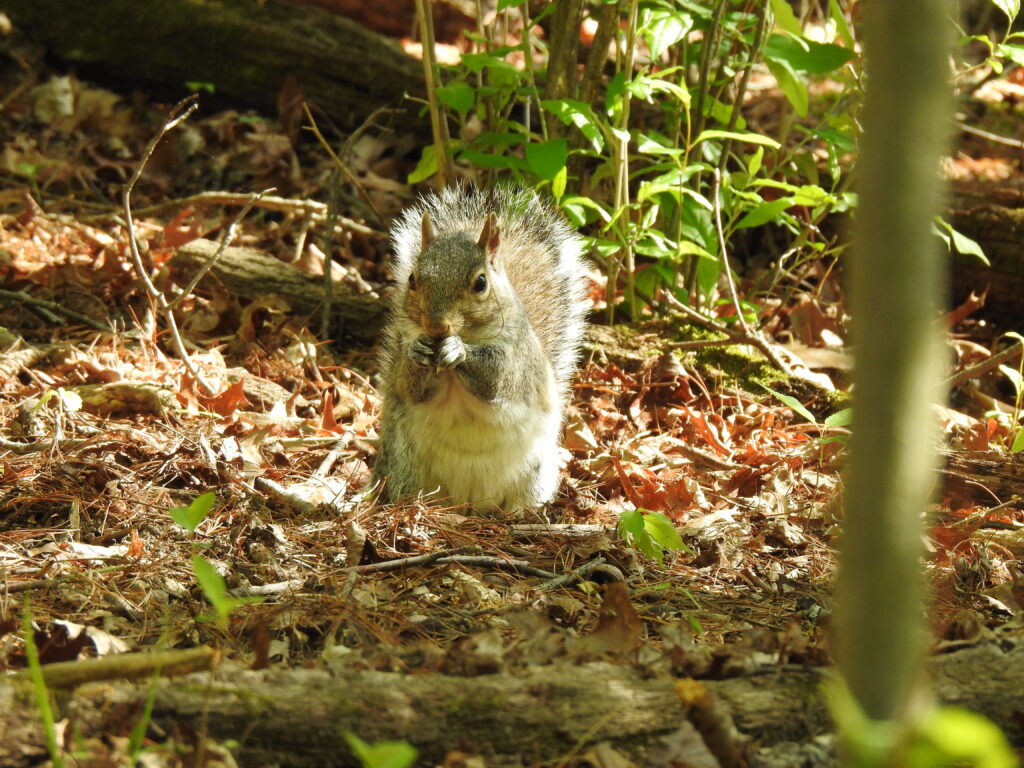
When feeding, it typically holds food in its front paws while sitting upright, allowing it to manipulate and consume items efficiently. This posture provides control and stability, especially when dealing with harder food sources that require effort to break apart. Its strong incisors are well-suited for this task, enabling it to access the contents of nuts and seeds.
In situations where food is limited, the Eastern Gray Squirrel becomes more selective and persistent in its search. It may revisit areas where food was previously found or rely more heavily on stored resources. This combination of memory, adaptability, and physical capability allows it to maintain consistent feeding behavior even under changing conditions.