Painted Turtle Overview Guide: Identification, Appearance, and Ecological Importance of Chrysemys picta
Quick Facts
Scientific Name: Chrysemys picta
Common Name: Painted Turtle
Location: Ponds, lakes, marshes, and slow-moving freshwater environments
Average Size: 5–10 inches long
Lifespan: 20–40 years
Global Range: Southern Canada and much of the United States
Conservation Status: Least Concern
Notable Feature: Bright red and yellow markings along the shell and skin
Location Observed: Pennsylvania, USA
Field Observation
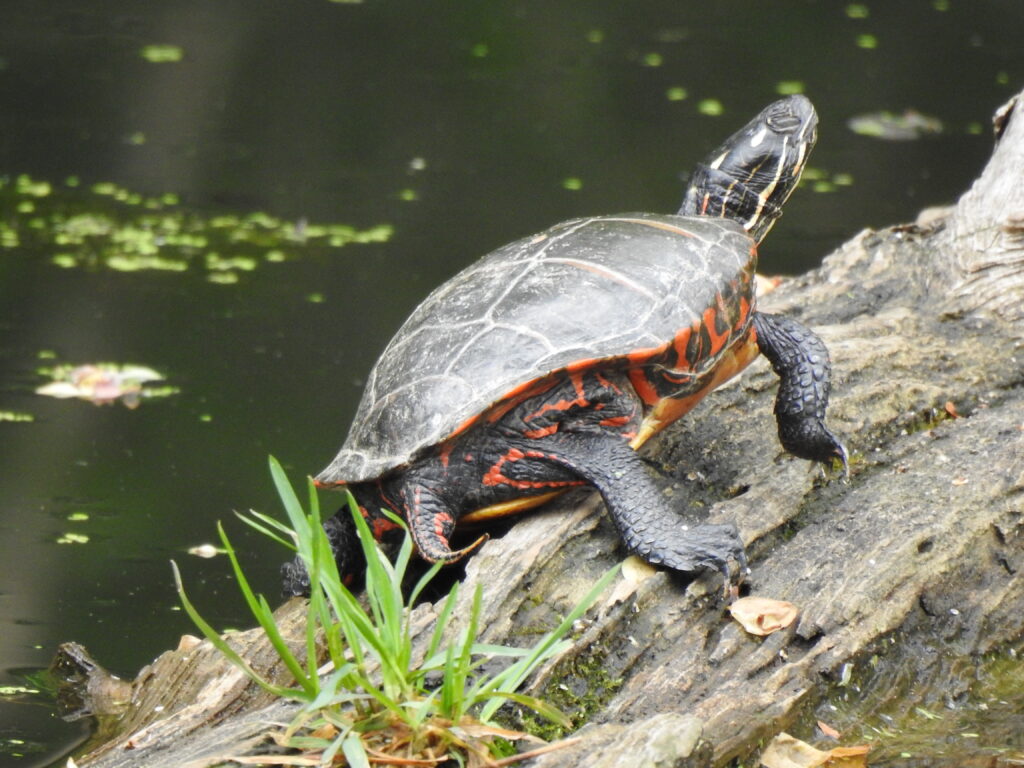
During this observation, the Painted Turtle remained motionless while basking quietly on a fallen log above the water. The turtle appeared fully relaxed as it absorbed heat from the sunlight, occasionally adjusting its posture slightly while continuing to rest. Its bright markings stood out clearly against the weathered wood and dark water surrounding it.
Introduction to the Painted Turtle Across North America
The Painted Turtle is one of the most widespread and recognizable freshwater turtles in North America. Known for its smooth dark shell and vivid red and yellow markings, the species is commonly associated with calm ponds, marshes, and shallow lakes throughout much of the United States and southern Canada. During warm weather, Painted Turtles are often seen basking on logs, rocks, or partially submerged branches near the water’s edge. Their colorful appearance and visible basking habits make them one of the easiest turtles for people to observe in the wild.
Across their range, Painted Turtles inhabit a wide variety of freshwater environments where still or slow-moving water supports aquatic vegetation and muddy shorelines. They are especially common in wetlands surrounded by reeds, floating plants, and fallen timber. In many regions, the species is familiar to hikers, anglers, and park visitors because of how frequently it appears in public ponds and nature reserves. Even heavily visited parks may support healthy Painted Turtle populations.
The species varies slightly in appearance depending on region, with different subspecies displaying unique shell and coloration patterns. Northern populations may appear darker overall, while some western forms show brighter and more extensive red markings beneath the shell. Despite these regional differences, most Painted Turtles share the same recognizable combination of striped skin and smooth rounded shells. Their striking color patterns stand out strongly against dark water and weathered logs.
Painted Turtles are strongly connected to freshwater landscapes shaped by seasonal environmental changes. In spring and summer, basking turtles line exposed logs under direct sunlight, while cooler seasons bring quieter activity around ponds and marshes. Their presence contributes heavily to the familiar appearance of wetland ecosystems throughout much of North America. Few freshwater reptiles are as widely recognized or visually distinctive as the Painted Turtle.
Painted Turtle Appearance and Distinctive Color Patterns
The overall appearance of the Painted Turtle combines smooth shell structure with vivid coloration rarely matched by other freshwater turtles. The upper shell, known as the carapace, is typically dark olive, black, or grayish brown with subtle line patterns following the shell plates. Around the edges, bright red or orange markings create sharp contrast against the darker shell surface. These colorful borders often appear especially vibrant when the turtle is wet or basking in sunlight.
Adult Painted Turtles are medium-sized reptiles, usually measuring between five and ten inches in shell length. Their bodies are low and streamlined rather than heavily domed, giving them a flatter appearance compared to box turtles. When viewed from above, the shell shape resembles a smooth oval stone resting on the water’s surface. This sleek structure contributes to the turtle’s clean and balanced profile.
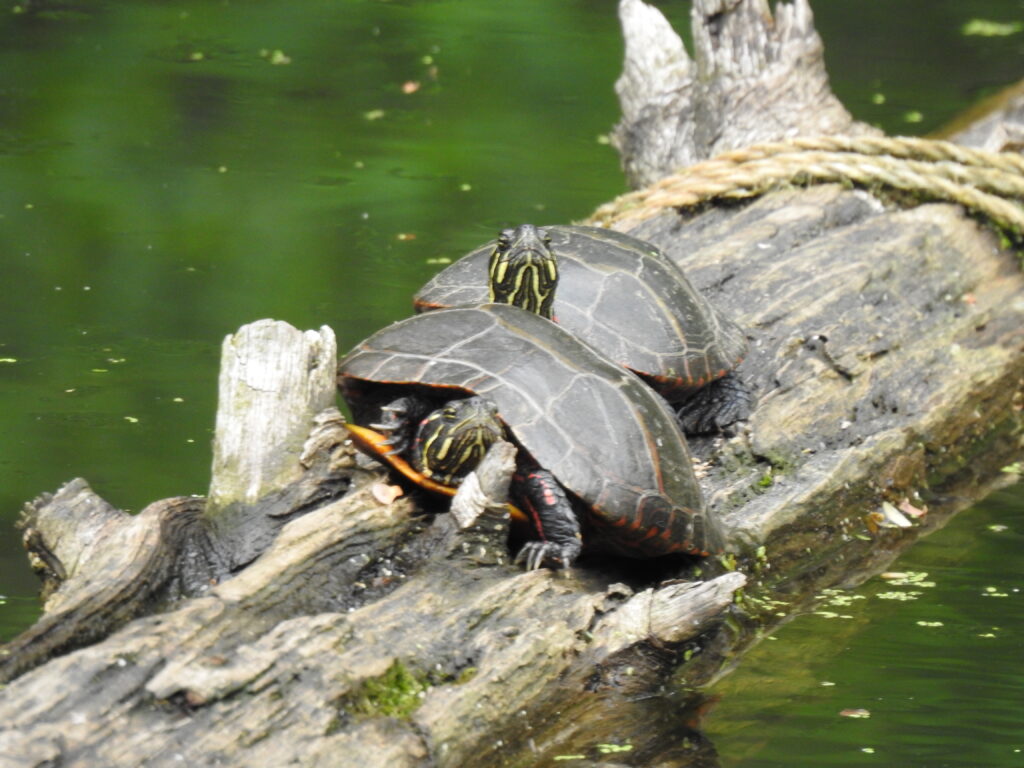
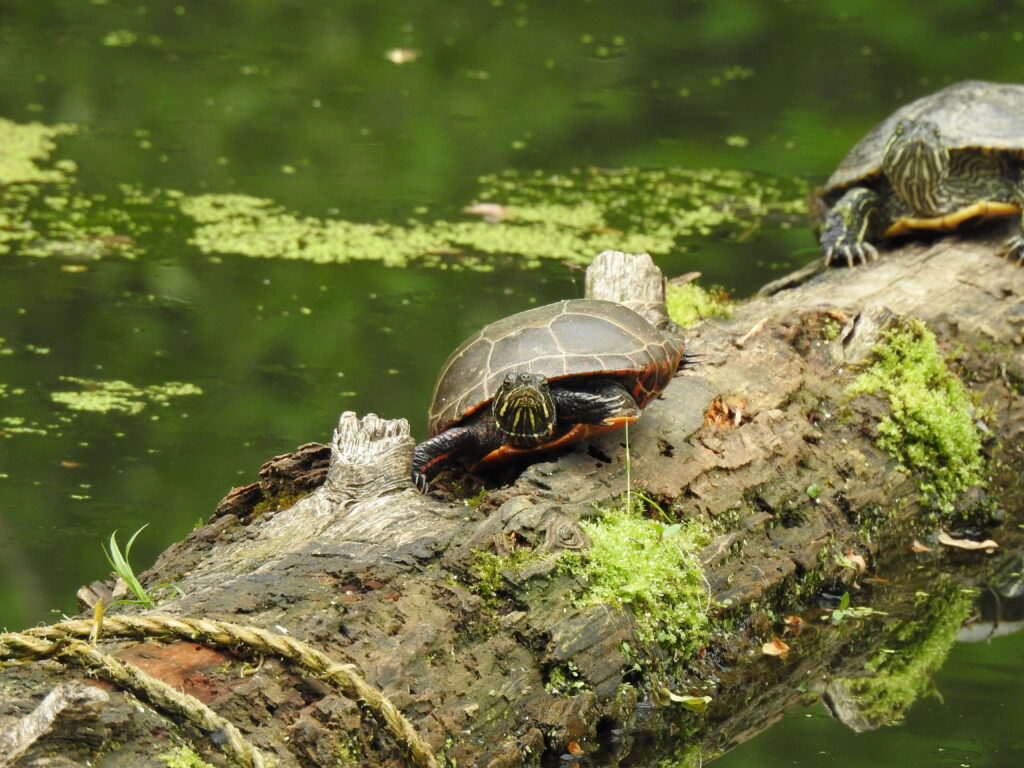
The skin features bold yellow striping across the head, neck, legs, and tail. Thin lines extend from the snout backward across the face, creating a highly recognizable pattern. In some individuals, red coloration also appears along portions of the limbs and lower shell. These markings help distinguish Painted Turtles from similar species such as sliders or map turtles, which often display different facial patterns and shell textures.
Underneath the turtle, the plastron can contain intricate yellow, orange, and reddish designs that vary between individuals and subspecies. Some turtles display large symmetrical blotches, while others show finer swirling patterns resembling brush strokes or ink markings. The bright underside contrasts sharply with the darker upper shell, creating one of the most colorful appearances among North American freshwater turtles. In direct sunlight, these patterns can appear almost painted by hand, contributing to the species’ common name.
Recognizable Painted Turtle Features and Physical Traits
Several defining characteristics make the Painted Turtle immediately recognizable among freshwater reptiles. One of the most noticeable features is the smoothness of the shell compared to rougher or heavily ridged turtle species. Unlike snapping turtles, which possess rugged shells and jagged tails, Painted Turtles appear streamlined and polished. Their cleaner shell shape gives them a more refined appearance within wetland environments.
The shell margins contain bright red or orange coloration that often glows against dark backgrounds. When the turtle rests on a weathered log, these markings can resemble thin painted stripes along the edge of black armor. This contrast becomes especially visible during sunny conditions when the shell dries slightly and colors intensify. Even partially submerged turtles may reveal flashes of red beneath the shell edges.
The head and facial markings are also highly distinctive. Yellow lines stretch across the face in smooth parallel patterns that resemble fine brush strokes or decorative pinstriping. Unlike the large red ear patch seen on the Red-eared Slider, Painted Turtles usually show thinner and more evenly distributed facial striping. Their smaller, cleaner markings create a more subtle appearance around the eyes and jaw.
Another unique physical characteristic involves the turtle’s balanced proportions. The legs, shell, and head all appear proportionate rather than oversized or heavily armored. This creates a graceful profile both in water and while basking. Compared to bulky snapping turtles or highly domed box turtles, Painted Turtles often appear lighter and more elegant in overall form.
Ecological Importance of the Painted Turtle in Freshwater Ecosystems
The Painted Turtle plays an important role within freshwater ecosystems across North America. As a widespread aquatic reptile, it contributes to ecological balance within ponds, wetlands, lakes, and marshes. Its presence reflects healthy freshwater environments capable of supporting diverse plant and animal life. Because Painted Turtles are long-lived and closely tied to aquatic habitats, they are often considered indicators of stable wetland systems.
Within the food web, Painted Turtles occupy a middle ecological position connecting multiple levels of the ecosystem. Young turtles and eggs may become prey for raccoons, herons, fish, snakes, and other predators. Adult turtles face fewer threats because of their hard shells, though larger predators may still target them occasionally. These predator-prey relationships help maintain balance within freshwater communities.
Painted Turtles also contribute to nutrient cycling within aquatic environments. Their interaction with vegetation, organic matter, and aquatic organisms helps redistribute nutrients through ponds and marshes. In shallow wetlands filled with decaying leaves and algae, turtles become part of the broader process that supports freshwater productivity. Wetland ecosystems often depend on many interconnected species functioning together, and Painted Turtles represent one visible part of that network.
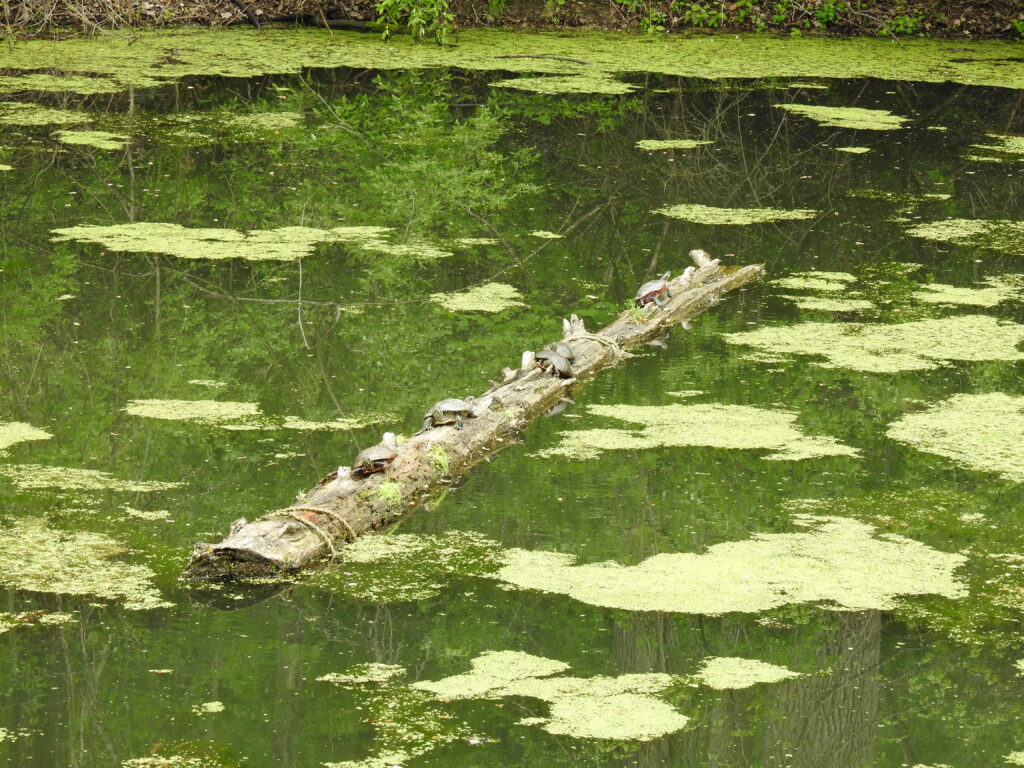
Beyond their ecological role, Painted Turtles are among the most recognizable reptiles encountered by people exploring wetlands and parks. Their habit of basking openly on logs makes them highly visible educational ambassadors for freshwater conservation. Observing multiple turtles lined across fallen timber is a familiar sight in many North American ponds during warmer months. Because of their widespread distribution and approachable appearance, Painted Turtles help connect people to the importance of preserving wetlands and freshwater habitats.
Observation Location
Observed in Nixon Park Nature Center, Pennsylvania, USA
Popular Searches About Painted Turtle
Explore Painted Turtle Guide
Explore More Wildlife

Support Encounters World
Help support wildlife photography and get behind the scenes discoveries on Patreon.