
Big-Headed Ground Beetle: Identification, Size, Range, and Overview Guide
Quick Facts
Scientific Name: Scarites sp.
Common Name: Big-Headed Ground Beetle
Location: Forests, grasslands, fields, and disturbed soils
Average Size: 0.75–1.50 inches (19–38 mm)
Lifespan: 1–3 years
Global Range: North America and related species worldwide
Conservation Status: Not Evaluated
Notable Feature: Enlarged head with powerful digging mandibles
Location Observed: Pennsylvania, USA
Field Observation
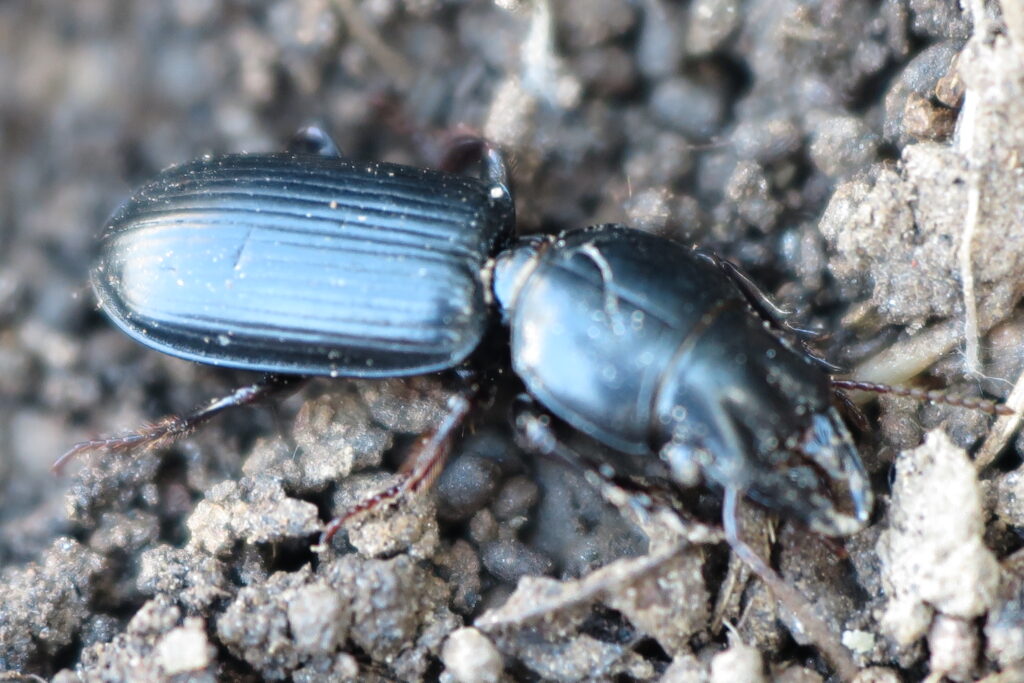
I observed this Big-Headed Ground Beetle resting beneath a rock, remaining completely still within the cool shade below the surface. The beetle appeared calm and concealed, using the cover of the rock as protection while avoiding direct sunlight. Its motionless posture and hidden location demonstrated the secretive nature of this species.
Big-Headed Ground Beetle Introduction and Geographic Range
The Big-Headed Ground Beetle (Scarites sp.) is one of the most distinctive members of the ground beetle family due to its broad head, heavy jaws, and glossy black appearance. Although it spends much of its life hidden beneath soil or debris, it occasionally emerges where people can observe its unusual shape. Encounters with these beetles often leave a lasting impression because of their armored appearance and oversized head.
Species within the genus Scarites occur across large portions of North America, with related species distributed throughout other parts of the world. Their range includes eastern forests, agricultural regions, grasslands, and open landscapes where suitable soil conditions exist. Because they spend much of their lives concealed, they are likely more widespread than observation records suggest.
A person walking along a trail after rain or turning over a board in a garden may suddenly encounter one of these beetles moving through loose soil. Their shiny black bodies often stand out against lighter dirt or leaf litter, making them easy to notice despite their secretive nature. The sight of their enlarged jaws immediately separates them from many other insects.
Finding a Big-Headed Ground Beetle can feel similar to discovering a small piece of excavation equipment beneath the ground. The insect appears heavily built and purposefully designed, with every body part contributing to its unusual shape. This distinctive form has made the beetle one of the most recognizable members of the ground beetle family.
Big-Headed Ground Beetle Appearance and Physical Features
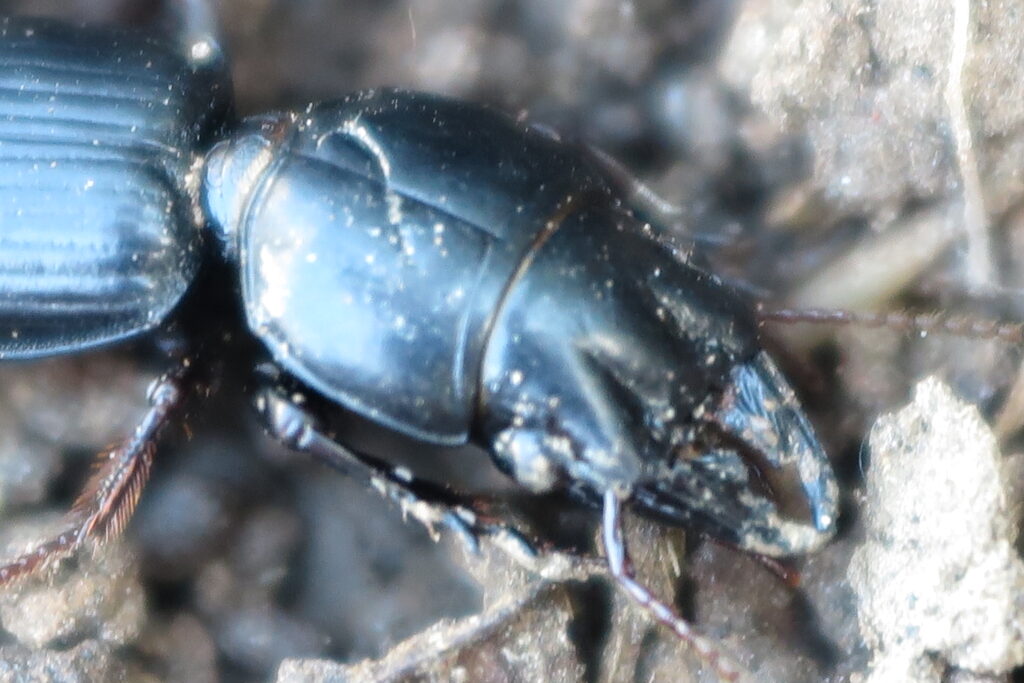
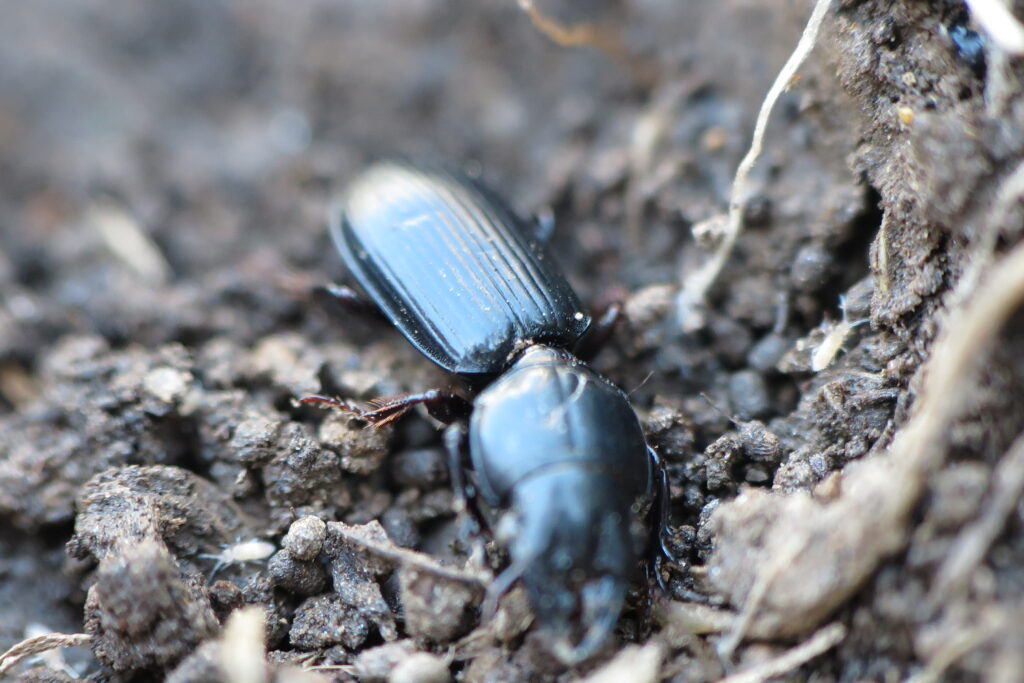
The most obvious feature of the Big-Headed Ground Beetle is its unusually large head. In many beetle species, the head appears relatively small compared to the body, but Scarites species possess a broad head that dominates the front of the insect. This feature gives the beetle a powerful appearance that immediately attracts attention.
Most individuals display a smooth black coloration that may appear dark brown under certain lighting conditions. The hardened wing covers contain deep grooves that run from front to back, producing a textured appearance across the surface. When exposed to sunlight or camera flash, the exoskeleton often develops a glossy sheen that highlights the beetle’s contours.
Adult beetles generally reach lengths between three-quarters of an inch and one and a half inches. A mature individual is roughly comparable to a house key, a USB drive, or a small pocketknife in length. Their bodies remain relatively low to the ground, giving them a compact and durable appearance.
The front portion of the body appears wider than the rear, producing a shape that resembles heavy machinery or construction equipment. The enlarged pronotum behind the head contributes to this muscular appearance. Viewed from above, the beetle looks almost like a miniature bulldozer designed for life beneath the soil surface.
Big-Headed Ground Beetle Defining Characteristics
The head remains the most important feature for identification. Few other North American beetles possess such an enlarged and heavily developed head capsule. This characteristic alone often allows naturalists to distinguish Scarites from other black beetles found in similar environments.
The mandibles are equally impressive. These large jaws project forward and create an appearance similar to small pincers or forceps. Compared to the mouthparts of many beetles, the mandibles of the Big-Headed Ground Beetle appear especially robust, contributing to its intimidating appearance.
The front legs display additional adaptations that make the species easy to recognize. Thick segments and strong spines allow the beetle to move through loose soil and debris efficiently. These legs resemble small digging tools and contribute to the beetle’s distinctive profile.
Another characteristic is the overall body texture. Unlike many beetles that possess colorful markings, metallic patterns, or decorative spots, the Big-Headed Ground Beetle remains relatively simple in coloration. Its appearance relies on structure rather than color, allowing the head, jaws, and body proportions to become the defining features.
Big-Headed Ground Beetle Role Within Ecosystems
The Big-Headed Ground Beetle occupies an important position within terrestrial ecosystems. Although it spends much of its life hidden underground, it contributes to the balance of soil communities and invertebrate populations. Its presence reflects the complex interactions that occur beneath the surface of forests, fields, and grasslands.
Within the food web, the beetle serves as both predator and prey. Larger animals such as birds, reptiles, amphibians, and small mammals may occasionally feed upon these insects, while the beetles themselves influence populations of smaller soil organisms. This intermediate position helps transfer energy between different levels of the ecosystem.
Ground beetles are often considered beneficial members of natural communities because they contribute to ecological stability. Their presence helps maintain balanced invertebrate populations while supporting the diversity of underground ecosystems. Healthy beetle populations frequently indicate that soil communities remain productive and functioning properly.
The ecological role of the Big-Headed Ground Beetle can be compared to a patrol officer working beneath the surface. Although rarely observed, it contributes to the regulation of numerous smaller organisms within the soil environment. Through its participation in the food web and its interactions with other species, this beetle helps maintain the health and stability of the ecosystems it inhabits.
Observation Location
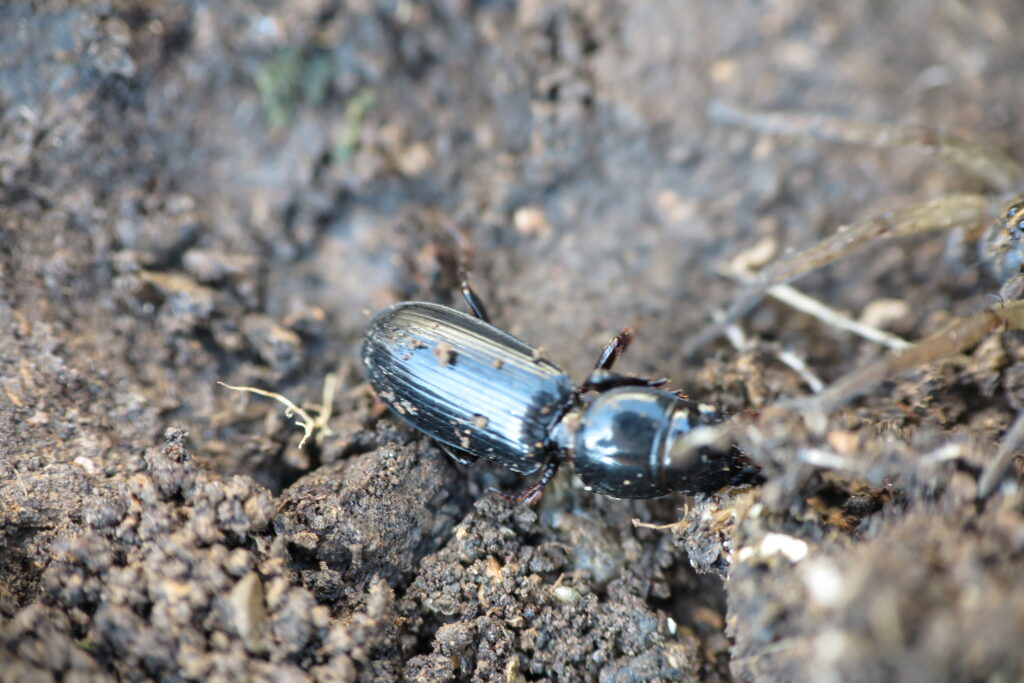
Observed in York County, Pennsylvania, USA
Popular Searches About Ground Beetles
Explore Ground Beetle Guide
Explore More Wildlife

Support Encounters World
Help support wildlife photography and get behind the scenes discoveries on Patreon.