
Big-Headed Ground Beetle Diet: Food Sources, Hunting Habits, and Feeding Behavior
Quick Facts
Diet Type: Carnivore
Main Food Sources: Insects, larvae, worms, and other soil invertebrates
Feeding Time: Primarily Nighttime
Foraging Method: Active Hunting and Ambush Predation
Seasonal Diet Changes: Influenced by prey availability and temperature
Predatory Adaptations: Large mandibles and strong sensory organs
Big-Headed Ground Beetle Feeding Ecology and Dietary Introduction
The Big-Headed Ground Beetle (Scarites sp.) occupies an important position among the predatory insects that live close to the ground. Distributed across portions of North America, these beetles spend much of their lives beneath the soil surface where they participate in the complex food webs of forests, fields, and open landscapes. Although people rarely witness their feeding habits directly, they are highly effective hunters within their environment.
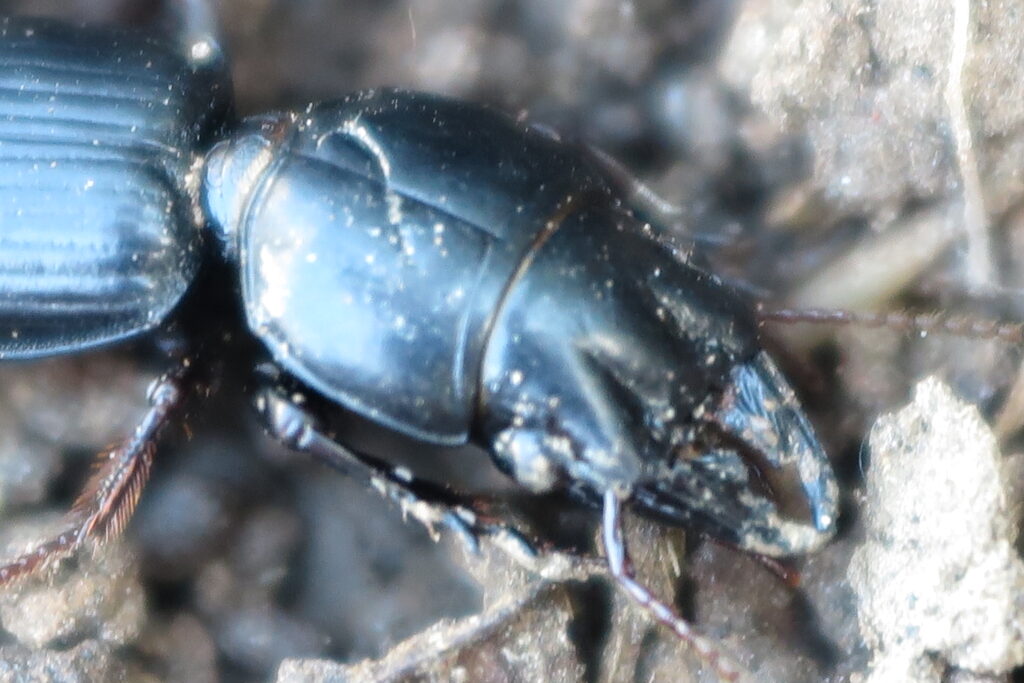
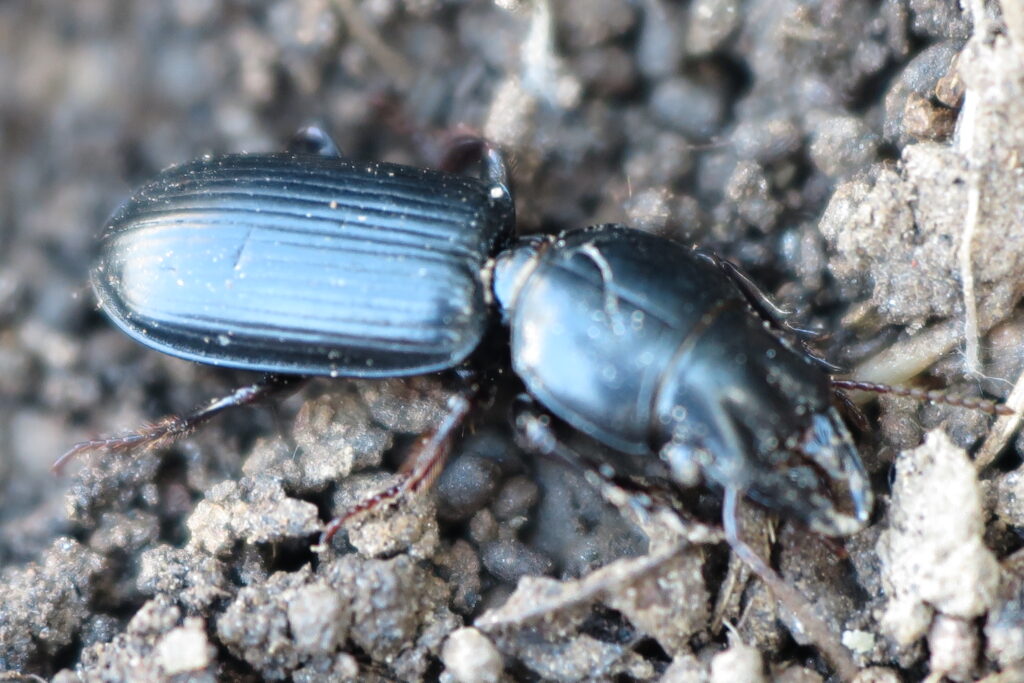
Unlike many beetles that consume plants, pollen, or decaying material, members of the genus Scarites rely on animal prey for survival. Their enlarged heads and strong jaws immediately suggest an insect designed for capturing and processing other organisms. These physical features provide clues to their feeding lifestyle long before actual hunting behavior is observed.
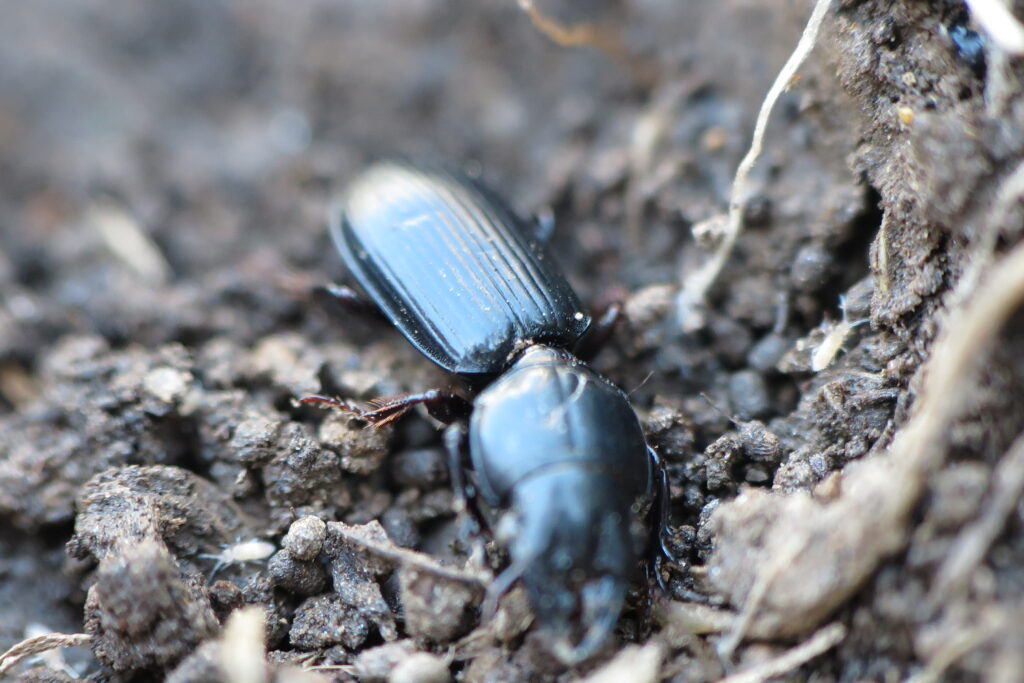
Many encounters with Big-Headed Ground Beetles occur beneath rocks, logs, or loose soil where the insects remain hidden during daylight hours. Beneath these protected locations exists a world of smaller invertebrates that supports numerous predators. The beetle functions as one of the larger hunters within these underground communities.
The feeding ecology of the species resembles that of a nocturnal predator patrolling beneath the surface. While larger animals hunt above ground, Big-Headed Ground Beetles search for opportunities within the soil and debris layer. Their diet influences both their behavior and their role within local ecosystems.
Big-Headed Ground Beetle Diet and Feeding Strategy
The Big-Headed Ground Beetle is classified as a carnivore. Rather than feeding on vegetation or decomposing organic material, it obtains nutrition by consuming other animals. This dietary specialization places the species among the predatory members of the ground beetle family.
Across its range, the beetle maintains a relatively consistent feeding strategy. While prey species may vary from one region to another, the overall dependence on animal food remains stable. This consistency allows the species to occupy similar ecological roles in many different environments.
Compared to omnivorous insects that consume both plants and animals, Scarites species display a more specialized diet. Their enlarged jaws and heavily developed head reflect adaptations associated with capturing prey rather than processing vegetation. These features separate them from many other beetles that possess broader feeding habits.
The beetle’s feeding strategy can be compared to that of a small mammalian predator. Just as a shrew hunts insects and worms beneath leaf litter, the Big-Headed Ground Beetle searches for suitable prey within the soil. This predatory lifestyle contributes to the regulation of numerous smaller invertebrates.
Although the specific prey available may differ among regions, the beetle remains highly dependent upon living animal food sources. This specialization influences its activity patterns, physical structure, and ecological importance. The species succeeds not because it consumes many different foods, but because it effectively captures suitable prey.
Big-Headed Ground Beetle Natural Food Sources
Earthworms represent one of the most frequently reported prey items for many Scarites species. These soft-bodied animals provide substantial nutrition and are commonly encountered within the same underground environments occupied by the beetles. The strong mandibles allow the beetle to subdue prey that may approach its own size.
Various insect larvae also contribute to the diet. Beetle grubs, caterpillars, and other immature insects living within the soil become potential food sources. These prey items supply protein and energy that support growth, maintenance, and reproduction.
Smaller ground-dwelling insects frequently become prey as well. Ants, smaller beetles, and various soft-bodied invertebrates may all be consumed when opportunities arise. The availability of prey often changes seasonally, causing local diets to vary according to conditions.
Young beetles may consume smaller prey items than fully grown adults. Juveniles possess smaller mandibles and reduced strength, limiting the size of prey they can successfully capture. As individuals mature, they become capable of subduing larger and more challenging food sources.
A single earthworm or large larva may provide a substantial meal compared to numerous smaller insects. These larger prey items can support the beetle for extended periods, reducing the need for constant hunting. The ability to utilize a variety of invertebrate prey helps maintain dietary stability throughout changing environmental conditions.
Big-Headed Ground Beetle Feeding Behavior and Survival
The Big-Headed Ground Beetle locates food through a combination of sensory detection and active searching. Antennae help the beetle investigate its surroundings and identify potential prey within the soil or beneath debris. Chemical signals, movement, and physical contact all contribute to successful prey detection.
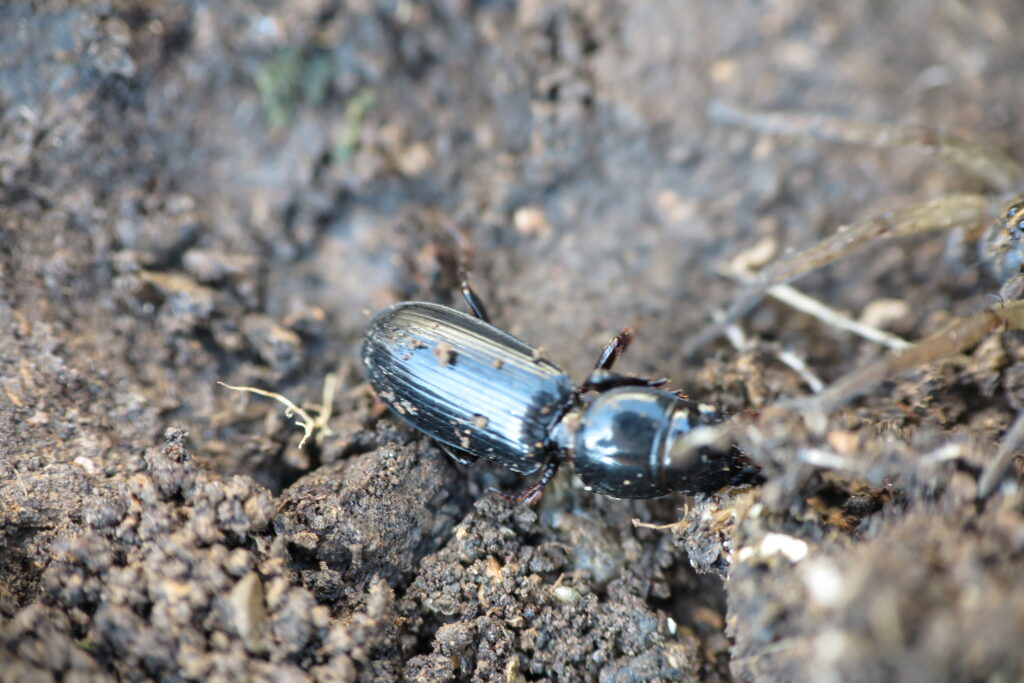
Many individuals hunt beneath the surface where prey remains concealed from larger predators. The beetle moves through loose soil and underground spaces while searching for opportunities. This hidden hunting environment reduces competition from many other insect predators.
The large mandibles play a central role during prey capture. Once prey is located, these powerful jaws allow the beetle to seize and restrain struggling animals. The enlarged head houses the muscles necessary to operate these mandibles effectively, providing a major advantage during feeding.
A useful comparison can be made to a fox hunting beneath snow. Both predators often rely on hidden prey that cannot be seen directly. Instead, they depend upon sensory information and precise movements to locate opportunities beneath the surface.
Competition for prey can occur with other predatory insects and ground-dwelling hunters. However, the beetle’s underground lifestyle reduces direct competition with many larger predators. Its ability to exploit concealed environments allows access to food sources that remain unavailable to numerous other animals.
During periods when prey becomes less abundant, the beetle conserves energy by reducing unnecessary activity. Rather than continuously searching, individuals may remain hidden until conditions improve. This strategy helps balance energy expenditure with food availability and contributes to the long-term survival of the species.
Through its predatory behavior, specialized anatomy, and efficient hunting methods, the Big-Headed Ground Beetle serves as an important carnivore within ground-level ecosystems. Its feeding habits influence smaller invertebrate populations while supporting the ecological balance of the environments it inhabits.
Popular Searches About Ground Beetles
Explore Ground Beetle Guide
Explore More Wildlife

Support Encounters World
Help support wildlife photography and get behind the scenes discoveries on Patreon.