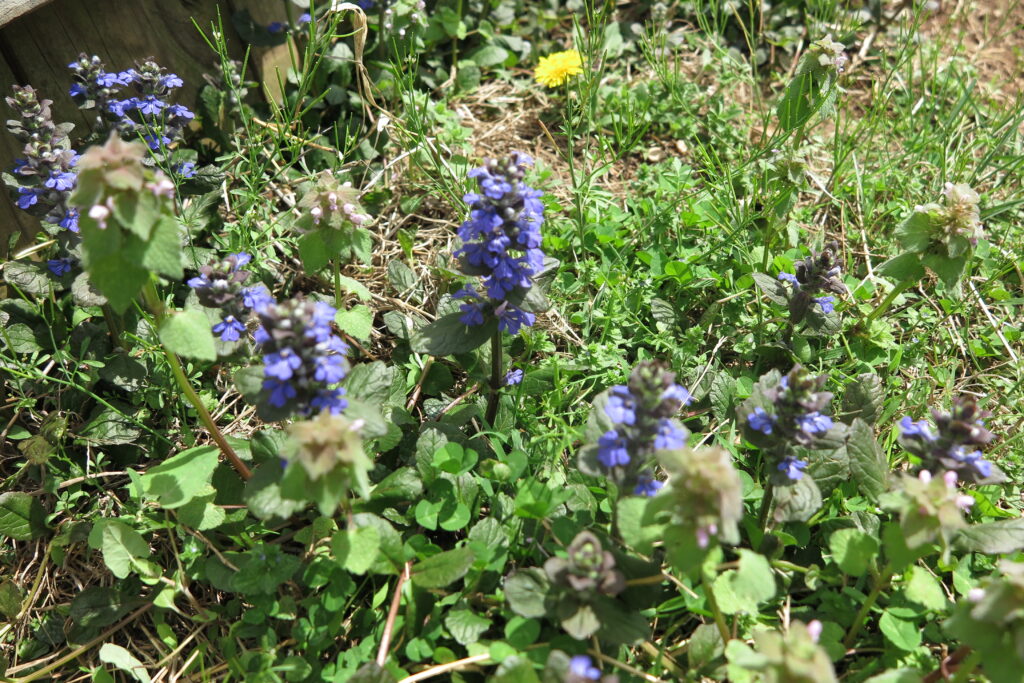
Bugleweed Growth and Behavior: Life Cycle, Spread, and Seasonal Changes (Ajuga reptans)
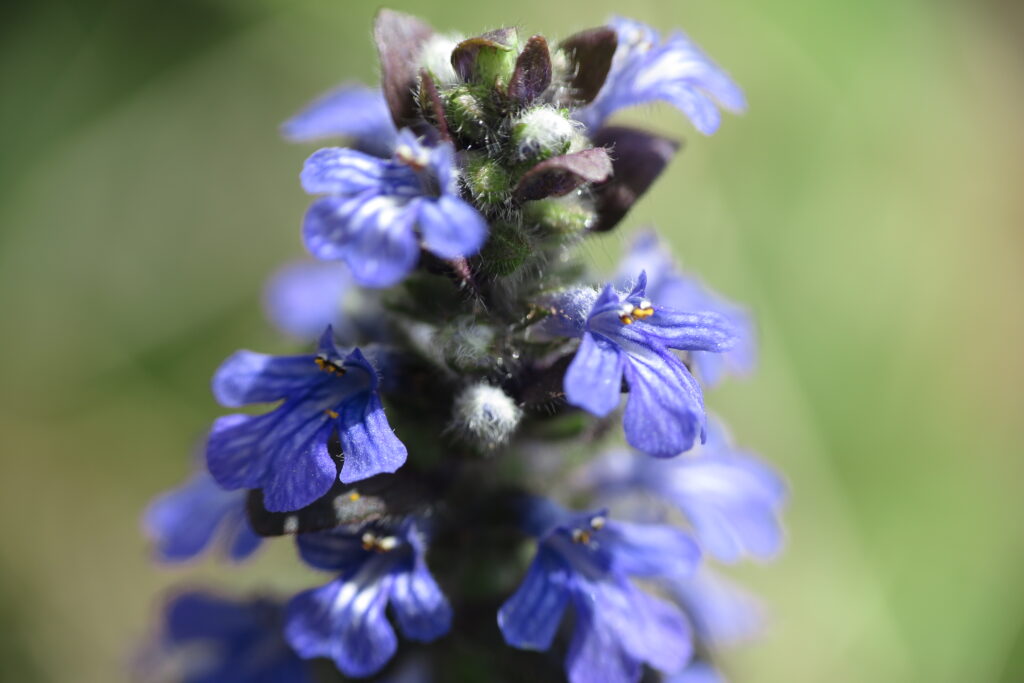
Quick Facts
Growth Rate: Moderate to fast
Growth Pattern: Spreading, mat-forming
Reproduction Method: Runners (stolons), seeds
Dormancy Period: Semi-evergreen (partially dormant in winter)
Sunlight Response: Full sun to partial shade, shade tolerant
Water Needs: Moderate
Pollination Type: Insects (primarily bees)
Seasonal Changes: Evergreen in mild conditions, foliage may darken or die back in colder seasons
Location Observed: Pennsylvania
Bugleweed (Ajuga reptans) is a low-growing perennial known for its ability to form dense, spreading ground cover while producing striking vertical flower spikes. Its combination of horizontal expansion and upright blooms creates a layered growth style that sets it apart from many other ground-level plants.
Native to Europe and western Asia, this species has been widely introduced to new regions where it is commonly found in managed landscapes and occasionally in naturalized areas. Its adaptability has allowed it to establish itself beyond its original range, making it a recognizable presence in a variety of settings.
When observed closely, bugleweed forms a patchwork of tightly clustered leaves, with bursts of vertical color rising above the foliage during its active phase. This contrast between low growth and upward flowering gives the plant a distinct visual rhythm throughout the season.
Bugleweed Overview: Growth Patterns and Development Characteristics
Bugleweed exhibits a growth style that emphasizes coverage and continuity rather than height. It expands outward across the ground, forming a connected network of foliage that gradually fills available space. This approach allows it to establish a consistent presence without relying on vertical dominance.
Its development follows a steady and predictable pattern. New growth emerges close to the ground, extending outward while maintaining a compact form. Over time, this creates a dense mat that can cover large areas, giving the plant a cohesive and unified appearance.
Adaptability is a defining characteristic of bugleweed’s growth. It adjusts to varying conditions by maintaining its spreading habit, ensuring that it continues to develop even as external factors shift. This flexibility allows it to persist across different environments while retaining its structural identity.
Overall, bugleweed demonstrates a balanced growth strategy. It combines gradual expansion with seasonal bursts of vertical development, creating a dynamic yet stable pattern that remains consistent throughout its life cycle.
Bugleweed Growth Behavior: Seasonal Development and Reproduction
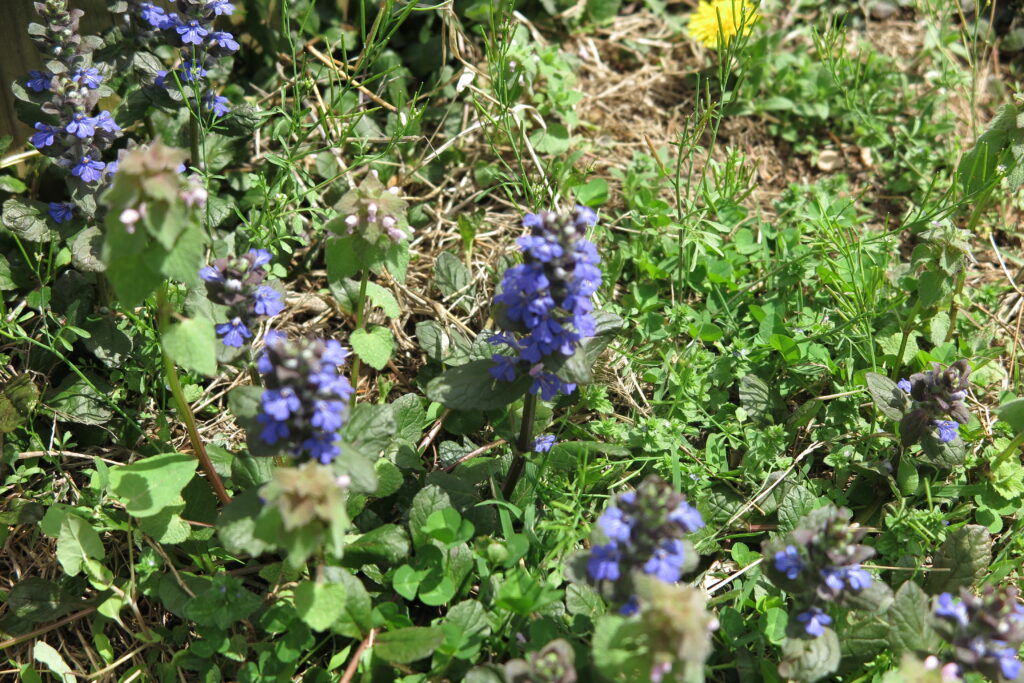
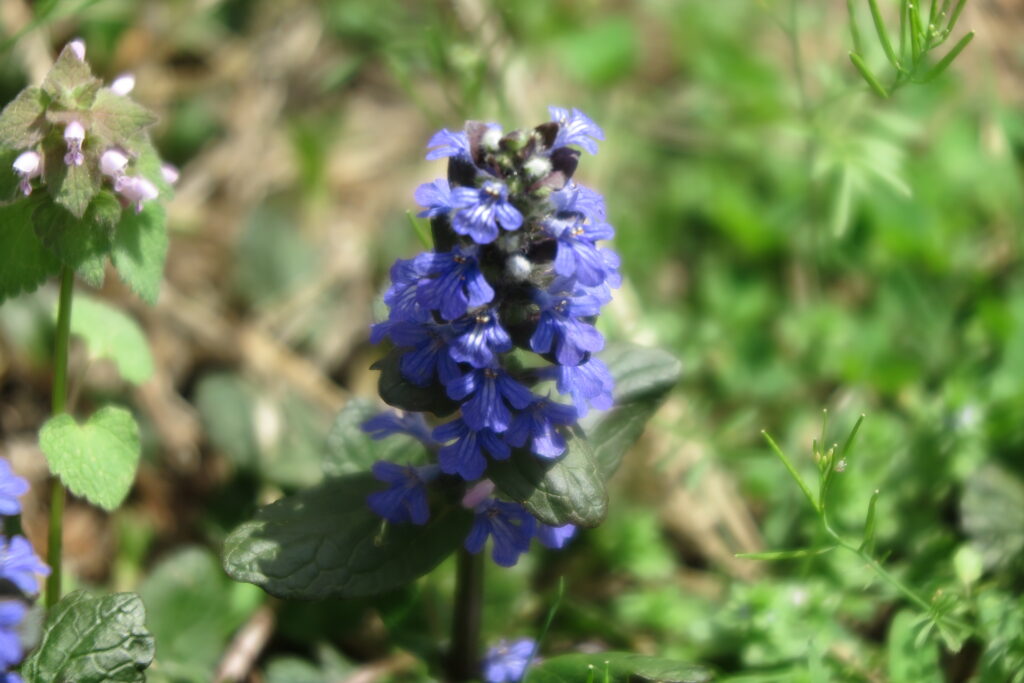
Bugleweed grows at a moderate to fast rate, particularly when conditions support its spreading habit. It extends through stolons—horizontal stems that travel along the ground and produce new growth points. These runners allow the plant to expand efficiently, forming dense clusters over time.
Throughout the growing season, bugleweed alternates between horizontal expansion and vertical flowering. During its active phase, it produces upright spikes that rise above the foliage, adding a temporary increase in height. After flowering, the plant returns its focus to ground-level growth, reinforcing its spreading structure.
Reproduction occurs through both vegetative and seed-based methods. The stolons contribute to continuous expansion, while seeds allow for new plants to establish beyond the immediate area. This dual strategy supports both local dominance and gradual outward spread.
Bugleweed responds to sunlight and water availability with notable flexibility. It tolerates a range of light conditions, from full sun to shaded areas, adjusting its growth accordingly. Consistent moisture supports its development, helping maintain the density and health of its foliage over time.
Bugleweed Life Cycle: Survival Strategies and Long-Term Persistence
The life cycle of bugleweed is centered around its ability to persist through seasonal changes while maintaining a stable presence. As temperatures shift, the plant may reduce visible growth, entering a semi-dormant state that conserves energy for future development.
Its survival is strongly supported by its network of stolons. These structures allow the plant to regenerate continuously, ensuring that even if parts of the foliage decline, new growth can emerge from established points. This interconnected system provides resilience and long-term stability.
Bugleweed’s spreading habit also acts as a protective strategy. By covering the ground densely, it reduces competition and secures space for continued growth. This coverage helps maintain its presence over time, allowing it to persist even as surrounding conditions change.
In response to environmental stress, the plant maintains a steady and controlled growth pattern rather than rapid expansion or decline. This consistency allows it to endure fluctuations without significant disruption, reinforcing its role as a durable and adaptable ground-covering species.