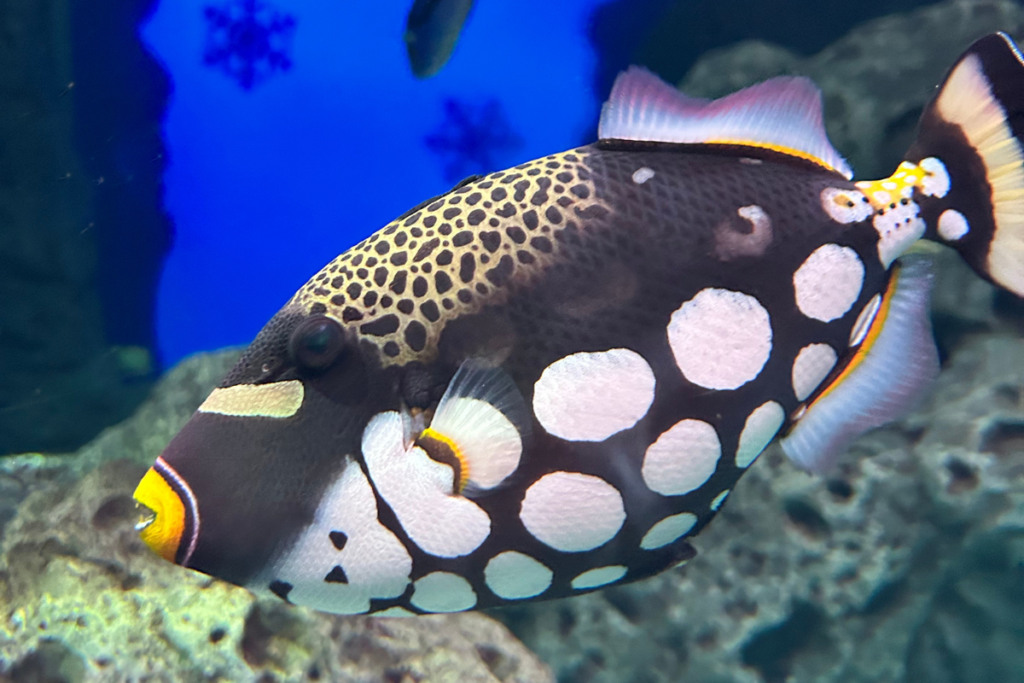
What Do Clown Triggerfish Eat? (Balistoides conspicillum Diet, Feeding Habits, and Prey)
Quick Facts
Scientific Name: Balistoides conspicillum
Common Name: Clown Triggerfish
Diet Type: Carnivore
Main Food Sources: Crustaceans, mollusks, sea urchins, small fish, marine invertebrates
Feeding Time: Daytime (diurnal)
Foraging Method: Active hunting and substrate inspection
Seasonal Diet Changes: Minimal; diet remains consistent with available prey
Predatory Adaptations: Strong jaws, crushing teeth, precise targeting ability
Location Observed: Atlanta Georgia Aquarium, USA (Exhibit)
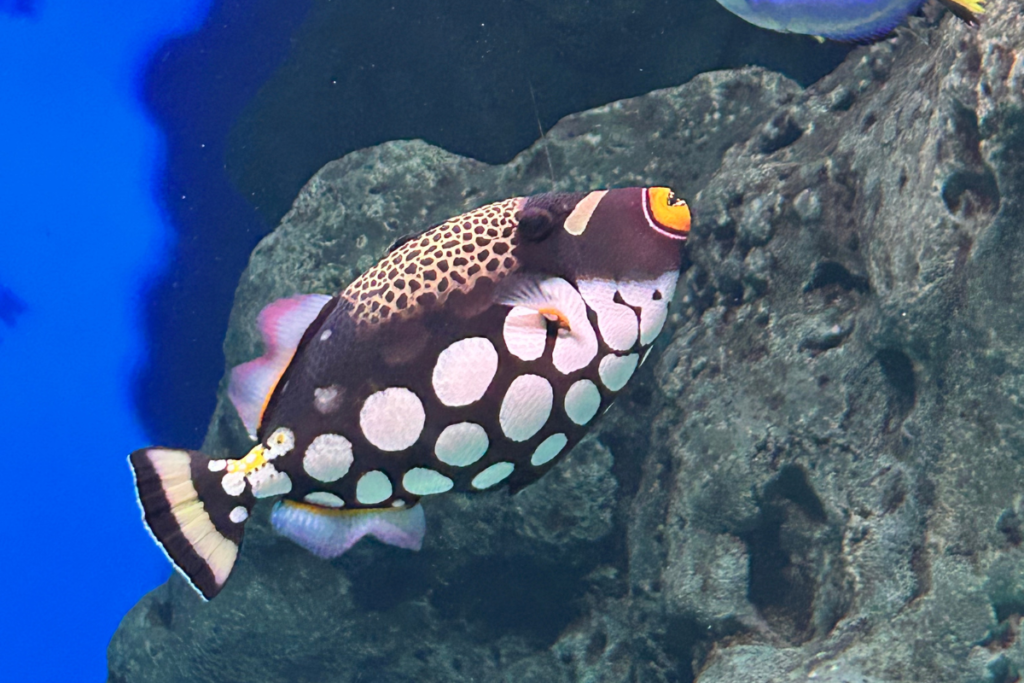
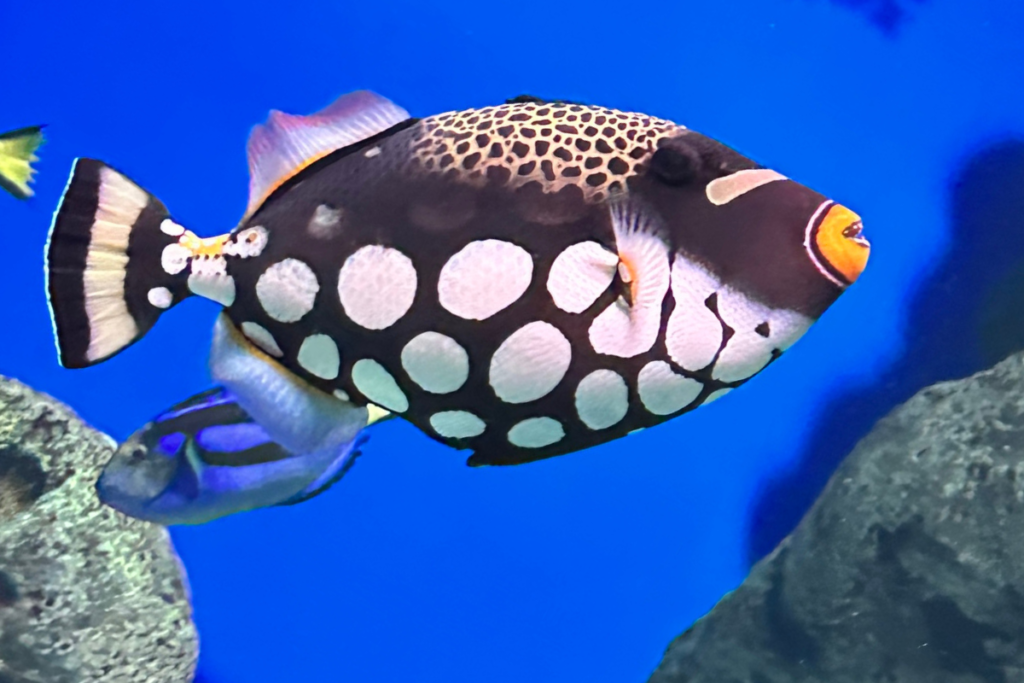
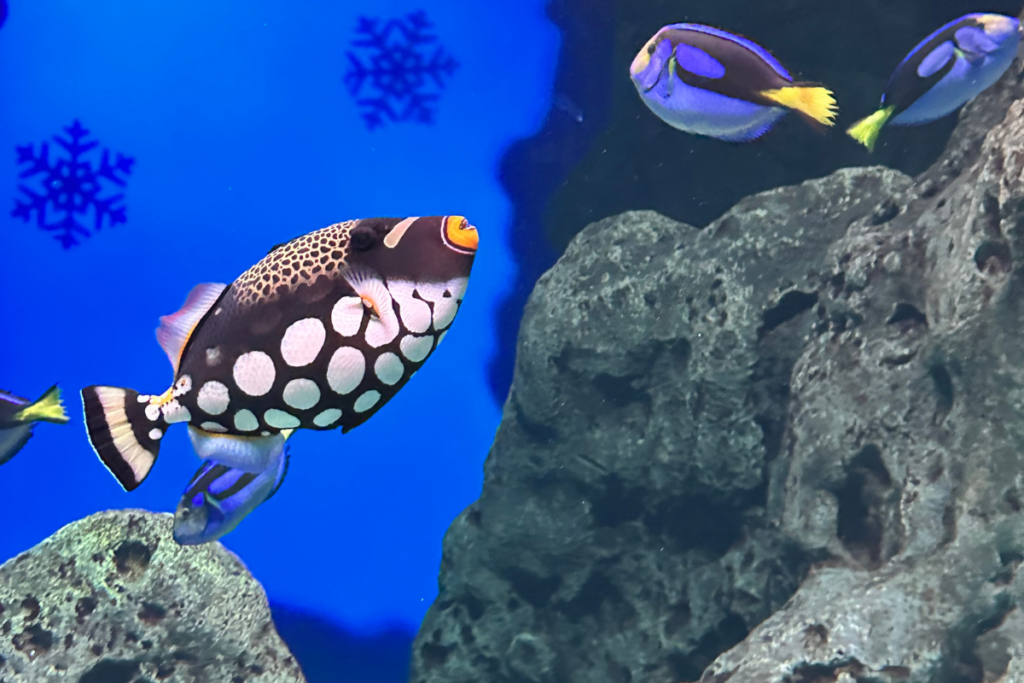
The clown triggerfish (Balistoides conspicillum) is a striking marine predator known for its bold appearance and powerful feeding capabilities. Behind its vibrant patterns lies a highly specialized diet that supports its role as a dominant reef fish.
Native to the Indo-Pacific, this species is commonly found in tropical marine environments where food sources are diverse and abundant. Within these regions, it relies on a variety of prey to maintain its energy and growth.
When observed during feeding, the clown triggerfish demonstrates a focused and deliberate approach. Its movements are controlled, and its feeding behavior reflects both strength and precision, making it an efficient and capable hunter.
Clown Triggerfish Diet Overview and Feeding Type
The clown triggerfish is a carnivorous species, relying primarily on animal-based food sources. Its diet is centered around marine invertebrates and smaller organisms that can be captured and consumed using its specialized mouth and teeth.
Feeding tendencies are consistent and methodical. Rather than grazing or feeding passively, this fish actively seeks out prey, often inspecting surfaces and crevices where food may be hidden. This approach reflects a high level of awareness and intent during feeding.
Adaptability plays a role in its diet. While it has preferred prey types, the clown triggerfish is capable of adjusting its feeding habits based on availability. This flexibility allows it to maintain a stable diet even when conditions change.
Overall, its dietary traits reflect efficiency and strength. It does not rely on speed or large-scale hunting but instead uses targeted actions to secure food, making it a precise and effective predator.
Clown Triggerfish Diet and Natural Food Sources
The diet of the clown triggerfish includes a variety of hard-bodied marine organisms. Crustaceans such as crabs and shrimp are common food sources, along with mollusks like clams and snails. These prey items provide the nutrients needed to support its growth and energy levels.
Sea urchins are another important part of its diet. The fish uses its strong jaws to break through the protective outer layer, accessing the softer internal tissue. This ability allows it to exploit food sources that many other fish cannot utilize.
Smaller fish and other invertebrates may also be consumed, depending on availability. The clown triggerfish is not limited to a single type of prey, instead incorporating multiple sources into its diet as needed.
Seasonal changes have minimal impact on its feeding habits. While prey availability may vary slightly, the overall diet remains stable due to the diversity of available food. This consistency helps maintain its position within its ecosystem.
Clown Triggerfish Feeding Behavior and Survival Strategies
The clown triggerfish relies on active foraging to locate food. It moves slowly through its environment, examining surfaces and structures for potential prey. This careful inspection allows it to detect hidden organisms that might otherwise go unnoticed.
Hunting behavior is deliberate rather than aggressive. The fish approaches prey with precision, using its mouth to grasp or crush depending on the target. Its strong jaws are capable of breaking through hard shells, giving it access to protected food sources.
Competition for food is managed through its assertive nature. The clown triggerfish is known to defend its feeding area, reducing interference from other species. This territorial control helps ensure consistent access to resources.
Survival strategies related to feeding are built around efficiency and capability. By targeting a wide range of prey and utilizing powerful physical adaptations, the clown triggerfish maintains a reliable food source. This combination of strength, awareness, and adaptability supports its long-term survival.