
Common Earthworm Overview: Characteristics, Global Range, and Ecosystem Importance
Quick Facts
Scientific Name: Family Lumbricidae (Earthworm sp.)
Common Name: Common Earthworm
Location: Forests, gardens, grasslands, farmland, and urban greenspaces
Average Size: 3–12 inches (7–30 cm)
Lifespan: 2–8 years
Global Range: Found worldwide except Antarctica
Conservation Status: Not Evaluated
Notable Feature: Segmented body specialized for life beneath the soil surface
Location Observed: Pennsylvania, USA
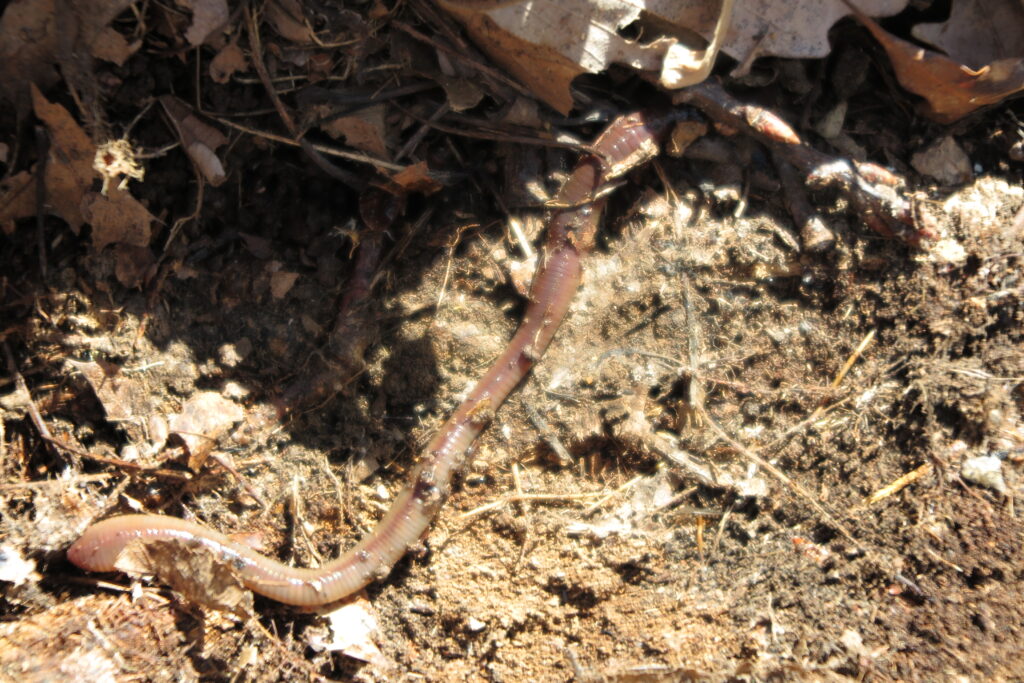
Field Observation
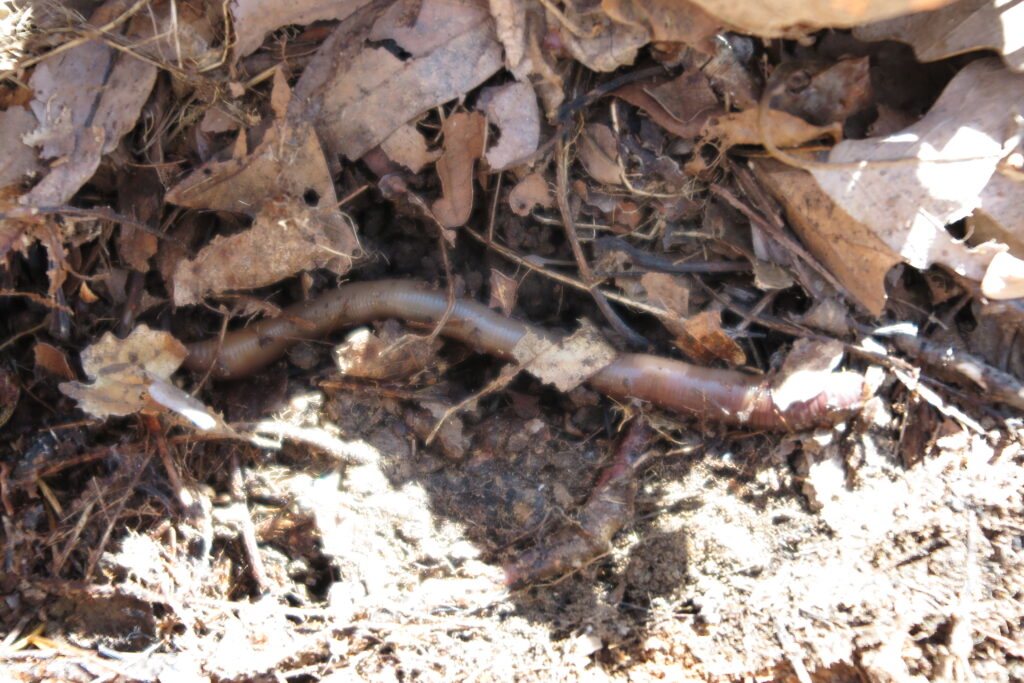
Following a rainy day and a period of dry weather, a common earthworm was observed beneath a fallen log where the soil remained cool and moist. The earthworm rested near the upper surface before slowly moving through the damp ground, navigating between pockets of soil and organic debris beneath the cover of the log.
Introduction: Common Earthworm Distribution and Worldwide Presence
The common earthworm is one of the most familiar invertebrates found across the globe. Although many people encounter them while gardening or exploring outdoors, few realize how widespread and successful these animals have become. Earthworms belong to a group of segmented worms that have occupied terrestrial environments for millions of years and remain an essential component of countless ecosystems today.
Earthworms occur on every continent except Antarctica and are present in a remarkable variety of landscapes. Their distribution spans temperate forests, agricultural regions, suburban neighborhoods, grasslands, and many other environments. Some species are native to the regions where they occur, while others have spread through human activities such as farming, transportation, and land development.
After periods of rain, earthworms often become more visible as they appear on sidewalks, driveways, trails, and exposed soil. These brief appearances provide a glimpse into a much larger underground community that normally remains hidden from view. In many locations, thousands of earthworms may exist beneath a relatively small area of ground.
Despite their ordinary appearance, earthworms have earned recognition from gardeners, farmers, scientists, and naturalists around the world. Their presence is frequently associated with healthy soils and productive landscapes. Whether discovered in a backyard garden or a remote woodland, the common earthworm remains one of the most recognizable animals living beneath the Earth’s surface.
Common Earthworm Appearance and Overall Physical Overview
The common earthworm possesses a long, cylindrical body composed of numerous repeating segments that create its distinctive appearance. Viewed from above, the animal resembles a flexible living cord that narrows slightly toward both ends. This streamlined form allows earthworms to maintain a simple yet highly recognizable profile unlike most other ground-dwelling invertebrates.
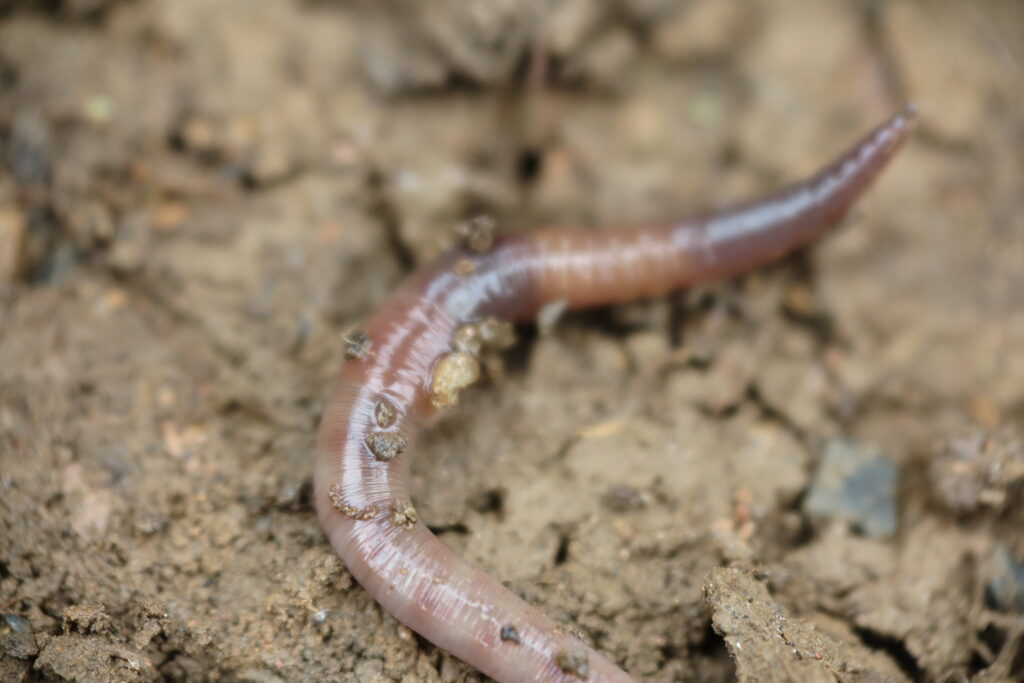
Coloration varies among species and individuals, producing shades ranging from pale pink and reddish brown to darker gray-brown or purplish tones. Some specimens display a noticeable contrast between the upper and lower portions of the body, while others appear more uniformly colored. Freshly exposed earthworms often possess a subtle sheen that reflects light across their moist skin.
Size can differ considerably depending on species, age, and environmental conditions. Smaller earthworms may measure only a few inches long, while larger individuals can approach the length of a standard pencil or even exceed it. Most commonly encountered earthworms fall somewhere between these extremes, making them easy to observe when found on the ground surface.
In the wild, earthworms often appear surprisingly smooth compared to many other invertebrates. They lack legs, wings, antennae, or a hardened external shell, giving them a clean and uncomplicated silhouette. This simple appearance contributes to their immediate recognizability even among people with little knowledge of wildlife.
The body may appear thicker near the front portion in mature individuals due to the presence of a specialized band known as the clitellum. This feature creates a noticeable change in texture and shape without disrupting the worm’s overall streamlined profile. Observers often notice this area when examining earthworms closely.
One reason earthworms have become so successful is their ability to maintain a consistent body design across an enormous geographic range. Whether encountered in a woodland clearing, cultivated garden, or open meadow, their familiar form remains largely unchanged. This combination of simplicity and adaptability has contributed to their widespread presence around the world.
Common Earthworm Characteristics and Distinctive Features
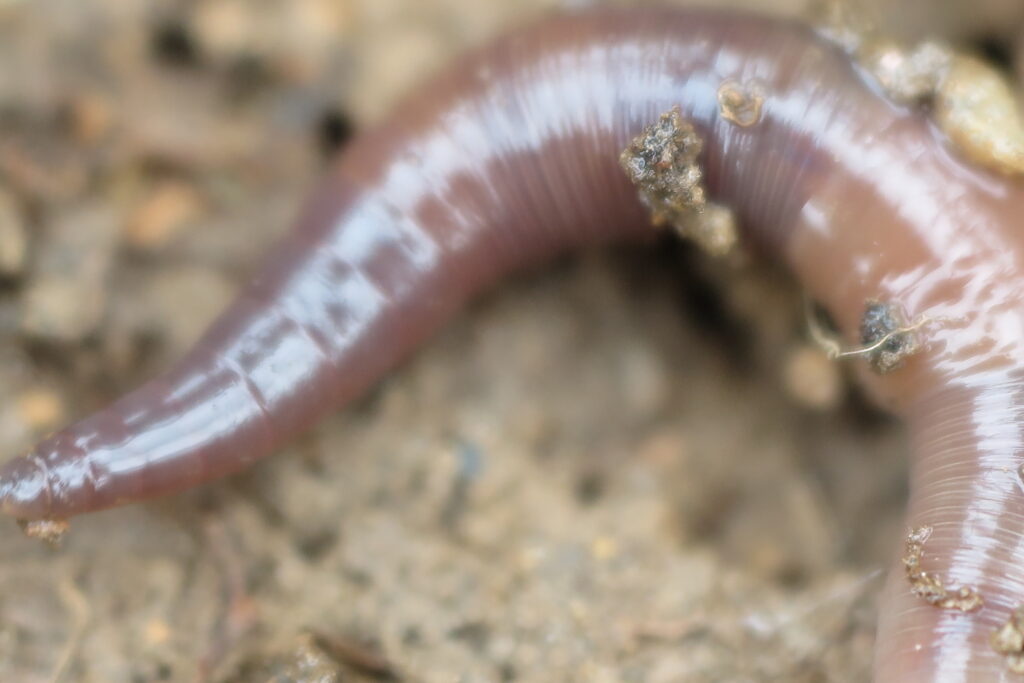
One of the defining characteristics of the common earthworm is its segmented construction. Each visible ring forms part of a repeating pattern that extends along the entire body, creating an appearance similar to a series of connected sections. This feature distinguishes earthworms from many other worm-like animals encountered in nature.
Unlike insects, beetles, or spiders, earthworms possess no rigid exoskeleton. Their bodies remain flexible from end to end, allowing them to bend and curve with ease. This soft-bodied structure gives them an appearance more comparable to a flexible rope than to a typical arthropod.
A notable feature of earthworms is their uniform body shape. While many animals possess clearly defined limbs, wings, tails, or other prominent structures, earthworms maintain a remarkably consistent form throughout most of their length. This gives them a balanced and symmetrical appearance when viewed from any angle.
The texture of the skin also contributes to their unique identity. Earthworms display a smooth, moist exterior that differs dramatically from the rough scales of reptiles or the hardened surfaces of insects. Under natural light, this surface often creates a subtle reflective quality that highlights individual segments.
At first glance, some people may confuse earthworms with small snakes due to their elongated bodies. Closer examination quickly reveals major differences in shape, texture, and overall structure. Earthworms lack the defined head shape, scales, and muscular appearance associated with snakes, resulting in a much softer and more uniform profile.
Another distinctive characteristic is the clitellum found on mature individuals. This thickened band appears as a noticeable section encircling part of the body and serves as one of the easiest features to recognize. Its presence often helps separate adult earthworms from younger specimens that have not yet developed this structure.
Common Earthworm Ecosystem Role and Environmental Importance
Earthworms occupy an important position within terrestrial ecosystems and are often regarded as some of nature’s most influential soil organisms. Although they spend much of their lives hidden underground, their presence contributes to processes that affect entire landscapes. Scientists frequently study earthworms because of the significant impact they can have on soil systems.
Many ecosystems benefit from the physical changes earthworms help create within the ground. Their presence can influence soil structure, water movement, and the distribution of organic material beneath the surface. These changes contribute to conditions that support a wide variety of plants, microorganisms, and other organisms living within the same environment.
Earthworms also serve as an important connection within food webs. Numerous species of birds, amphibians, reptiles, mammals, and invertebrates rely on earthworms as a source of nutrition. Because earthworms are often abundant, they provide a dependable resource that supports wildlife populations across many regions.
The environmental influence of earthworms extends beyond individual gardens or forests. In agricultural landscapes, natural areas, and urban greenspaces alike, their contributions help maintain ecological processes that would otherwise function differently. Their role demonstrates how even relatively small animals can shape the broader health of an ecosystem.
Ecologists often view earthworms as indicators of active and functioning soil communities. Areas supporting healthy earthworm populations frequently contain diverse forms of underground life working together within complex ecological networks. Their presence provides evidence that important biological processes are occurring below the surface.
Perhaps the most remarkable aspect of the common earthworm is how much ecological value it provides despite its modest appearance. Hidden beneath fields, forests, and gardens around the world, these animals contribute to environmental balance on a scale far greater than most people realize. Their importance serves as a reminder that some of nature’s most influential species are rarely seen.
Observation Location
Observed in York, Pennsylvania, USA
Popular Searches About Earthworms
Explore Earthworm Guide
Explore More Wildlife

Support Encounters World
Help support wildlife photography and get behind the scenes discoveries on Patreon.