Eastern Skunk Cabbage (Symplocarpus foetidus): Identification, Growth, and Habitat Guide
Quick Facts
Scientific Name: Symplocarpus foetidus
Common Name: Eastern Skunk Cabbage
Plant Type: Perennial
Average Height: 1–3 feet (leaves)
Spread Width: 2–4 feet
Leaf Type: Broadleaf
Growth Form: Clumping
Bloom Color: Dark purple, maroon, or mottled (spathe)
Native Range: Eastern North America
Toxicity: Toxic to humans & pets (contains calcium oxalate crystals)
Location Observed: Pennsylvania
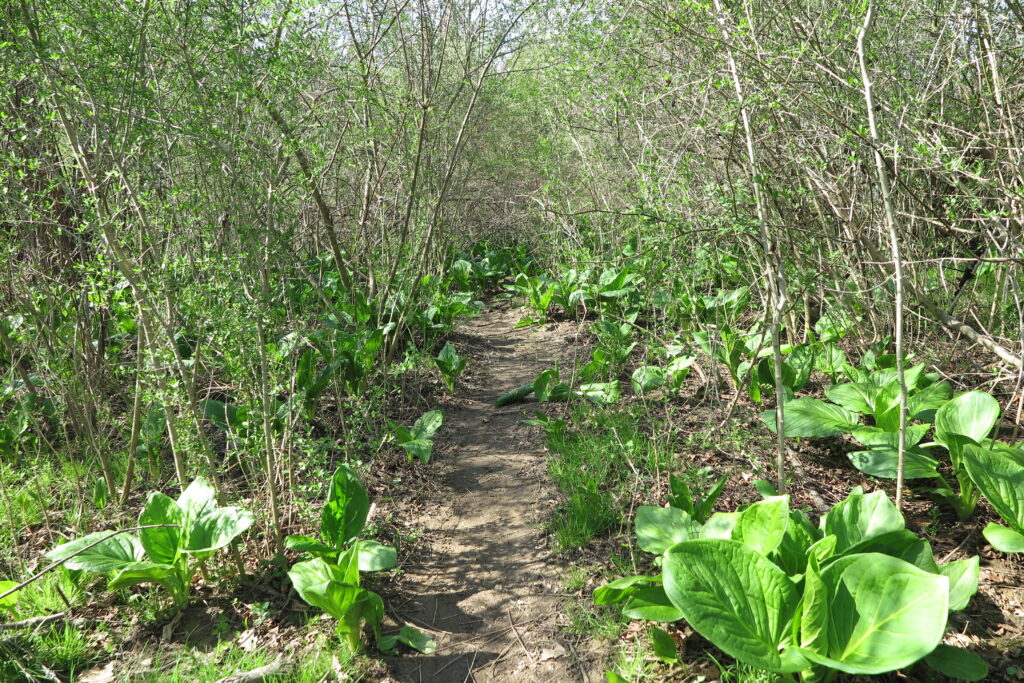
Eastern skunk cabbage (Symplocarpus foetidus) is a distinctive perennial plant recognized for its large, bold leaves and unusual early-season appearance. Often one of the first plants to emerge at the end of winter, it stands out against still-dormant surroundings with thick, vibrant green foliage.
Native to eastern North America, this species is commonly found across a wide natural range stretching from Canada down through the eastern United States. It is frequently encountered in low-lying landscapes where moisture is abundant and seasonal changes are pronounced.
At first glance, the plant creates a striking visual presence—broad leaves unfolding from the ground in clustered formations, giving the impression of something both ancient and resilient. Its emergence signals a seasonal transition, quietly marking the shift from cold to growth.
Eastern Skunk Cabbage Overview: Appearance, Structure, and Key Characteristics
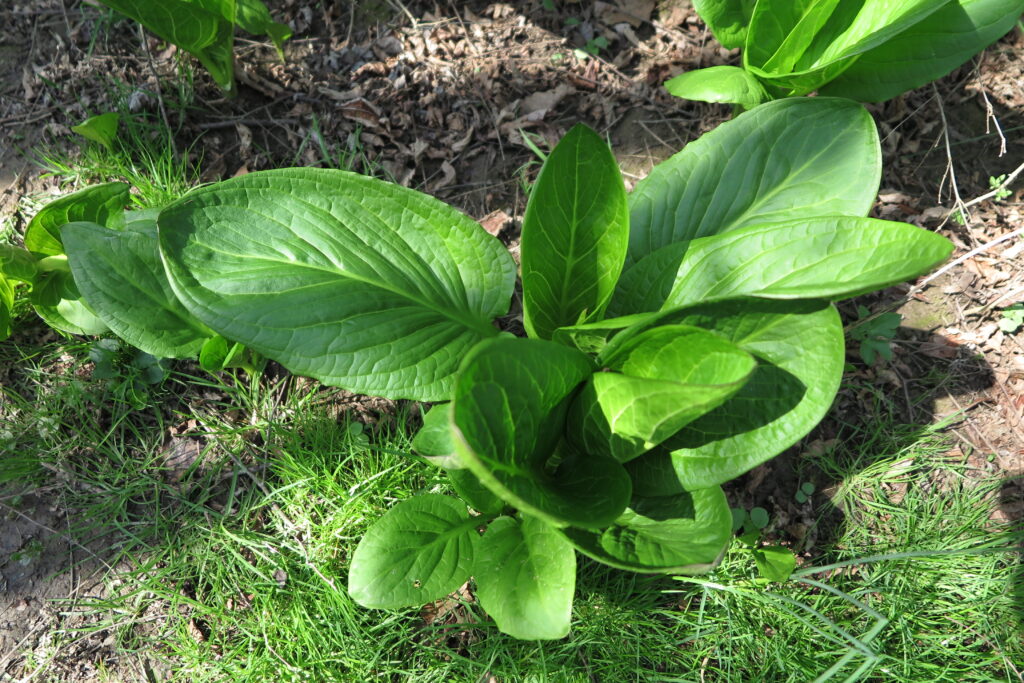
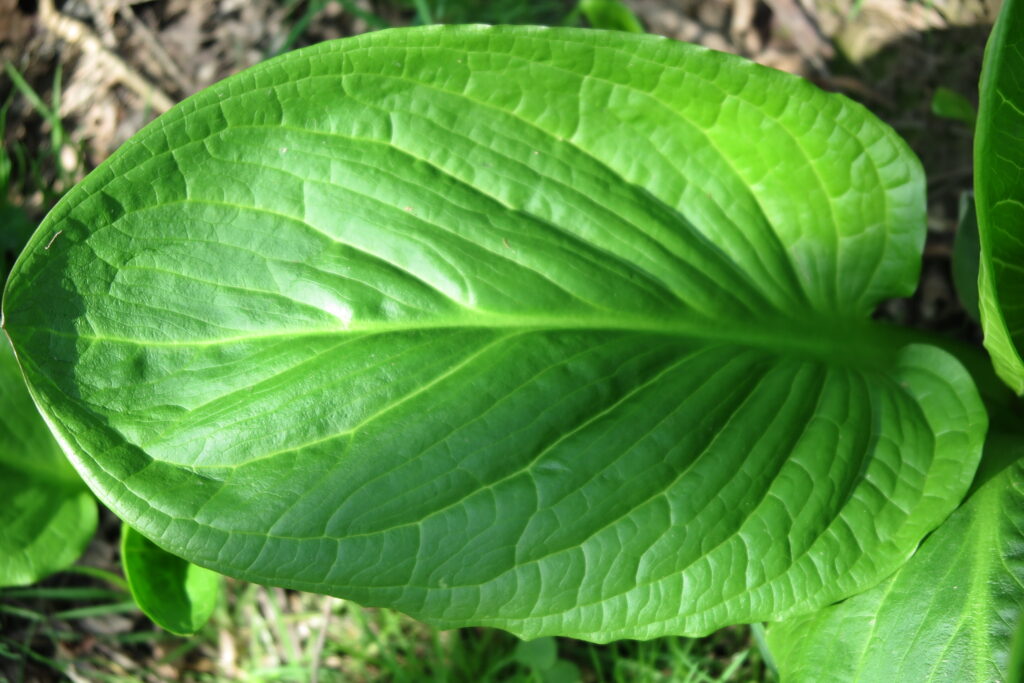
Eastern skunk cabbage presents a bold and unmistakable structure, defined by its large, paddle-shaped leaves that radiate outward from a central base. These leaves are smooth to slightly textured, with prominent veins running from the base to the tip, creating a strong visual pattern across their surface. The overall appearance is both robust and grounded, giving the plant a heavy, anchored look compared to more delicate species.
The plant grows in a tight clumping form, with individual leaves emerging closely together rather than spreading widely across the ground. As the leaves expand, they often overlap and layer, forming a dense cluster that can dominate the surrounding vegetation. This growth form allows it to stand out clearly in early development stages, even before surrounding plants fully emerge.
In terms of structure, eastern skunk cabbage is built for durability. Its leaves are thick and fleshy, capable of withstanding fluctuating conditions early in the season. The plant’s base remains low to the ground, while the leaves extend outward rather than upward, creating a wide, grounded silhouette that distinguishes it from upright or vine-like species.
Across its natural range, this species demonstrates strong adaptability to varying seasonal patterns. It consistently emerges early, maintains a steady presence through the growing season, and gradually fades as conditions shift. Its overall form remains consistent regardless of slight environmental differences, making it one of the more recognizable plants in its category.
Eastern Skunk Cabbage Growth and Behavior: Seasonal Development and Life Cycle
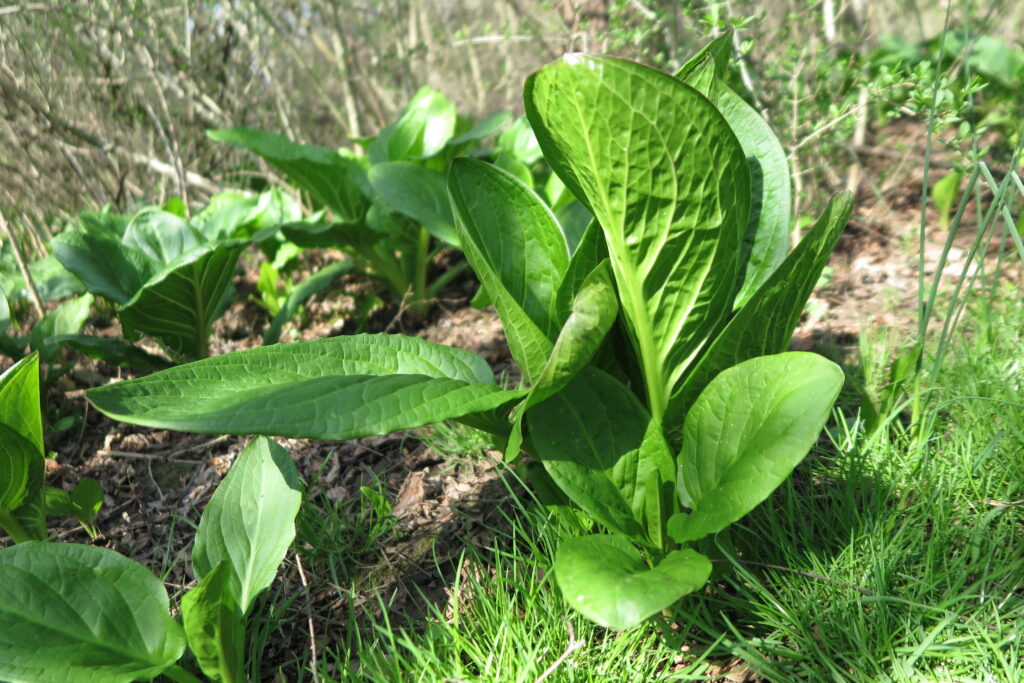
Eastern skunk cabbage follows a unique growth cycle that begins unusually early in the year. It is among the first plants to break dormancy, often appearing while surrounding vegetation remains inactive. This early emergence gives it a distinct advantage, allowing it to establish itself before competition increases.
As the season progresses, the plant transitions from tightly curled initial growth into fully expanded leaves. These leaves broaden significantly over time, reaching their full size relatively quickly. The growth pattern is steady rather than rapid, with each stage clearly defined as the plant develops outward from its base.
Reproduction occurs through a specialized structure that forms before the leaves fully develop. This structure produces seeds that later disperse into the surrounding area, allowing new plants to establish nearby. Over time, colonies can form as multiple individuals grow in proximity, creating a repeating pattern of clustered growth.
The plant’s behavior also reflects a strong response to light and moisture availability. It adjusts leaf expansion and positioning based on exposure, ensuring efficient energy use throughout the season. As conditions change later in the year, growth slows and eventually declines, marking the end of its active cycle until the following season.
Eastern Skunk Cabbage Habitat: Where It Grows and Environmental Conditions
Eastern skunk cabbage is closely associated with environments that provide consistent moisture and stable ground conditions. It is commonly found in low-lying landscapes where water accumulates naturally, creating a setting that supports its growth and structure. These areas often include soft soils and shaded surroundings that maintain moisture over time.
The plant thrives in rich, organic soils that retain water while still allowing for slow drainage. These soils are typically dark and nutrient-dense, formed from decaying plant material that continuously enriches the environment. This type of substrate supports the plant’s large leaf development and sustained seasonal growth.
Climate plays an important role in supporting this species, particularly regions that experience distinct seasonal transitions. Cooler periods followed by gradual warming provide the conditions needed for its early emergence and continued development. The plant is well-adapted to these cycles, maintaining consistency across its range.
Overall, the environments where eastern skunk cabbage is found are defined by moisture, shade, and stability. These factors combine to create a setting where the plant can establish itself year after year, forming recognizable patches that signal suitable growing conditions.