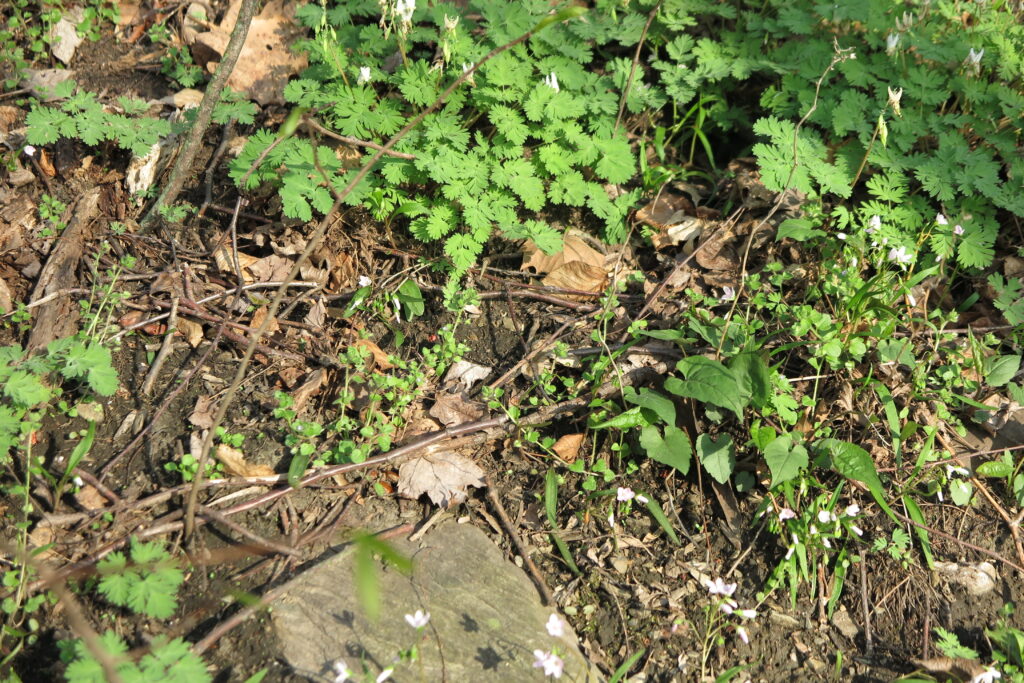
Eastern Spring Beauty (Claytonia virginica): Identification, Growth, and Habitat Guide
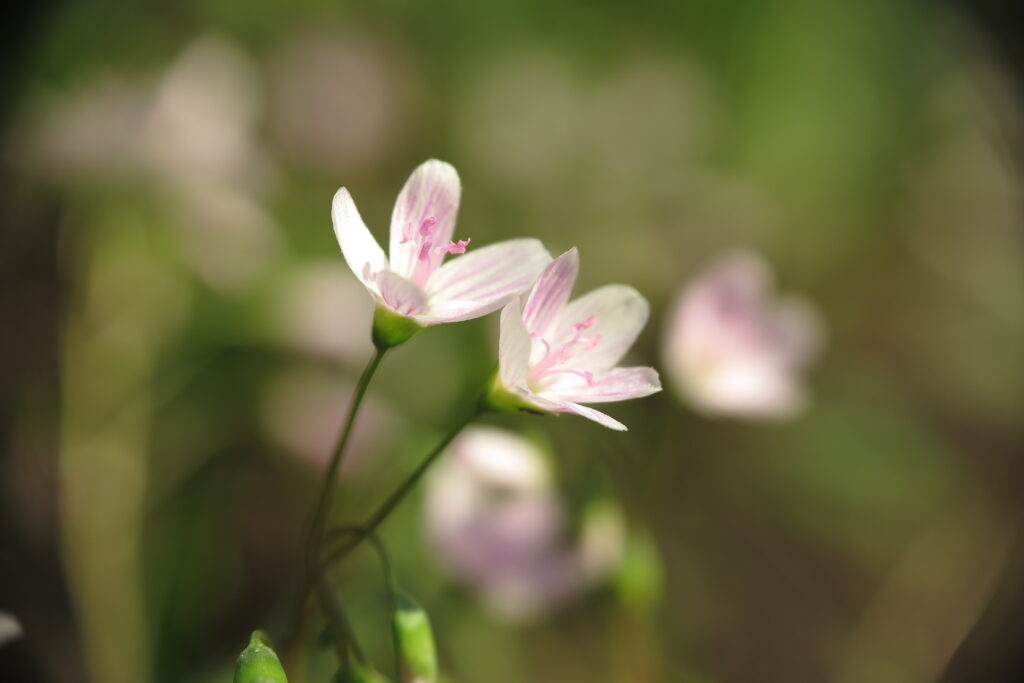
Quick Facts
Scientific Name: Claytonia virginica
Common Name: Eastern Spring Beauty
Plant Type: Perennial (spring ephemeral)
Average Height: 4–8 inches (10–20 cm)
Spread Width: 3–6 inches (7–15 cm)
Leaf Type: Broadleaf
Growth Form: Clumping, low-growing
Bloom Color: White to pale pink with darker pink veins
Native Range: Eastern North America
Toxicity: Non-toxic to humans & pets
Location Observed: Pennsylvania
Eastern Spring Beauty is a delicate woodland wildflower known for its soft pink-striped petals and early seasonal appearance. Often one of the first blossoms to emerge after winter, it forms small clusters that brighten the forest floor with subtle color and detail. Despite its fragile look, it plays a noticeable role in early spring plant communities.
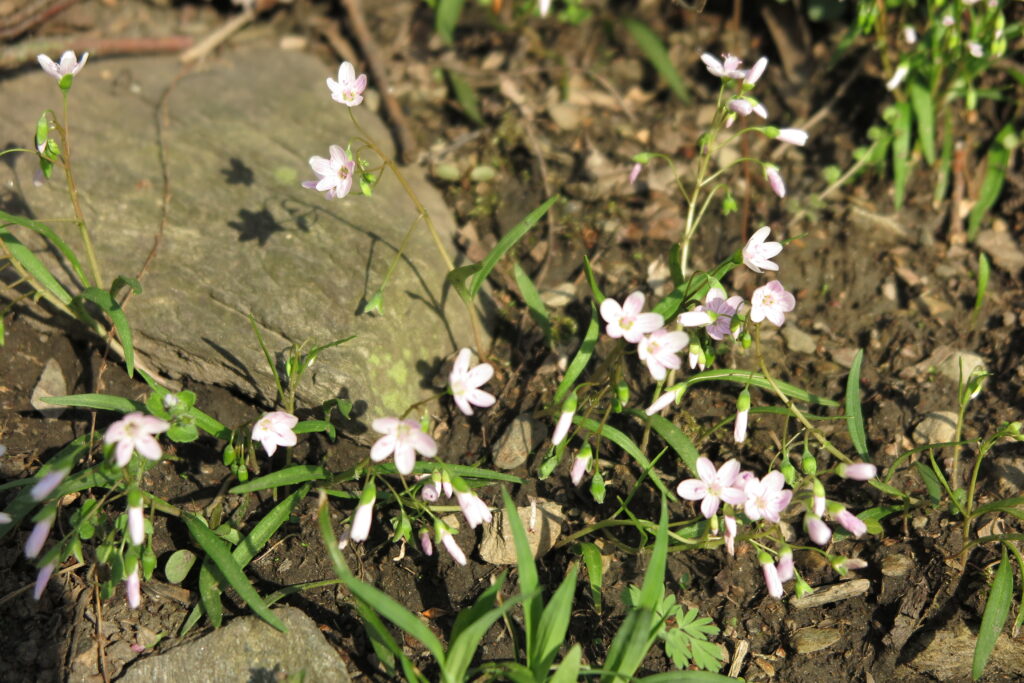
This species is native to eastern regions of North America, where it appears across a wide geographic range. It is commonly encountered in deciduous forests, meadows, and lightly shaded open areas, often forming scattered patches rather than dense colonies. Its presence signals the transition from dormant winter landscapes to active spring growth.
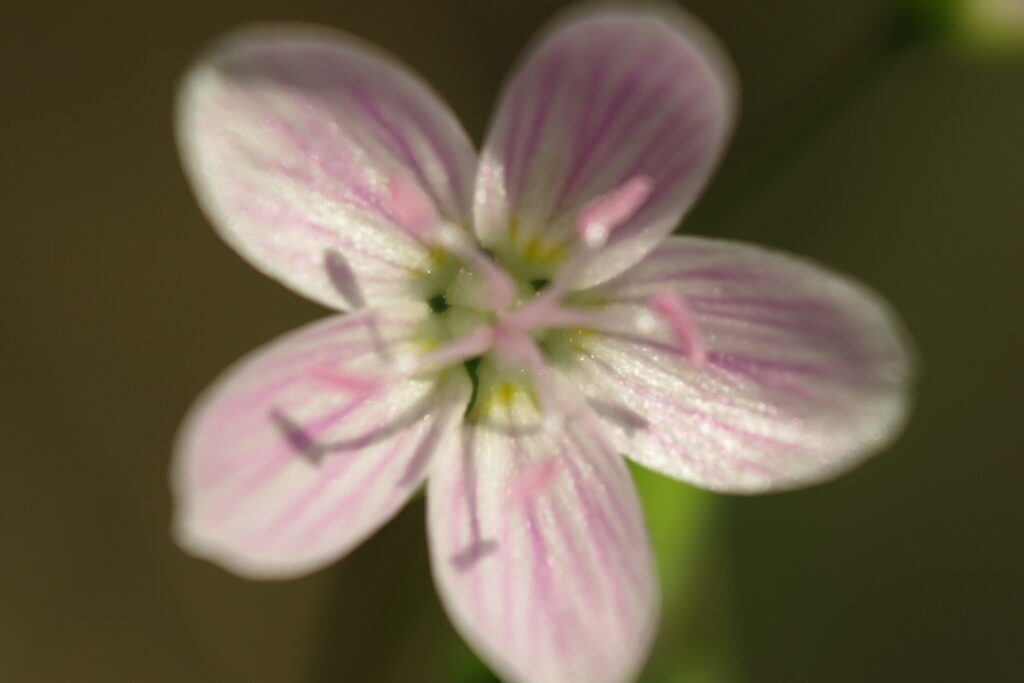
At ground level, these flowers create a quiet but striking display. The thin stems, paired leaves, and gently veined petals give the plant a refined, almost minimalist appearance. When observed up close, the fine details of the flower structure stand out, offering a clear example of early-season plant adaptation without overwhelming the surrounding environment.
Eastern Spring Beauty Overview: Appearance, Structure, and Key Characteristics
Eastern Spring Beauty presents a compact and understated structure, typically growing low to the ground with a simple, upright posture. The plant’s narrow stems support small, symmetrical flowers that open during daylight hours, giving it a subtle rhythm tied to light exposure. Its overall form remains neat and uncluttered, contributing to its recognizable appearance among early spring flora.
The leaves are smooth and elongated, emerging in pairs along the stem. Their broadleaf structure allows for efficient energy capture during the short window of early spring sunlight before tree canopies fully develop. This brief period of exposure shapes much of the plant’s overall design and function, even though those processes are not immediately visible.
Color variation in the blooms adds to its visual identity. While typically white, the petals often carry fine pink striping that radiates from the center outward. This detail creates contrast without bold coloration, allowing the plant to blend naturally into its surroundings while still remaining noticeable upon closer inspection.
Across its range, Eastern Spring Beauty maintains consistent characteristics, showing little variation in size or structure. Its adaptability lies more in its ability to appear in a variety of lightly shaded environments rather than in dramatic physical changes. This consistency makes it easier to identify and study across different regions within its native range.
Eastern Spring Beauty Growth and Life Cycle: Seasonal Development and Behavior
Eastern Spring Beauty follows a rapid seasonal cycle, emerging quickly as temperatures begin to rise. Its growth is timed precisely to take advantage of early spring conditions, allowing it to complete much of its visible life cycle before larger plants begin to dominate the landscape. This short-lived above-ground phase is a defining trait.
The plant develops from underground storage structures, which allow it to reappear each year without relying solely on seed germination. This method supports consistent regrowth and helps maintain populations even in environments where surface conditions fluctuate. Above ground, the stems and flowers develop quickly and efficiently.
Reproduction occurs through both seed production and underground structures, giving the plant multiple ways to persist. The flowers open during daylight and close under low light conditions, responding directly to changes in sunlight. This behavior not only protects delicate structures but also aligns with periods of pollinator activity.
Water needs remain moderate, with the plant relying on early-season moisture from melting snow and spring rains. As the season progresses and conditions become warmer and drier, the above-ground portions begin to fade. This transition marks the end of its active phase, while the underground components remain dormant until the next growth cycle.
Eastern Spring Beauty Habitat: Where Claytonia virginica Naturally Grows
Eastern Spring Beauty is most commonly found in environments that provide a balance of light and protection. It thrives in areas where sunlight reaches the ground in early spring but becomes filtered or reduced as the season progresses. This pattern allows it to grow without prolonged exposure to intense conditions.
The plant favors soils that are well-drained yet capable of retaining enough moisture during its active period. Loose, nutrient-rich ground supports its early development, allowing roots and underground structures to function effectively. These soil conditions are often found in undisturbed natural settings.
Climate plays a significant role in supporting its lifecycle. Regions with distinct seasonal transitions, including cold winters followed by gradual warming, create the ideal timing for its emergence. The plant relies on this predictable shift to initiate growth and complete its cycle before summer conditions take hold.
Landscapes that support Eastern Spring Beauty typically include forest edges, open woodlands, and lightly shaded clearings. These environments provide the necessary combination of light availability, soil quality, and seasonal moisture. Together, these factors create a stable setting where the plant can return year after year without significant disruption.