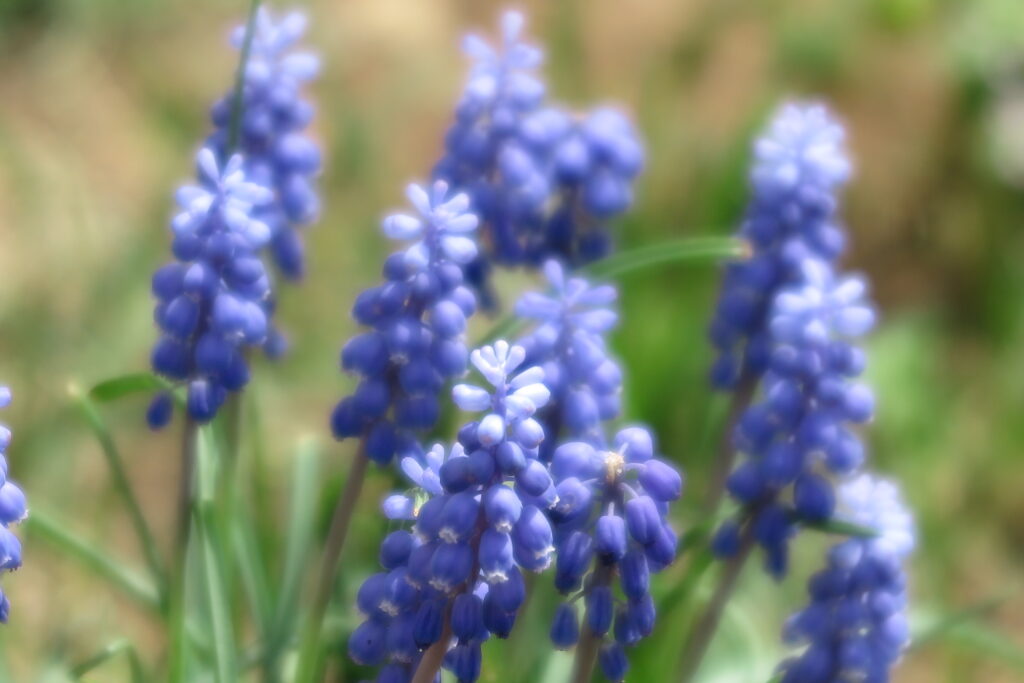
Grape Hyacinth Flower and Structure: Anatomy, Bloom Form, and Plant Features Explained (Muscari armeniacum)
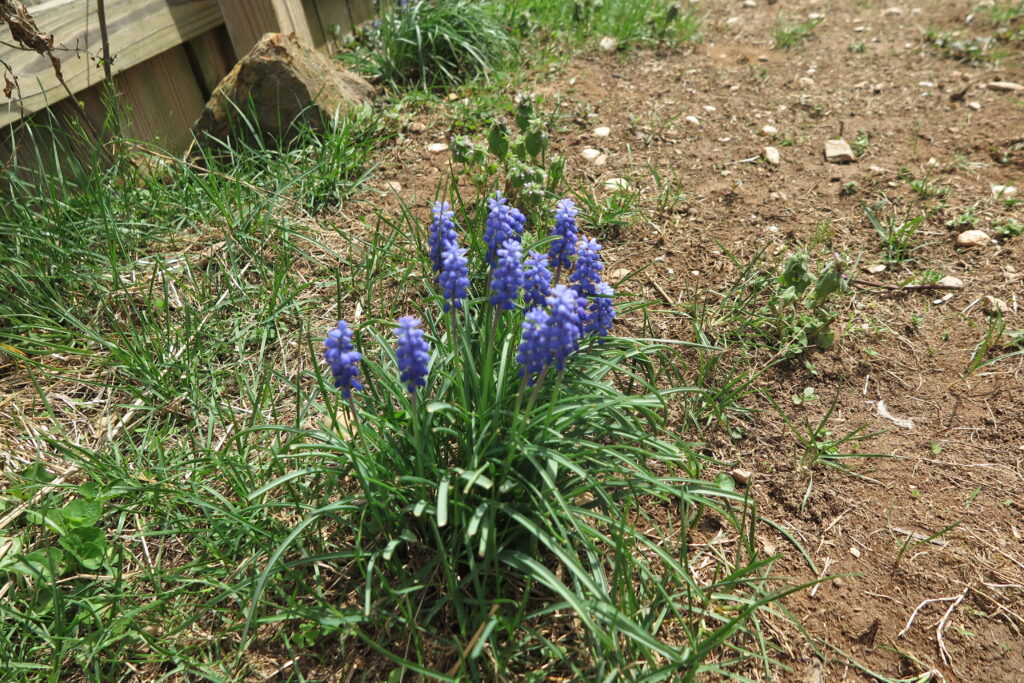
Quick Facts
Flower Type: Cluster (dense spike of florets)
Flower Shape: Urn-shaped to bell-shaped (tightly packed)
Bloom Time: Early spring
Bloom Duration: Weeks (short bloom period, repeated annually)
Flower Color Variations: Deep blue, purple-blue, occasionally white
Fragrance: Mild
Pollinator Attraction: Bees, small insects
Reproductive Role: Seed production through pollination; bulb division also supports reproduction
Location Observed: Pennsylvania, USA
The grape hyacinth (Muscari armeniacum) is a compact flowering plant known for its dense clusters of blue blooms and simple, clean structure. Its appearance is both distinctive and uniform, making it easy to recognize during its short but vibrant flowering period.
Native to southeastern Europe and western Asia, this plant has spread widely across temperate regions and is commonly seen in cultivated and naturalized settings. Its recognizable form appears each spring, adding texture and color to the landscape.
As it emerges, slender leaves form at ground level, followed by upright stems carrying tightly packed flowers. These blooms resemble small beads grouped together, giving the plant its signature “grape-like” appearance.
Grape Hyacinth Structural Overview
The overall structure of grape hyacinth is compact, organized, and highly uniform. It maintains a low-growing profile, with all visible parts emerging from a central point beneath the soil surface.
Its leaves form a narrow, grass-like cluster that spreads outward from the base. These leaves remain relatively simple in form, contributing to the plant’s clean and uncluttered appearance.
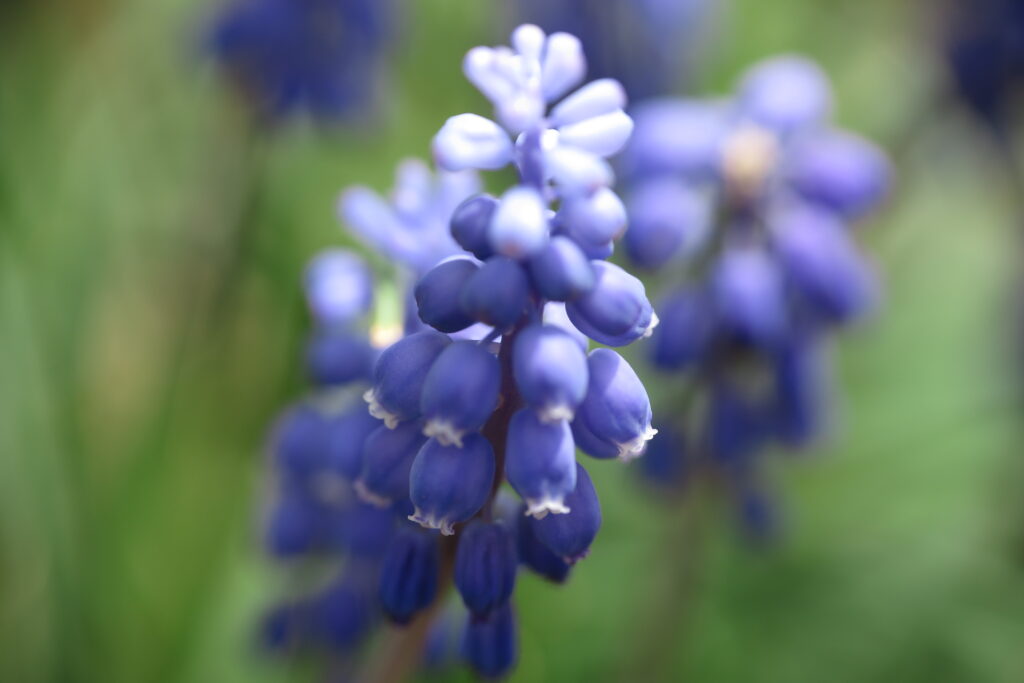
The flower spike is the most defining feature. Rising above the leaves, it consists of numerous small blossoms packed tightly together, creating a dense vertical cluster that stands out visually.
Below the surface, the plant is supported by a bulb-based root system. This underground structure anchors the plant while supporting its above-ground form, ensuring stability and repeated seasonal emergence.
Grape Hyacinth Structure and Anatomy
The leaves of grape hyacinth are long, slender, and smooth-edged, resembling blades of grass. They grow directly from the base and arch slightly outward, forming a neat cluster around the plant’s center.
The stem is upright, unbranched, and relatively short, supporting a single flower spike. Its sturdy yet flexible form allows it to hold the dense cluster of flowers without collapsing.
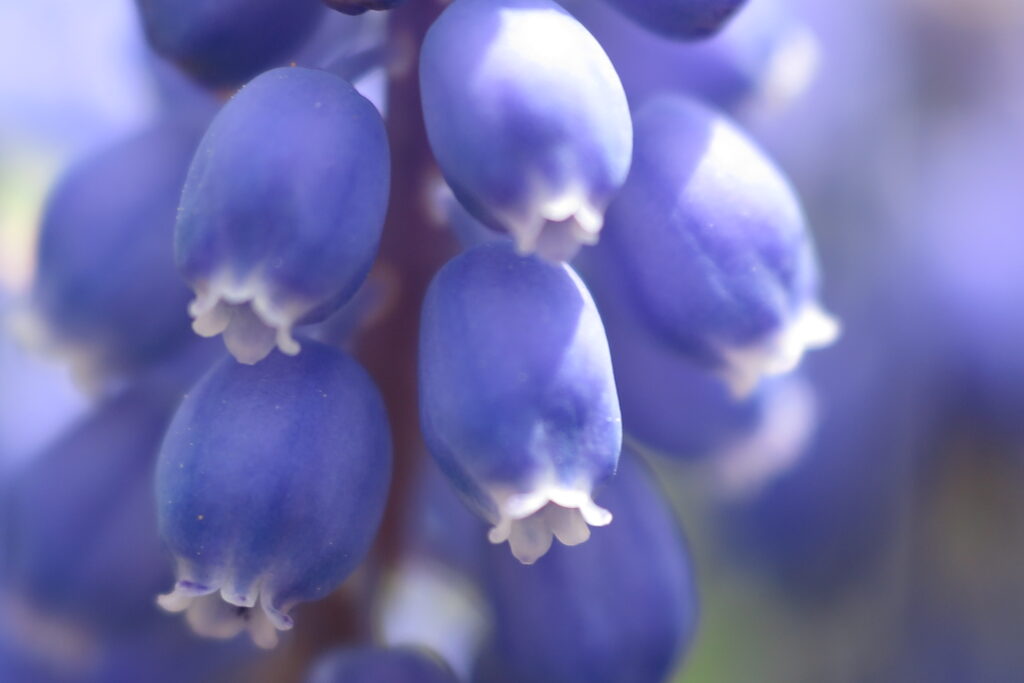
The flower structure is made up of many individual florets, each shaped like a small bell or urn. These florets are tightly arranged along the stem, creating the appearance of a single, unified bloom.
Beneath the surface lies the bulb, which serves as the plant’s primary structural foundation. From this bulb, roots extend downward, securing the plant and enabling the development of leaves and stems above.
Grape Hyacinth Structural Adaptations and Function
The compact leaf arrangement plays an important role in the plant’s overall stability. By keeping foliage close to the ground, the plant reduces exposure to external forces while maintaining efficient access to light.
The upright flower spike is designed for visibility and efficiency. Its vertical structure elevates the blooms above the leaves, making them more noticeable and accessible within the surrounding space.
Each individual floret contributes to the plant’s reproductive potential. By grouping many small flowers together, the plant increases its chances of successful pollination and seed formation.
The bulb is the core of the plant’s structural success. Acting as both a storage unit and support system, it allows the plant to survive periods when above-ground growth is absent and ensures reliable re-emergence each season.