Lesser Celandine (Ficaria verna): Identification, Growth, and Habitat Guide
Quick Facts
Scientific Name: Ficaria verna
Common Name: Lesser Celandine (also called Fig Buttercup)
Plant Type: Perennial (tuber-forming)
Average Height: 3–10 inches (7–25 cm)
Spread Width: 12–24+ inches (spreading ground cover)
Leaf Type: Broadleaf
Growth Form: Creeping, mat-forming
Bloom Color: Bright yellow
Native Range: Europe, Western Asia, North Africa
Toxicity: Toxic (can irritate skin; harmful if ingested by humans & pets)
Location Observed: Pennsylvania
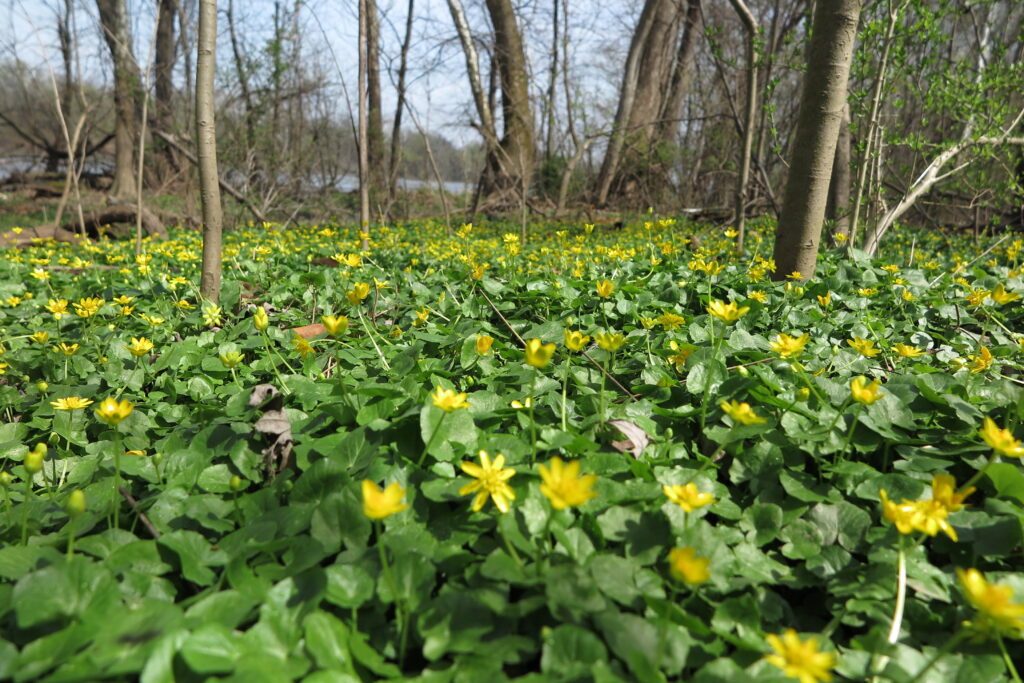
Lesser Celandine is a low-growing spring plant recognized for its glossy green leaves and vibrant yellow flowers that appear early in the season. Its bright blooms create a noticeable contrast against the forest floor, often forming dense patches that stand out among surrounding vegetation. Though small in stature, it quickly becomes visually dominant when present in large numbers.
Originally native to parts of Europe, western Asia, and North Africa, Lesser Celandine has expanded far beyond its natural range. It is now widely found across many regions, particularly in temperate zones where seasonal cycles support its early growth. Its ability to establish itself in new areas has made it one of the more recognizable spring plants in introduced landscapes.
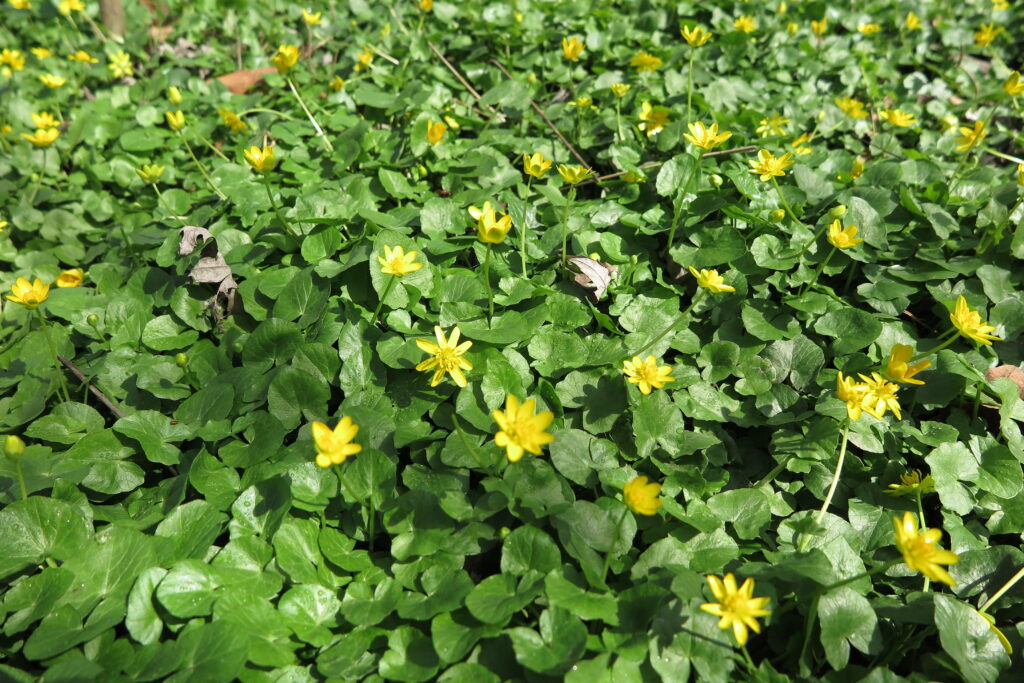
When encountered in the wild, it often appears as a thick, green carpet dotted with yellow flowers. The smooth, reflective leaves and upright flower stems give the plant a clean and uniform look. This early-season display can cover large sections of ground, creating a distinct visual layer before other plants fully emerge.
Lesser Celandine Overview: Appearance, Structure, and Key Characteristics
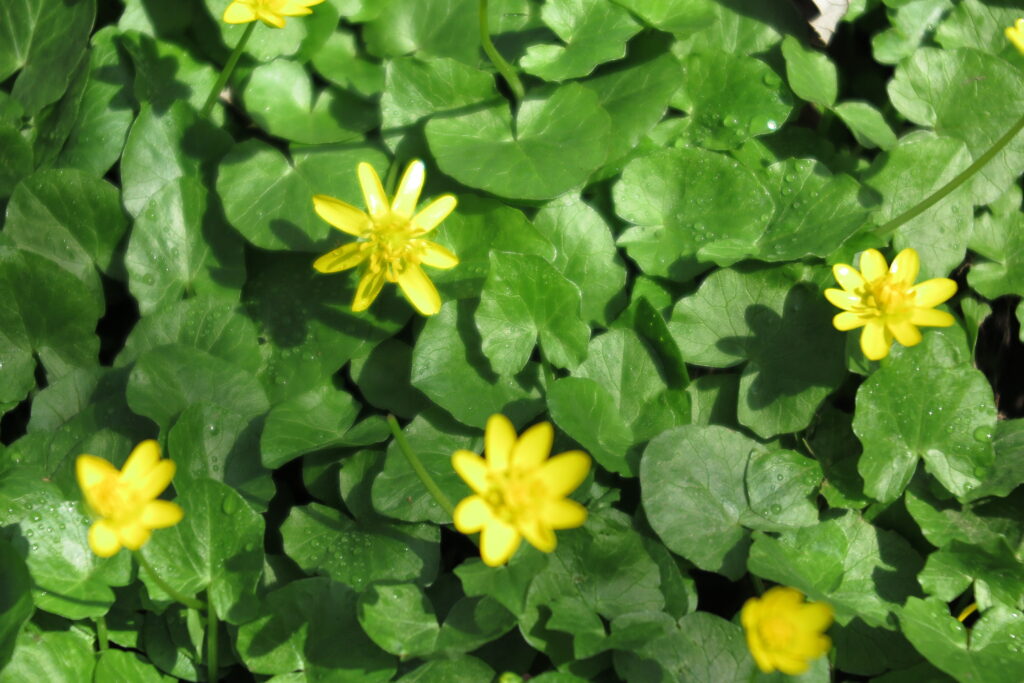
Lesser Celandine presents a compact yet expansive form, spreading outward across the ground rather than growing vertically. Its structure is centered around clusters of rounded, heart-shaped leaves that create a dense and continuous surface. This growth style allows it to dominate visually despite its relatively short height.
The leaves are one of its most defining features. Smooth, glossy, and deep green, they reflect light in a way that makes patches of the plant easy to identify from a distance. Their uniform shape and size contribute to a consistent appearance across entire colonies, reinforcing its ground-covering nature.
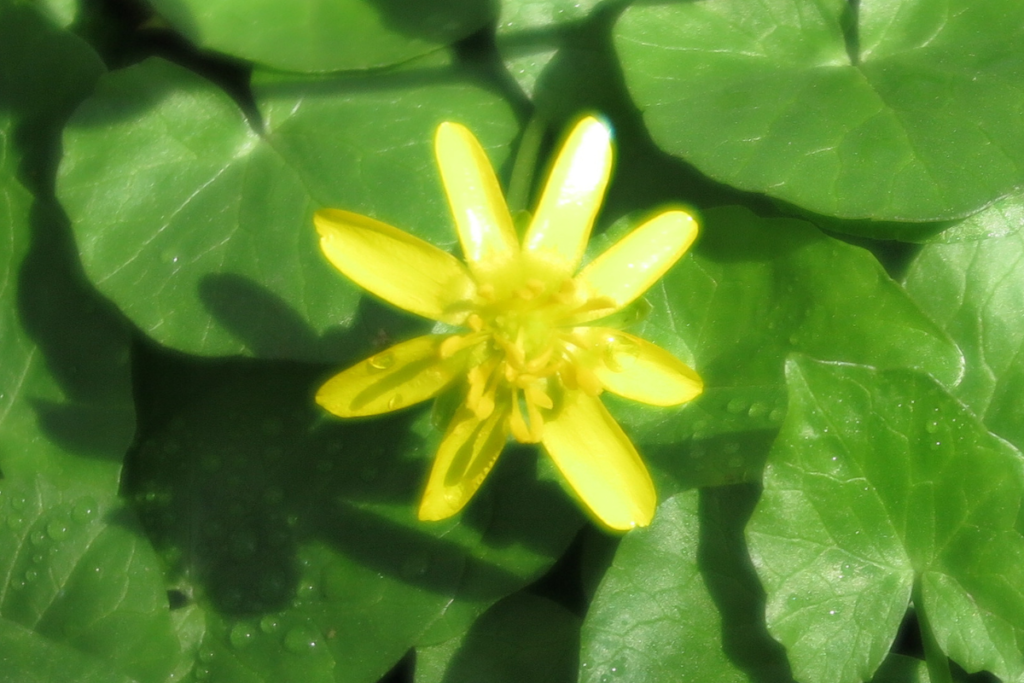
The flowers rise slightly above the leaf layer, each supported by a thin, upright stem. With multiple narrow petals arranged in a circular pattern, they form small, star-like blooms. The bright yellow coloration adds contrast to the darker foliage, creating a striking yet simple visual combination.
Across its range, Lesser Celandine maintains a consistent look, with little variation in structure or form. Its adaptability lies not in changing its physical traits but in its ability to establish dense populations. This consistency makes it one of the more easily recognizable early spring plants once familiar.
Lesser Celandine Growth & Behavior: Life Cycle, Spread, and Seasonal Development
Lesser Celandine follows a rapid and highly efficient growth cycle. It emerges early in the year, taking advantage of open conditions before taller vegetation develops. During this period, it quickly forms dense mats, covering available ground in a relatively short time.
Reproduction occurs through both seeds and underground structures, allowing the plant to expand steadily over time. These underground components enable it to return each year without relying solely on new germination. As a result, established patches often grow larger with each passing season.
Seasonal changes play a major role in its behavior. After flowering in early spring, the plant begins to decline as conditions shift. By late spring or early summer, the above-ground portions typically disappear, leaving little visible trace until the following year. This cycle allows it to avoid competing with later-growing plants.
Its response to sunlight and water is closely tied to its seasonal timing. It thrives during periods of consistent moisture and moderate light exposure, completing its active phase before harsher conditions develop. This early-season strategy defines much of its behavior and contributes to its success.
Lesser Celandine Habitat: Where Ficaria verna Naturally Grows
Lesser Celandine is commonly found in environments that provide a balance of moisture and seasonal light. It favors landscapes where conditions remain stable during early spring, allowing it to establish and spread without interruption. These settings often support a wide variety of low-growing plant life.
It frequently appears in wooded areas, particularly where the ground remains undisturbed. Forest floors provide a layer of organic material that supports its growth, while the seasonal canopy allows light to reach the ground during its active phase. These areas offer the consistency the plant relies on.
Beyond forests, it can also be found in open or semi-open spaces such as grassy fields, edges, and lightly managed landscapes. These environments share similar seasonal characteristics, even if they differ in structure. The plant’s ability to occupy both shaded and partially open areas contributes to its widespread presence.
Soil and climate conditions further shape its distribution. It prefers soils that retain moisture without becoming overly saturated, along with climates that provide clear seasonal transitions. These factors create an environment where Lesser Celandine can complete its growth cycle efficiently and return each year with minimal variation.