Lesser Celandine (Ficaria verna) Habitat: Where It Grows and Environmental Conditions Guide
Quick Facts
Primary Habitat: Forest, woodland edges, floodplains, gardens
Soil Type: Loamy, clay, well-drained (tolerates compact soils)
Soil pH Preference: Neutral to slightly alkaline
Moisture Level: Moist to wet
Climate Zone: Temperate
USDA Hardiness Zone: 4–9
Elevation Range: Sea level to ~4,000 ft (varies by region)
Light Requirements: Partial shade to full sun (early-season exposure)
Location Observed: Pennsylvania
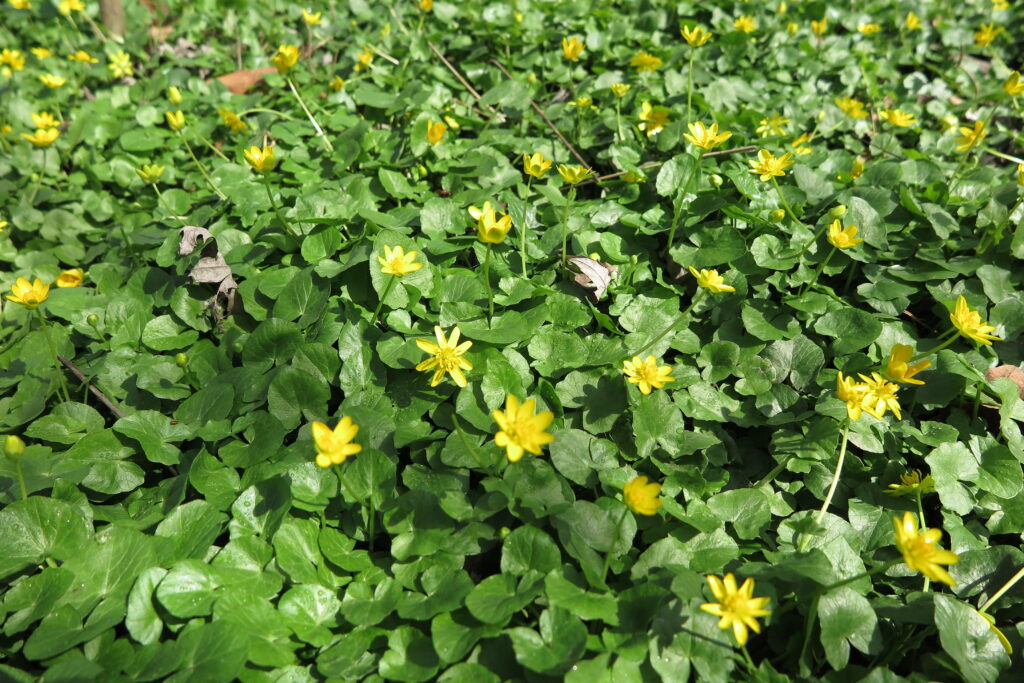
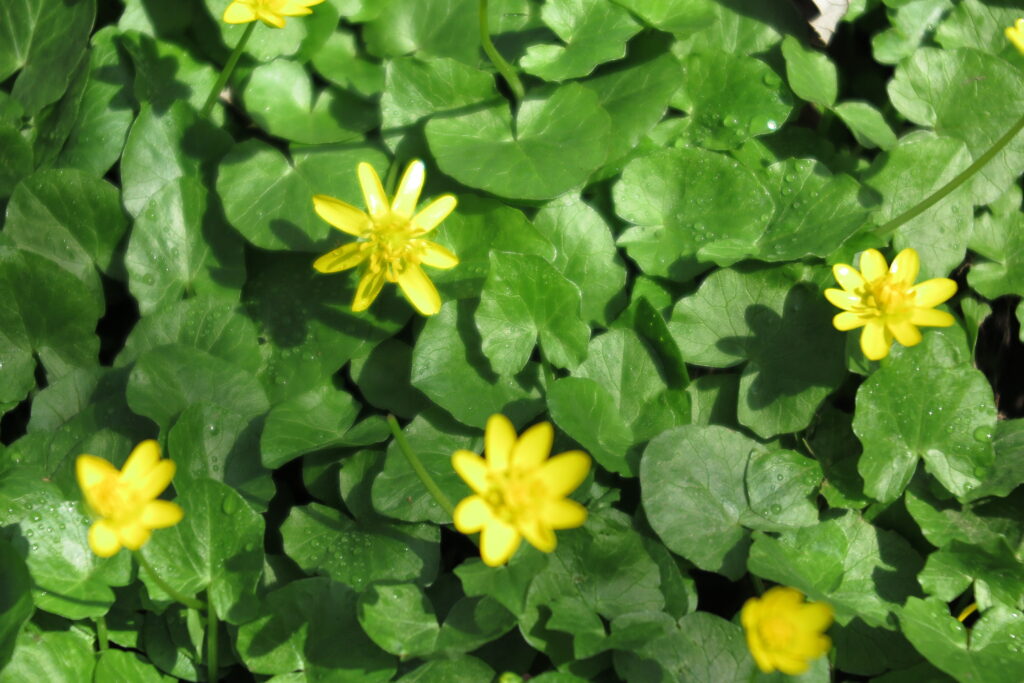
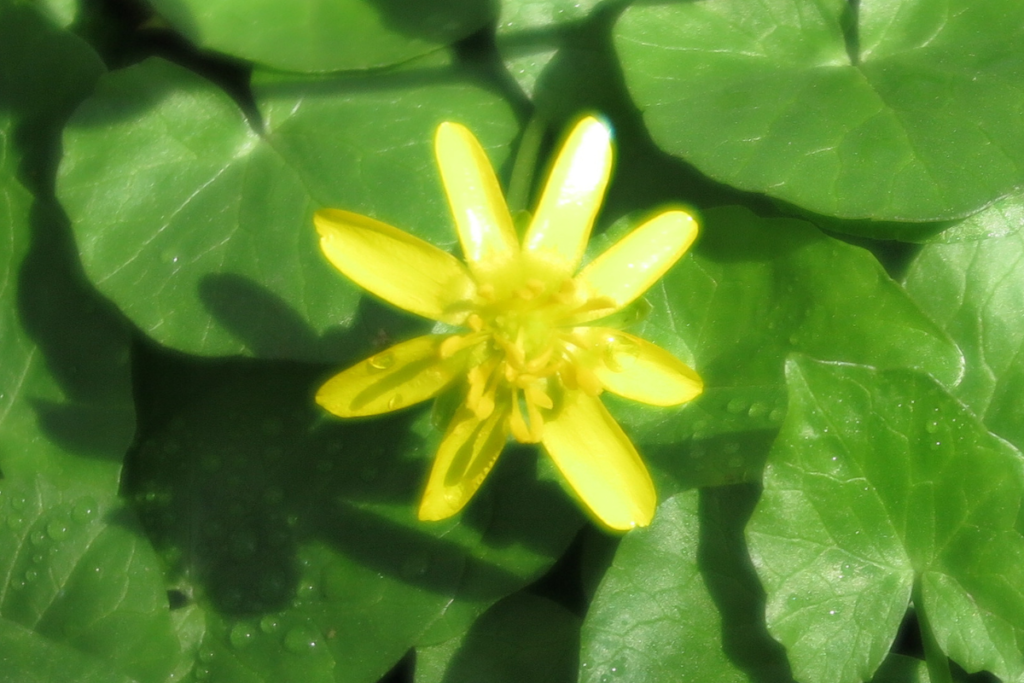
Lesser Celandine is a low-growing flowering plant recognized for its bright yellow blooms and glossy green leaves that appear early in the year. Its dense, ground-hugging presence gives it a distinctive look, often forming continuous patches that stand out against surrounding vegetation. Despite its small size, it quickly becomes one of the most noticeable plants in early spring landscapes.
Originally native to Europe, western Asia, and parts of North Africa, Lesser Celandine has expanded well beyond its natural range. It is now widely encountered in temperate regions where seasonal transitions allow it to establish and persist. Its ability to adapt to new environments has contributed to its widespread presence in introduced areas.
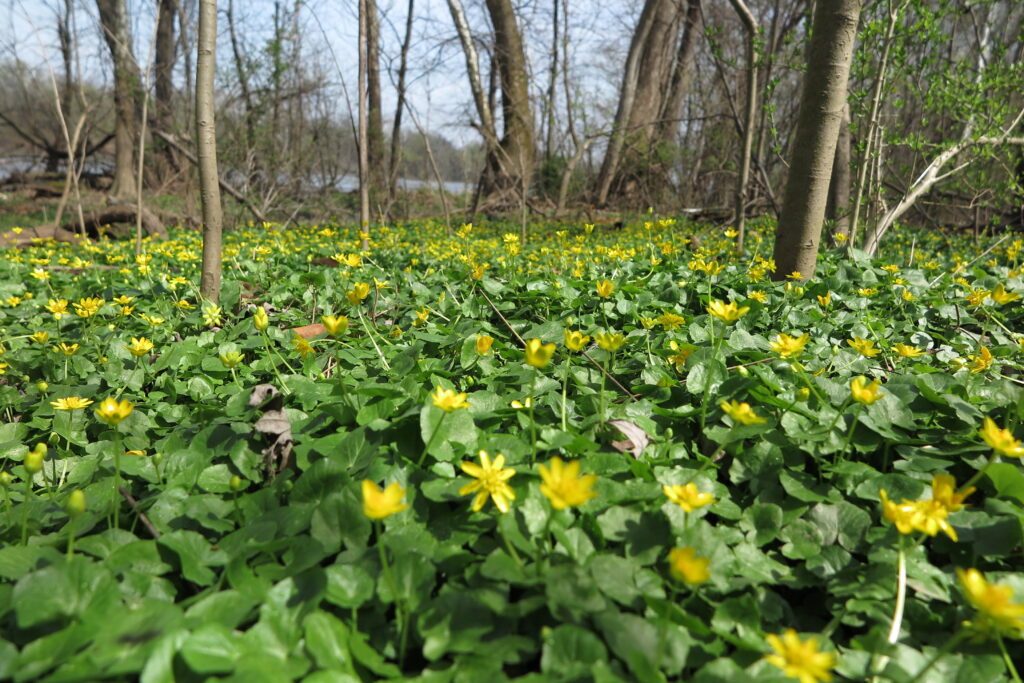
When observed in the field, it often appears as a carpet of green leaves punctuated by bright yellow flowers. The setting is usually calm and moisture-rich, with filtered light reaching the ground. This combination creates an environment where the plant can establish itself visually and physically before other species fully emerge.
Lesser Celandine Habitat Overview: Natural Range and Environmental Preferences
Lesser Celandine is most closely associated with temperate environments that experience distinct seasonal changes. These regions provide the timing and conditions necessary for its early appearance, allowing it to establish before other vegetation becomes dominant. Its presence is often linked to landscapes that remain stable during early spring.
Within its native range, the plant is commonly found in woodland settings and lowland areas where moisture is consistently available. These environments support its ability to form dense patches, giving it a strong visual and physical presence. As it has spread beyond its original range, it has maintained these preferences while adapting to new conditions.
The plant demonstrates a notable level of adaptability, appearing in both natural and human-influenced environments. It can establish itself in undisturbed forests as well as in managed spaces such as parks and gardens. This flexibility has contributed to its widespread distribution.
Overall, Lesser Celandine favors environments that combine consistent moisture, moderate light, and stable seasonal patterns. These factors create a reliable framework that supports its continued presence across a wide geographic range without requiring significant changes in its structure.
Lesser Celandine Habitat: Where Ficaria verna Naturally Grows
Lesser Celandine is most commonly found in deciduous forests, where leaf litter and seasonal light create a suitable setting. These areas provide a natural layer of organic material that supports its growth, while early-season sunlight reaches the ground before the canopy fully develops.
It is also frequently observed along woodland edges and transitional zones. These locations offer a balance between open space and partial cover, allowing the plant to establish in areas that receive both light and protection. Its presence often follows these boundaries, forming patches along edges rather than deep within dense vegetation.
Beyond forests, the plant can be found in floodplains, stream banks, and other low-lying areas where moisture remains consistent. These environments provide the conditions necessary for its early development, supporting its ability to form dense, continuous coverage.
In more human-influenced settings, Lesser Celandine appears in lawns, gardens, and urban green spaces. These areas often replicate the moisture and soil conditions found in natural environments, allowing the plant to establish itself even in managed landscapes. Its ability to thrive in both natural and altered settings contributes to its widespread distribution.
Lesser Celandine Environmental Conditions: Soil, Moisture, Light, and Climate
Lesser Celandine thrives in soils that retain moisture while still allowing for drainage. Loamy and clay-based soils are particularly well-suited, as they provide both stability and water retention. These soil types support the plant’s underground structures and help maintain consistent growth conditions.
The plant shows a preference for neutral to slightly alkaline soil pH levels. These conditions are commonly found in many woodland and lowland environments, allowing it to establish without requiring specialized soil chemistry. This flexibility contributes to its ability to spread across different regions.
Moisture plays a critical role in its success. Lesser Celandine favors environments where the soil remains consistently moist, especially during early spring. It can tolerate periods of higher moisture, making it well-suited to areas near water sources or in low-lying terrain.
Light availability is closely tied to seasonal changes. The plant benefits from partial shade to full sun during its active phase, taking advantage of early-season light before surrounding vegetation reduces exposure. Combined with a temperate climate and moderate elevation range, these environmental conditions create a stable setting that supports its long-term establishment and persistence.