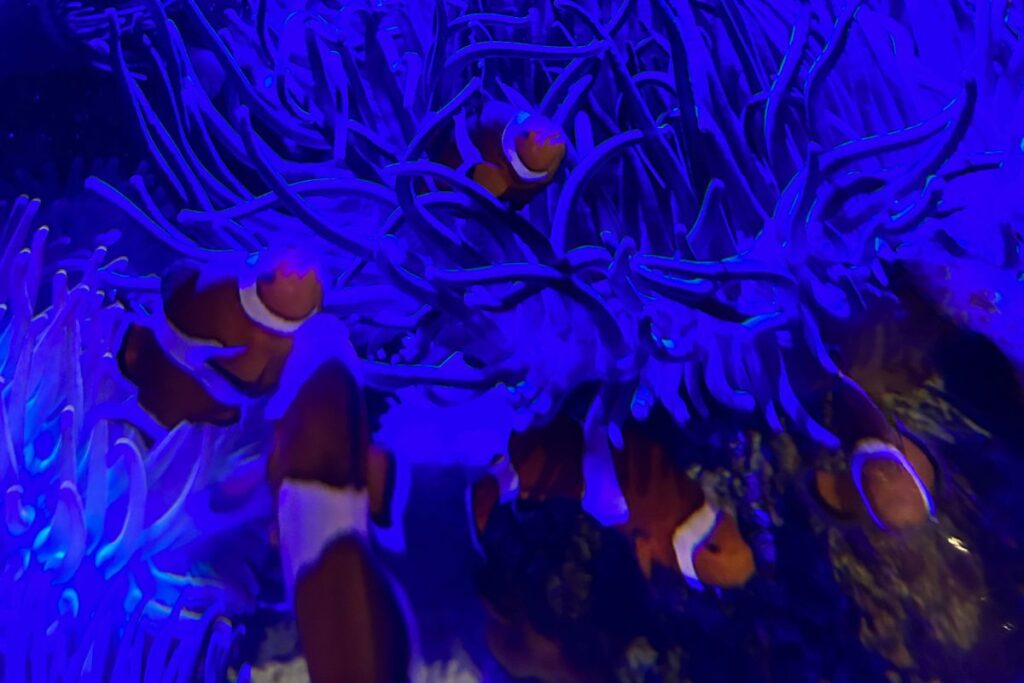
Ocellaris Clownfish (Common Clownfish) in Pennsylvania – Aquarium Exhibit Encounter in Atlanta, Georgia
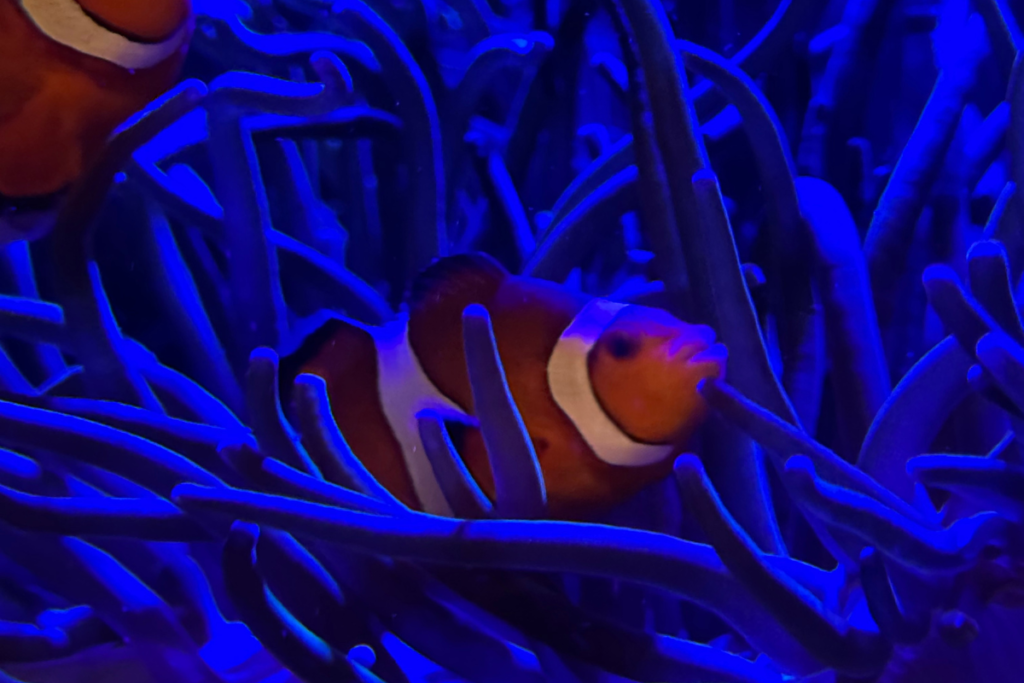
Quick Facts
Scientific Name: Amphiprion ocellaris
Common Name: Ocellaris Clownfish (Common Clownfish)
Location: Aquarium Exhibit – Atlanta, Georgia, USA
Size: 3–4 inches (7–11 cm)
Diet: Omnivore – eats small crustaceans, plankton, algae, and prepared aquarium foods
Habitat: Warm tropical saltwater reefs, commonly found living among sea anemones in the Indo-Pacific
Lifespan: 6–10 years (can live longer in protected aquarium environments)
Behavior: Highly territorial and social fish that form small groups with a strict hierarchy; known for their symbiotic relationship with sea anemones, where they gain protection and shelter
Notable Feature: Bright orange coloration with three white bands and a unique ability to live safely among stinging sea anemones
The Ocellaris Clownfish, commonly known as the Common Clownfish, is one of the most recognizable marine fish in the world. Known for its bright orange coloration and distinct white bands, this species has become iconic in both wild reef ecosystems and aquarium exhibits.
Although this individual was observed in a carefully maintained aquarium exhibit in Atlanta, Georgia, its relevance extends to Pennsylvania through education, conservation awareness, and aquarium displays that replicate its natural ocean environment. Encounters like this allow viewers in Pennsylvania to experience tropical marine life that would otherwise be inaccessible.
In this setting, the clownfish was seen moving through a vibrant, reef-like aquarium environment designed to mimic natural ocean conditions. The controlled exhibit provides a clear and detailed view of the species, offering an opportunity to closely observe its physical traits and natural presence without disturbance.
Ocellaris Clownfish Overview – Appearance, Range, and General Traits
The Ocellaris Clownfish is a small, laterally compressed fish distinguished by its vivid orange body and three bold white vertical bands outlined in black. Its coloration serves as both identification and visual appeal, making it one of the most easily recognized fish species worldwide. The fins are rounded, and the body shape allows for agile movement in confined reef spaces.
In terms of global distribution, this species is native to the warm tropical waters of the Indo-Pacific region, including areas such as the Great Barrier Reef and coastal Southeast Asia. While not naturally found in Pennsylvania waters, it is commonly displayed in aquariums across the state, bringing marine biodiversity into inland environments.
The species shows a high level of adaptability, particularly in controlled environments like aquariums. It thrives in stable water conditions and can adjust well to life in captivity when provided with appropriate care. This adaptability is one of the reasons it is so commonly featured in public and private aquariums.
Overall, the Ocellaris Clownfish is known for its resilience, striking appearance, and ability to live in close association with other reef organisms. Its compact size and manageable nature make it a frequent subject of study and observation in educational exhibits.
Ocellaris Clownfish Behavior – Movement, Social Structure, and Activity Patterns
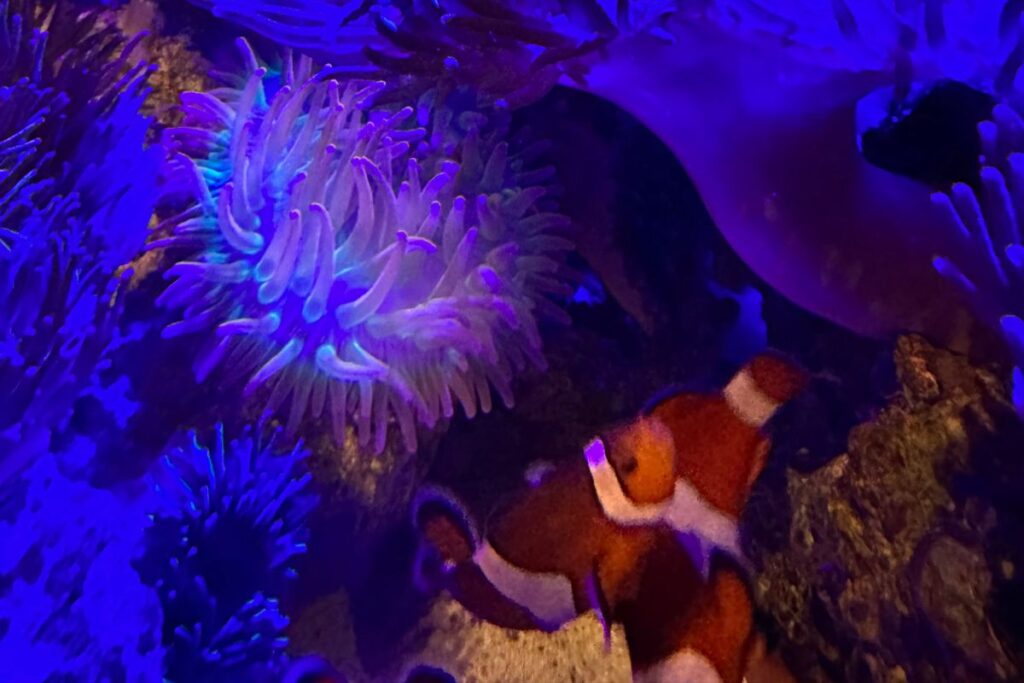
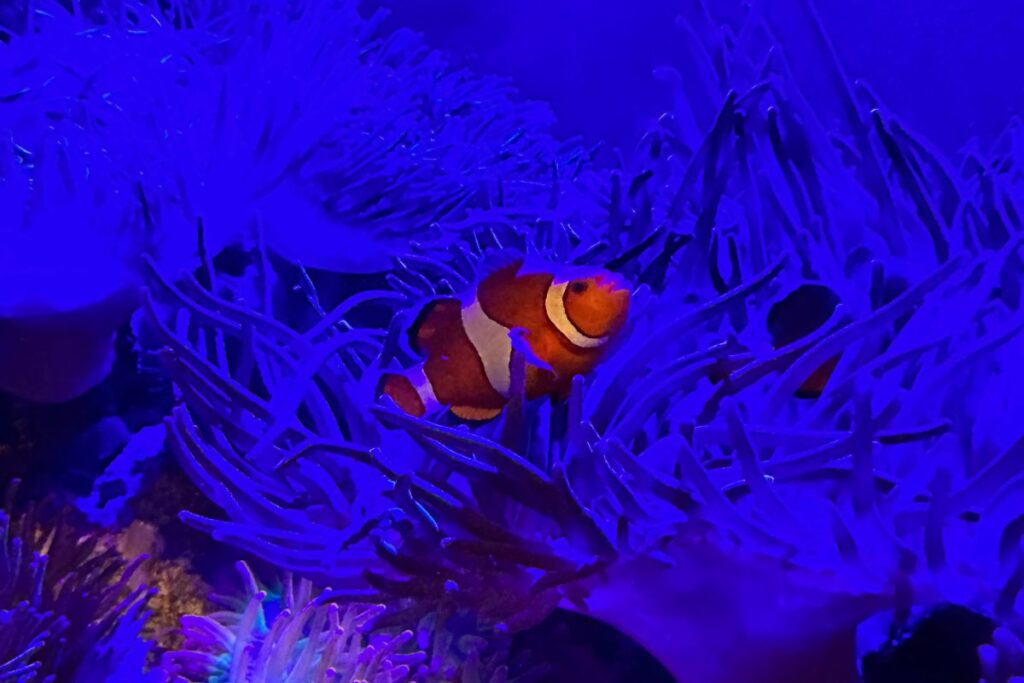
The Ocellaris Clownfish is an active swimmer, often seen making short, controlled movements within a defined area. Rather than roaming widely, it tends to stay within a specific zone, especially when associated with a host structure or territory. Its movement pattern is steady and deliberate, allowing it to maintain awareness of its surroundings.
This species exhibits strong territorial behavior, particularly within small social groups. Clownfish live in a strict hierarchy, typically consisting of a dominant female, a breeding male, and several smaller subordinate individuals. This structured social system helps maintain order and stability within the group.
Unlike many other fish, clownfish are not known for producing noticeable vocalizations to humans, but they do communicate through subtle movements and body positioning. These interactions play a key role in maintaining social structure and establishing dominance within the group.
Activity levels remain fairly consistent throughout the day, with the fish remaining alert and responsive to its environment. In aquarium settings, it often displays curiosity, interacting with its surroundings and occasionally approaching the glass when movement is detected outside the tank.
Ocellaris Clownfish Habitat – Natural Environment and Pennsylvania Relevance
In the wild, the Ocellaris Clownfish inhabits warm, shallow saltwater reef environments where coral structures provide shelter and stability. These ecosystems are rich in biodiversity and offer the conditions necessary for survival, including consistent temperatures, salinity levels, and protective structures.
One of the defining aspects of its environment is the presence of sea anemones, which provide a unique living space within reef systems. The surrounding reef structure offers protection from predators and supports a balanced ecosystem that sustains the species.
These environments are typically found in tropical regions with clear, sunlit waters that allow coral and other reef organisms to thrive. The stability of these conditions is essential, as even small changes in temperature or water chemistry can impact the health of reef systems.
While Pennsylvania does not have natural saltwater reef habitats, aquarium exhibits recreate these environments with remarkable accuracy. Facilities in and around Pennsylvania, as well as exhibits like the one in Atlanta, Georgia, allow individuals to observe and learn about these ecosystems firsthand, bridging the gap between inland regions and ocean life.