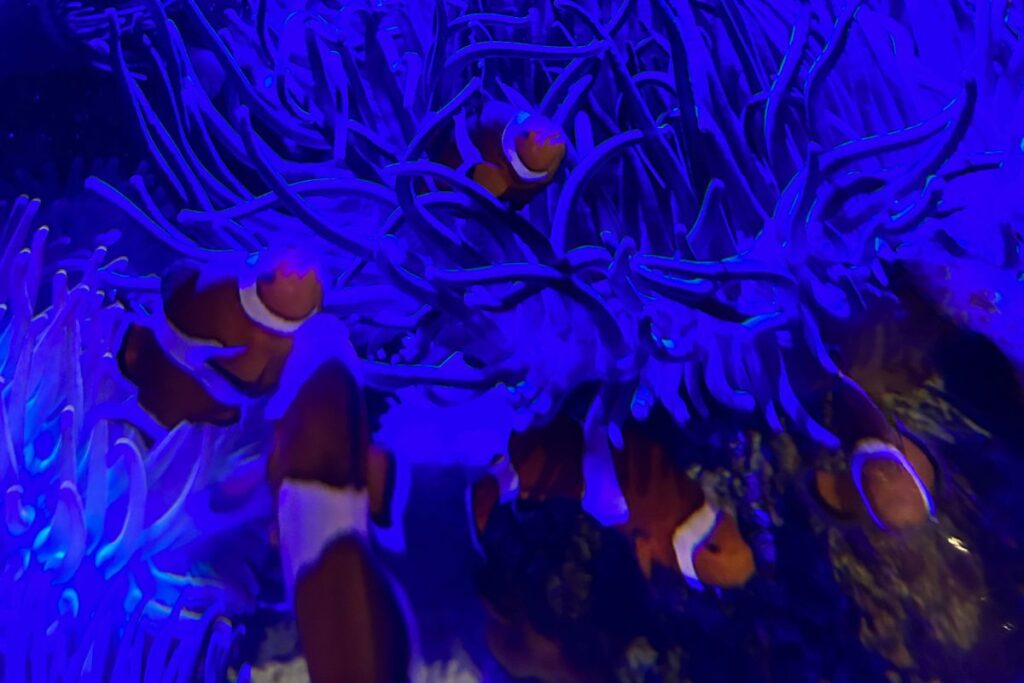
Ocellaris Clownfish (Common Clownfish) Behavior in Pennsylvania – Aquarium Exhibit Encounter in Atlanta, Georgia
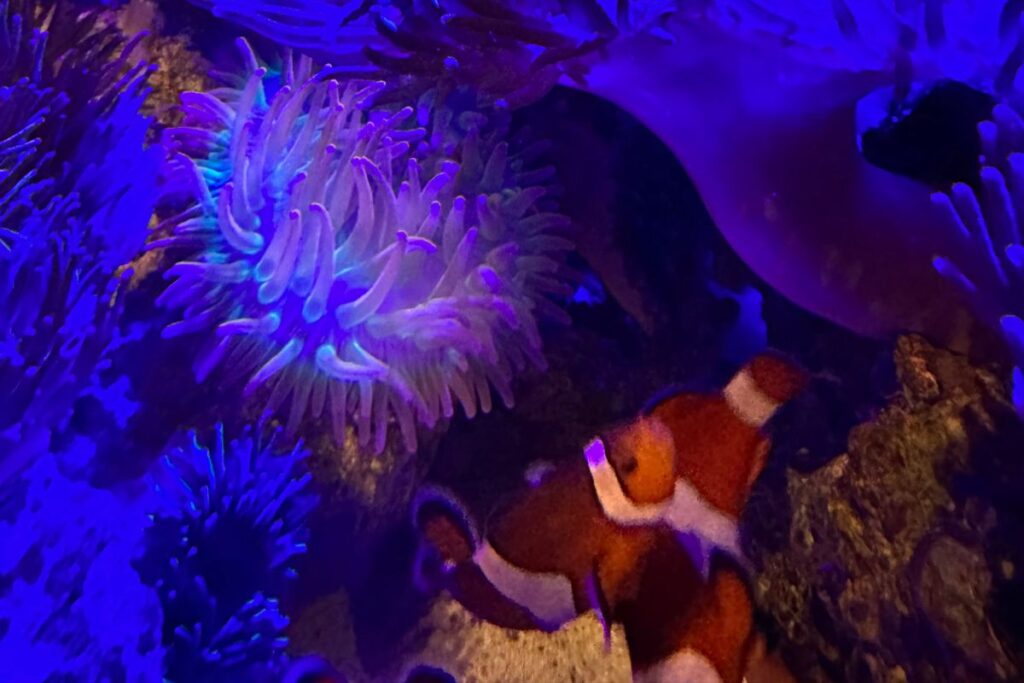
Quick Facts
Scientific Name: Amphiprion ocellaris
Common Name: Ocellaris Clownfish (Common Clownfish)
Location: Aquarium Exhibit – Atlanta, Georgia, USA
Activity Type: Diurnal (active during the day)
Social Behavior: Group-living with a strict social hierarchy; typically found in small groups consisting of a dominant female, a breeding male, and subordinate individuals
Territorial Behavior: Highly territorial within a small defined area, often defending a specific space or host structure from intruders
Vocalizations: Produces subtle clicking and popping sounds used for communication and establishing dominance, though not easily heard in aquarium settings
Migration/Seasonal Behavior: Non-migratory; remains within a fixed territory year-round with no significant seasonal movement
Behavior observed in a controlled aquarium environment designed to replicate natural reef conditions.
The Ocellaris Clownfish, commonly known as the Common Clownfish, is a small tropical marine fish recognized for its vivid orange coloration and distinct white banding. It is widely known for its unique behavioral patterns and close interactions within its environment.
While naturally found in tropical Indo-Pacific waters, this individual was observed in a controlled aquarium exhibit in Atlanta, Georgia. For viewers and researchers in Pennsylvania, such exhibits provide a valuable opportunity to study and understand the behavior of marine species that are otherwise not present in local ecosystems.
In this exhibit setting, the clownfish was seen navigating a reef-like tank environment, maintaining a consistent presence within a defined area. The controlled conditions allow for clear observation of its movement, social tendencies, and behavioral responses in a stable, replicated environment.
Ocellaris Clownfish Behavior Overview – Movement, Activity, and General Traits
The Ocellaris Clownfish displays steady and controlled movement, typically remaining within a confined area rather than roaming widely. Its swimming style is deliberate, with short bursts of motion followed by periods of hovering, allowing it to stay oriented within its surroundings.
In terms of activity levels, this species is primarily active during daylight hours. It remains alert and responsive, continuously adjusting its position and reacting to subtle changes in its environment. This consistent activity pattern makes it easy to observe over extended periods.
The species demonstrates a high level of adaptability, particularly in controlled environments such as aquariums. It quickly becomes accustomed to stable conditions and can exhibit predictable movement and interaction patterns once settled.
Overall, the behavioral traits of the Ocellaris Clownfish are defined by consistency, awareness, and structured movement. Its ability to maintain position and respond to its environment contributes to its success both in the wild and in aquarium settings.


Ocellaris Clownfish Behavior Patterns – Movement, Territoriality, and Daily Activity
The movement patterns of the Ocellaris Clownfish are centered around maintaining a specific territory. Rather than exploring large areas, it tends to remain within a defined zone, making repeated passes and adjusting its position within that space. This creates a recognizable and predictable movement pattern.
Territorial behavior is a key characteristic of this species. Individuals actively defend their space from perceived intruders, using quick movements and positioning to establish boundaries. This territorial nature becomes more pronounced in group settings, where hierarchy plays a role.
Although not easily audible to humans, the Ocellaris Clownfish is capable of producing subtle clicking or popping sounds. These sounds are believed to be used for communication, particularly in establishing dominance or responding to nearby individuals.
Activity patterns remain consistent throughout the day, with the fish showing peak activity during daylight hours. It does not undergo significant seasonal behavioral changes and maintains a relatively stable routine in both natural and controlled environments.
Ocellaris Clownfish Interaction and Survival Behavior – Social Structure and Response Patterns
The Ocellaris Clownfish exhibits a structured social system, typically forming small groups with a clear hierarchy. A dominant female leads the group, followed by a breeding male and smaller subordinate individuals. This hierarchy reduces conflict and maintains stability within the group.
In terms of interaction, the species is highly aware of its surroundings and responds quickly to changes. When faced with potential threats, it may retreat, adjust its position, or increase its movement speed to maintain safety. These responses are controlled and efficient rather than erratic.
Feeding-related behavior involves short, precise movements and quick reactions to available food sources. The fish remains attentive and responsive, often positioning itself to take advantage of opportunities without straying far from its established area.
Overall, the survival instincts of the Ocellaris Clownfish are centered around maintaining territory, staying within a structured social system, and reacting quickly to environmental changes. These behavioral traits contribute to its ability to thrive in both natural reef systems and controlled aquarium environments.