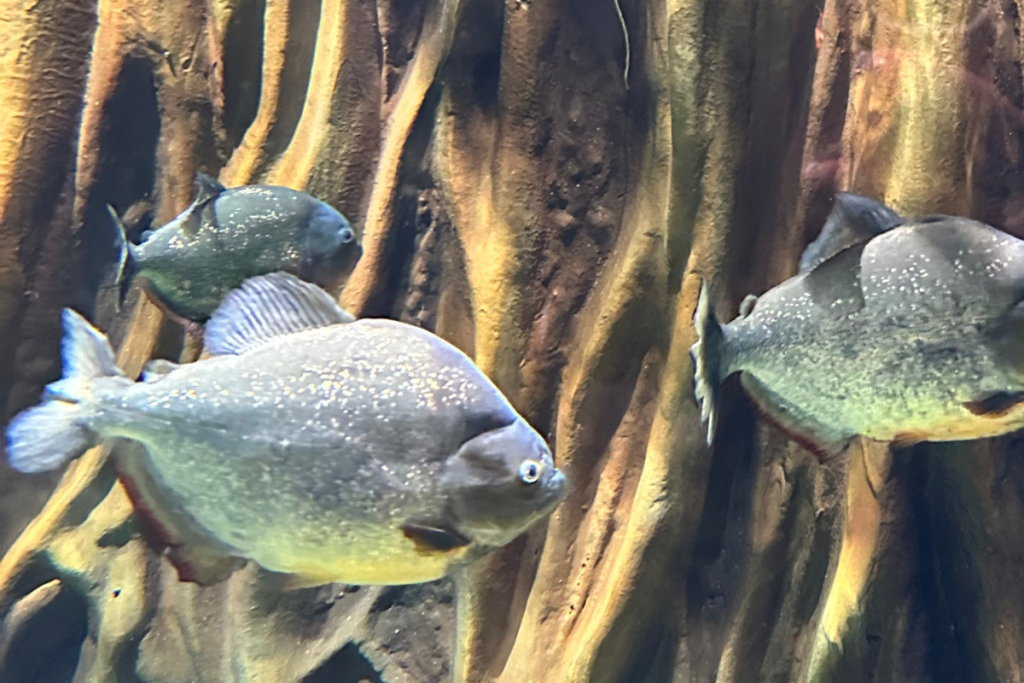
What Do Red-bellied Piranha Eat? Diet, Feeding Habits & Hunting Behavior
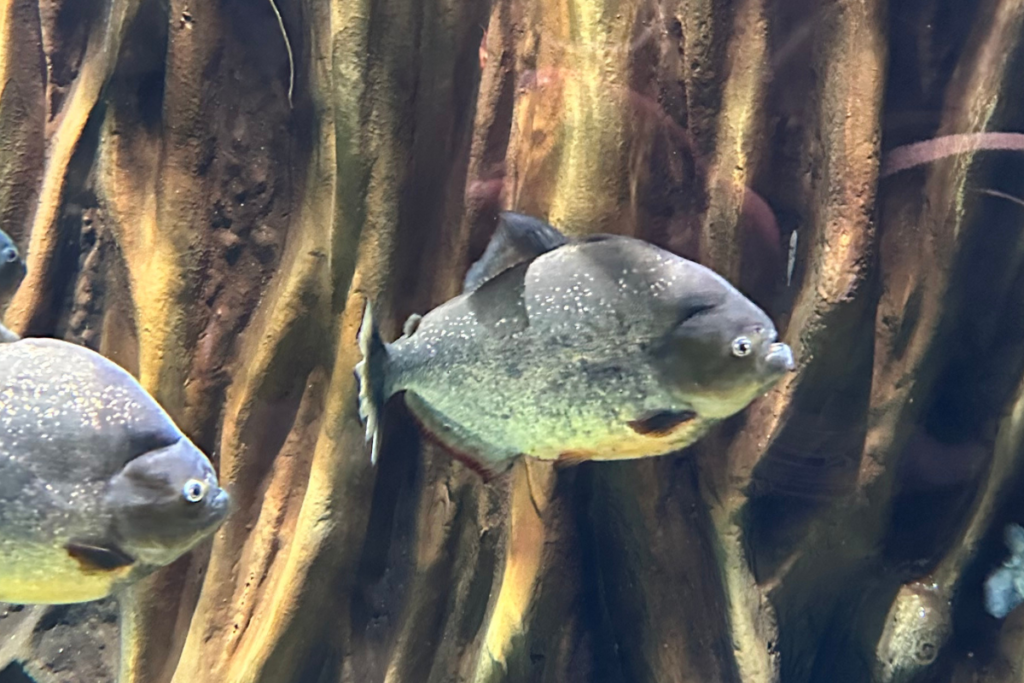
Quick Facts
Scientific Name: Pygocentrus nattereri
Common Name: Red-bellied Piranha
Diet Type: Omnivore (leans carnivorous)
Main Food Sources: Fish, insects, crustaceans, carrion, plant material, seeds
Feeding Time: Most active at dawn and dusk (crepuscular)
Foraging Method: Opportunistic feeding; group-based response to food presence
Seasonal Diet Changes: Shifts between animal prey and plant matter depending on water levels and availability
Predatory Adaptations: Razor-sharp interlocking teeth, powerful bite force, rapid burst speed
Location Observed: Atlanta, Georgia, USA (exhibit)
The Red-bellied Piranha (Pygocentrus nattereri) is widely known for its powerful bite and reputation as a predator, but its diet is far more diverse than often assumed. It consumes a mix of animal and plant material, adapting to what is available in its environment.
This species is naturally found throughout South America, especially within the Amazon Basin and surrounding river systems. In these waters, it feeds on a variety of organisms that move through or settle within the water.
Picture murky river water where visibility is limited and movement is subtle. Beneath the surface, a piranha reacts instantly to changes around it, responding to opportunity with speed and precision.
Red-bellied Piranha Diet Overview – Feeding Type & General Eating Habits
The Red-bellied Piranha is classified as an omnivore, though it leans heavily toward carnivorous feeding. This flexibility allows it to survive in environments where food availability changes throughout the year.
Feeding tendencies are opportunistic. Rather than constantly hunting, the piranha responds quickly when food becomes available, making use of short windows of opportunity.
Adaptability plays a key role in its diet. It can shift between consuming live prey, scavenging remains, and even eating plant matter when necessary.
Overall dietary behavior is based on efficiency. The Red-bellied Piranha does not rely on a single food source but instead uses a wide range of options to maintain consistent energy intake.
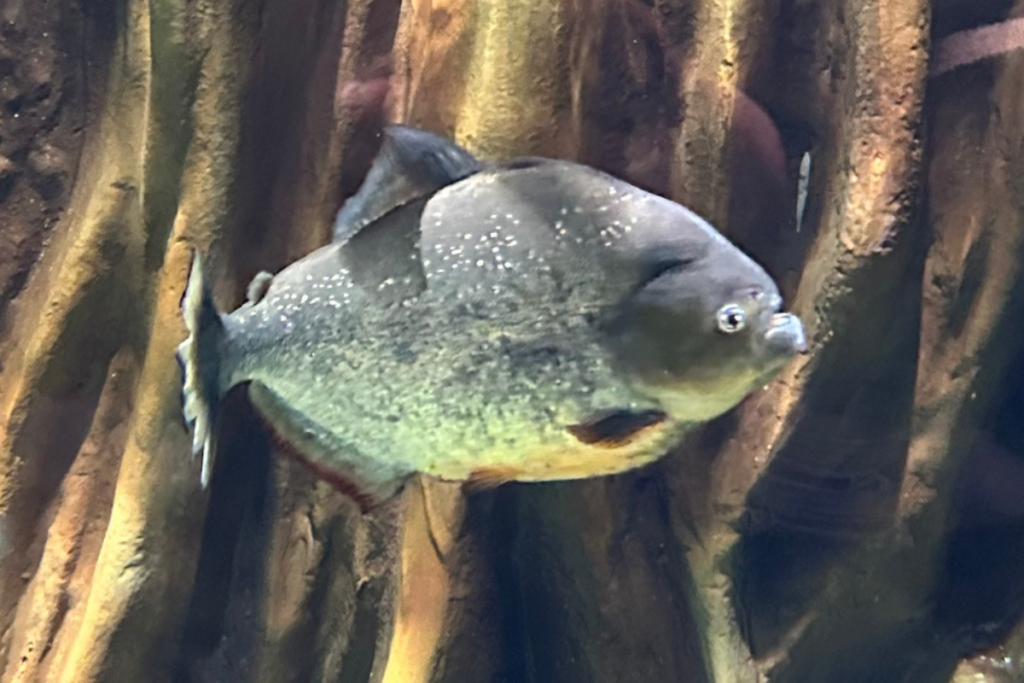
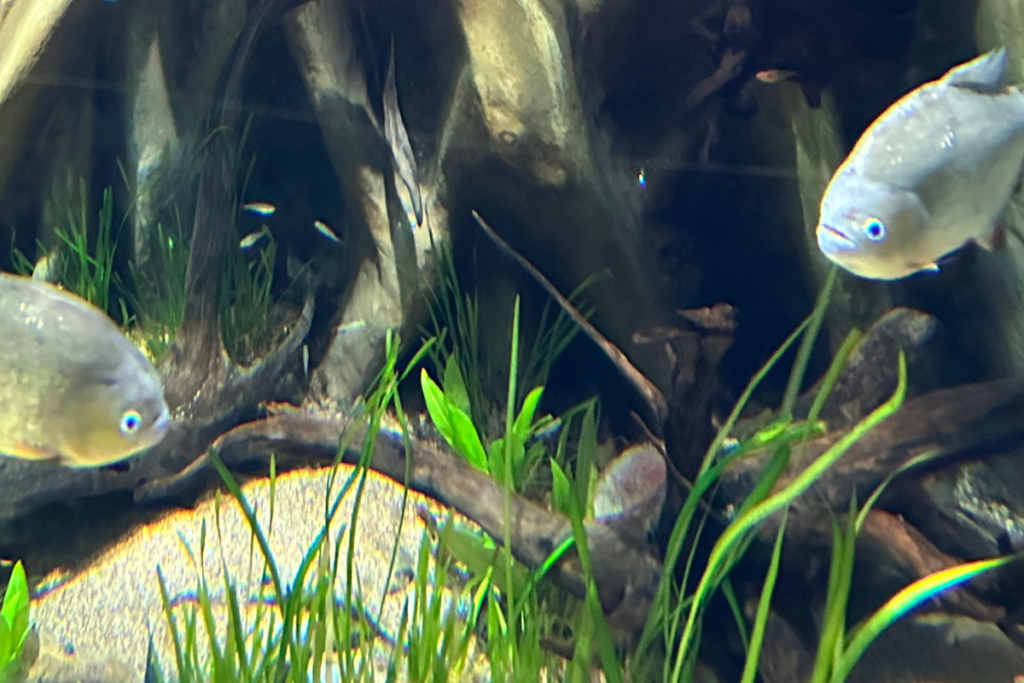
Red-bellied Piranha Diet – Food Sources, Variation & Availability
Fish make up a significant portion of the Red-bellied Piranha’s diet. Smaller fish or injured individuals are common targets, providing a high-protein food source.
Insects and crustaceans are also important. These smaller prey items are often consumed regularly and contribute to a balanced intake.
Carrion plays a major role in its feeding strategy. Rather than relying solely on hunting, the piranha frequently scavenges, taking advantage of already available food.
Plant material, including seeds and vegetation, is occasionally consumed. This becomes more common during certain seasons when other food sources may be less available.
Red-bellied Piranha Feeding Behavior & Survival – Strategy, Competition & Efficiency
The Red-bellied Piranha relies on rapid response rather than prolonged pursuit. When food is detected, it reacts instantly, using speed and precision to secure its share.
Foraging behavior often involves group dynamics. Multiple individuals may converge on a food source, increasing competition but also ensuring that food is consumed quickly.
Competition is intense but brief. Feeding events typically occur in short bursts, after which the group disperses back into a more controlled state.
Survival strategies center on efficiency and awareness. By combining sharp sensory perception with powerful physical adaptations, the Red-bellied Piranha maximizes its ability to obtain food while minimizing unnecessary energy use.