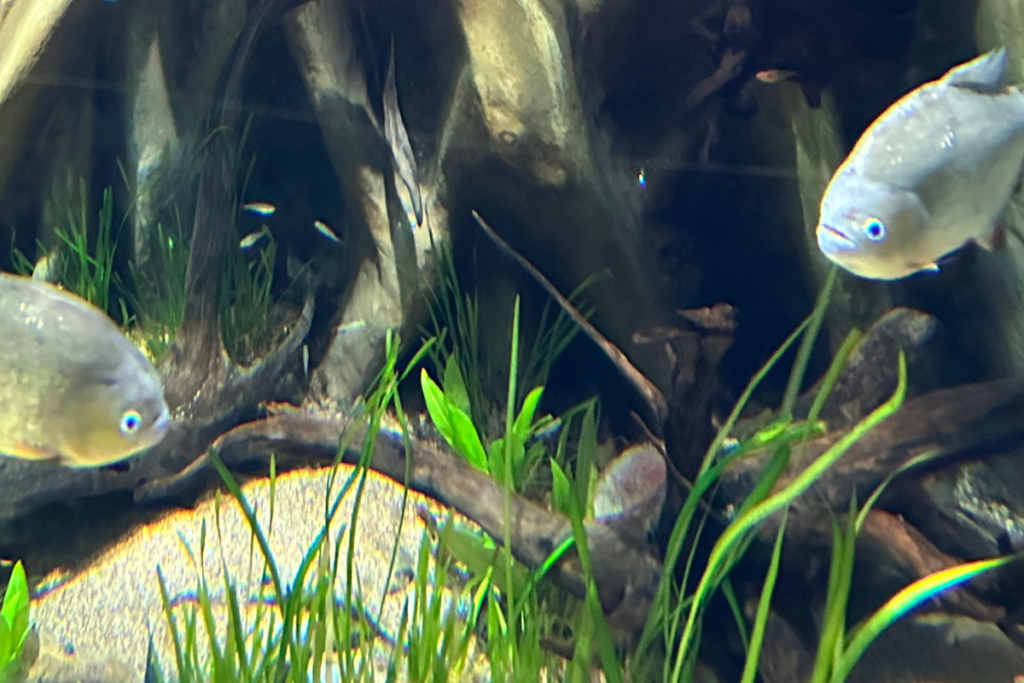
Red-bellied Piranha Behavior – Movement, Social Structure & Survival Instincts
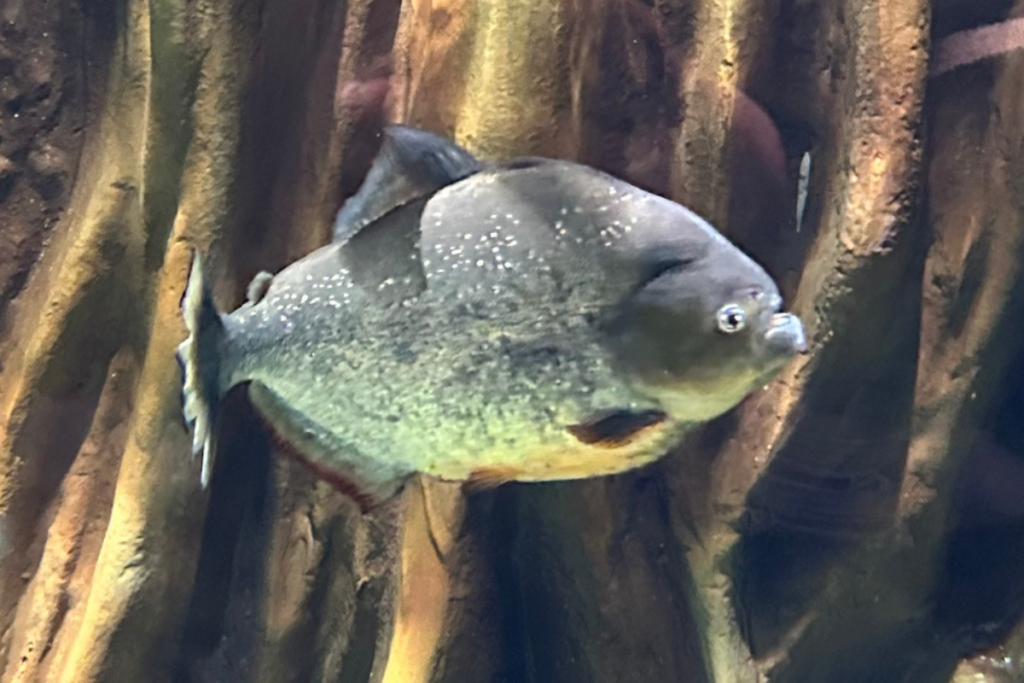
Quick Facts
Scientific Name: Pygocentrus nattereri
Common Name: Red-bellied Piranha
Activity Type: Crepuscular (most active at dawn and dusk)
Social Structure: Schooling species; forms loose to tight groups
Territorial Behavior: Semi-territorial; more defensive in feeding or stress situations
Movement Style: Coordinated group swimming with sudden bursts of speed
Communication Method: Body positioning, vibration signals, and subtle sound production
Defense Strategy: Group formation, rapid retreat bursts, and intimidation displays
Location Observed: Atlanta, Georgia, USA (exhibit)
The Red-bellied Piranha (Pygocentrus nattereri) is widely known for its reputation, yet its behavior is far more structured and calculated than commonly believed. Rather than constant aggression, it displays controlled, responsive actions shaped by its surroundings.
This species is naturally found throughout South America, particularly within the Amazon Basin and connected river systems. Across these regions, it exists within dynamic freshwater environments where awareness and timing play critical roles.
Picture a quiet stretch of water where visibility is low and movement is subtle. A group of piranhas holds position, shifting slightly as a unit, each individual reacting instantly to changes in the environment around them.
Red-bellied Piranha Behavior Overview – General Patterns & Activity Traits
The Red-bellied Piranha exhibits behavior centered on balance between caution and responsiveness. It does not act randomly; instead, its movements reflect awareness of both opportunity and risk.
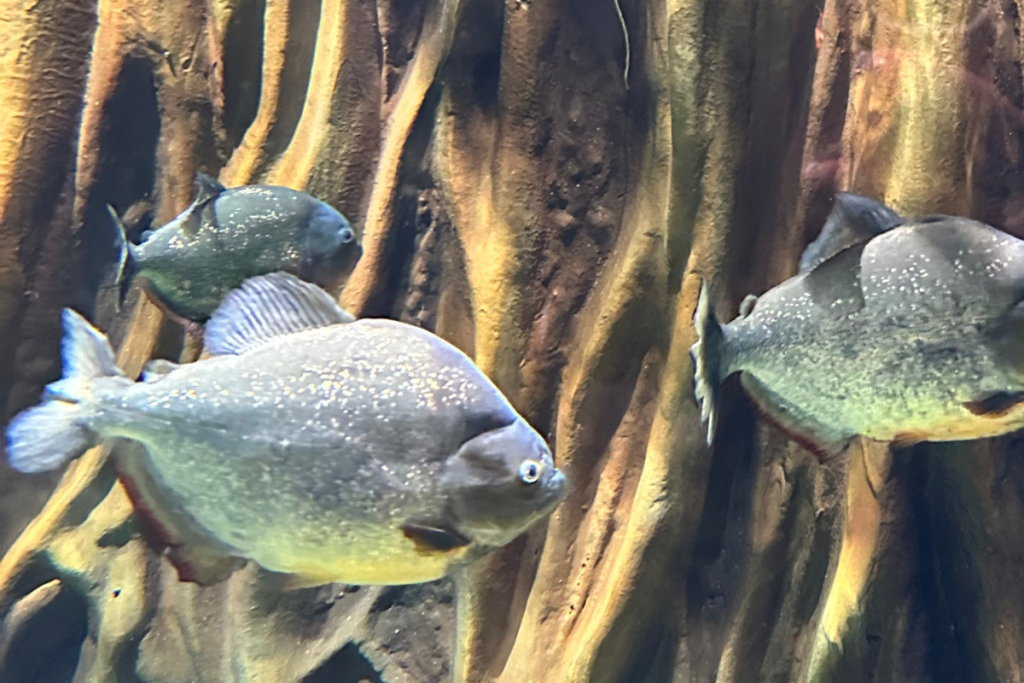
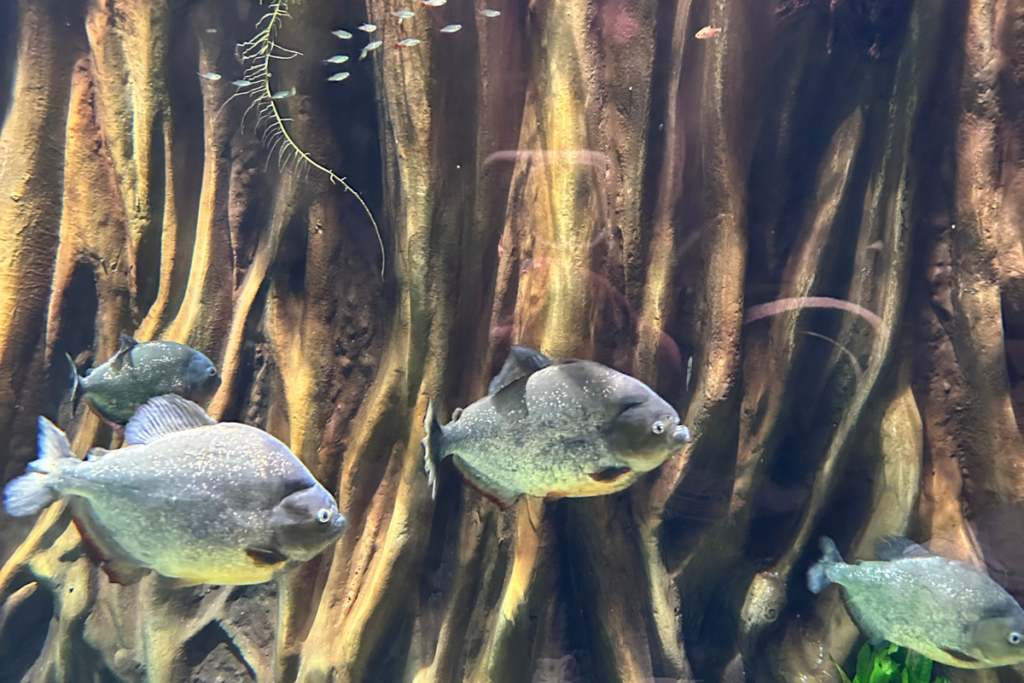
General movement tendencies show a reliance on group coordination. Individuals often remain close together, adjusting position in synchronized patterns that allow rapid collective response.
Activity levels vary depending on environmental conditions. While capable of sudden bursts of motion, these fish spend much of their time in controlled, steady positioning within the water.
Adaptability is a defining trait. The Red-bellied Piranha can shift its behavioral intensity based on food availability, environmental pressure, and group dynamics, allowing it to function efficiently across different situations.
Red-bellied Piranha Behavior – Movement, Territoriality & Communication
Movement is typically smooth and deliberate, with sudden acceleration when needed. Group swimming provides both awareness and protection, allowing individuals to respond quickly without acting alone.
Territorial behavior is situational rather than constant. While not aggressively territorial at all times, piranhas may defend space during feeding periods or when stressed, creating short bursts of defensive interaction.
Communication occurs through subtle physical cues. Changes in spacing, orientation, and synchronized movement help maintain group cohesion and signal shifts in behavior.
In addition, Red-bellied Piranhas are capable of producing low-frequency sounds. These vibrations contribute to communication during heightened activity, reinforcing coordination within the group.
Red-bellied Piranha Interaction & Survival Behavior – Response, Strategy & Group Dynamics
When responding to perceived threats, the Red-bellied Piranha relies heavily on group behavior. Tight formations can reduce individual risk while increasing overall awareness.
Social structure is flexible. Groups may expand or contract depending on conditions, allowing the species to adjust to changes in environment and resource availability.
Feeding-related behavior reflects opportunism rather than constant aggression. Individuals respond quickly when opportunity arises, but this behavior is typically brief and controlled.
Survival strategies emphasize efficiency and awareness. The combination of group coordination, rapid reaction time, and environmental sensitivity allows the Red-bellied Piranha to navigate complex conditions successfully without unnecessary risk.