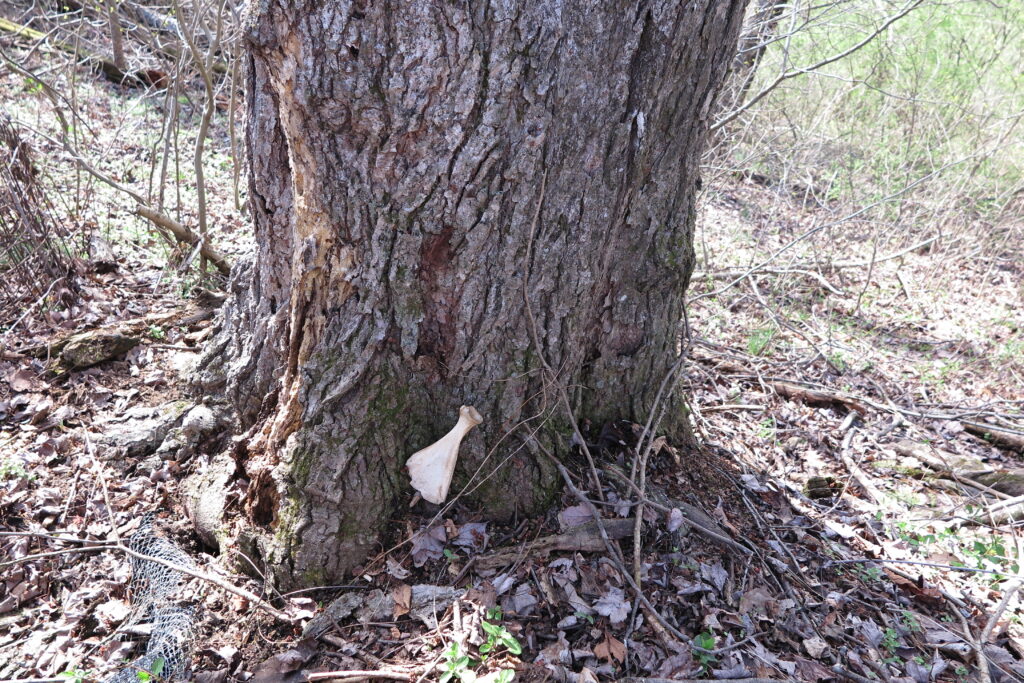
White-Tailed Deer Scapula (Shoulder Blade Fragment): Structure, Identification, and Physical Characteristics
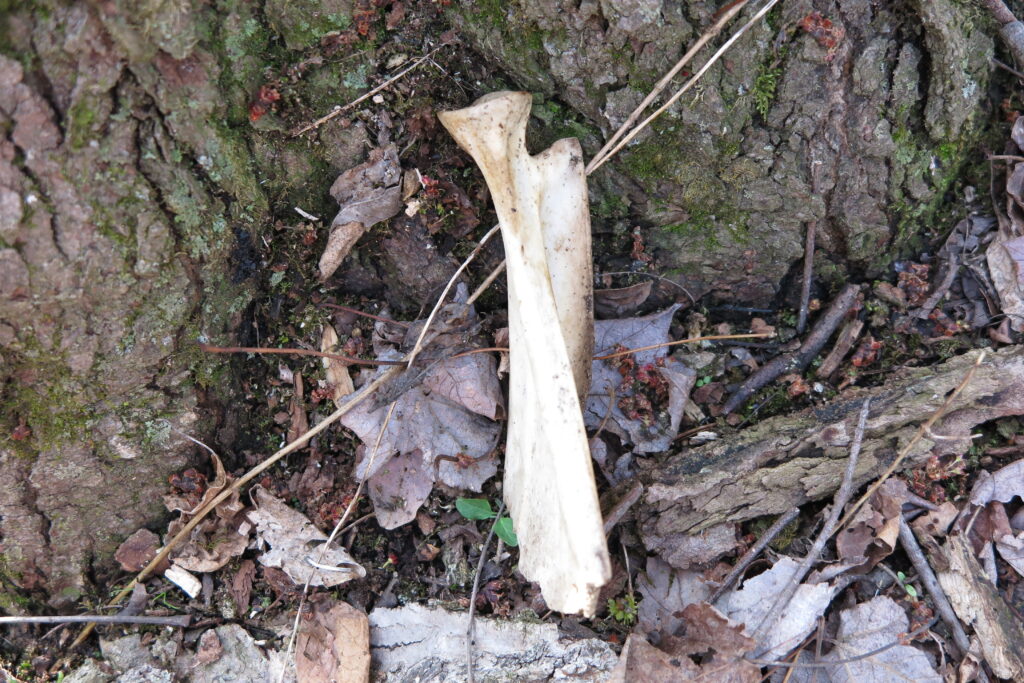
Quick Facts
Bone Composition: Dense outer layer with internal spongy (cancellous) bone
Surface Texture: Smooth with light weathering and minor porous areas
Bone Thickness: Thin to moderately thick, thicker near upper joint region
Curvature: Slight natural curve with a broad, flattened blade
Edges & Break Pattern: Jagged, uneven break along lower blade; natural fragmentation
Visible Landmarks: Subtle ridge (scapular spine), narrowed upper neck, partial joint region
Weight: Lightweight relative to size
Symmetry: Asymmetrical
Structural Strength: Moderate (strong for muscle support, but thin overall)
Location Observed: Pennsylvania
The white-tailed deer scapula, commonly known as the shoulder blade, is a flat bone that forms part of the upper forelimb structure. Positioned along the side of the body, it serves as a connecting point between the front leg and the main skeletal frame.
This bone likely belongs to a White-tailed deer, a widely distributed species found throughout North America, Central America, and parts of northern South America. Its adaptability allows it to thrive in a wide range of environments, making its remains commonly encountered.
Scapula fragments like this are often discovered resting on the ground surface, partially exposed among leaf litter, roots, or fallen debris. Their flat shape and pale coloration make them stand out against darker forest floors, especially once weathering has lightened the bone.
White-Tailed Deer Scapula Overview (Physical Structure)
The scapula presents a broad, flattened form that is easily distinguishable from more cylindrical or compact bones. Its overall triangular shape creates a wide blade that tapers toward a narrower upper region. Even when fragmented, this general outline remains recognizable.
The surface of the bone appears relatively smooth, though slight textural variations can be observed depending on wear. Over time, exposure leads to subtle discoloration, often resulting in a pale, off-white tone with scattered darker markings. These visual traits help separate it from fresher remains.
In terms of density, the scapula combines a firm outer layer with a lighter internal structure. This balance creates a bone that is both durable and lightweight, allowing it to maintain strength without unnecessary mass. The thinness of the blade contributes to its distinctive appearance.
Size-wise, the scapula aligns with that of a medium-sized mammal. Its proportions are larger than small woodland animals but lack the thickness associated with livestock. This intermediate scale, paired with its flattened shape, strongly supports identification as a deer shoulder blade.
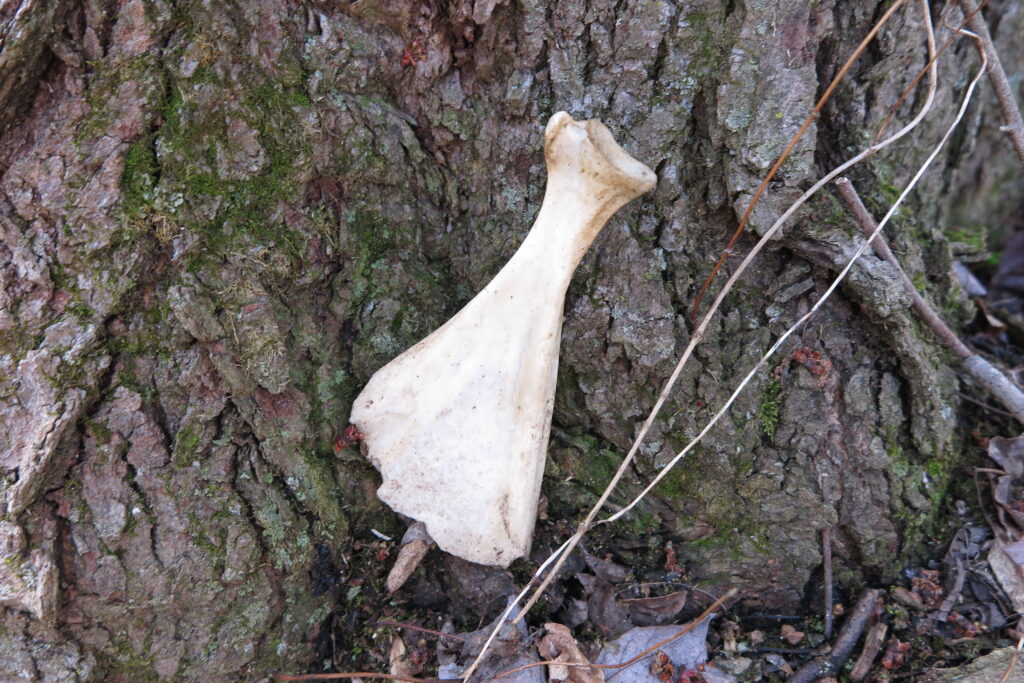
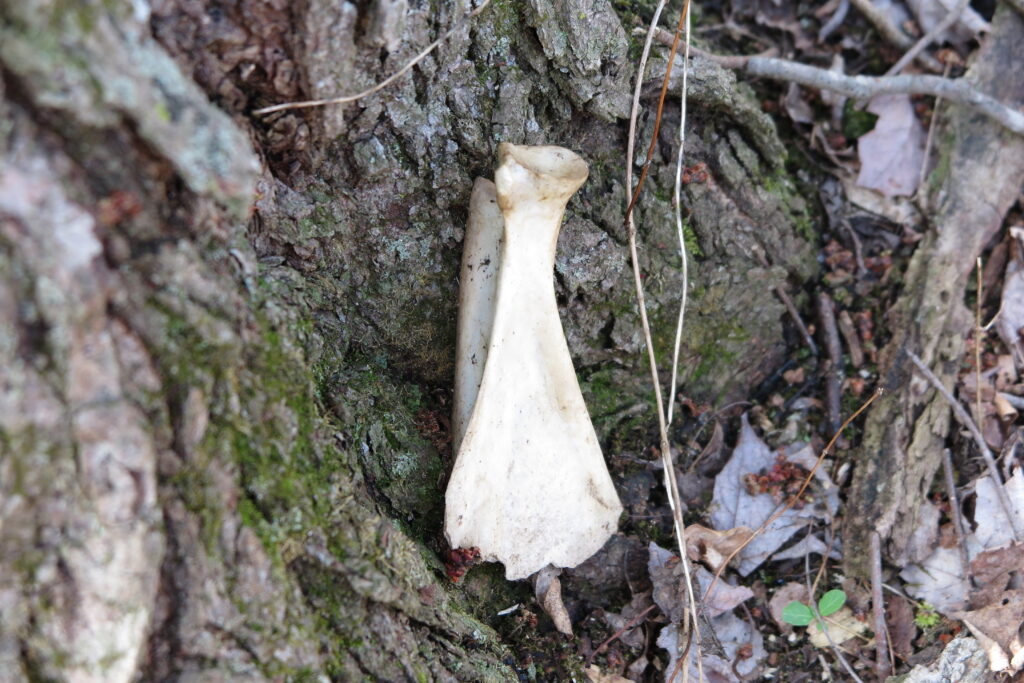
White-Tailed Deer Scapula Structure (Physical Characteristics)
Looking closer, the bone reveals a combination of thin, flat sections and slightly thicker areas concentrated near the upper portion. This transition in thickness is gradual, giving the bone a tapered feel from top to bottom. The thicker region typically indicates where the bone once connected to other skeletal components.
The curvature of the scapula is subtle but noticeable. Rather than being completely flat, the blade has a gentle contour that gives it depth. This curvature becomes more apparent when viewed from different angles, especially along the central ridge.
Surface texture varies across the bone. While much of it remains smooth, small porous sections may appear, particularly in weathered areas. These tiny openings reflect the underlying spongy structure beneath the outer layer, especially where the bone has experienced natural wear.
The break pattern seen in this fragment is irregular and jagged, suggesting natural fragmentation rather than clean separation. Along the surface, a faint ridge—known as the scapular spine—can be observed. This ridge acts as a key landmark, dividing the bone into distinct sections and aiding in identification.
White-Tailed Deer Scapula Variation and Identification Features
Scapula bones can vary slightly in size and shape depending on the age and overall size of the individual deer. Younger individuals may have thinner, less defined structures, while mature specimens tend to show more pronounced features and stronger contours.
Weathering plays a significant role in how the bone appears over time. Exposure to sunlight, moisture, and ground contact gradually alters the surface, often smoothing edges and lightening coloration. In some cases, small cracks or flaking may develop, adding to the bone’s textured appearance.
Damage or fragmentation can make identification more challenging, especially if key landmarks are missing. However, the general flatness, triangular outline, and presence of a ridge are usually enough to distinguish a scapula from other bones. Even partial pieces retain these defining characteristics.
When compared to similar bones, the scapula stands out due to its unique combination of width, thinness, and asymmetry. It differs from ribs, which are curved and narrow, and from long bones, which are cylindrical and dense. These contrasts make the scapula one of the more recognizable skeletal elements when encountered in the wild.