What Do Wild Horses Eat? (Equus ferus caballus Diet Guide)
Quick Facts
Scientific Name: Equus ferus caballus
Common Name: Wild Horses (Feral Domestic Horse)
Diet Type: Herbivore
Main Food Sources: Grasses, sedges, herbs, low-growing plants, occasional woody vegetation
Feeding Time: Primarily dawn and dusk (crepuscular feeding peaks)
Foraging Method: Continuous grazing while moving
Seasonal Diet Changes: Shifts from lush grasses to tougher, fibrous plants when availability decreases
Predatory Adaptations: None (non-predatory species; relies on grazing efficiency and digestion)
Location Observed: Outer Banks, North Carolina
Wild horses, scientifically classified as Equus ferus caballus, are widely recognized as grazing mammals with a long history tied to human domestication. While many populations are managed by people, others now live freely, relying entirely on natural food sources to survive.
This species has spread across the globe, occupying a broad range of environments where plant life supports their dietary needs. From open plains to coastal landscapes, feral horses adapt their feeding habits to match what is available, making them one of the most flexible large herbivores.
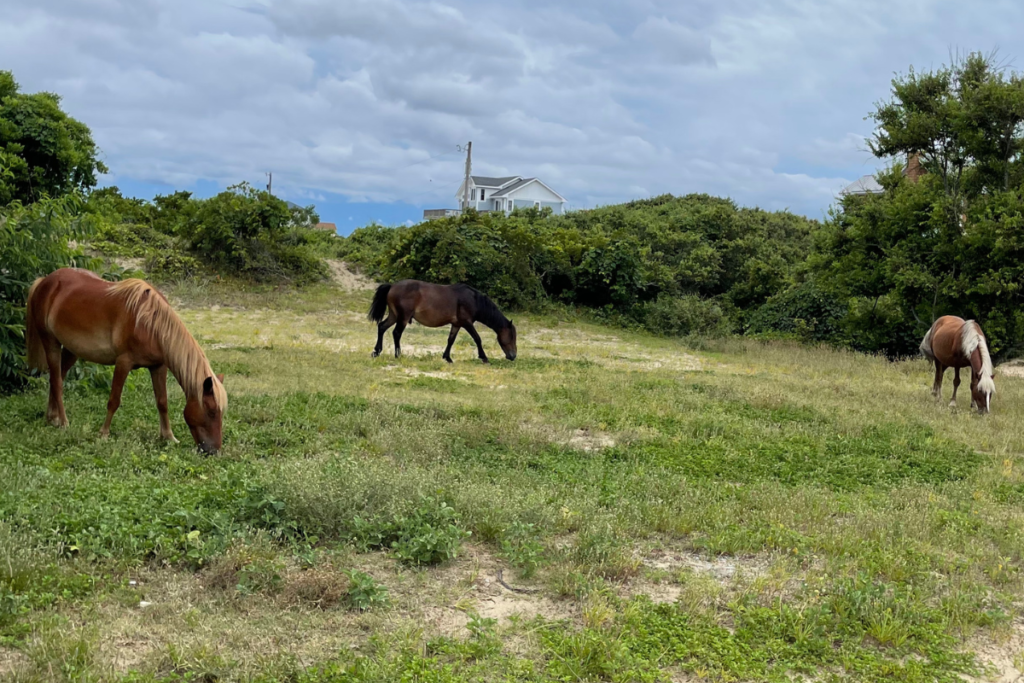
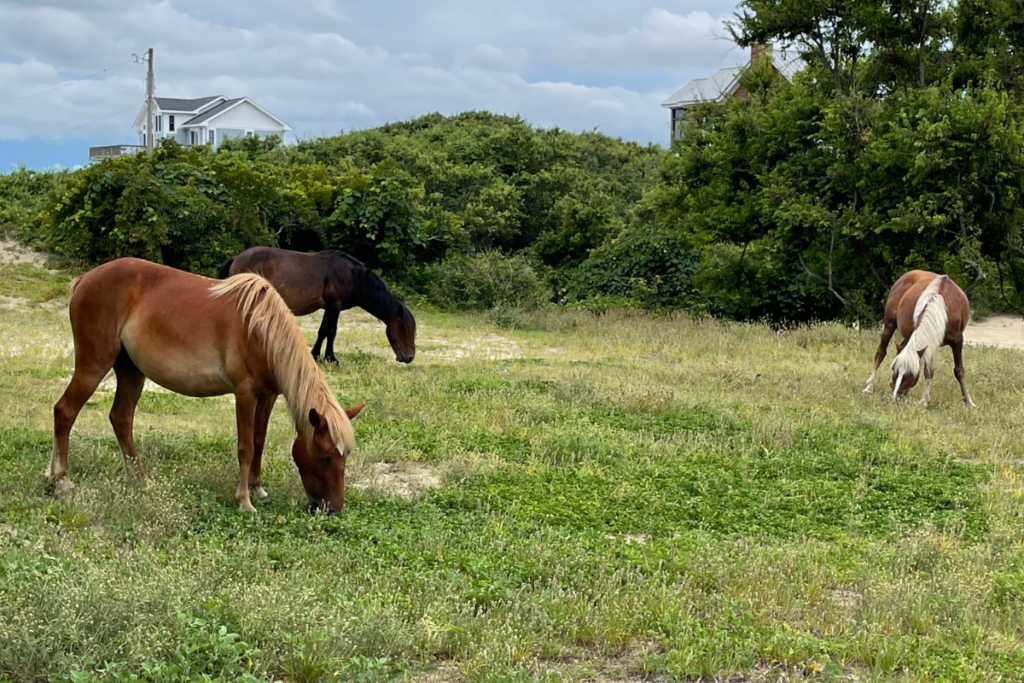
In this setting, the horses move slowly across open terrain, heads lowered as they feed almost continuously. Their steady grazing behavior creates a rhythm that defines their daily routine, emphasizing how central food intake is to their survival.
Wild Horses Diet Overview: Feeding Type and General Traits
Wild horses are strict herbivores, relying entirely on plant-based material for nutrition. Their digestive system is specialized to process large amounts of fibrous vegetation, allowing them to extract energy from grasses and other low-quality plant matter that many animals cannot utilize effectively.
Feeding is not a brief activity but a nearly constant process. Horses spend a significant portion of their day grazing, moving gradually as they feed. This continuous intake supports their large body size while maintaining energy levels throughout the day.
Adaptability is a defining feature of their diet. While grasses form the foundation of their nutrition, horses can shift to alternative plant sources when necessary. This flexibility allows them to persist in environments where food quality and availability fluctuate over time.
Overall, their dietary traits emphasize efficiency rather than specialization. Instead of relying on a narrow range of food sources, wild horses consume a broad variety of plant material, ensuring survival even under changing conditions.
Wild Horses Diet: What Feral Horses Eat
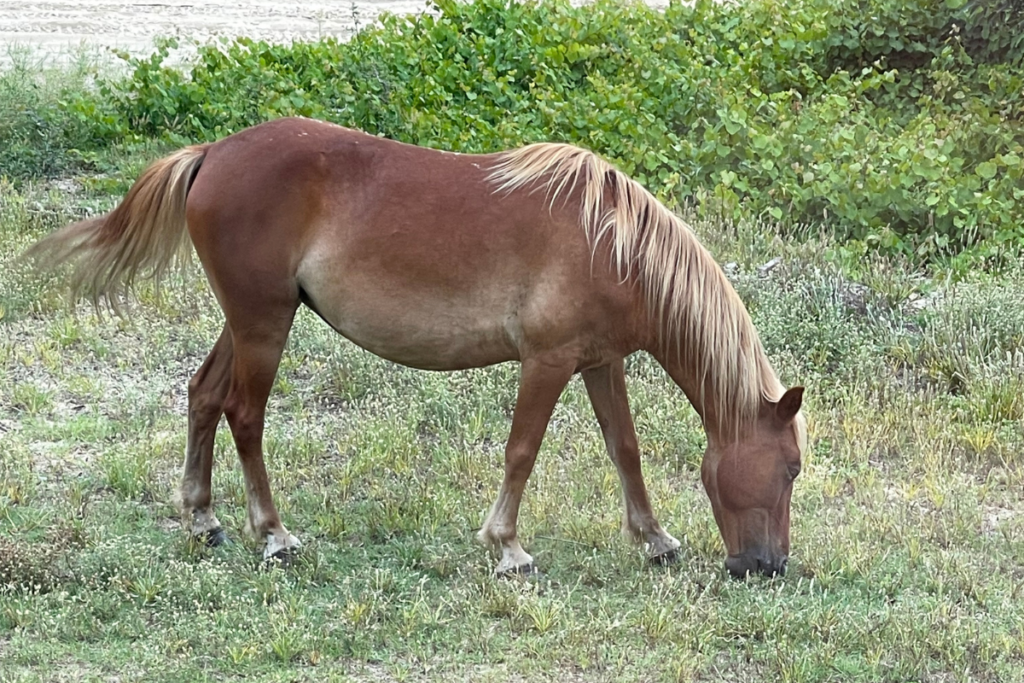
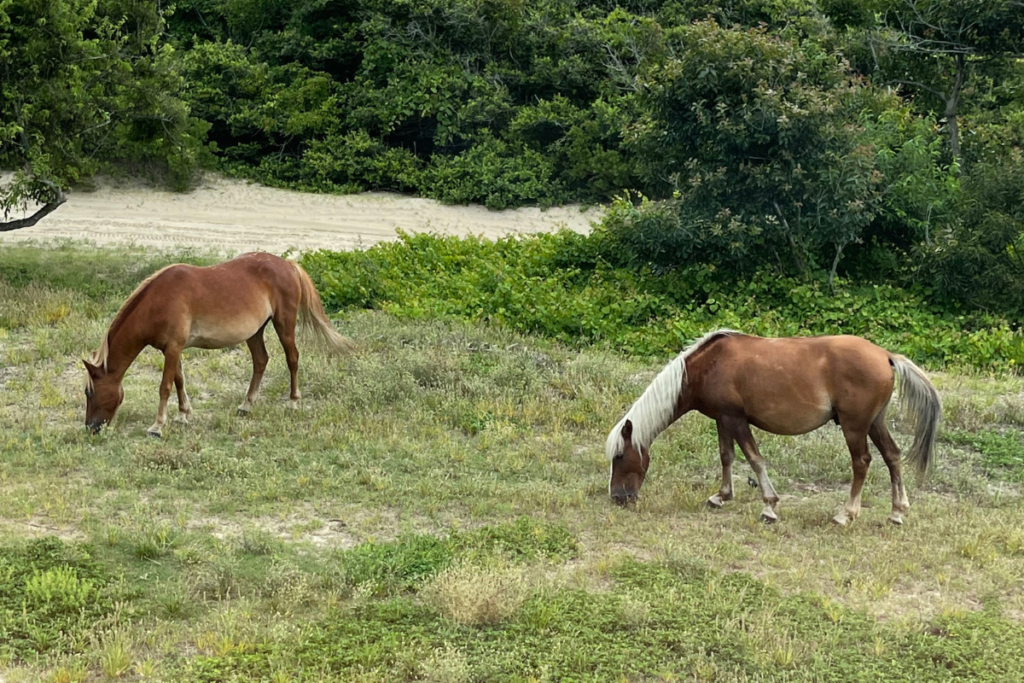
The primary food source for wild horses is grass. They graze on a wide range of species, selecting tender shoots when available but also consuming tougher, more fibrous growth when necessary. Grasses provide the bulk of their caloric intake and form the core of their diet.
In addition to grasses, horses consume sedges, herbs, and other low-growing plants. These supplementary foods add diversity to their diet and help meet nutritional needs that grasses alone may not fully provide. In some cases, they may also nibble on woody vegetation such as small shrubs or bark.
Seasonal changes influence what horses eat. During periods of abundant growth, they consume fresher, more nutrient-rich plants. When plant availability declines, they shift toward drier, more fibrous material, demonstrating their ability to adjust without requiring a completely different food source.
Food availability directly shapes dietary patterns. Horses do not rely on a single plant type but instead feed on what is present in their environment at any given time. This opportunistic grazing approach allows them to maintain consistent intake even when resources are limited.
Wild Horses Feeding Behavior and Survival Strategies
Wild horses locate food through constant movement and visual scanning of the ground. Their feeding process is integrated into their daily activity, with individuals lowering their heads to graze while gradually advancing across the landscape. This method ensures a steady intake without requiring long pauses.
Foraging is highly efficient and coordinated. Horses often feed in groups, spreading out slightly while maintaining awareness of each other. This spacing allows multiple individuals to graze simultaneously without exhausting a single patch of vegetation too quickly.
Competition for food exists but is generally subtle. Instead of direct conflict, horses rely on spacing and movement to access resources. Dominance hierarchies may influence positioning, but large-scale aggression over food is uncommon due to the widespread nature of grazing resources.
Survival depends on the ability to balance intake with movement. Horses must consume enough vegetation to sustain themselves while continuing to travel and remain alert. Their digestive system supports this by allowing continuous feeding on low-quality plant material, ensuring that even sparse resources can be utilized effectively.