Eastern Spring Beauty Growth Guide: Development, Spread, and Life Cycle
Quick Facts
Growth Rate: Moderate
Growth Pattern: Clumping, Upright
Reproduction Method: Seeds and Underground Corms
Dormancy Period: Late Spring through Winter
Sunlight Needs: Partial Shade to Full Sun in Early Spring
Water Needs: Moderate
Seasonal Changes: Emerges in Early Spring, Dormant by Late Spring
Eastern Spring Beauty Seasonal Development and Growth
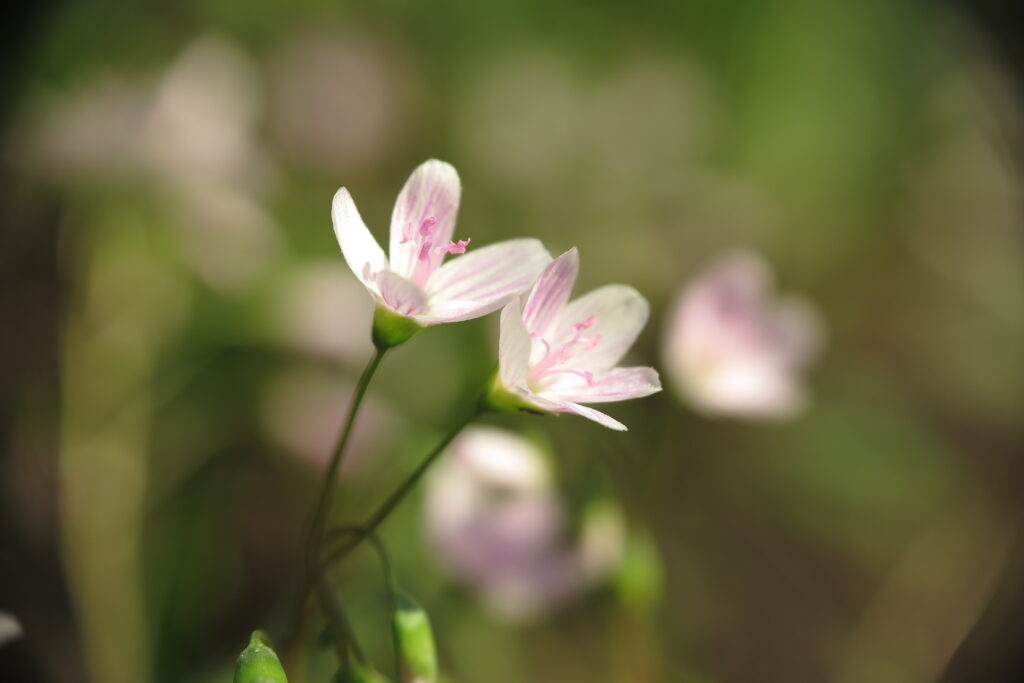
Eastern Spring Beauty (Claytonia virginica) is a perennial wildflower that follows a unique annual rhythm tied closely to the changing seasons. Native to eastern North America, this species is among the earliest plants to emerge after winter, often appearing while surrounding vegetation remains dormant. Its growth cycle is carefully timed to take advantage of favorable spring conditions.
Throughout its range, Eastern Spring Beauty is recognized for its brief but noticeable period of activity. Unlike plants that remain visible throughout summer and autumn, this species concentrates most of its yearly development into a relatively short window. The result is a wildflower that appears quickly, flourishes for a brief period, and then disappears from view for much of the year.
The plant’s growth strategy reflects its long adaptation to temperate climates. Seasonal changes strongly influence when shoots emerge, when flowers develop, and when the plant eventually enters dormancy. This predictable pattern allows Eastern Spring Beauty to thrive alongside other early-season native plants.
Although the flowers often attract the most attention, much of the plant’s success comes from what occurs before and after blooming. Beneath the surface, important developmental processes continue even when the visible portion of the plant is absent. Understanding this broader growth cycle provides valuable insight into how the species persists across such a large geographic range.
Eastern Spring Beauty Growth Rate and Seasonal Progression
Eastern Spring Beauty is generally considered a moderately growing perennial. Once established, it reliably returns each year and develops quickly during its active season. The speed of emergence often surprises observers because plants can appear seemingly overnight following favorable spring weather.
Development begins early in the year as temperatures gradually rise. New shoots emerge from underground storage structures and rapidly produce leaves and flowering stems. Compared to many later-blooming wildflowers, Eastern Spring Beauty completes much of its annual growth in a remarkably short period of time.
The plant’s yearly progression follows a consistent pattern across most of its range. Early spring marks active growth, flowering occurs shortly afterward, and visible growth gradually slows as temperatures increase. By late spring, the plant begins transitioning toward dormancy, ending its above-ground activity long before many surrounding species.
Eastern Spring Beauty demonstrates considerable consistency regardless of minor environmental differences. While plants growing in cooler regions may emerge slightly later than those farther south, the overall sequence remains largely unchanged. This predictable development helps make the species a reliable indicator of seasonal transition.
Compared to many woodland perennials that maintain foliage throughout summer, Eastern Spring Beauty completes its visible development much more rapidly. Its growth strategy resembles a brief seasonal sprint rather than a prolonged marathon. This efficient use of time allows the plant to capitalize on early-season resources before conditions become less favorable.
Eastern Spring Beauty Growth Pattern and Physical Expansion
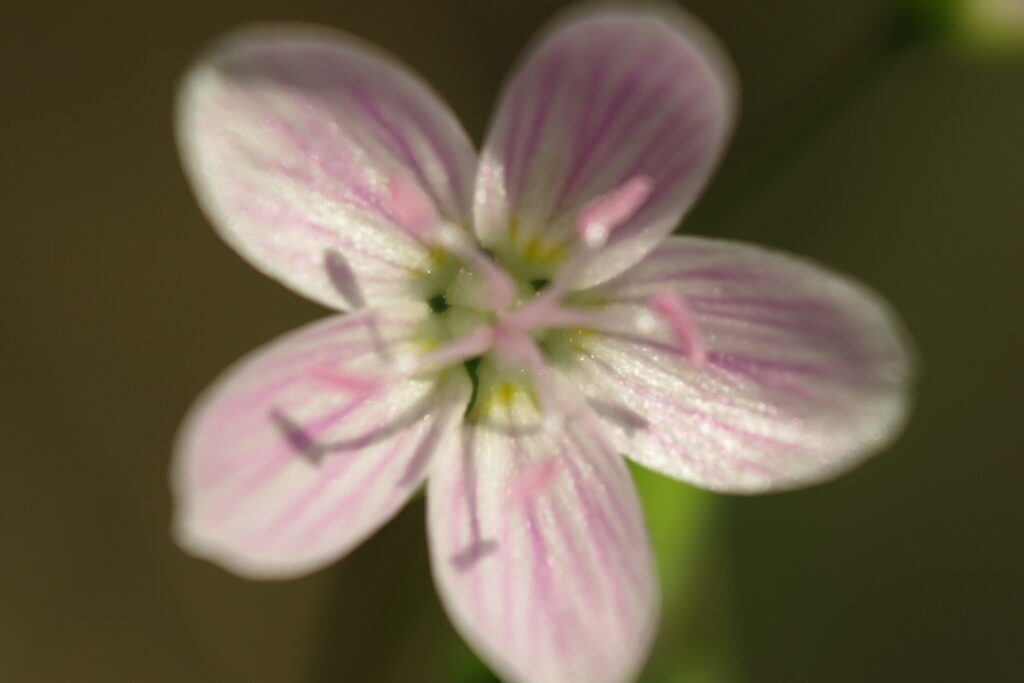
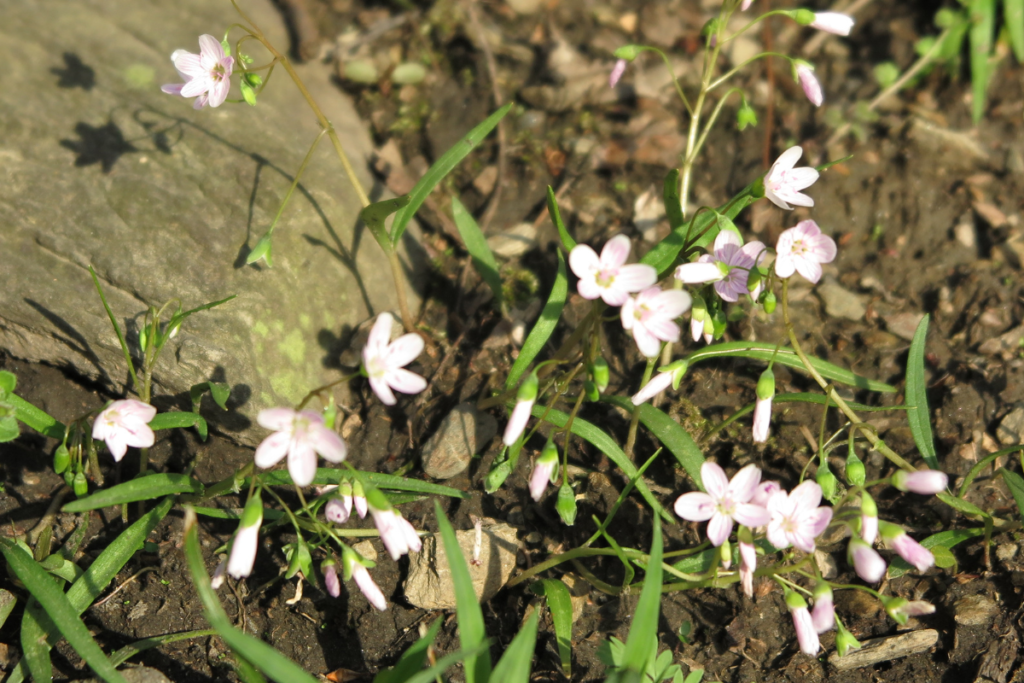
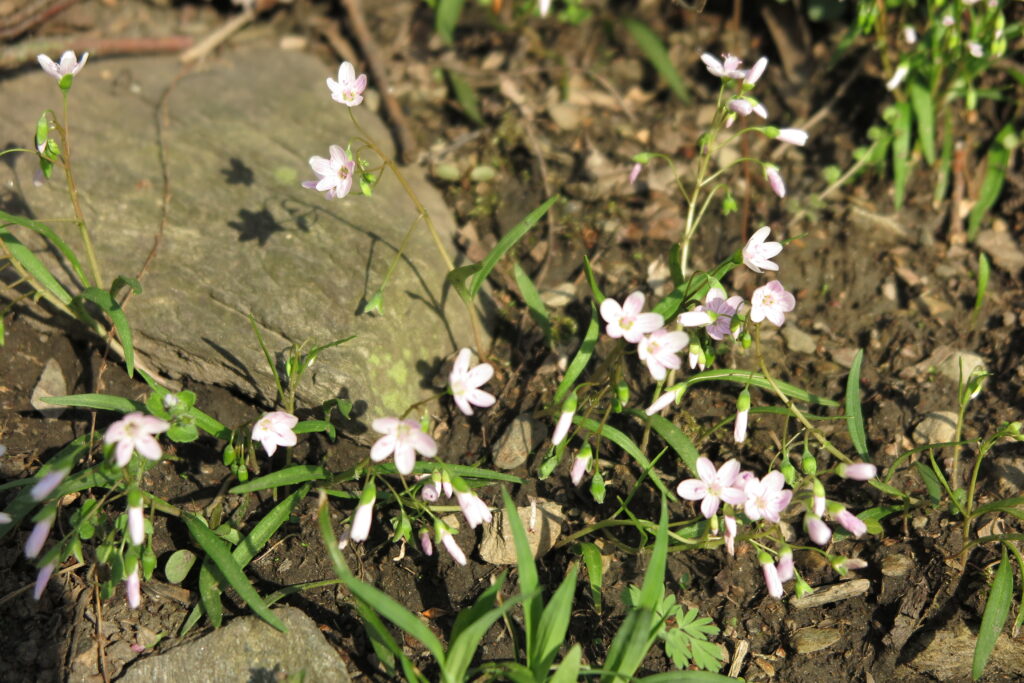
Eastern Spring Beauty grows in an upright, clumping form that allows individual plants to remain relatively compact while still creating noticeable colonies. Each plant produces slender stems that rise from a central point, giving groups a neat and organized appearance. When multiple individuals occur together, they can form attractive patches scattered across the landscape.
Rather than spreading aggressively across large distances in a single season, Eastern Spring Beauty expands gradually over time. New plants often appear near existing populations, creating clusters that slowly increase in size. This measured expansion helps maintain the natural character of woodland wildflower communities.
The plant occupies space in a way that resembles a loose carpet of scattered blooms rather than a dense ground cover. Individual flowers remain distinct, allowing observers to appreciate each plant while still enjoying the visual impact of larger colonies. During peak bloom, these clusters can create impressive displays without overwhelming neighboring vegetation.
Above ground, growth remains relatively modest in height and spread. Most stems rise only a few inches above the soil surface, producing a delicate appearance that complements other spring wildflowers. Despite their small size, groups of plants can become highly visible due to the abundance of blossoms produced across a colony.
A useful comparison is to imagine small stars scattered across the forest floor. Rather than forming a continuous blanket, Eastern Spring Beauty creates numerous points of color that collectively attract attention. This growth style allows the species to occupy available space efficiently while preserving an open and natural appearance.
Eastern Spring Beauty Reproduction and Annual Life Cycle
Eastern Spring Beauty reproduces primarily through seed production and underground corms. The flowers contain both male and female reproductive structures, allowing pollination to occur when insects visit the blooms. Successful pollination leads to the development of seeds that contribute to future generations.
Seed production plays an important role in the species’ ability to establish new populations. Once mature, seeds are released near the parent plant and may be moved short distances by environmental factors. Over time, this process allows colonies to gradually expand and occupy nearby suitable areas.
Underground corms provide another important method of persistence. These storage structures contain energy reserves that help the plant survive periods when no above-ground growth is present. Even after leaves and stems disappear, the corm remains alive beneath the soil, preparing for the next growing season.
The annual life cycle begins with spring emergence, followed by leaf development and flowering. After pollination and seed production occur, the plant gradually redirects energy below ground. Above-ground portions eventually die back, marking the beginning of a long dormant period that lasts until favorable conditions return.
This combination of seed reproduction and underground survival contributes significantly to the long-term success of Eastern Spring Beauty. Seeds allow populations to spread gradually, while corms ensure established plants can return year after year. Together, these strategies help explain why the species remains such a common and recognizable component of eastern North American spring landscapes.
Popular Searches About Eastern Spring Beauty
Explore Eastern Spring Beauty Guide
Explore More Plants

Support Encounters World
Help support wildlife photography and get behind the scenes discoveries on Patreon.