Lesser Celandine Growth Guide: Growth Rate, Spread, Reproduction, and Life Cycle
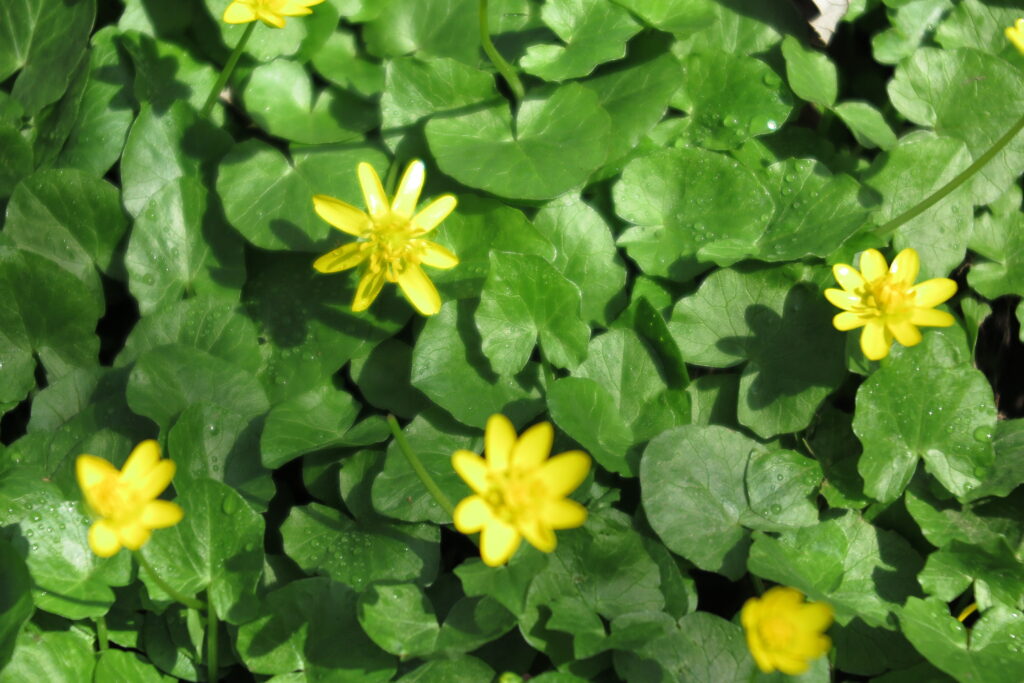
Quick Facts
Growth Rate: Fast
Growth Pattern: Creeping Ground Cover
Reproduction Method: Seeds, Tubers, and Bulbils
Dormancy Period: Late Spring Through Winter
Sunlight Needs: Full Sun to Partial Shade
Water Needs: Moderate to High Moisture
Seasonal Changes: Emerges in Late Winter, Flowers in Spring, Dormant by Early Summer
Understanding Lesser Celandine Growth Throughout the Year
Lesser Celandine (Ficaria verna) is a perennial flowering plant known for its ability to establish dense populations within a relatively short period of time. Native to Europe, western Asia, and parts of North Africa, it has become widely distributed in many temperate regions beyond its original range. Wherever it occurs, the species is recognized for its distinctive seasonal appearance and rapid development during the cooler months of the year.
Unlike many plants that remain visible throughout summer, Lesser Celandine concentrates much of its annual activity into a relatively brief period. Its most noticeable phase occurs during late winter and spring, when fresh foliage and flowers emerge while many neighboring plants are still dormant. This timing allows it to take advantage of conditions that exist before taller vegetation begins competing for resources.
Observers often notice how quickly colonies seem to appear after winter. Areas that looked nearly bare only weeks earlier may suddenly display extensive green coverage and bright yellow flowers. This dramatic seasonal transformation contributes to the plant’s reputation as one of the earliest active wildflowers in many landscapes.
The species has successfully expanded across a wide geographic range partly because its annual development is highly dependable. Even when weather conditions vary from year to year, Lesser Celandine typically follows a predictable seasonal schedule. This consistency helps established populations persist and reappear in the same locations each spring.
Lesser Celandine Growth Rate and Seasonal Development
Lesser Celandine is generally considered a fast-growing plant compared to many native spring wildflowers. Once conditions become favorable, new growth develops rapidly and can cover significant areas before neighboring vegetation reaches full activity. This ability allows the plant to make efficient use of the early growing season.
The first signs of growth often emerge during late winter or very early spring. Leaves begin appearing while temperatures remain relatively cool, creating green patches across the landscape. As daylight increases, the plant quickly transitions into its flowering stage and reaches peak visibility.
Spring represents the most active period of the year for Lesser Celandine. During this time, colonies expand, flowers open, and the plant completes much of its annual development. In comparison to slower-growing woodland species that require extended periods to mature, Lesser Celandine progresses through its seasonal stages at a notably faster pace.
As temperatures rise and surrounding vegetation becomes denser, the plant gradually enters a period of decline. Foliage begins to yellow and disappear, eventually leaving little visible evidence of the colony above ground. This transition can occur surprisingly quickly, especially during warm weather.
Despite this apparent disappearance, the plant remains alive beneath the soil surface. Dormancy allows it to survive periods that are less favorable for active growth. The cycle then repeats when cooler temperatures return, making its annual development remarkably reliable across much of its range.
How Lesser Celandine Physically Expands and Occupies Space
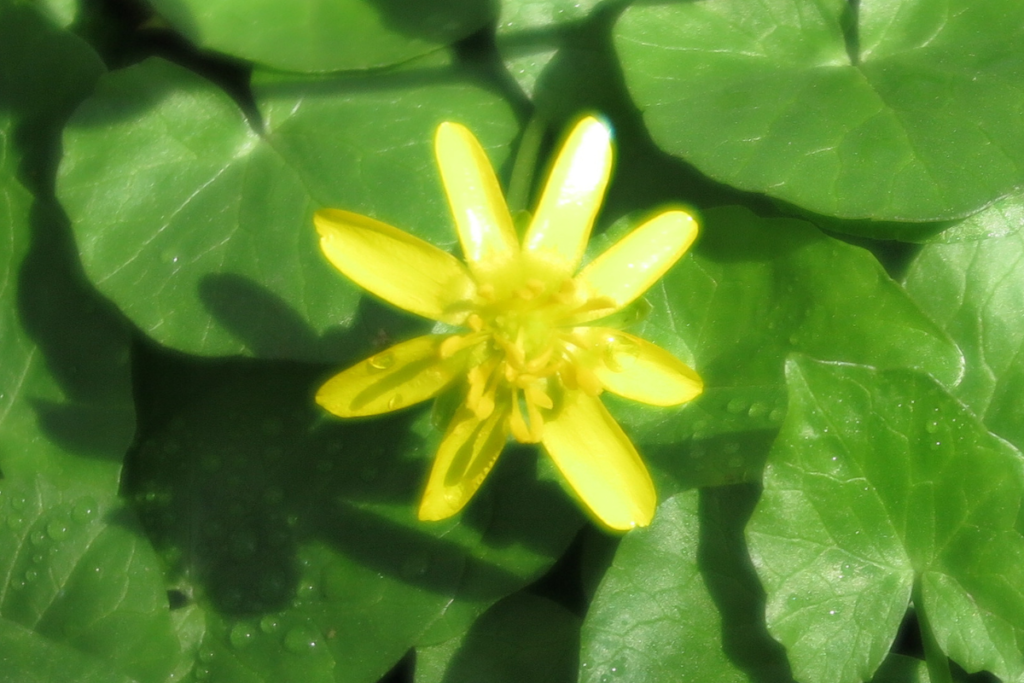
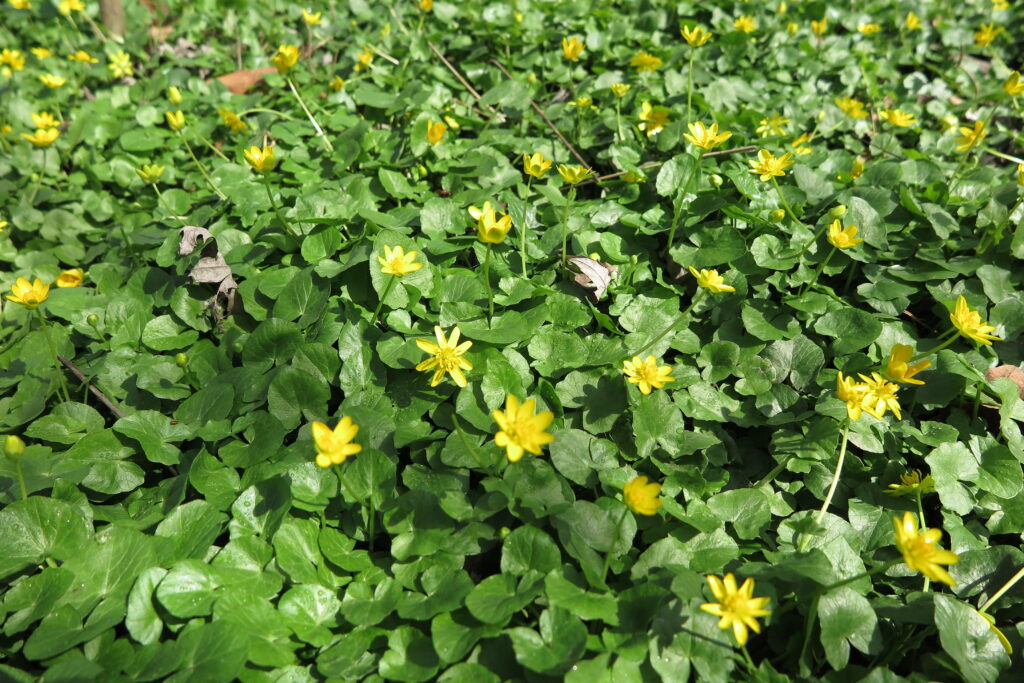
The growth form of Lesser Celandine is best described as creeping and carpet-forming. Rather than producing tall stems or upright clusters, it spreads outward close to the ground. Over time, this creates continuous mats of vegetation that can cover large sections of available space.
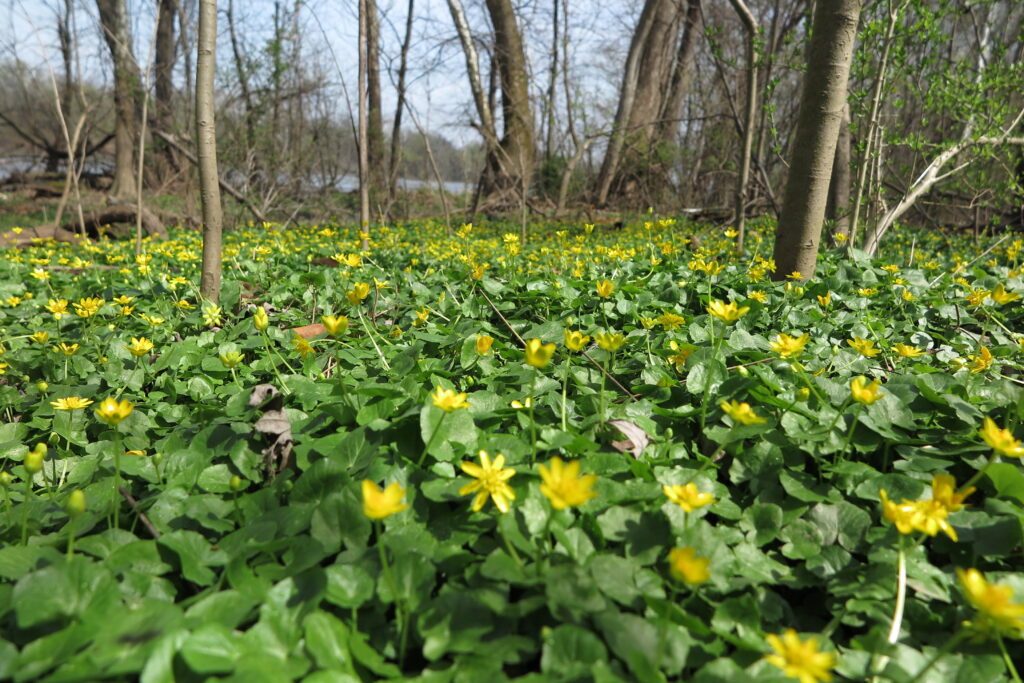
As colonies expand, individual plants become difficult to distinguish from one another. Leaves overlap and merge into dense layers, producing an almost uninterrupted blanket of green foliage. From a distance, extensive patches may resemble a living carpet spread across the forest floor.
This growth style differs significantly from clump-forming perennials that remain concentrated in one location. Instead of developing into isolated mounds, Lesser Celandine gradually occupies surrounding ground through horizontal expansion. The process often creates broad colonies with relatively uniform coverage.
A useful comparison is creeping ground cover used in landscaping. Much like ornamental plants designed to fill open areas between pathways or beneath trees, Lesser Celandine spreads laterally and gradually closes gaps between individual plants. This characteristic contributes greatly to its visual dominance during spring.
The species is also effective at occupying small openings within existing vegetation. Bare soil, thin patches of ground cover, and lightly disturbed areas can quickly become incorporated into expanding colonies. Over time, this pattern allows populations to increase their footprint without requiring dramatic vertical growth.
Lesser Celandine Reproduction and Annual Life Cycle
The life cycle of Lesser Celandine begins with renewed growth from underground structures that survive the dormant season. As temperatures moderate in late winter, stored energy supports the production of fresh leaves and flowering stems. This early start gives the plant an advantage before many competitors become active.
Flowering typically occurs during spring when colonies reach their most visible stage. Bright yellow blossoms attract pollinating insects, allowing seed production to occur when conditions are favorable. Although seeds contribute to reproduction, they represent only one part of the plant’s overall strategy.
Lesser Celandine is particularly effective because it also reproduces through underground tubers and small structures known as bulbils. These specialized growth structures can detach from the parent plant and develop into new individuals. A single colony may therefore expand even when seed production is limited.
Water movement often plays an important role in the dispersal of reproductive material. Flooding, runoff, and seasonal water flow can transport tubers or bulbils to new locations. This process helps explain how populations sometimes appear along connected waterways and floodplain systems.
After flowering and reproduction are completed, the plant gradually enters dormancy. Above-ground growth dies back while underground structures remain protected beneath the soil. These reserves persist through summer, autumn, and winter before initiating the next cycle of growth. This combination of seed production, vegetative reproduction, and seasonal dormancy helps explain why Lesser Celandine can establish long-lasting populations and spread efficiently across suitable landscapes.
Popular Searches About Lesser Celandine
Explore Lesser Celandine Guide
Explore More Plants

Support Encounters World
Help support wildlife photography and get behind the scenes discoveries on Patreon.