Lesser Celandine Identification Guide: How to Recognize Leaves, Flowers, and Key Features
Quick Facts
Leaf Shape: Heart-Shaped to Kidney-Shaped
Stem Type: Smooth, Soft, Low-Growing Stems
Root System: Fibrous Roots with Underground Tubers
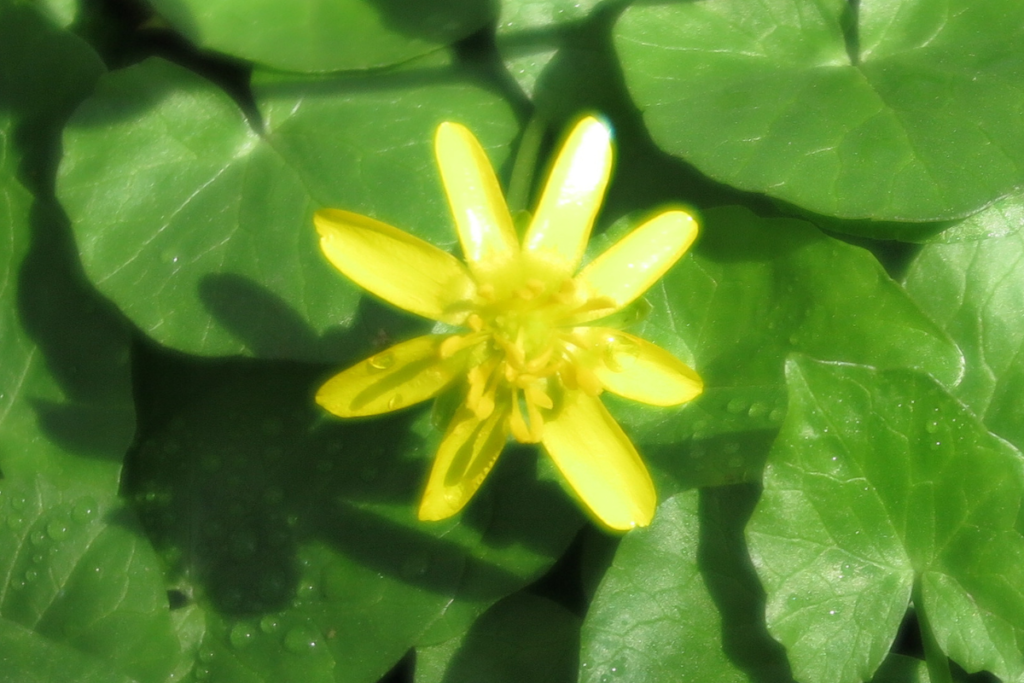
Flower Structure: Yellow Multi-Petaled Flower with Central Reproductive Disk
Growth Form: Creeping Ground Cover
Texture: Smooth and Glossy
Color Variations: Bright Green Foliage with Golden Yellow Flowers
Recognizing Lesser Celandine in the Wild
Lesser Celandine (Ficaria verna) is a spring-flowering perennial that attracts attention through its bright yellow blooms and glossy green foliage. Native to Europe, western Asia, and North Africa, the species has become established in many temperate regions around the world. It is often noticed during the earliest stages of spring when much of the surrounding landscape remains relatively subdued in color.
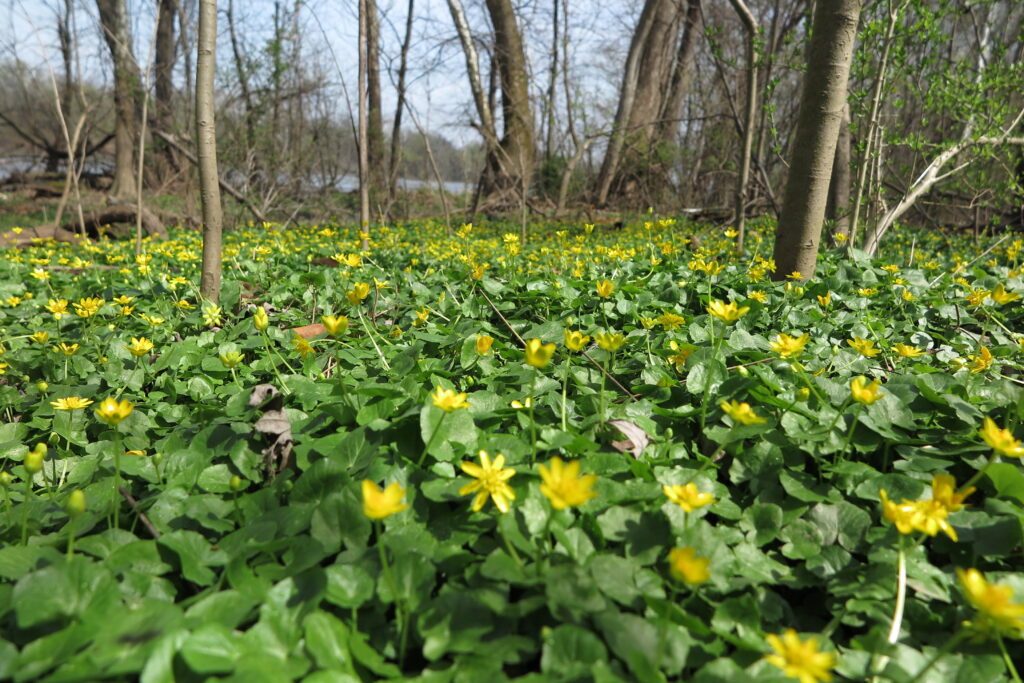
The plant has a distinctive appearance that becomes especially noticeable when large colonies bloom simultaneously. Thousands of flowers may appear across an area, producing a striking display that stands out from neighboring vegetation. Even individuals unfamiliar with plant identification often recognize that these dense patches differ from most common spring wildflowers.
Because the species frequently occurs in large groups, observers usually notice the colony before focusing on individual plants. A broad carpet of green leaves interrupted by numerous yellow flowers creates an unmistakable visual impression. From a distance, these patches can resemble a blanket scattered with tiny golden stars.
Correct identification is important because Lesser Celandine is sometimes confused with native spring flowers that share similar colors. Looking beyond the bright blossoms and examining the plant’s overall structure helps separate it from other species. The combination of low growth, shiny foliage, and numerous narrow flower petals creates a distinctive profile that becomes easier to recognize with experience.
Lesser Celandine Overall Structure and Growth Form
Viewed as a whole, Lesser Celandine is a compact plant that remains close to the ground. Most individuals rarely reach significant height, giving colonies a low, spreading appearance rather than a vertical presence. This growth style allows large patches to develop without creating dense layers of tall vegetation.
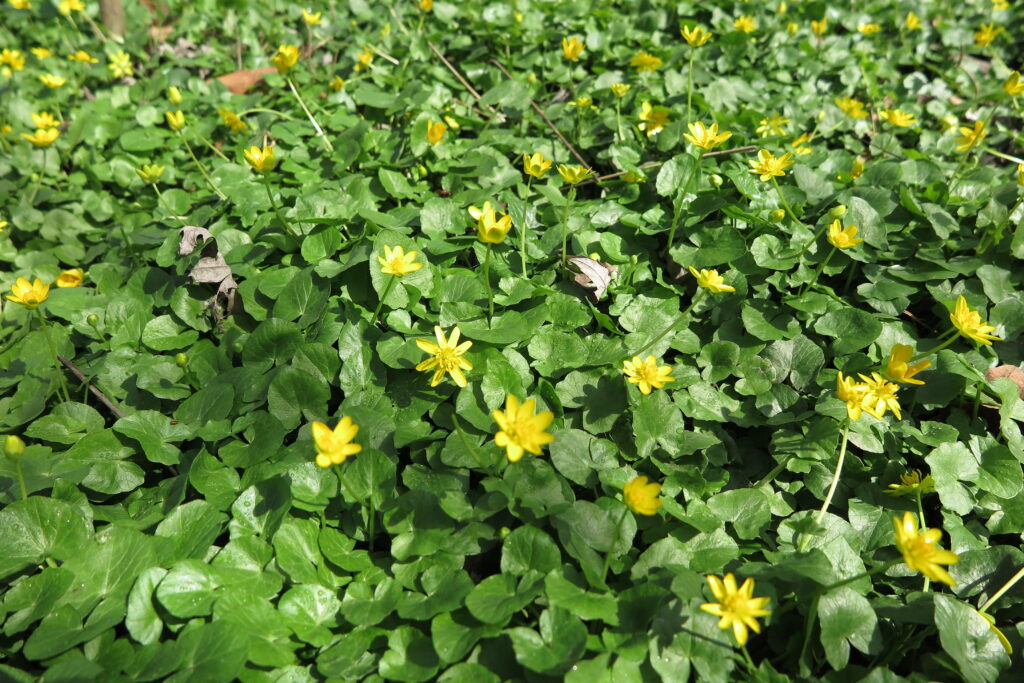
The species is best described as a creeping ground cover. Instead of forming isolated clumps or upright stems, it gradually occupies space through horizontal expansion. Over time, neighboring plants merge together until the colony appears as a continuous mat of vegetation.
From a distance, established populations often resemble a green rug spread across the landscape. During peak flowering, bright yellow blossoms emerge above the foliage and create the appearance of decorative patterns woven into that living carpet. This visual effect is one of the easiest ways to recognize the plant before examining individual features.
The overall shape of a colony tends to be broad and uniform rather than irregular or patchy. Plants fill available space efficiently, producing smooth transitions between neighboring individuals. As a result, dense populations often appear organized and continuous compared to species that grow in scattered clusters.
Another useful identifying characteristic is the contrast between the plant’s modest height and its extensive coverage. While individual specimens remain small, colonies may extend across large sections of ground. This combination of low stature and broad expansion contributes significantly to the plant’s distinctive appearance in natural settings.
Lesser Celandine Leaf, Stem, and Root Characteristics
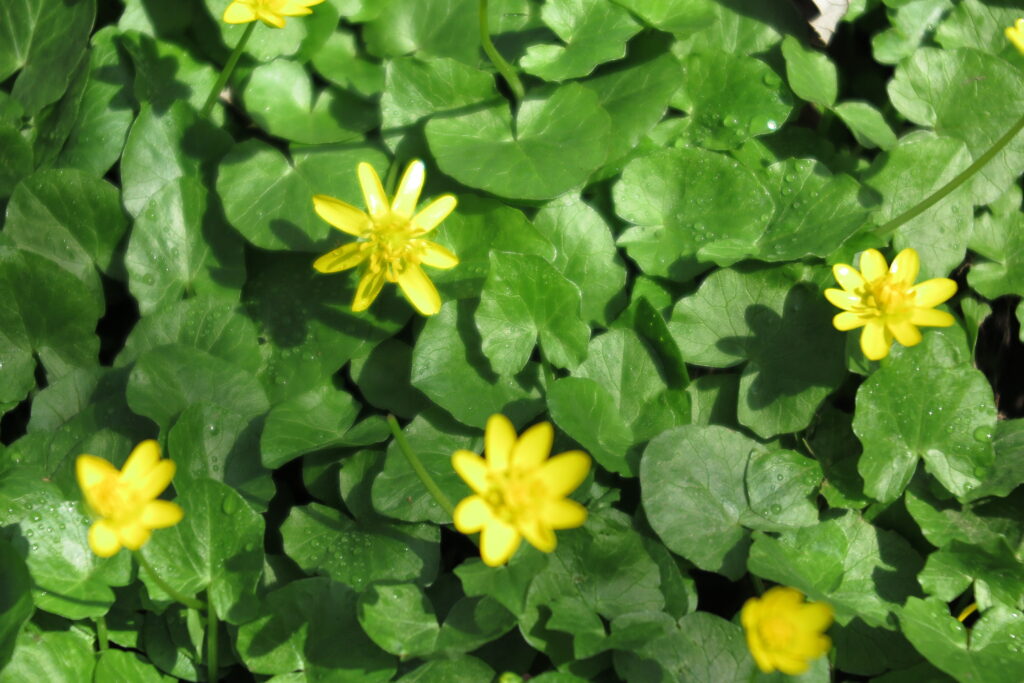
The leaves of Lesser Celandine are among its most recognizable features. Most are heart-shaped, kidney-shaped, or broadly rounded, with smooth edges and a distinctly glossy surface. Their reflective quality often causes them to shine in sunlight, making colonies appear brighter than surrounding vegetation.
Leaf coloration typically ranges from medium to deep green, although some plants may display lighter tones depending on growing conditions. The smooth texture contrasts with the rougher or more deeply lobed foliage found on many woodland plants. Individual leaves are usually attached by slender stalks that elevate them slightly above the ground.
Stems are soft, flexible, and relatively inconspicuous compared to the foliage and flowers. Because they remain low and often hidden beneath leaves, casual observers may overlook them entirely. Their primary role is supporting the leaves and flowers while maintaining the plant’s compact structure.
Below the soil surface lies a fibrous root system accompanied by small tuber-like structures. These underground organs often resemble clusters of tiny pale nodules attached to the roots. A useful comparison is a string of miniature beads hidden beneath the soil, each capable of contributing to the plant’s persistence.
Together, the leaves, stems, and roots create a combination that is uncommon among many spring wildflowers. The glossy heart-shaped foliage, unobtrusive stems, and tuber-bearing root system form a collection of traits that helps distinguish Lesser Celandine from similar-looking species. Examining these structures closely often provides confirmation when flower characteristics alone are not sufficient.
Lesser Celandine Flowers and Reproductive Features
The flowers of Lesser Celandine are the most eye-catching part of the plant and often provide the first clue for identification. Each bloom displays a vivid yellow color that stands out strongly against the surrounding green foliage. During peak flowering periods, colonies can produce an impressive concentration of blossoms.
Unlike flowers with only a handful of broad petals, Lesser Celandine typically produces numerous narrow petals arranged around a central reproductive disk. The result is a starburst-like appearance that immediately draws attention. Many observers compare the flowers to miniature suns scattered across the landscape.
Individual blooms generally sit slightly above the leaves on short stalks. This positioning helps the flowers remain visible even within dense colonies. The petals often possess a glossy quality similar to the foliage, allowing them to reflect sunlight and appear especially bright during clear spring days.
After flowering, reproductive structures develop that contribute to the plant’s continued presence. Seeds may form following successful pollination, adding another means of reproduction. Although these structures are less visually striking than the flowers themselves, they play an important role in the species’ ability to maintain populations.
When identifying Lesser Celandine, the flower structure remains one of the most reliable characteristics. The combination of bright yellow coloration, numerous narrow petals, and a prominent central disk creates a distinctive appearance rarely confused with unrelated species. Paired with the plant’s glossy foliage and creeping growth form, these reproductive features provide a dependable foundation for accurate identification.
Popular Searches About Lesser Celandine
Explore Lesser Celandine Guide
Explore More Plants

Support Encounters World
Help support wildlife photography and get behind the scenes discoveries on Patreon.