Eastern Skunk Cabbage Identification Guide: How to Recognize Leaves, Flowers, and Key Features
Quick Facts
Leaf Shape: Broad Oval to Elliptical
Stem Type: Thick, Fleshy Basal Stalks
Root System: Massive Contractile Root Network with Thick Rhizomes
Flower Structure: Hooded Spathe Surrounding a Rounded Spadix
Growth Form: Clumping Perennial
Texture: Smooth, Thick, and Waxy
Color Variations: Bright Green Leaves with Maroon, Purple, Yellow, and Green Flower Structures
Recognizing Eastern Skunk Cabbage in the Field
Few native plants create a stronger first impression than Eastern Skunk Cabbage (Symplocarpus foetidus). Encountering a mature patch often feels like discovering a group of tropical plants unexpectedly growing in a temperate forest. Its oversized leaves and unusual flower structures immediately separate it from most neighboring vegetation.
This species is native to eastern North America and occurs throughout much of the northeastern United States, Great Lakes region, Appalachian Mountains, and portions of eastern Canada. Naturalists frequently encounter it during woodland walks when many other plants remain relatively inconspicuous. Its distinctive appearance makes it one of the easiest wetland plants to remember after a single observation.
Eastern Skunk Cabbage belongs to the arum family, which includes several plants known for unusual flower arrangements and bold foliage. While many members of this family occur in warmer climates, this species has adapted to the forests and wetlands of North America. The result is a plant that appears surprisingly exotic despite being entirely native.
Correct identification is important because Eastern Skunk Cabbage is often one of the first large-leaved plants visible each year. Its size attracts attention from hikers, photographers, and beginner naturalists who may be unfamiliar with native wetland flora. Learning its key features quickly transforms it into one of the most recognizable plants in the eastern forest.
Eastern Skunk Cabbage Overall Structure and Growth Form
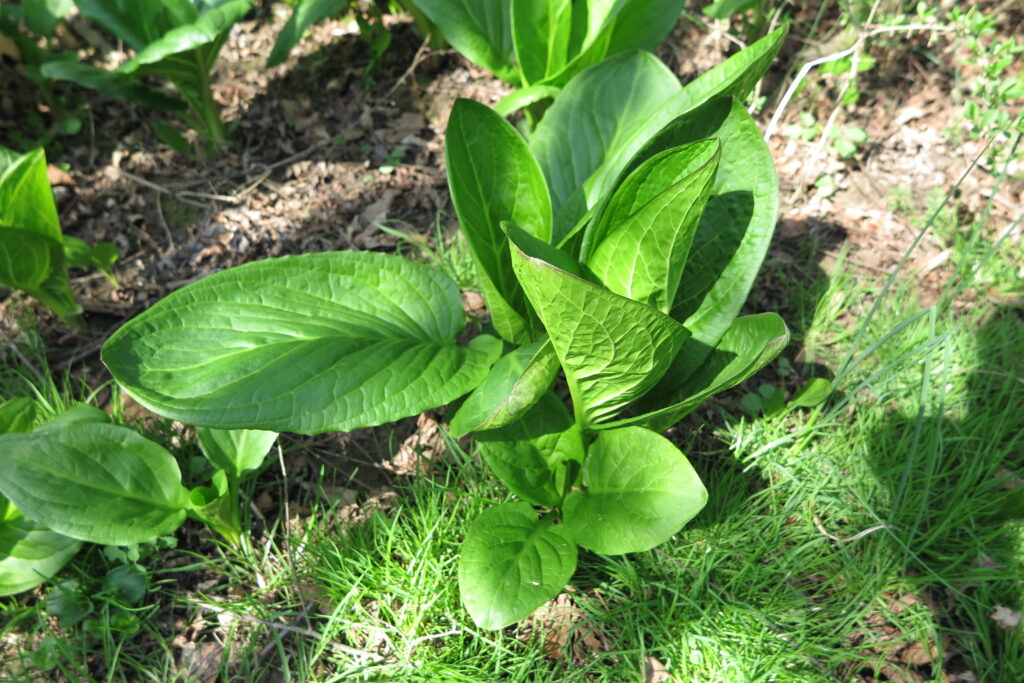
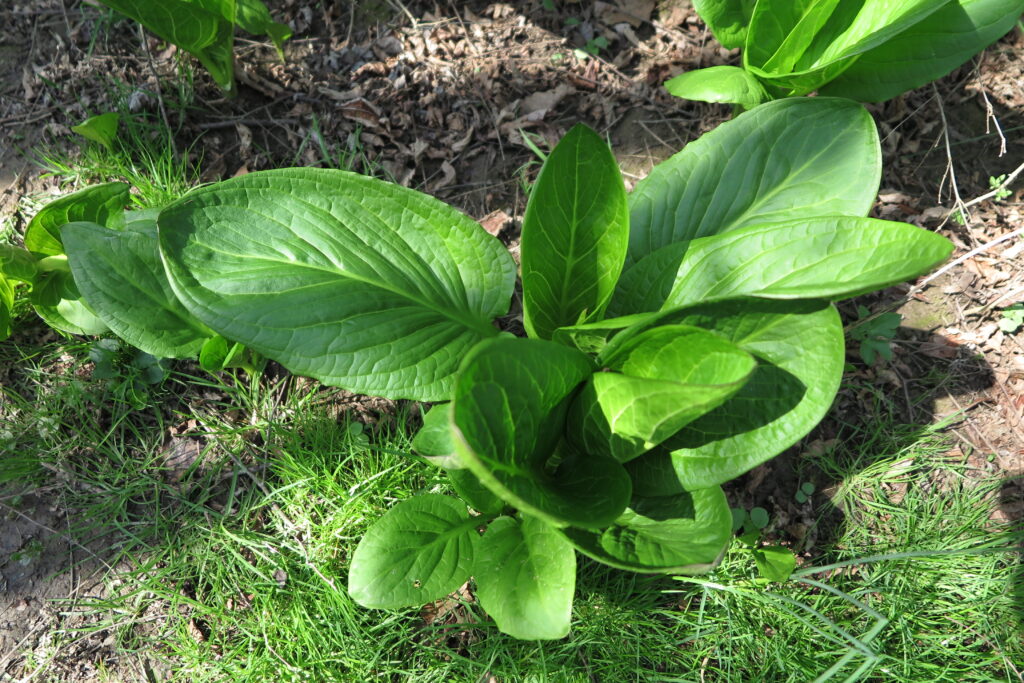
Eastern Skunk Cabbage develops as a large, clump-forming perennial with a distinctly architectural appearance. Rather than producing a central trunk or branching stems, the plant emerges directly from a compact crown near ground level. This growth style creates a dense cluster that gradually expands as the plant matures.
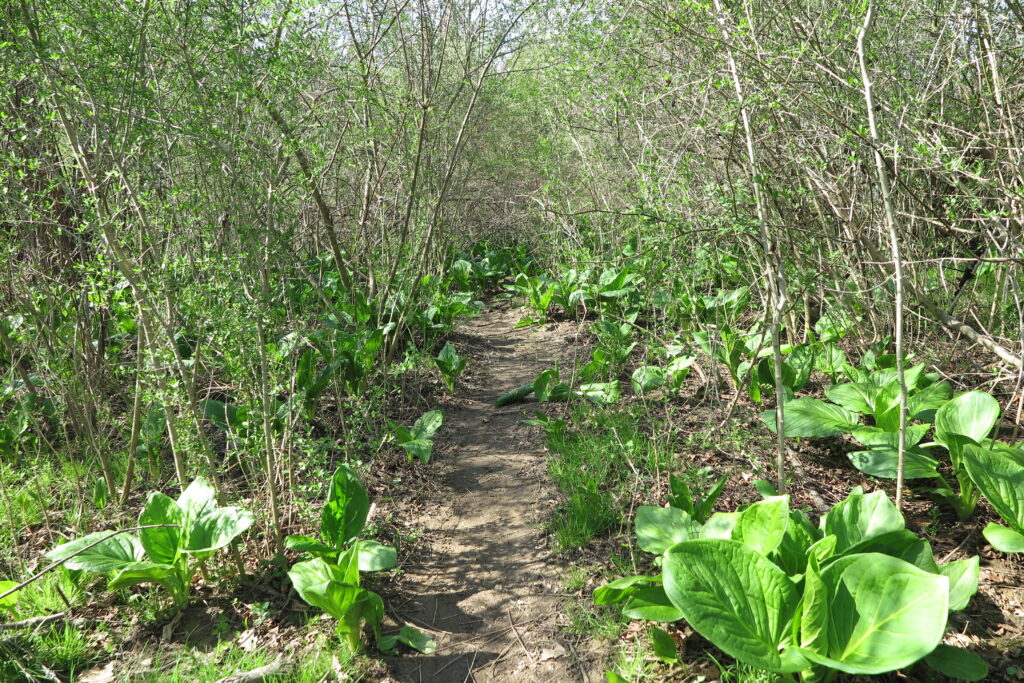
When viewed from a distance, mature specimens often resemble enormous fountains of green foliage. The leaves arch outward from a central point, creating a rounded silhouette that stands apart from surrounding vegetation. Large colonies can produce a dramatic visual effect across the landscape.
The plant’s overall dimensions contribute significantly to its recognizability. Mature clumps may spread several feet across and become among the largest herbaceous plants within their immediate surroundings. This substantial size makes Eastern Skunk Cabbage difficult to overlook once it reaches full development.
A useful comparison is an oversized hosta growing in a natural setting. Both plants form broad clumps of large leaves, but Eastern Skunk Cabbage typically appears more robust and imposing. The heavier foliage and stronger structure create a noticeably bolder presence.
Unlike trailing vines, creeping ground covers, or upright flowering stalks, Eastern Skunk Cabbage occupies a category of its own. Its rounded, expanding form remains highly consistent throughout its range. This distinctive profile often allows experienced observers to identify the species from considerable distances before individual features become visible.
Eastern Skunk Cabbage Leaf, Stem, and Root Features
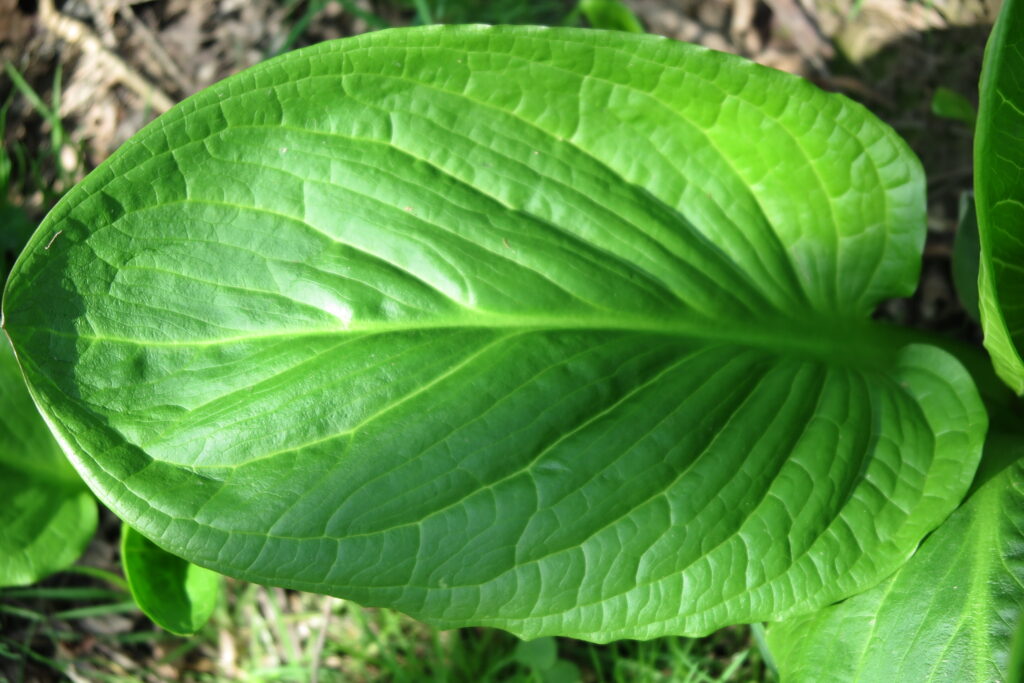
The leaves are the most obvious identifying feature of Eastern Skunk Cabbage. Individual leaves are broad, oval to elliptical, and often reach impressive sizes. Some mature specimens produce foliage that exceeds two feet in length, making them among the largest leaves found on native woodland plants.
Each leaf displays prominent veins that radiate from a strong central midrib. These veins create a textured appearance that remains visible even when viewed from several yards away. Their arrangement helps support the substantial size of the leaf blade and contributes to the plant’s structured look.
The leaf surface feels smooth and somewhat waxy to the touch. Unlike rough-textured foliage found on many woodland plants, Eastern Skunk Cabbage leaves possess a clean, polished appearance. Fresh growth often appears especially vibrant and gives colonies a lush, healthy look.
The stems remain relatively short but are thick and fleshy. Rather than elevating leaves high above the ground, they support the foliage from a compact basal position. This arrangement allows the plant to maintain its characteristic clumping form while supporting exceptionally large leaves.
Beneath the soil lies an impressive root system anchored by thick rhizomes and extensive roots. A useful comparison is a network of underground cables spreading outward from a central hub. These roots provide stability and support for a plant that produces a surprisingly large amount of above-ground growth each season.
Eastern Skunk Cabbage Flowers and Reproductive Structures
The flowers of Eastern Skunk Cabbage are unlike those of most familiar wildflowers. Instead of producing obvious petals, the plant develops a specialized structure known as a spathe. This hood-like covering partially encloses the reproductive center and creates one of the species’ most distinctive identifying features.
The spathe is typically maroon, reddish-purple, brownish-purple, or mottled with multiple colors. Its shape resembles a curved hood, shell, or folded vessel emerging directly from the ground. These unusual forms often appear before the leaves become prominent, making them especially noticeable in early spring.
Inside the spathe sits a rounded structure known as the spadix. This dense cluster contains numerous tiny flowers packed closely together. At first glance, the spadix resembles a textured ball or miniature club covered with small reproductive units.
A helpful comparison is a protective tent surrounding a central stage. The spathe acts as the shelter, while the spadix serves as the focal point containing the flowers. This arrangement differs dramatically from the open flower structures most people associate with blooming plants.
Seed production follows successful pollination, eventually resulting in rounded fruiting structures hidden near the base of the plant. Although less conspicuous than the leaves or spathe, these reproductive features contribute additional identification clues. Combined with the hooded flower structure, large foliage, and distinctive growth form, they make Eastern Skunk Cabbage one of the most unique and easily identifiable native plants in North America.
Popular Searches About Skunk Cabbage
Explore Skunk Cabbage Guide
Explore More Plants

Support Encounters World
Help support wildlife photography and get behind the scenes discoveries on Patreon.