Bugleweed Overview: Identification, Characteristics, Appearance, and Key Facts
Quick Facts
Scientific Name: Ajuga reptans
Common Name: Bugleweed
Plant Type: Perennial
Average Height: 4–12 inches (10–30 cm)
Spread Width: 1–3 feet (30–90 cm)
Leaf Type: Broadleaf
Growth Form: Creeping
Bloom Color: Blue, Purple, Violet, Pink, and White
Native Range: Europe, Western Asia, and North Africa
Toxicity: Non-toxic to humans & pets
Location Observed: Pennsylvania, USA
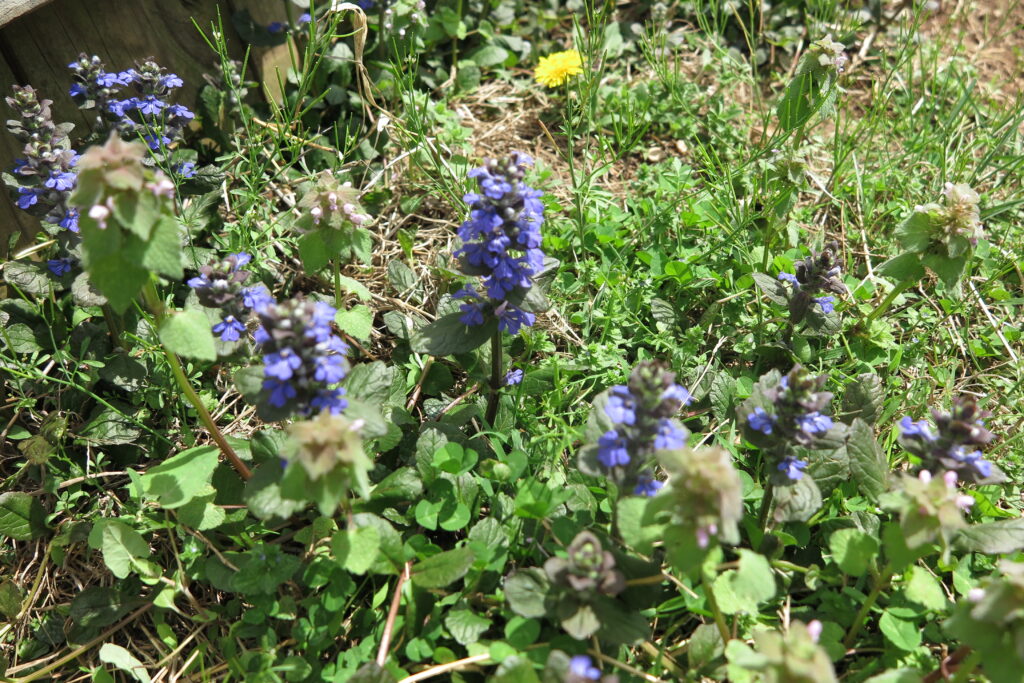
Field Observation
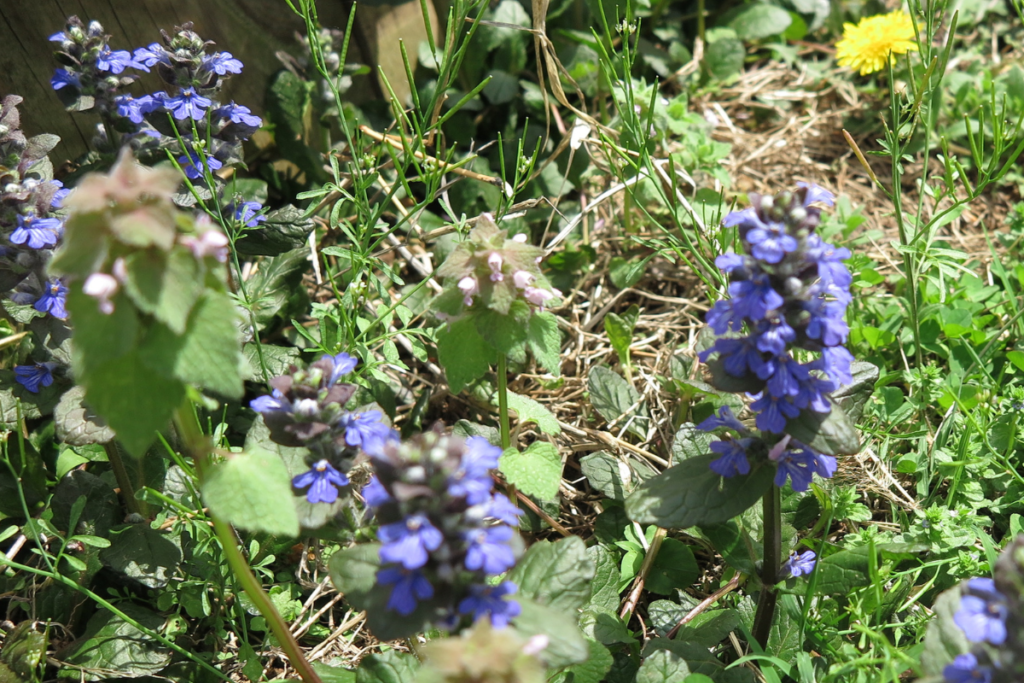
I observed a patch of Bugleweed growing together in a dense cluster, with numerous flower spikes rising above the surrounding vegetation. The plants displayed vibrant purple-blue flowers along the upper portions of the stems, creating a colorful display that stood out clearly against the green groundcover below.
Bugleweed in Gardens and Natural Landscapes
Spring landscapes often become brighter when patches of Bugleweed begin producing their colorful flower spikes. Known scientifically as Ajuga reptans, this low-growing perennial has become a familiar sight in gardens, lawns, woodland edges, and landscaped spaces throughout many parts of the world. Its combination of attractive foliage and vibrant blooms has made it one of the most widely recognized groundcover plants.
Originally native to Europe, western Asia, and portions of North Africa, Bugleweed has expanded far beyond its natural range through cultivation and landscape planting. Gardeners have valued the species for centuries because of its ability to create dense carpets of vegetation while also providing seasonal color. Today it can be found growing in both managed landscapes and naturalized settings across numerous temperate regions.
The plant belongs to the mint family, a diverse group known for aromatic herbs, ornamental flowers, and distinctive flower structures. While Bugleweed lacks the strong fragrance associated with many mint relatives, it shares several family characteristics that become apparent upon closer inspection. These connections help place the species within one of the world’s most recognizable plant groups.
Many people first notice Bugleweed when its flower spikes rise above surrounding vegetation. The colorful blooms often attract attention from a distance, creating patches of blue or purple that stand out against green foliage. Even when not flowering, the plant remains visually appealing due to its dense leaves and orderly appearance.
Bugleweed Appearance and Overall Growth Form
Bugleweed is a relatively small perennial that creates a broad visual presence despite its modest height. Most plants remain low to the ground, forming extensive mats that spread across available space. This growth habit gives the species a neat and uniform appearance that makes it especially popular in ornamental plantings.
Viewed from a distance, established patches often resemble a living green carpet punctuated by upright flower spikes. The contrast between horizontal foliage and vertical blooms creates a layered look that adds texture to gardens and naturalized areas. Large colonies can cover substantial sections of ground and produce impressive displays during the flowering season.
The plant’s overall form remains compact and organized. Instead of developing into a shrub-like mass or tall flowering stalk, Bugleweed maintains a low profile that allows it to blend naturally into surrounding vegetation. This characteristic contributes greatly to its value as a groundcover species.
Adaptability has also played a major role in the plant’s popularity. Bugleweed performs successfully in a variety of temperate regions and is capable of thriving under conditions that challenge some ornamental plants. Its ability to establish dense growth while maintaining an attractive appearance has helped it become widely cultivated across many landscapes.
A mature patch creates a distinctive visual effect. Flower spikes rise above a sea of foliage, producing a layered arrangement that resembles a miniature meadow compressed close to the ground. This combination of low growth and seasonal flowering is one of the defining characteristics of the species.
Distinctive Bugleweed Characteristics
The foliage of Bugleweed serves as one of its most recognizable features. Leaves are generally oval to spoon-shaped with gently scalloped edges that create a slightly textured outline. Their broad shape allows the plant to form dense, overlapping layers that cover the ground efficiently.
Leaf coloration varies considerably among populations and cultivated varieties. Some plants display bright green foliage, while others develop bronze, burgundy, or deep purple tones. These color variations contribute additional ornamental value and make Bugleweed attractive even when flowers are absent.
Texture is another defining characteristic. The leaves often possess a slightly glossy or softly wrinkled appearance that catches sunlight and adds visual depth. A useful comparison is the surface of quilted fabric, where subtle contours create texture without appearing rough or heavily ridged.
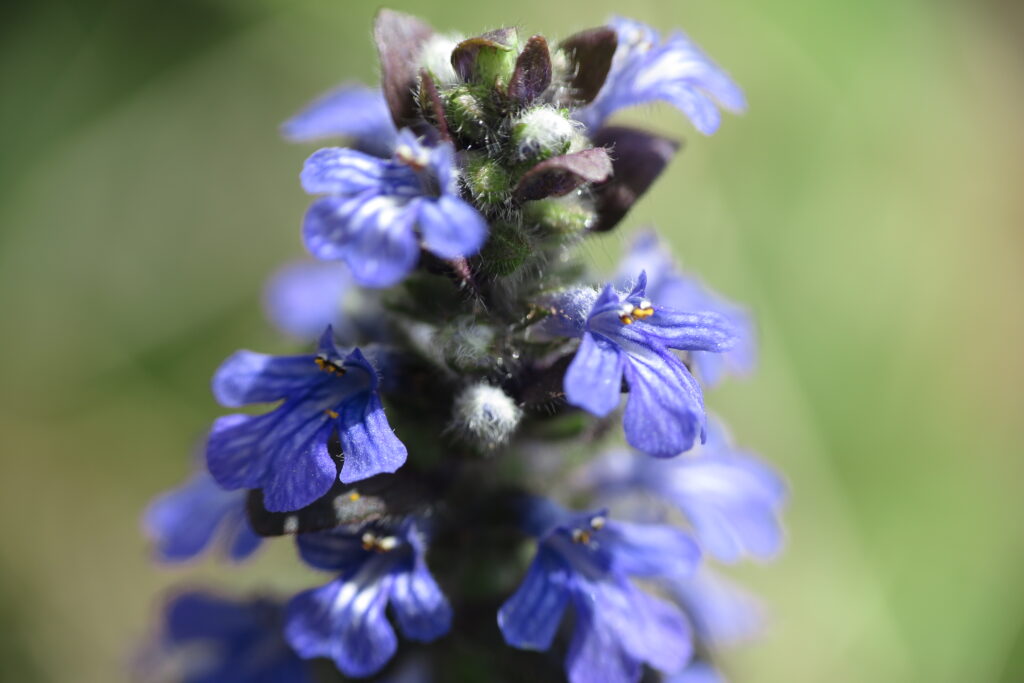
The flower spikes provide the plant’s most eye-catching feature. Numerous small blooms are arranged in dense tiers along upright stems, creating colorful columns that rise above the foliage. These spikes often become the focal point of the entire plant during the blooming season.
Bugleweed also displays strong visual contrast between foliage and flowers. Deep green or bronze leaves provide a rich background that enhances the intensity of blue and purple blossoms. This natural color combination contributes significantly to the plant’s popularity among gardeners and nature enthusiasts alike.
How to Identify Bugleweed in the Field
Recognizing Bugleweed begins with observing its overall growth habit. Dense mats of broad leaves covering the ground are often the first clue. When flowering stems are present, identification becomes considerably easier because the plant develops a highly distinctive profile.
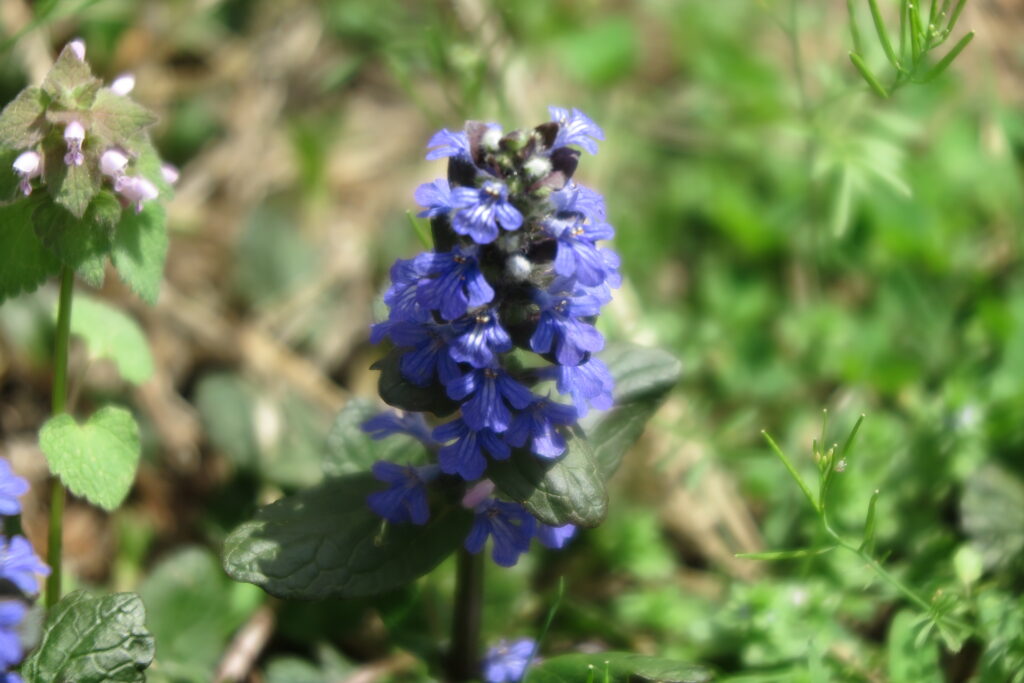
The flower spikes consist of numerous blue to violet blossoms arranged in stacked clusters. These blooms create a column-like appearance that remains visible even from several feet away. The vertical arrangement helps separate Bugleweed from many other low-growing plants that produce flowers individually or in loose clusters.
Leaf arrangement offers another valuable identification feature. Leaves occur in opposite pairs along the stem, a characteristic common among members of the mint family. Observing this pattern can help confirm identification when flowers are not present.
One common source of confusion involves Creeping Charlie (Glechoma hederacea), another mint-family plant frequently found in lawns and gardens. Both species produce purple-blue flowers and spreading growth. Bugleweed, however, develops upright flower spikes and larger, more structured foliage, while Creeping Charlie typically produces scattered flowers along creeping stems.
A useful field comparison is to imagine a miniature flowering tower rising from a carpet of leaves. Few groundcover plants combine dense foliage with such prominent flower spikes. When observers look for broad leaves, paired leaf arrangement, and colorful vertical blooms occurring together, Bugleweed becomes one of the easiest ornamental groundcovers to identify.
Observation Location
Observed in York County, Pennsylvania, USA
Popular Searches About Bugleweed
Explore Bugleweed Guide
Explore More Plants

Support Encounters World
Help support wildlife photography and get behind the scenes discoveries on Patreon.