Blue Jay Sounds Guide: Calls, Noises, and Vocal Meanings of Cyanocitta cristata
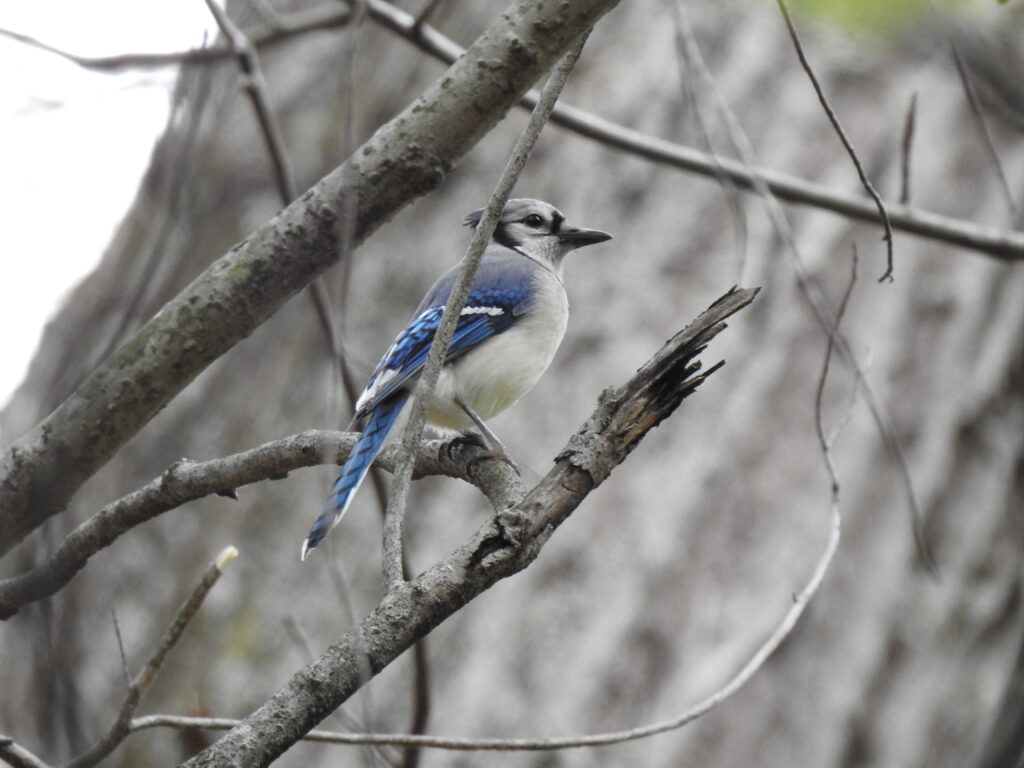
Quick Facts
Location: Forests, suburban neighborhoods, woodland edges, and parks
Average Vocal Range: Loud, sharp, and highly varied calls
Lifespan: 7–17 years
Global Range: Eastern and central North America
Conservation Status: Least Concern
Notable Feature: Extremely loud vocalizations with varied call types and mimicry abilities
Introduction to Blue Jay Sounds and Woodland Calls
The Blue Jay is widely recognized not only for its bright blue plumage, but also for its loud and unmistakable vocalizations. Across forests, neighborhoods, parks, and woodland edges throughout North America, Blue Jay calls often echo through the trees long before the bird itself becomes visible. Their voices carry strongly across wooded landscapes, making them one of the easiest birds to identify by sound alone. Even people unfamiliar with birdwatching often recognize the species immediately after hearing its sharp calls.
Blue Jays are found throughout much of eastern and central North America, where their sounds become a familiar part of the environment in both rural and suburban areas. During quiet mornings, their calls may cut through the background noise of forests with surprising intensity. In neighborhoods lined with mature trees, the birds frequently vocalize from rooftops, branches, or utility lines. Their presence often feels larger than their actual size because of how powerful and attention-grabbing their calls can be.
Unlike many songbirds that rely mostly on soft melodies, Blue Jays produce a wide range of harsh cries, whistles, clicks, and complex vocal notes. Some sounds are abrupt and alarm-like, while others are smoother and more musical. Individual birds may shift between several completely different call types within only a few minutes. This vocal variety gives the species one of the most recognizable sound profiles among North American woodland birds.
The soundscape surrounding Blue Jays changes throughout the seasons as activity levels rise and fall. Spring and early summer often bring frequent vocal exchanges as birds become more active around nesting areas. Autumn forests may fill with loud calls traveling between trees as groups move across woodland edges. Regardless of season, Blue Jay vocalizations remain one of the defining natural sounds associated with eastern North American forests.
Overview of Blue Jay Vocalizations and Call Variety
The vocal range of the Blue Jay is remarkably broad compared to many similarly sized birds. Most people associate the species with its loud “jay-jay” cries, but this represents only a small portion of its full sound repertoire. Blue Jays are capable of producing whistles, rattles, clicking noises, squeaks, and softer murmuring calls that vary depending on situation and surroundings. Their vocal complexity often surprises observers who only know the bird for its sharp warning sounds.
Many Blue Jay calls carry long distances because of their volume and piercing tone. In dense forests, these sounds can travel across clearings and through thick vegetation with ease. Some vocalizations resemble rusty hinges or squealing metal, while others sound more like short whistles or flute-like notes. This wide variation allows Blue Jays to create one of the most diverse sound signatures among common woodland birds.
Compared to species like the American Robin, which produces smoother and more melodic songs, Blue Jay sounds often feel harsher and more forceful. Their calls are designed less for musical quality and more for strong communication over distance. Even softer vocalizations still tend to contain a rough, textured quality that separates them from gentler songbirds. This distinct sound structure makes identification easier even without visual confirmation.
Another unusual feature of Blue Jay vocal behavior is mimicry. Some individuals imitate the calls of hawks, particularly the Red-shouldered Hawk or Red-tailed Hawk. These imitations can sound surprisingly convincing when heard from a distance. In woodland settings, a listener may briefly mistake a Blue Jay for a hawk until the bird reveals itself visually or shifts back into more familiar calls.
Recognizable Blue Jay Sound Types and Vocal Characteristics
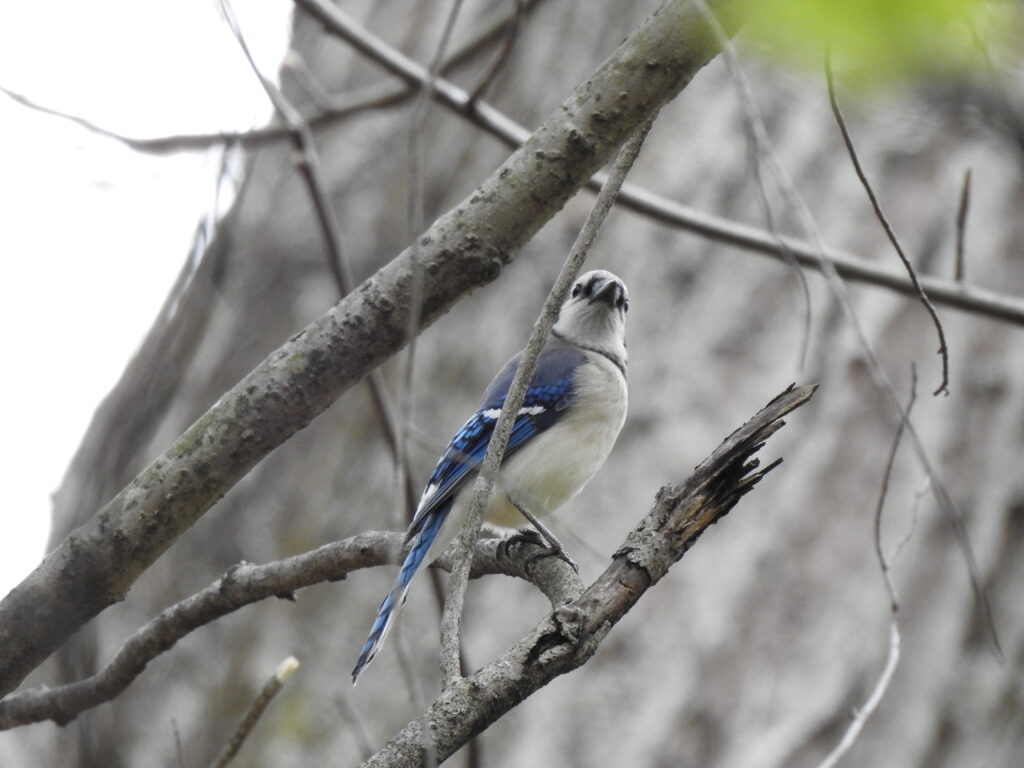
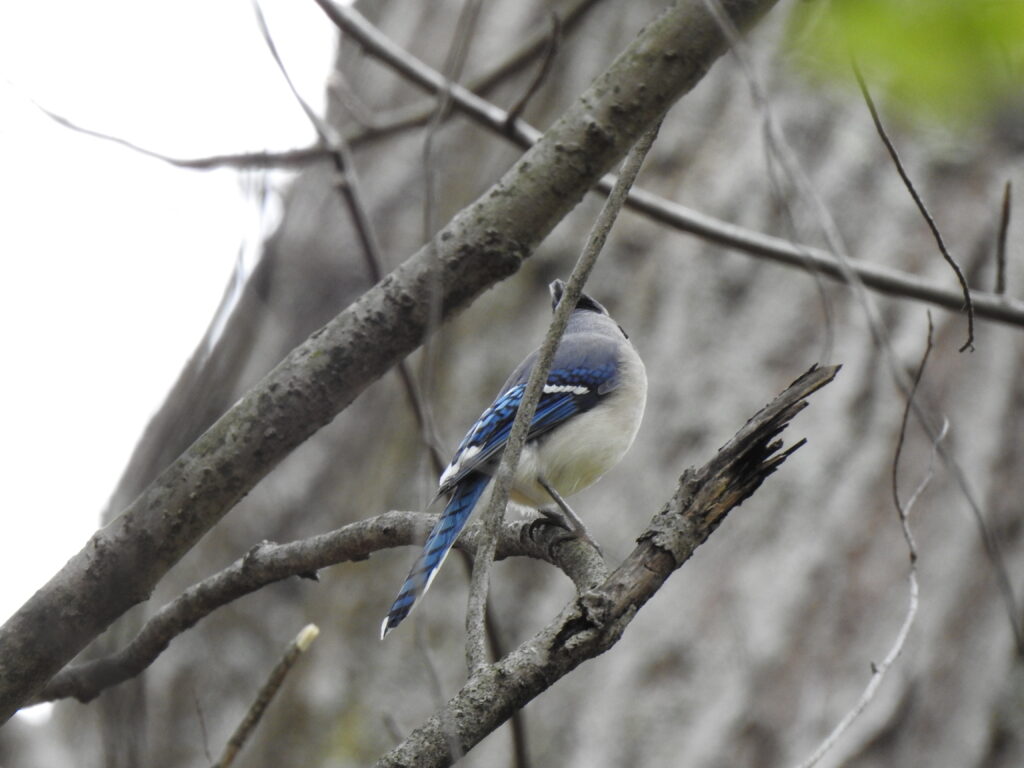
Several sound types make the Blue Jay instantly recognizable within North American forests and suburban landscapes. The classic “jay” call remains the most familiar vocalization and is usually delivered in loud repeated bursts. This call has a sharp, raspy quality capable of carrying through dense trees and open spaces alike. Its intensity often makes the bird sound larger and more aggressive than it actually is.
Blue Jays also produce lower-volume calls that many casual observers rarely notice. These include soft whistles, gentle clicking notes, and quiet chattering sounds exchanged between nearby birds. At close range, these quieter vocalizations create a completely different impression from the species’ loud alarm calls. Instead of sounding harsh or aggressive, the bird may seem calm and conversational while perched quietly within the canopy.
The tonal quality of Blue Jay calls often resembles mechanical or metallic noises more than traditional birdsong. Some rattling sounds resemble shaking keys or tapping wood together rapidly. Other vocalizations have a squeaky, almost rubber-like texture similar to the sound of shoes sliding across polished floors. This unusual variety contributes heavily to the species’ instantly recognizable audio identity.
Young Blue Jays gradually develop stronger and clearer calls as they mature. Juvenile birds often produce weaker, rougher sounds lacking the full power of adults. Over time, their vocalizations deepen and become more structured. Seasonal conditions may also influence sound clarity, as cool autumn air can allow calls to travel farther and sound sharper compared to humid summer mornings.
Ecological Importance of Blue Jay Calls in Forest Ecosystems
The sounds produced by the Blue Jay play an important role within forest ecosystems and surrounding wildlife communities. Loud vocalizations often function as warning signals that alert nearby animals to changes in the environment. When Blue Jays react suddenly with repeated alarm calls, other birds and small mammals frequently become alert as well. Their calls can therefore influence the awareness and behavior of multiple species within the same habitat.
Because Blue Jays are highly visible and vocal, they contribute significantly to the overall soundscape of eastern North American forests. Woodland environments containing active Blue Jays often feel louder and more dynamic because of their constant communication. Their calls blend with other natural sounds such as rustling leaves, woodpecker drumming, and distant songbirds. Together, these layers create the complex acoustic atmosphere associated with healthy forest ecosystems.
Blue Jay vocal activity may also indirectly affect predator-prey interactions. Hawk imitations and alarm calls can temporarily change how nearby animals behave, sometimes causing smaller birds to retreat into cover. These reactions influence movement patterns throughout sections of the forest canopy. Even animals that never see the Blue Jay directly may still respond to its vocalizations.
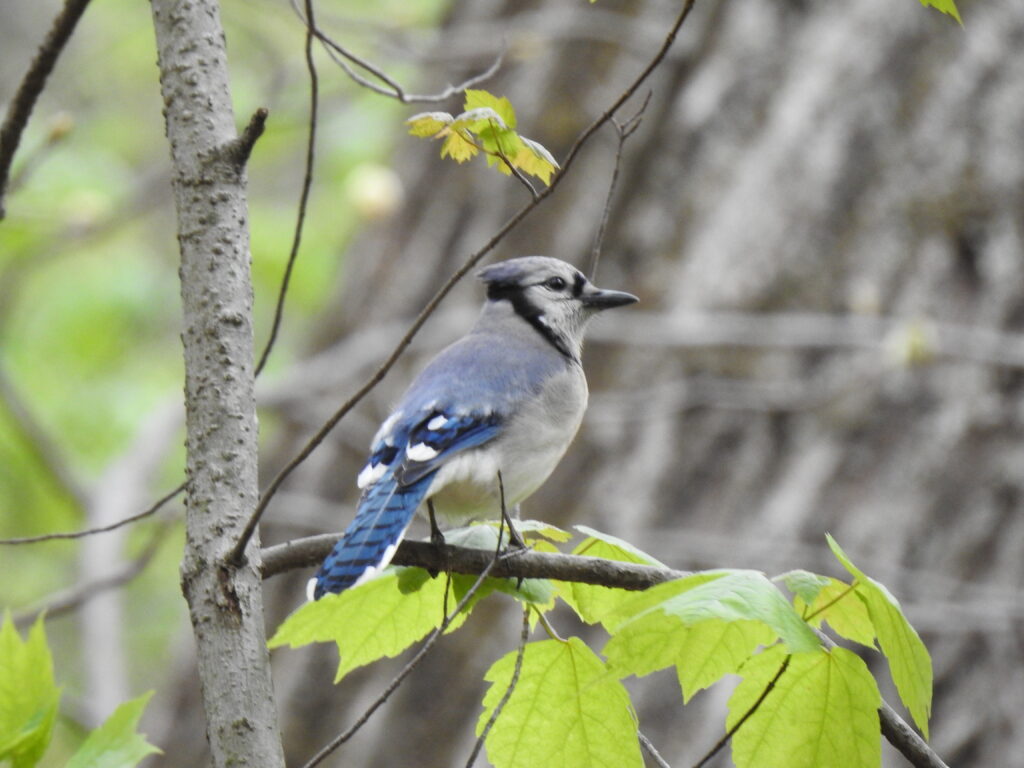
Beyond ecological importance, Blue Jay sounds are deeply connected to human experiences with nature. Their calls are among the most recognizable bird noises in suburban neighborhoods and public parks across eastern North America. Many people first become aware of seasonal bird activity through hearing Blue Jays calling overhead. Whether echoing through autumn woods or sounding from backyard trees during spring mornings, their vocal presence remains one of the defining natural sounds of the region.
Popular Searches About Blue Jay
Explore Blue Jay Guide
Explore More Wildlife

Support Encounters World
Help support wildlife photography and get behind the scenes discoveries on Patreon.