Black Rat Snake Overview Guide: Identification, Appearance, and Ecological Importance
Quick Facts
Scientific Name: Pantherophis alleghaniensis
Common Name: Black Rat Snake
Location: Forests, rocky hillsides, farmland edges, barns, and woodland clearings
Average Size: 3.5–6 feet long
Lifespan: 10–20 years
Global Range: Eastern North America, primarily the eastern United States
Conservation Status: Least Concern
Notable Feature: Long black body with glossy scales and strong climbing ability
Location Observed: Pennsylvania, USA
Field Observation
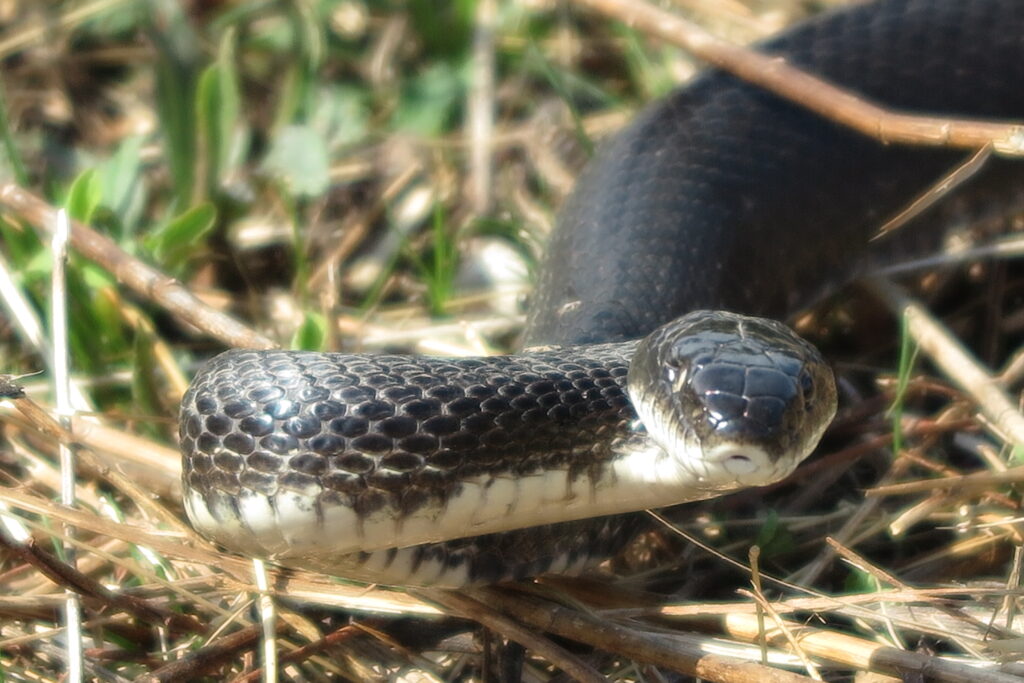
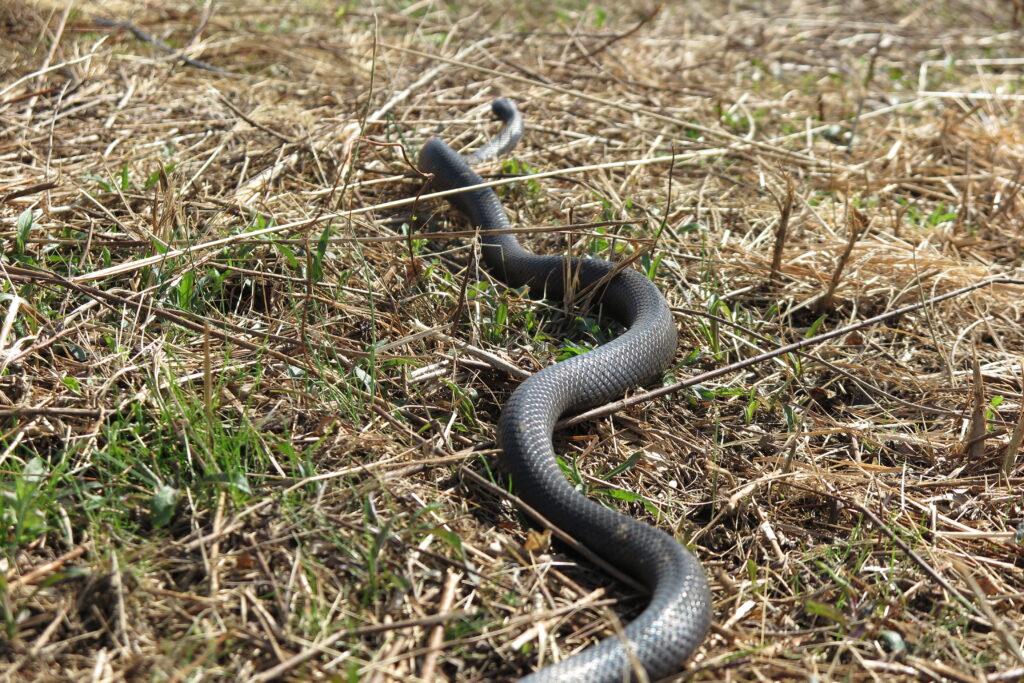
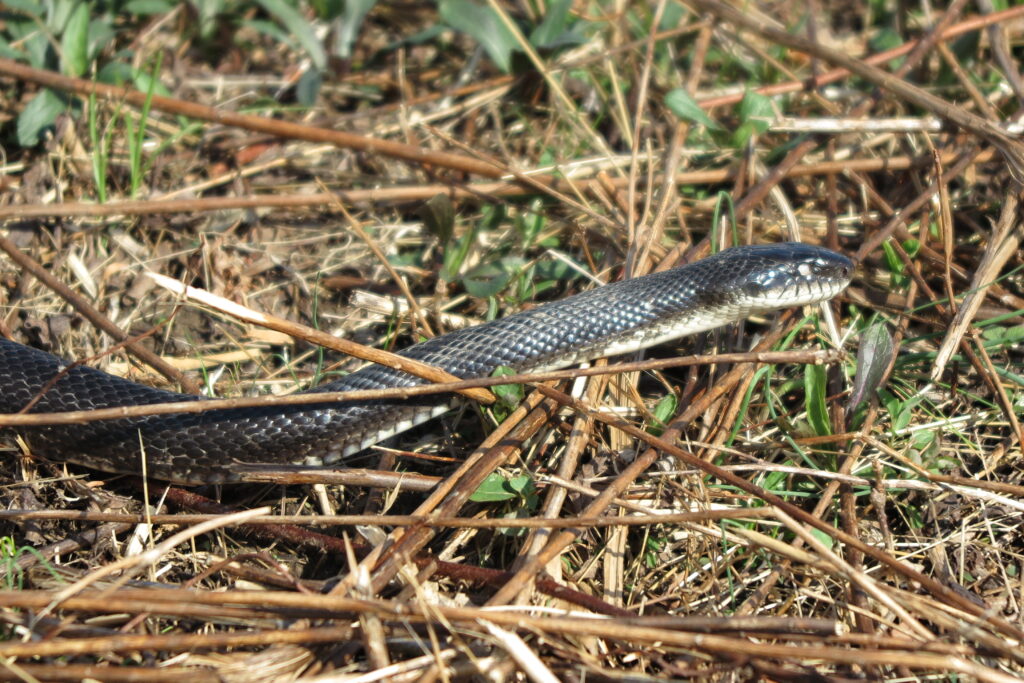
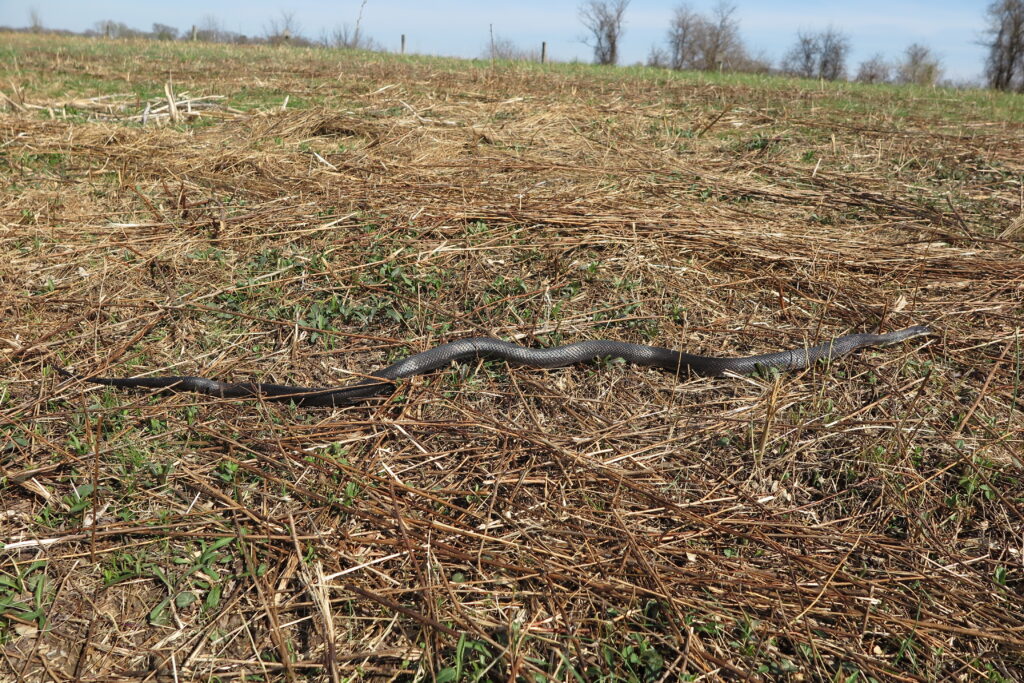
The Black Rat Snake was observed moving smoothly through the grass with steady, effortless motion, appearing fully focused on reaching its destination. It showed little awareness of nearby surroundings, gliding naturally through the vegetation without hesitation or interruption.
Introduction to the Black Rat Snake’s Natural Presence
The Black Rat Snake is one of the largest and most recognizable nonvenomous snakes found across eastern North America. Its range stretches throughout much of the eastern United States, where it is commonly associated with forests, rocky terrain, agricultural land, and rural environments. Because of its large size and dark coloration, the species often leaves a strong impression on anyone who encounters it in the wild.
Black Rat Snakes are frequently observed crossing trails, climbing trees, or resting quietly among rocks and fallen logs. Their dark bodies can blend surprisingly well into shaded woodland environments, despite their impressive length. In warmer months, sightings become more common as the snakes move through open areas searching for shelter and suitable basking locations.
Many encounters happen near human structures such as barns, sheds, wood piles, and abandoned buildings. These environments often provide cover, warmth, and nearby prey populations, making them attractive to the species. Although their appearance can initially seem intimidating, Black Rat Snakes are an important and widespread part of eastern North American ecosystems.
Juvenile Black Rat Snakes often look very different from adults, creating confusion during identification. Younger snakes display gray or patterned bodies with darker blotches, while mature adults gradually develop the darker coloration associated with the species. This noticeable transformation makes the Black Rat Snake visually unique throughout different stages of life.
Black Rat Snake Appearance and Physical Overview
The Black Rat Snake is a long, muscular snake with a sleek body covered in glossy scales that reflect light subtly across the surface. Most adults display dark black or charcoal coloration across the upper body, while the underside may appear lighter with gray, white, or faint checker-like patterns. In sunlight, the scales sometimes reveal faint brown or bluish undertones rather than appearing completely solid black.
Adult snakes commonly reach lengths between 3.5 and 6 feet, though exceptionally large individuals may grow even longer. A fully stretched Black Rat Snake can resemble the length of a fishing rod or the width of a small hallway when extended across the ground. Their size alone often surprises observers unfamiliar with nonvenomous North American snakes.
The head is slightly wider than the neck but remains relatively narrow compared to heavily built venomous snakes. Rounded pupils and smooth facial structure contribute to a more streamlined appearance. The scales themselves create a textured surface that gives the snake a polished, almost armored look under direct lighting.
Juveniles possess a completely different visual appearance compared to mature adults. Young Black Rat Snakes usually display pale gray backgrounds with dark brown or black blotches running along the body. These patterns help camouflage younger snakes among leaves, bark, and forest debris before darker adult coloration develops over time.
Compared to the Eastern Garter Snake, the Black Rat Snake appears much thicker, longer, and more powerful. Garter snakes display thinner bodies and striped coloration, while Black Rat Snakes maintain a heavier muscular frame and darker appearance. This larger body structure gives them a more commanding visual presence in woodland environments.
The scales are slightly keeled, meaning they possess faint ridges rather than appearing perfectly smooth. These ridges help reduce glare and create a matte texture across portions of the body. Combined with dark coloration, the texture allows the snake to blend naturally into shaded environments and rocky terrain.
When observed in natural surroundings, the snake’s body often appears like a thick black rope stretched across the forest floor or draped through branches. Its combination of length, dark coloration, and glossy scales creates one of the most recognizable silhouettes among eastern North American snakes.
General Characteristics That Make the Black Rat Snake Recognizable
The Black Rat Snake possesses several defining characteristics that separate it from other nonvenomous snakes in eastern North America. Its long body, glossy black scales, and muscular build immediately create a distinct appearance. Mature adults especially stand out because of their dark coloration and impressive overall size.
One of the most recognizable traits is the snake’s elongated body structure. Black Rat Snakes appear lean yet powerful, with bodies capable of stretching across large distances while maintaining flexibility. Their form resembles a thick climbing rope capable of moving smoothly through trees, rocks, and uneven terrain.
The head remains relatively narrow compared to the broader triangular heads often associated with pit vipers. Rounded pupils further distinguish the species from venomous snakes such as the Copperhead. These physical differences help experienced observers identify the species more confidently.
Another defining feature is the contrast between juvenile and adult coloration. Younger snakes display patterned blotches similar to many woodland snakes, while adults gradually darken into the familiar black form. This dramatic transformation creates very different visual appearances during different life stages.
The species also possesses remarkable climbing adaptations visible through its body structure. Strong muscles and textured scales allow the snake to grip bark and rough surfaces effectively. Seeing a large snake extended through tree branches often surprises people who assume heavy-bodied snakes remain only on the ground.
Black Rat Snakes sometimes display subtle white skin between scales when the body stretches or curves sharply. This can create a faint patterned effect during movement or defensive postures. Under certain lighting conditions, the body may appear lightly checkered rather than entirely solid black.
Their glossy scales contribute heavily to the snake’s overall appearance. Moisture, sunlight, or shaded woodland light can produce reflective highlights across the body surface. These shifting reflections give the snake a sleek, polished look uncommon among many rougher-textured reptiles.
Black Rat Snake Role in the Ecosystem and Environmental Importance
The Black Rat Snake plays an important ecological role as one of the major nonvenomous predators within eastern North American ecosystems. Across forests, farmland edges, and rural environments, the species helps regulate populations of rodents and other small animals. This natural control contributes significantly to ecological balance.
Black Rat Snakes occupy an important middle position within food webs. They function as predators while also serving as prey for hawks, owls, foxes, raccoons, and larger mammals. This dual ecological role helps transfer energy throughout ecosystems and supports biodiversity across many habitats.
In agricultural regions, Black Rat Snakes can provide natural rodent control near barns, grain storage areas, and farmland. Their presence may reduce populations of mice and rats that damage crops or stored food supplies. Because of this, the species is often considered highly beneficial despite common fear surrounding snakes.
The snake’s climbing ability also expands its ecological influence beyond the forest floor. By moving through trees and elevated structures, Black Rat Snakes interact with multiple layers of the environment rather than remaining strictly ground-based. This allows them to occupy ecological spaces unavailable to many other snake species.
Black Rat Snakes additionally contribute to maintaining balance among prey populations within woodland ecosystems. Without predators regulating rodent numbers, certain prey species could increase excessively and place pressure on vegetation or food resources. The snake’s role helps stabilize these broader environmental relationships.
Young Black Rat Snakes contribute differently to ecosystems compared to adults because of their smaller size and increased vulnerability. Juveniles become prey for a wider variety of animals while still participating as predators of smaller organisms. This creates ecological influence across multiple stages of development.
The species also serves as an indicator of healthy habitat structure in many regions. Forests, rocky terrain, and mixed rural landscapes supporting Black Rat Snakes often contain diverse wildlife communities and stable environmental conditions. Their continued presence reflects the importance of preserving natural cover and habitat connectivity.
Although sometimes misunderstood because of their appearance, Black Rat Snakes remain valuable and ecologically important reptiles throughout eastern North America. Their role in controlling prey populations, supporting food webs, and maintaining ecosystem balance makes them a vital part of the environments they inhabit.
Observation Location
Observed in Nixon Park Nature Center, Pennsylvania, USA
Popular Searches About Black Rat Snakes
Explore Black Rat Snake Guide
Explore More Wildlife

Support Encounters World
Help support wildlife photography and get behind the scenes discoveries on Patreon.