Black Rat Snake Bite Guide: Symptoms, Identification, and Bite Facts
Quick Facts
Bite Severity: Mild and nonvenomous
Typical Symptoms: Small punctures, mild bleeding, swelling, and temporary pain
Venom Type: Nonvenomous constrictor
Average Fang Size: Small curved teeth rather than venom fangs
Global Range: Eastern North America, primarily the eastern United States
Conservation Status: Least Concern
Notable Feature: Large nonvenomous snake commonly mistaken for venomous species
Introduction to Black Rat Snake Bites and Human Encounters
The Black Rat Snake is one of the most frequently encountered large snakes across eastern North America, and its size alone often causes concern during human encounters. Found throughout forests, farmland, barns, rocky hillsides, and suburban woodland edges, the species regularly appears in environments shared with people. Because of its dark coloration and impressive length, it is commonly mistaken for venomous snakes despite being completely nonvenomous.
Black Rat Snake bites are defensive reactions rather than aggressive attacks. Most bites happen when the snake is cornered, handled, stepped on, or physically restrained. In natural situations, these snakes almost always attempt to escape before resorting to biting.
Many people first notice a Black Rat Snake while it moves through grass, climbs trees, or rests near wood piles and stone walls. Their sudden appearance and large muscular bodies can create panic, especially for those unfamiliar with eastern North American snakes. This fear often leads to confusion between harmless rat snakes and dangerous venomous species.
Although a bite from a Black Rat Snake can be startling and uncomfortable, it is generally mild compared to bites from venomous snakes. Understanding how to identify the species and recognize common bite symptoms helps reduce unnecessary fear and misinformation. In most cases, Black Rat Snakes are highly beneficial reptiles that prefer avoidance over confrontation.
Black Rat Snake Bite Overview and Snake Identification
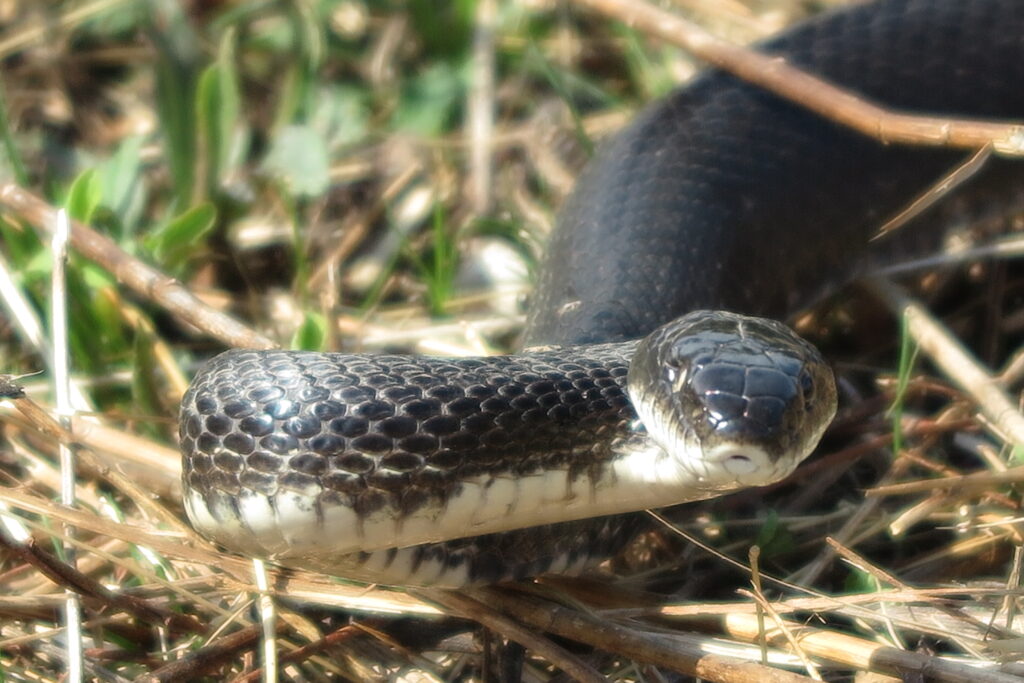
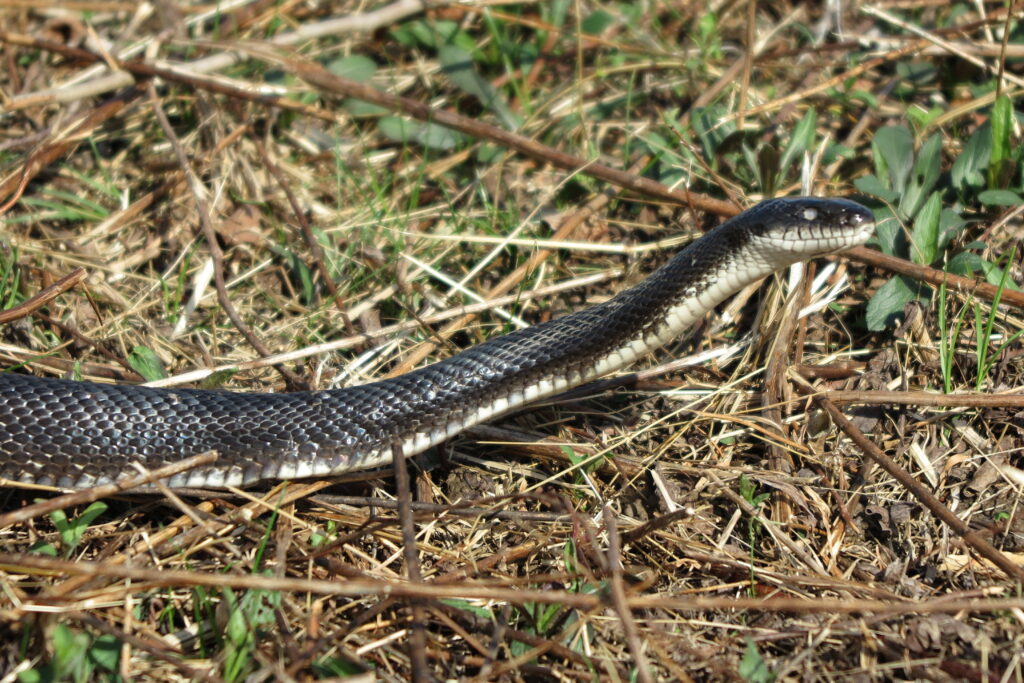
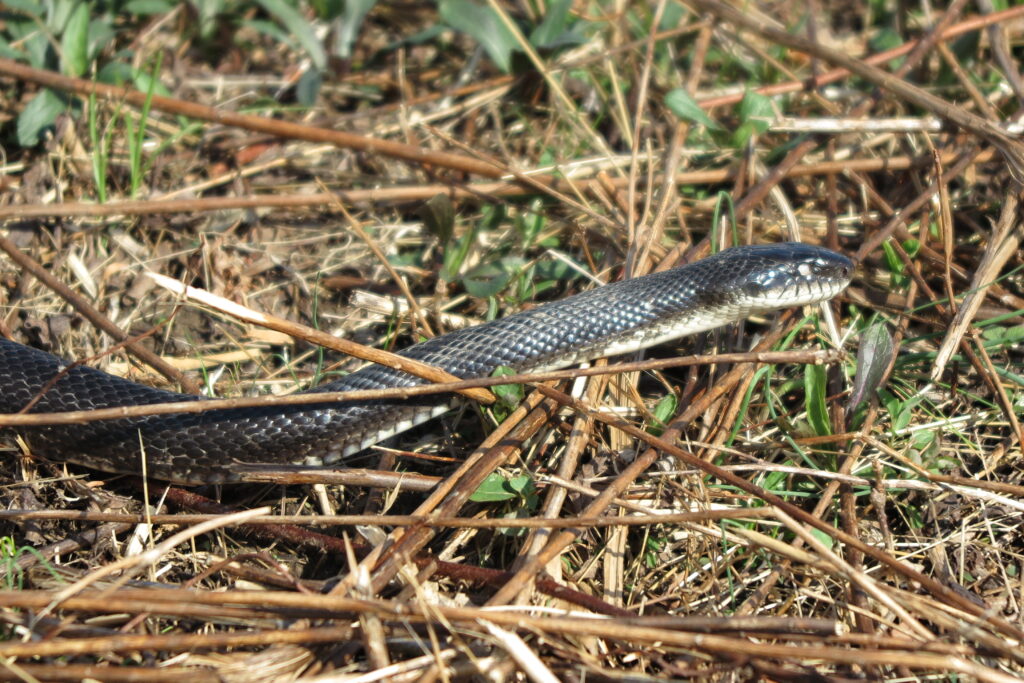
Black Rat Snakes are long, muscular snakes with glossy dark scales and streamlined bodies built for climbing and movement across varied terrain. Most adults appear black or charcoal gray with lighter undersides that may contain faint checker-like patterns. In sunlight, subtle blue or brown tones sometimes become visible across the scales.
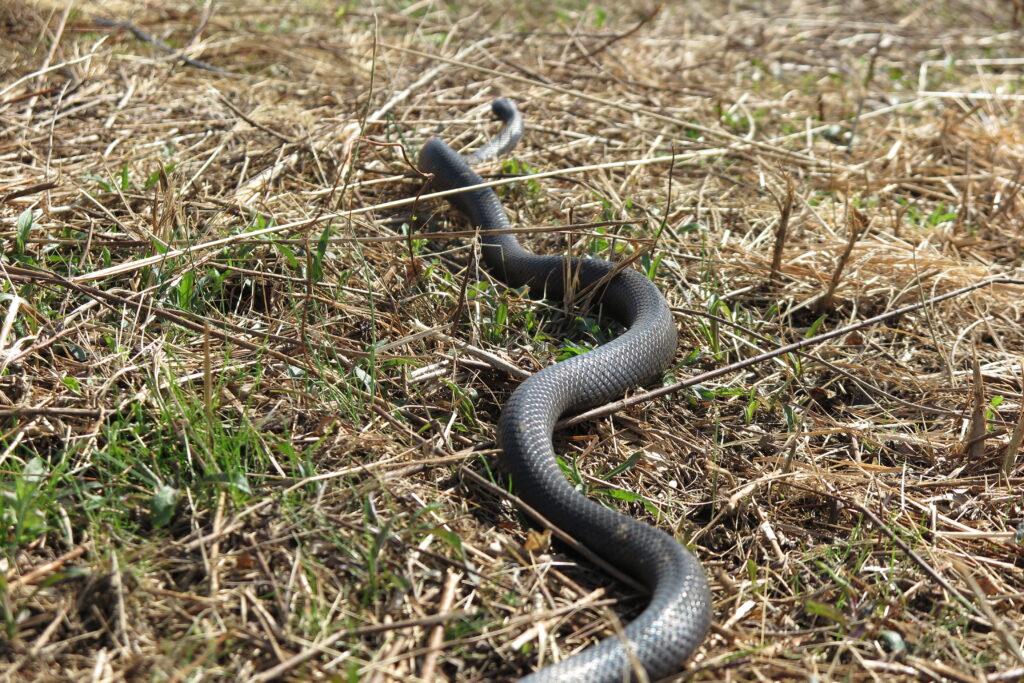
Adult snakes commonly grow between 3.5 and 6 feet long, though exceptionally large individuals may exceed this size. A mature Black Rat Snake stretched across the ground can resemble the length of a fishing rod or garden hose. Their large size is often the main reason they appear intimidating during unexpected encounters.
The head is relatively narrow and blends smoothly into the neck compared to the thick triangular head shape associated with pit vipers. Rounded pupils also help distinguish the species from venomous snakes such as the Copperhead. These physical differences are important for safe identification.
Unlike venomous snakes equipped with hollow fangs, Black Rat Snakes possess rows of small backward-curved teeth used for gripping prey. A bite usually leaves several tiny puncture marks or shallow scratches rather than large deep fang wounds. Mild bleeding is common because of the multiple small teeth involved.
Juvenile Black Rat Snakes often look dramatically different from adults. Young snakes display gray or tan bodies covered with darker blotches, creating patterns that resemble many woodland snakes. As they mature, darker coloration gradually develops across the body.
The snake’s scales are slightly keeled, meaning they contain subtle ridges that create a textured appearance. This gives the body a matte, rugged surface under certain lighting conditions. Combined with glossy reflections, the scales contribute to the species’ distinctive appearance.
When threatened, Black Rat Snakes may flatten portions of the body, hiss loudly, or vibrate the tail in dry leaves to imitate a rattlesnake. These defensive displays often appear more dramatic than the bite itself. Most individuals prefer intimidation and escape over physical contact whenever possible.
General Characteristics of Black Rat Snake Bites and Symptoms
A Black Rat Snake bite is typically mild and non-life-threatening for healthy humans. Most bites result in temporary discomfort rather than serious medical complications. Common symptoms include small puncture wounds, mild swelling, redness, and localized pain around the bite area.
The bite sensation is often described as similar to a series of sharp pinpricks or scratches. Because the snake lacks venom fangs, the injury usually comes from rows of curved gripping teeth rather than deep punctures. Some bleeding may occur immediately after contact due to multiple tooth marks.
Swelling around the bite area is generally limited and temporary. Mild bruising or irritation may develop over the following hours, especially if the bite occurred during defensive struggling. Most uncomplicated bites improve naturally within several days with basic wound care.
Compared to bites from the Eastern Diamondback Rattlesnake, Black Rat Snake bites are dramatically less dangerous. Venomous snakebites may involve severe tissue damage, systemic symptoms, or medical emergencies, while Black Rat Snake bites usually remain minor surface injuries.
Secondary infection is one of the primary concerns after any nonvenomous snakebite. Bacteria from the snake’s mouth or surrounding environment can enter broken skin if the wound is not cleaned properly. Washing the area thoroughly with soap and water greatly reduces this risk.
Some individuals may experience stronger localized reactions because of sensitivity or allergic response. Increased swelling, unusual redness, or persistent discomfort should be monitored carefully if symptoms worsen over time. Serious reactions, however, remain uncommon for this species.
Another important characteristic is that many reported “attacks” actually involve defensive bites during handling attempts. Black Rat Snakes generally avoid humans and rarely pursue confrontation actively. Their bites are survival responses triggered by stress or perceived danger.
Black Rat Snake Role in the Ecosystem and Why They Benefit Humans
The Black Rat Snake plays an important ecological role as one of the primary nonvenomous predators of rodents across eastern North America. By helping regulate populations of mice, rats, and other small mammals, the species contributes directly to environmental balance. This natural rodent control is especially valuable in agricultural and rural areas.
Black Rat Snakes are commonly found near barns, grain storage areas, and woodland edges where rodent activity remains high. Their presence often reduces populations of animals that damage crops, contaminate stored food, or spread disease. Because of this, many farmers historically viewed the species as highly beneficial despite fear surrounding snakes.
The species also occupies an important middle position within food webs. Black Rat Snakes function as predators while also serving as prey for hawks, owls, foxes, raccoons, and larger mammals. This dual ecological role helps transfer energy throughout ecosystems and supports biodiversity across many habitats.
Their climbing ability expands their ecological influence into elevated portions of the environment. Unlike strictly ground-dwelling snakes, Black Rat Snakes interact with birds, nests, and tree-dwelling prey as well. This allows them to occupy ecological roles unavailable to many other reptiles.
Fear surrounding Black Rat Snake bites often comes primarily from appearance rather than actual danger. Their large muscular bodies and dark coloration naturally create caution in people unfamiliar with nonvenomous snakes. In reality, their bites are mild and their ecological value is substantial.
Black Rat Snakes also help reduce dependence on chemical rodent control in some environments. Natural predation can limit rodent populations without pesticides or poisons that affect broader ecosystems. This ecological service benefits both wildlife and human-managed landscapes.
Even their defensive behaviors contribute to survival without posing major danger to humans. Hissing, tail vibration, and bluffing displays usually function to avoid physical conflict entirely. Once given space, most Black Rat Snakes retreat quickly rather than continue confrontation.
Although their appearance may initially seem intimidating, Black Rat Snakes are valuable reptiles that rarely pose serious risk to people. Their mild bites, nonvenomous nature, and important ecological role make them one of the most beneficial large snakes found throughout eastern North America.
Popular Searches About Black Rat Snakes
Explore Black Rat Snake Guide
Explore More Wildlife

Support Encounters World
Help support wildlife photography and get behind the scenes discoveries on Patreon.