Black Rat Snake vs Black Racer: Key Differences, Identification, and Comparison Guide
Quick Facts
Black Rat Snake Scientific Name: Pantherophis alleghaniensis
Black Racer Scientific Name: Coluber constrictor constrictor
Common Names: Black Rat Snake and Black Racer
Average Size Difference: Black rat snakes are usually thicker and longer
Main Identification Feature: Black racers have smooth glossy scales while rat snakes have faintly keeled scales
Global Range: Eastern North America
Conservation Status: Least Concern for both species
Behavior Difference: Black racers are extremely fast and active during daylight
Introduction to Black Rat Snake vs Black Racer Identification
The Black Rat Snake and the Black Racer are two of the most commonly confused snakes in eastern North America. Both species can appear glossy black as adults, both are nonvenomous, and both are frequently encountered near forests, fields, roadsides, suburban neighborhoods, and woodland edges. Because of these similarities, many people struggle to identify which snake they are seeing.
Although they share similar coloration, black rat snakes and black racers differ significantly in body shape, movement style, climbing behavior, scale texture, and overall appearance. Black racers are built for speed and active daytime movement, while black rat snakes are heavier-bodied constrictors adapted for climbing and ambush-style hunting. These differences become easier to recognize once specific identification features are understood.
Confusion between the two species is especially common when snakes are observed quickly crossing roads, climbing through vegetation, or disappearing into tall grass. Lighting conditions and distance often hide important details such as scale texture or body proportions. As a result, many people simply assume any black snake is automatically the same species.
Learning the differences between black rat snakes and black racers helps reduce fear and improves wildlife identification accuracy. Both species play valuable ecological roles as nonvenomous predators, but each possesses unique physical traits and environmental adaptations that separate them clearly when viewed carefully.
Black Rat Snake vs Black Racer Appearance Differences
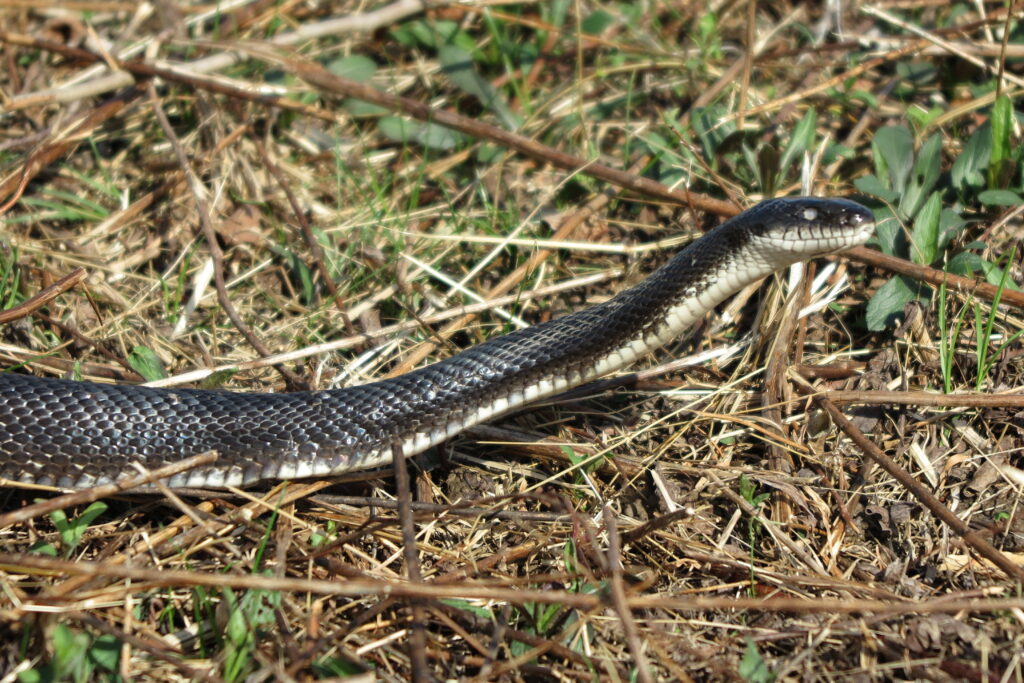
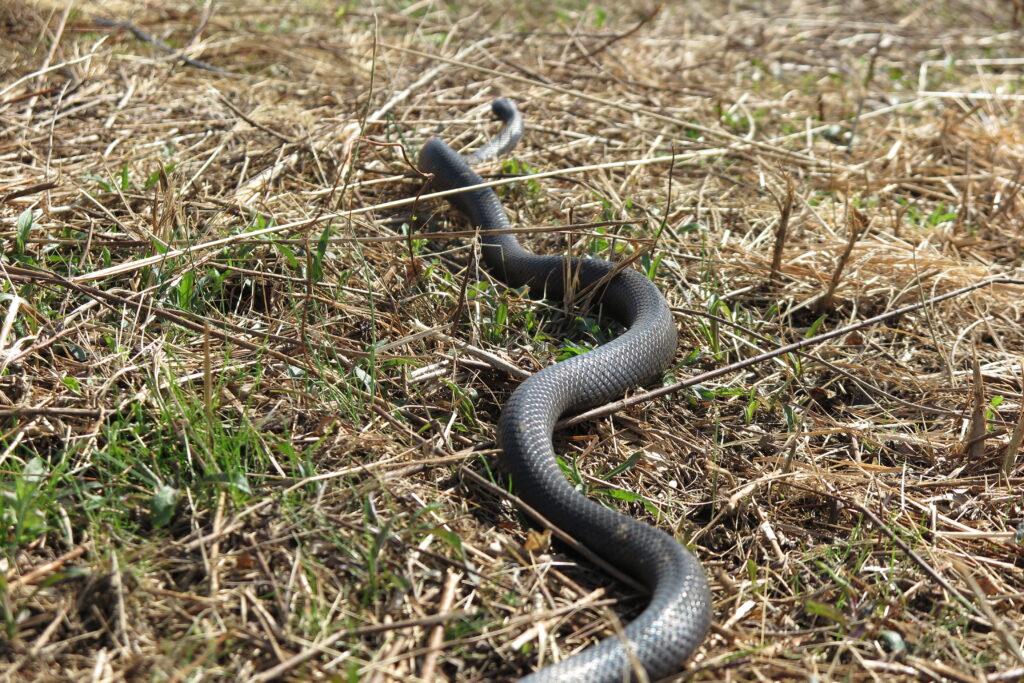
One of the most obvious differences between black rat snakes and black racers is overall body shape. Black rat snakes possess thick muscular bodies built for constriction and climbing, giving them a heavier appearance. Black racers are noticeably slimmer and more streamlined with a long narrow body designed for speed.
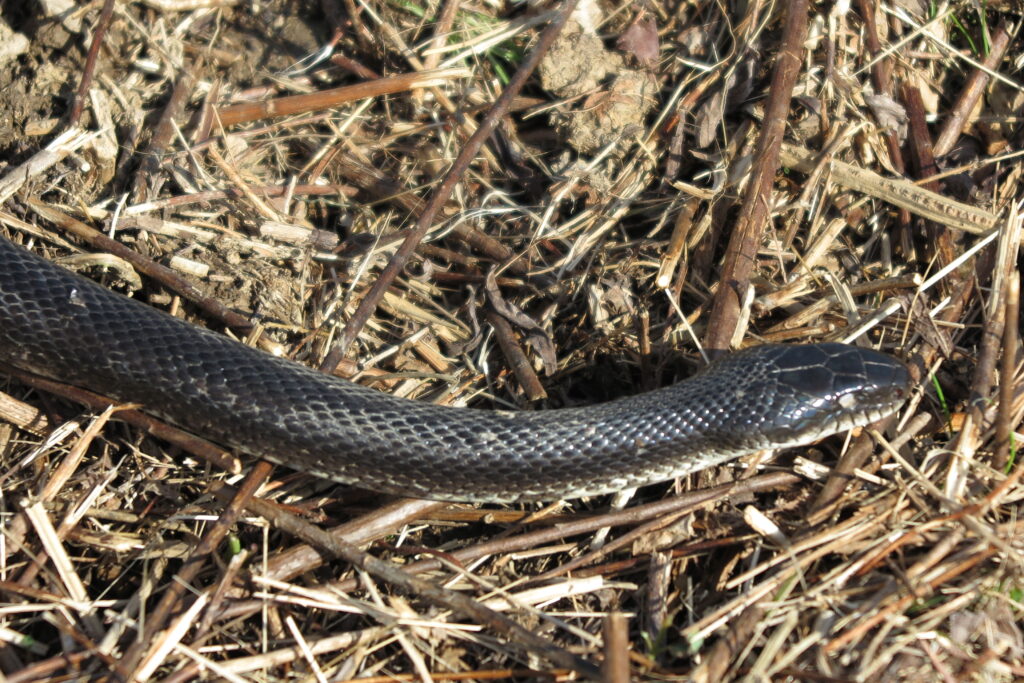
Black racers usually appear smoother and shinier overall because of their glossy scales. Their scales reflect sunlight cleanly, creating an almost polished appearance under bright lighting. Black rat snakes also possess dark coloration, but their scales are slightly keeled, giving the body a rougher or more textured appearance when viewed closely.
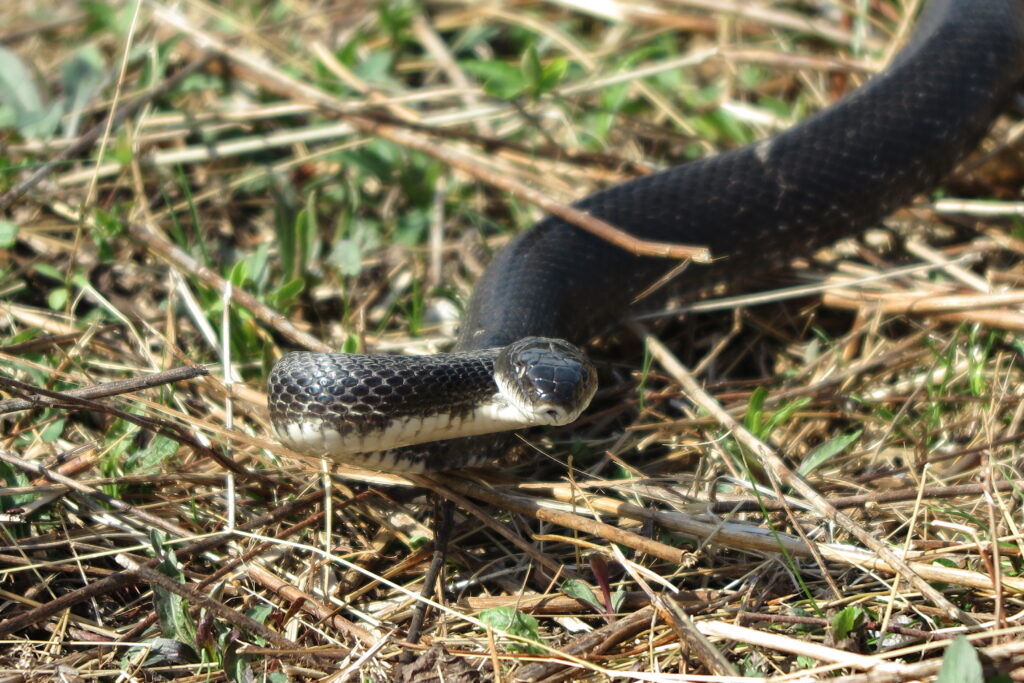
The head shape of each species also differs significantly. Black racers possess narrower smoother heads that blend gradually into the neck, while black rat snakes have a more defined head structure with slightly broader jawlines. Adult black rat snakes often appear more powerful overall because of this heavier facial structure.
Compared to the Eastern Garter Snake, both species appear much larger and darker overall. However, black racers maintain a much slimmer athletic body style, while black rat snakes resemble heavier climbing constrictors with stronger body proportions.
The underside coloration can also help separate the species. Black racers usually possess lighter gray or white underbellies with smoother transitions between colors. Black rat snakes may display patterned checker-like undersides or mottled lighter coloration beneath the body.
Juvenile appearance creates additional confusion because young black rat snakes look completely different from adults. Juveniles display gray or tan bodies covered in dark blotches rather than solid black coloration. Young black racers, meanwhile, appear more uniformly grayish with less dramatic patterning.
Another important distinction involves eye appearance. Black racers tend to have larger more noticeable eyes relative to head size, contributing to their alert active appearance. Black rat snakes possess darker subtler eyes that blend more naturally into their head coloration.
General Characteristics That Separate the Two Species
Movement style is one of the easiest ways to distinguish black racers from black rat snakes in the wild. Black racers move extremely quickly across open ground and often flee at high speed when disturbed. Their motion appears smooth, direct, and highly energetic compared to the slower heavier movement of rat snakes.
Black rat snakes, while capable climbers and fast movers when necessary, usually appear calmer and more deliberate. They frequently climb trees, barns, fences, and rocky terrain while searching for prey or shelter. Black racers are more ground-oriented and spend less time climbing vertically.
Behavior around humans also differs noticeably. Black racers are highly alert and usually flee rapidly once they notice movement nearby. Black rat snakes may freeze, coil defensively, or slowly retreat into cover instead of instantly racing away.
Compared to the Copperhead, both black rat snakes and black racers are harmless nonvenomous species. However, their dark coloration frequently causes unnecessary panic because people may mistakenly assume they are venomous snakes.
Black rat snakes are constrictors that overpower prey using muscular coils. Black racers do not constrict prey in the same manner and instead rely more heavily on speed and direct capture. This difference influences body structure, with rat snakes appearing far thicker and more muscular overall.
Another defining characteristic involves habitat use. Black rat snakes commonly occupy forests, rocky hillsides, barns, woodland edges, and elevated structures. Black racers prefer more open sunny environments such as fields, roadsides, brushy edges, and grasslands where their speed provides maximum advantage.
Defensive behavior also differs between the species. Black racers may vibrate their tail, strike repeatedly, or flee explosively when cornered. Black rat snakes often hiss loudly, coil tightly, or release foul-smelling musk as defensive responses. These behavioral differences become more noticeable during close encounters.
Ecological Role of Black Rat Snakes and Black Racers
Both black rat snakes and black racers serve highly important ecological roles as nonvenomous predators throughout eastern North America. By consuming rodents, insects, amphibians, reptiles, birds, and small mammals, these snakes help regulate prey populations naturally within forests, grasslands, and suburban ecosystems.
Black rat snakes are especially valuable for rodent control around farms, barns, sheds, and woodland environments. Their climbing ability allows them to access nesting areas and elevated spaces where rodents commonly hide. Historically, many farmers appreciated black rat snakes because of their ability to reduce mice and rat populations naturally.
Black racers contribute heavily to daytime predator activity within open habitats. Their speed allows them to hunt actively across fields, grassy edges, and roadside environments where prey animals move frequently. This active daytime hunting helps balance populations of small animals across sunny open ecosystems.
Compared to heavier constrictor species, black racers occupy a faster more mobile ecological niche. Their streamlined body and alert behavior make them highly effective visual hunters during daylight hours. Black rat snakes, meanwhile, combine climbing ability with ambush and constriction strategies.
Both snakes also provide food for hawks, owls, foxes, coyotes, raccoons, and larger predators. Even large adults remain part of the broader food web despite their role as predators themselves. Their presence supports balanced ecological interaction across many habitats.
Because both species are nonvenomous, they present very little danger to humans under normal circumstances. Fear often results from mistaken identity rather than actual threat. Learning the differences between black rat snakes and black racers helps reduce unnecessary killing of beneficial native snakes.
These species additionally help demonstrate the diversity of snake adaptations within eastern North America. Although both appear black and superficially similar, their body design, movement, and ecological roles differ significantly. Black racers represent speed and agility, while black rat snakes emphasize climbing strength and constriction.
Through rodent control, prey regulation, and ecological interaction, black rat snakes and black racers remain two of the most important nonvenomous snakes in eastern North America. Understanding their differences improves identification accuracy while encouraging appreciation for their role within healthy natural ecosystems.
Popular Searches About Black Rat Snakes
Explore Black Rat Snake Guide
Explore More Wildlife

Support Encounters World
Help support wildlife photography and get behind the scenes discoveries on Patreon.