
Canada Goose Overview: Identification, Appearance, and Ecological Importance
Quick Facts
Scientific Name: Branta canadensis
Common Name: Canada Goose
Location: North America
Average Size: 30–43 inches (76–110 cm)
Lifespan: 10–25 years
Global Range: North America, Europe, and parts of Asia
Conservation Status: Least Concern
Notable Feature: Black neck with white cheek patch
Location Observed: Pennsylvania, USA
Field Observation
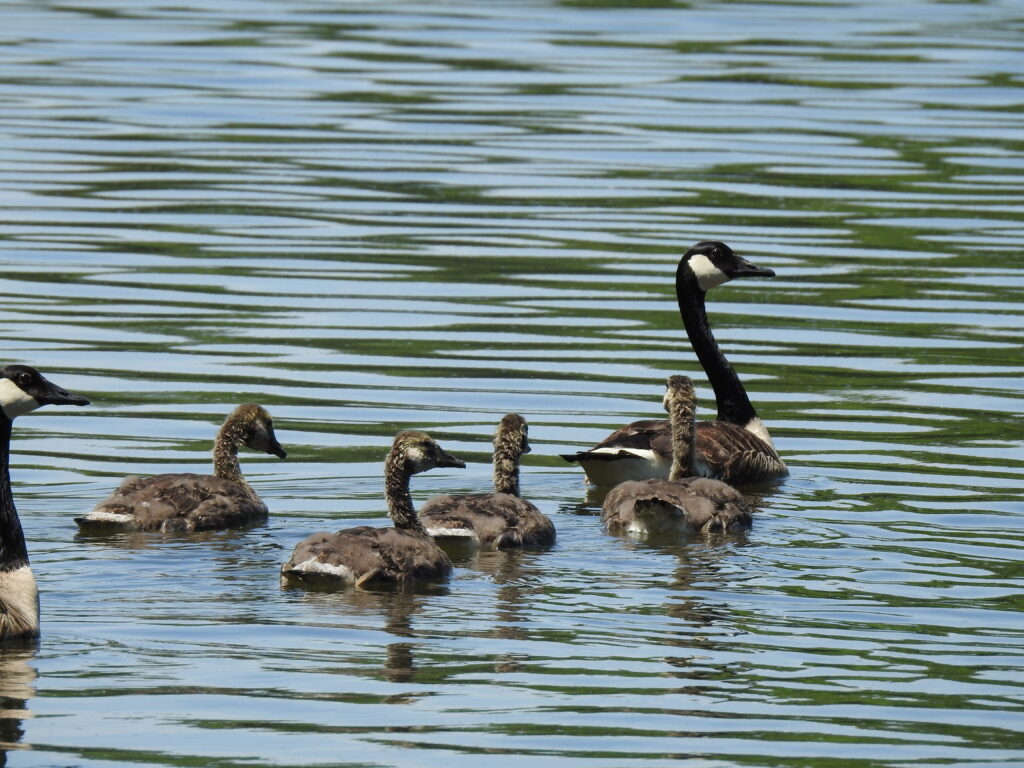
I observed Canada Geese in multiple locations, where they consistently remained highly aware of their surroundings and maintained distance from nearby people and animals. The geese almost always stayed together as a group, rarely separating from one another while feeding or resting. When young goslings were present, the adults kept them extremely close, surrounding and guiding the young birds as a protective family unit.
The Canada Goose Across North America
The Canada Goose (Branta canadensis) is one of the most recognizable waterfowl species in North America. Its long black neck, white facial patch, and large body have made it familiar to people living near lakes, rivers, parks, and wetlands. The species belongs to the duck family Anatidae and represents one of the largest geese found across much of the continent.
Its natural range extends from northern Canada and Alaska through much of the United States and into northern Mexico. Introduced populations also occur in Europe and parts of New Zealand. Because of its broad distribution, the Canada Goose has become one of the most widely observed wild birds in the world.
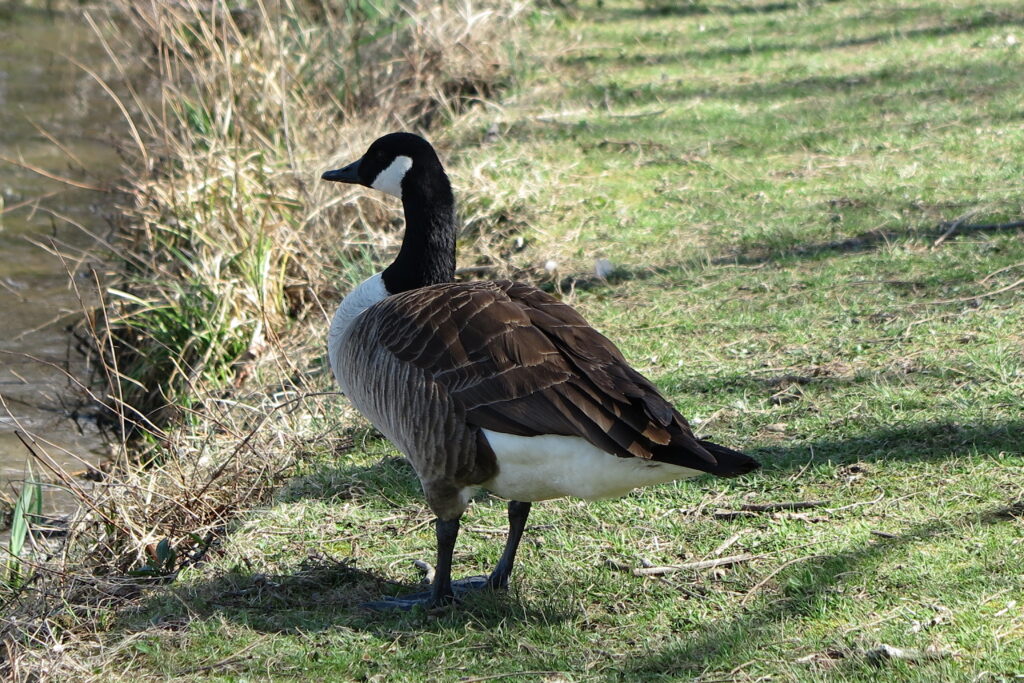
A shoreline during spring or autumn often provides an ideal setting to observe these birds. Their large bodies stand prominently against grassy banks, while their dark necks create strong contrast against water and sky. Even a single goose resting along a pond immediately attracts attention because of its size and posture.
Throughout much of its range, the Canada Goose has become a symbol of wetlands, migration, and seasonal change. Large groups appearing in the sky or gathering along shorelines signal changing seasons for many people. Their familiar appearance has made them one of the most recognized birds in North America.
Canada Goose Physical Appearance and Visible Features
The Canada Goose possesses a large, streamlined body built for both land and water. Adults commonly measure between 30 and 43 inches long with wingspans that may exceed five feet. Their body size is often compared to that of a medium-sized dog or a small turkey.
Coloration remains one of the easiest identification features. The head and neck are glossy black, while the face displays a distinctive white cheek patch extending from the throat to the sides of the head. The breast appears light brown to tan, gradually fading into pale underparts.
The back and wings contain layered brown feathers with lighter edging. These overlapping feathers create a scaled appearance when viewed closely. During sunlight, subtle variations of brown, gray, and chestnut become visible throughout the plumage.
Some populations display slight differences in size and coloration. Northern birds often appear larger, while southern resident populations may be somewhat smaller. Despite these variations, the black neck and white facial markings remain consistent throughout the species.
A standing Canada Goose presents an upright profile with a long neck held above a broad body. Its silhouette is immediately recognizable even from considerable distances. Few North American waterfowl possess such a distinctive combination of height, shape, and coloration.
Canada Goose Characteristics and Identification Traits
The long neck serves as one of the defining characteristics of the Canada Goose. The neck often appears nearly equal in length to the body itself, giving the bird an elegant and elevated posture. This feature separates it from many ducks and smaller geese.
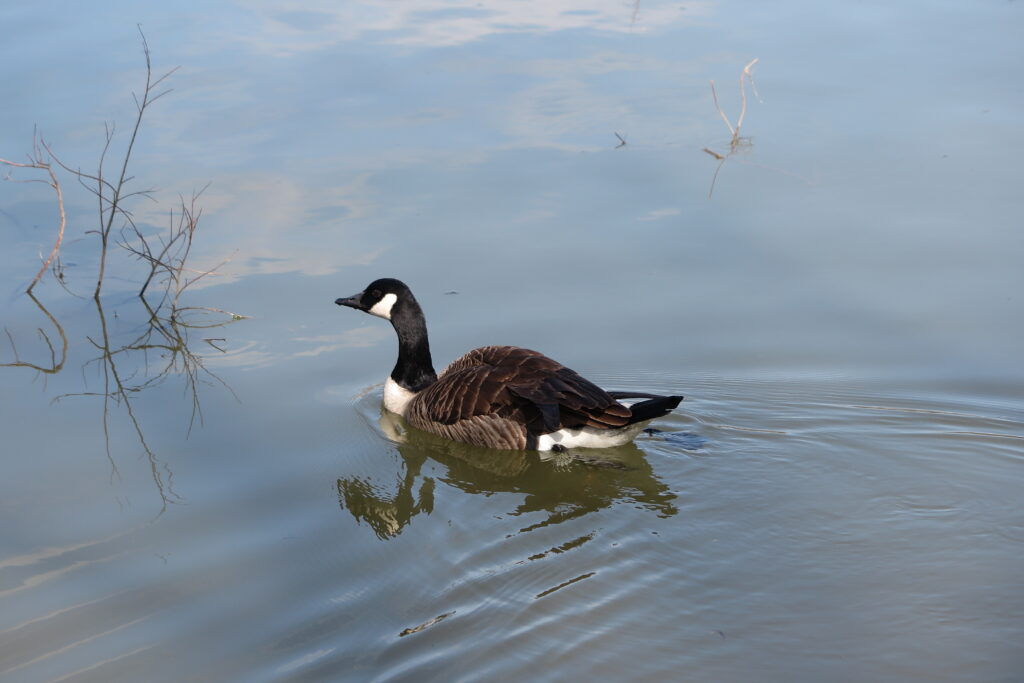
The white cheek patch acts almost like a natural field mark. Birdwatchers frequently identify Canada Geese solely by this feature, even at long distances. Against the black head, the bright white patch creates a bold visual contrast.
Their bills appear relatively short and black compared to their overall body size. The legs and feet also display black coloration and are positioned toward the rear of the body. These features contribute to the bird’s efficient movement both in water and on land.
Compared to the Snow Goose, the Canada Goose appears much darker and more heavily built. Snow Geese possess mostly white plumage, while Canada Geese maintain rich browns and black coloration. This distinction makes the two species relatively easy to separate.
The body shape can resemble a floating canoe when viewed on the water. The long neck rises vertically from the body while the broad chest creates a smooth profile. These proportions help make the Canada Goose one of the easiest birds in North America to identify.
Canada Goose Role in Ecosystems and Wetland Communities
Canada Geese occupy an important position within wetland and grassland ecosystems. As large herbivorous waterfowl, they contribute to nutrient movement between aquatic and terrestrial environments. Their presence often influences vegetation growth and wetland conditions.
The species also serves as prey during certain life stages. Eggs and young goslings provide food for numerous predators, helping transfer energy through the food web. Adult birds, due to their size, experience fewer predators but still contribute to ecological relationships.
Their movement between habitats allows nutrients to be redistributed across landscapes. Materials consumed in one location may be deposited elsewhere, contributing to soil fertility and nutrient cycling. This process connects wetlands, fields, and shoreline habitats.
Large groups of geese can influence vegetation structure through grazing activities. Their presence may create open areas within grasslands and wetlands that benefit certain plant and animal species. These changes contribute to habitat diversity in many locations.
The Canada Goose can be compared to a living connection between water and land. It spends time in both environments and transports energy between them. Through its ecological role, the species contributes to wetland health, nutrient cycling, and food web stability across much of its range.
Today, the Canada Goose remains one of the most successful and recognizable birds in North America. Its distinctive appearance, broad distribution, and ecological importance have made it a familiar presence in natural areas, city parks, lakeshores, and wetlands throughout the continent.
Observation Location
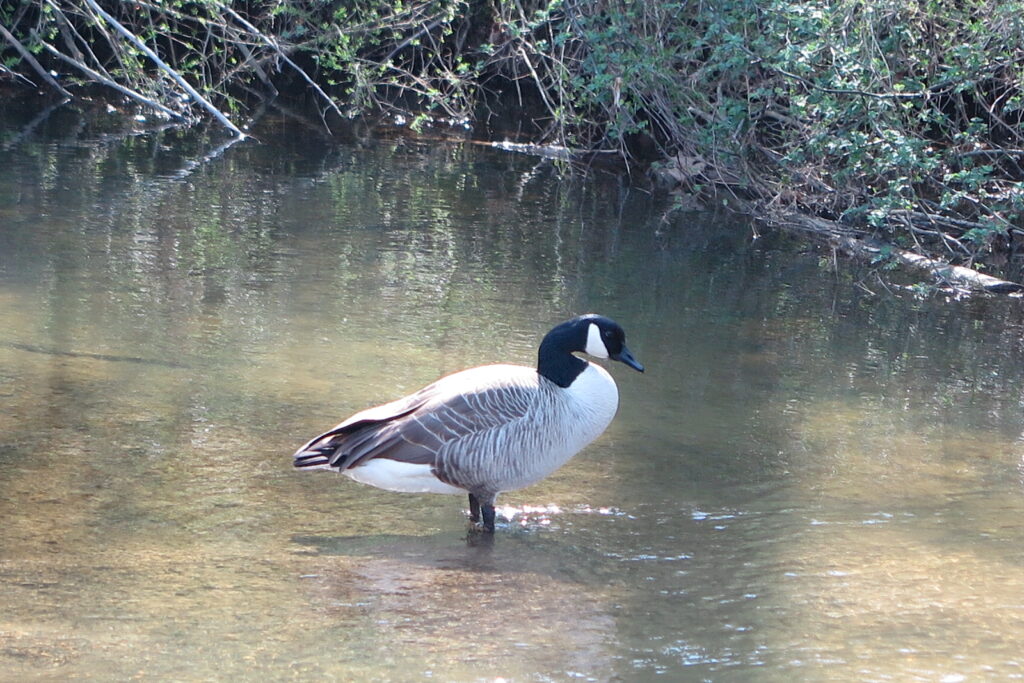
Observed in York County, Pennsylvania, USA
Popular Searches About Canada Goose
Explore Canada Goose Guide
Explore More Wildlife

Support Encounters World
Help support wildlife photography and get behind the scenes discoveries on Patreon.