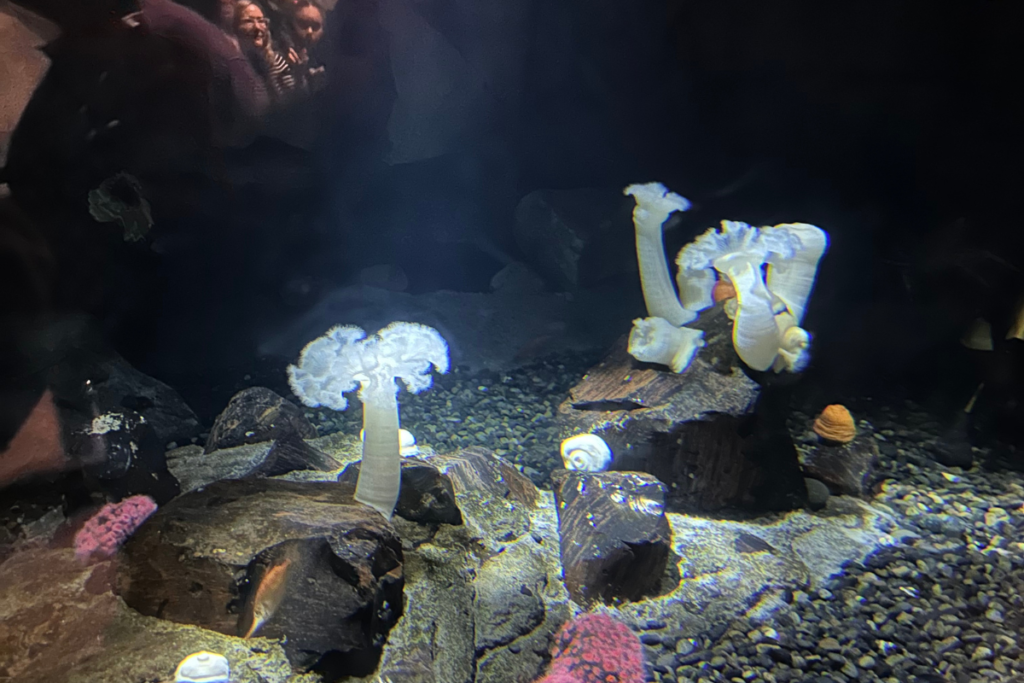
Common Plumose Anemone (Metridium senile) Behavior, Movement, and Survival Strategies
Quick Facts
Scientific Name: Metridium senile
Common Name: Common Plumose Anemone
Activity Type: Passive, responsive (environment-driven activity)
Social Structure: Solitary, but often found in dense groupings
Territorial Behavior: Minimal; may compete for space through overgrowth
Movement Style: Sessile (anchored), with slow repositioning over time
Communication Method: None (responds to physical and chemical stimuli)
Defense Strategy: Rapid contraction, tentacle withdrawal, and stinging cells
Location Observed: Atlanta, Georgia, USA (Exhibit)
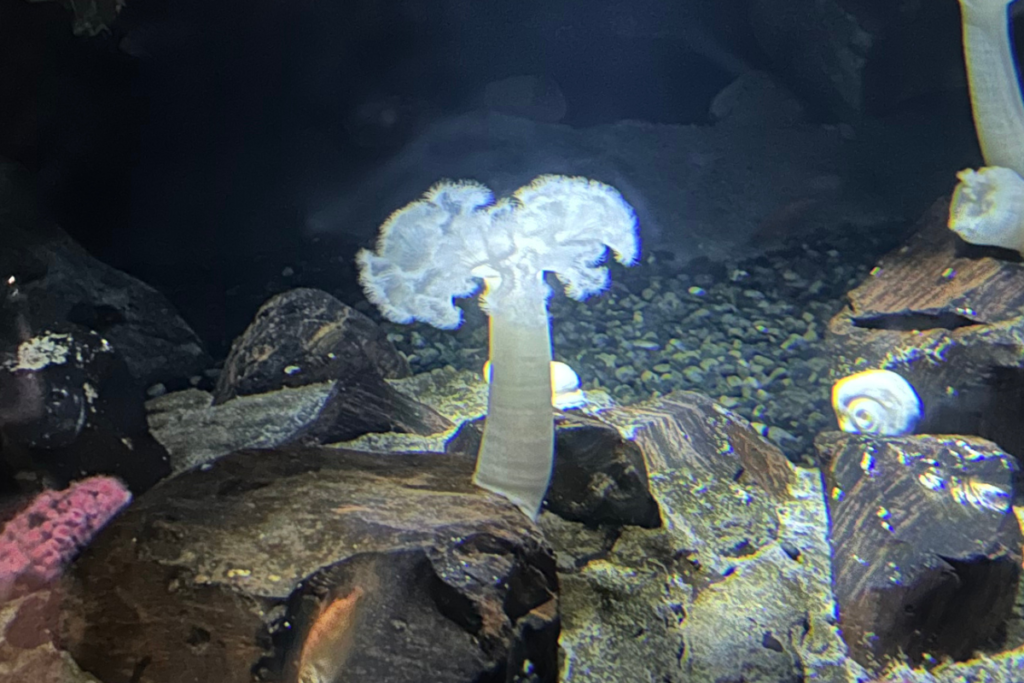
The common plumose anemone (Metridium senile) is a soft-bodied marine invertebrate known for its upright form and feathery crown of tentacles. Despite its plant-like appearance, it is an active animal in subtle ways, constantly responding to its surroundings through expansion, contraction, and environmental sensitivity.
This species is naturally distributed across the cold waters of the North Atlantic and North Pacific Oceans, where it is commonly found attached to solid surfaces. Its wide global range reflects its adaptability, allowing it to maintain consistent behavioral patterns across varying marine conditions.
In a controlled exhibit setting, the plumose anemone presents a calm yet dynamic presence. At first glance, it appears still, but closer observation reveals continuous, small-scale changes—its body shifting, tentacles adjusting, and form subtly reacting to the environment around it.
Common Plumose Anemone Behavioral Overview and Activity Patterns
The behavior of the common plumose anemone is defined by its stationary lifestyle combined with continuous environmental responsiveness. Rather than actively moving through space, it remains anchored while adjusting its physical form to match surrounding conditions. This creates a pattern of behavior that is passive in movement but active in reaction.
Its activity level is steady and consistent, without clear periods of rest or heightened motion. Instead of following a strict daily rhythm, the anemone operates based on external stimuli such as water flow, light exposure, and physical disturbance. This makes its behavior flexible rather than time-dependent.
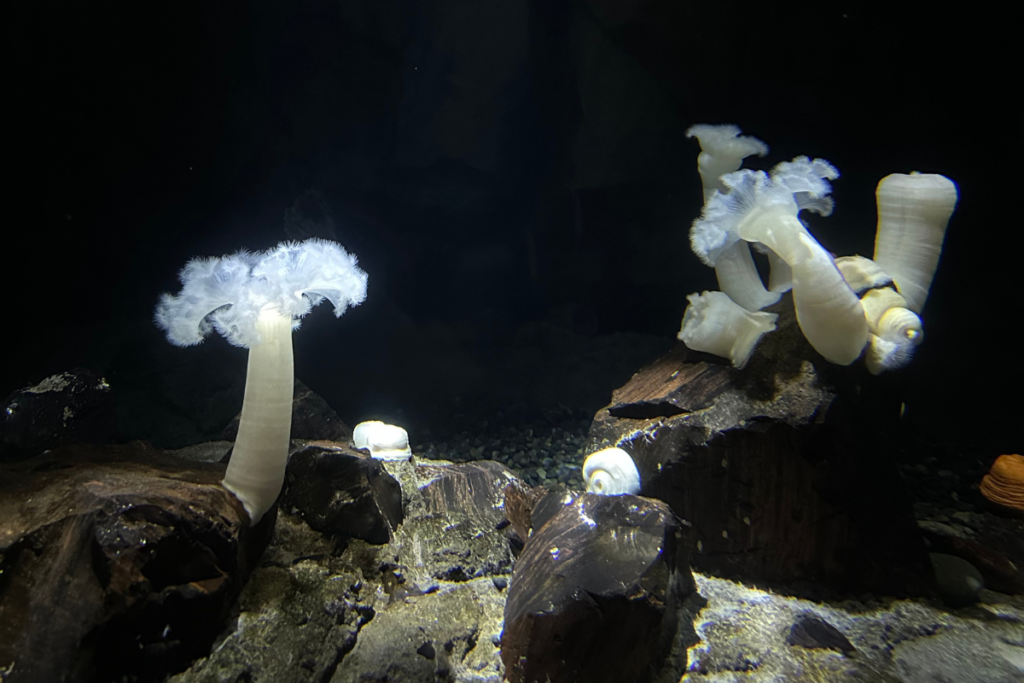
Adaptability plays a key role in how this species behaves. The anemone can extend its full body height and spread its tentacles widely when conditions are stable, then quickly retract into a compact shape when necessary. This ability allows it to maintain control over its form without relocating.
Overall, its behavior can be described as controlled and reactive. While it lacks the visible movement of mobile animals, it continuously adjusts its structure, creating a subtle but constant interaction with its environment.
Common Plumose Anemone Movement and Behavioral Patterns
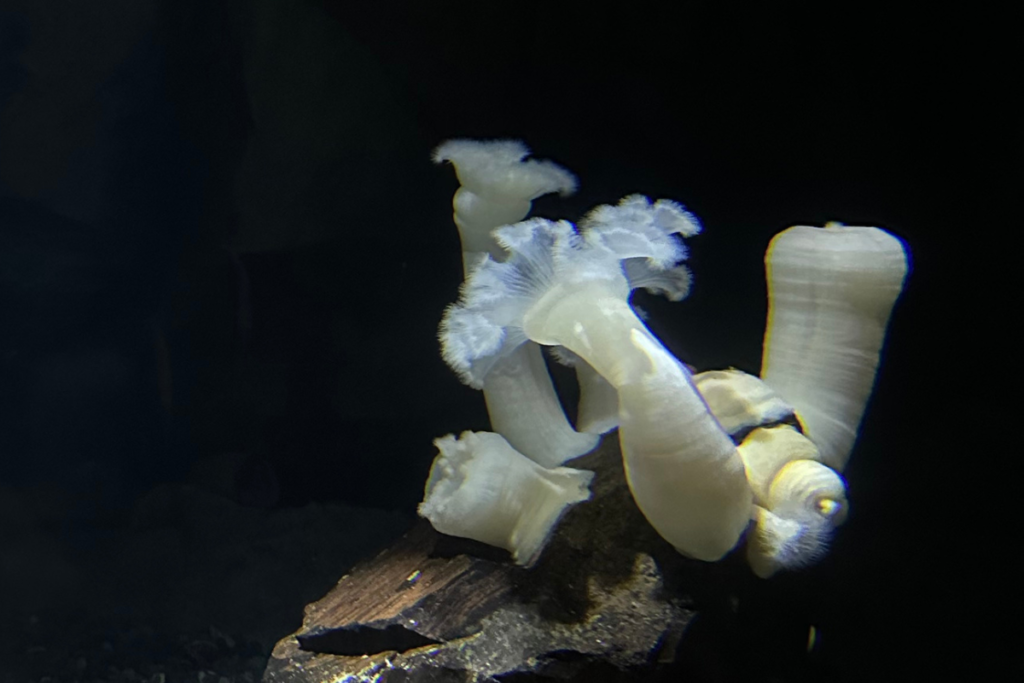
Although the common plumose anemone is classified as sessile, it is not entirely immobile. It can slowly shift its position over time by gliding along the surface it is attached to. This movement is extremely gradual and typically occurs only when conditions require adjustment.
The most visible aspect of its behavior is the expansion and contraction cycle. When undisturbed, the anemone extends upward, its tentacles forming a wide, feathery crown. If touched or exposed to sudden change, it retracts rapidly, folding inward and reducing its profile to protect itself.
Territorial behavior is minimal but present in a passive form. When multiple individuals occupy the same space, they may compete by growing into available areas or overlapping slightly. This interaction is not aggressive in the traditional sense but reflects a slow competition for surface space.
The species does not produce sound or engage in vocal communication. Its interactions are entirely based on physical and chemical signals, responding directly to contact, water movement, and other environmental cues without the need for complex signaling systems.
Common Plumose Anemone Interaction and Survival Behavior
The survival behavior of the common plumose anemone is centered around rapid response rather than escape. When faced with disturbance, it contracts instantly, pulling its tentacles inward and reducing exposure. This reaction minimizes vulnerability and protects delicate structures.
Its social structure is generally solitary, though individuals are often found clustered together in suitable areas. These groupings are not cooperative but occur due to shared environmental preferences. Each anemone operates independently, without coordinated interaction.
Feeding behavior is integrated into its overall activity, with tentacles extending outward to interact with passing particles. This passive feeding approach allows the anemone to sustain itself without active pursuit, relying instead on positioning and environmental flow.
In the absence of complex mobility or communication, the species relies on simplicity and efficiency. Its ability to react quickly, maintain structural flexibility, and remain anchored in place forms the foundation of its survival strategy, allowing it to persist in stable conditions over long periods.