
Common Earthworm Behavior: Movement, Activity Patterns, and Survival Explained
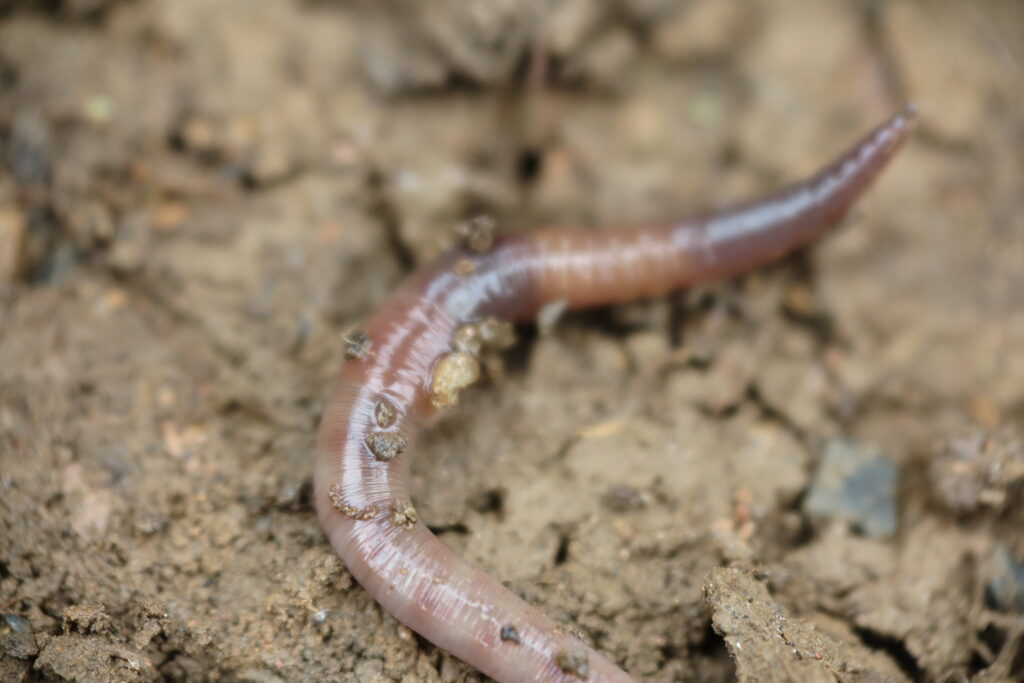
Quick Facts
Scientific Name: Lumbricus terrestris
Common Name: Common Earthworm (Nightcrawler)
Activity Type: Mostly nocturnal
Social Structure: Solitary
Territorial Behavior: None
Movement Style: Peristaltic (muscle-driven contraction and extension)
Communication Method: Chemical and tactile sensing
Defense Strategy: Burrowing, retreating, and body contraction
Location Observed: Pennsylvania
The common earthworm is a soft-bodied invertebrate known for its subtle yet constant movement beneath the surface. Its behavior is defined by slow, controlled motion and an almost continuous interaction with the soil it inhabits. Unlike many animals that rely on speed or visibility, the earthworm operates through quiet persistence.
Originally native to Europe and now widespread across temperate regions, the common earthworm has developed behavioral patterns suited to a variety of soil environments. Its activity is largely hidden from view, occurring just beneath the surface where conditions remain stable and supportive.
Occasionally, its presence becomes visible when it emerges briefly or is uncovered while the ground is disturbed. In these moments, its behavior appears simple, but beneath that simplicity is a highly efficient system of movement and environmental response.
Common Earthworm Behavior Overview and General Activity Patterns
The overall behavior of the common earthworm is steady and methodical, built around continuous interaction with its surroundings. Movement is not rushed or erratic but follows a consistent rhythm that allows it to navigate through soil with precision and control.
Activity levels vary depending on environmental conditions, but the earthworm remains generally active within its immediate surroundings. It does not rely on long-distance travel, instead focusing on localized movement that allows it to maintain stability and efficiency.
Adaptability is a defining characteristic of its behavior. The earthworm can adjust its activity based on changes in moisture, temperature, and soil structure, ensuring that it continues to function effectively even when conditions shift.
Rather than displaying complex behaviors or interactions, the common earthworm relies on repetition and consistency. Its behavioral patterns may appear simple, but they are highly effective for survival within its niche.


Common Earthworm Movement, Activity Cycles, and Behavioral Patterns
Movement in the common earthworm is achieved through coordinated muscular contractions known as peristalsis. By alternating between extending and anchoring segments of its body, it creates a wave-like motion that pushes it forward through soil with remarkable efficiency.
The earthworm is primarily active during nighttime or periods of reduced environmental disturbance. This pattern helps limit exposure and allows for safer movement when surface conditions are less intense. Despite this tendency, much of its activity remains below ground.
There is no evidence of territorial behavior in earthworms. Individuals move freely within their environment without defending space or competing for territory. This lack of territoriality reflects a lifestyle centered on coexistence rather than conflict.
Communication is limited to basic chemical and tactile sensing. The earthworm does not produce sounds or visual signals but instead responds to subtle changes in its surroundings, allowing it to navigate and react without the need for complex interaction.
Common Earthworm Interaction and Survival Behavior Strategies
The common earthworm relies on simple yet effective strategies to respond to potential threats. When disturbed, it quickly contracts its body or retreats deeper into the soil, using its flexible form to escape from danger with minimal resistance.
Its solitary nature means interactions with other individuals are minimal and typically brief. There is no formation of groups or social structures, and each earthworm operates independently within its environment.
Feeding-related movement is integrated into its overall behavior, with the worm continuously moving through soil as part of its natural process. This constant motion supports both its survival and its role within the ecosystem, even though the behavior itself remains subtle.
Ultimately, the survival of the common earthworm depends on its ability to remain undetected and maintain steady movement. Its behavior is not defined by aggression or dominance, but by quiet efficiency and adaptation to its surroundings.