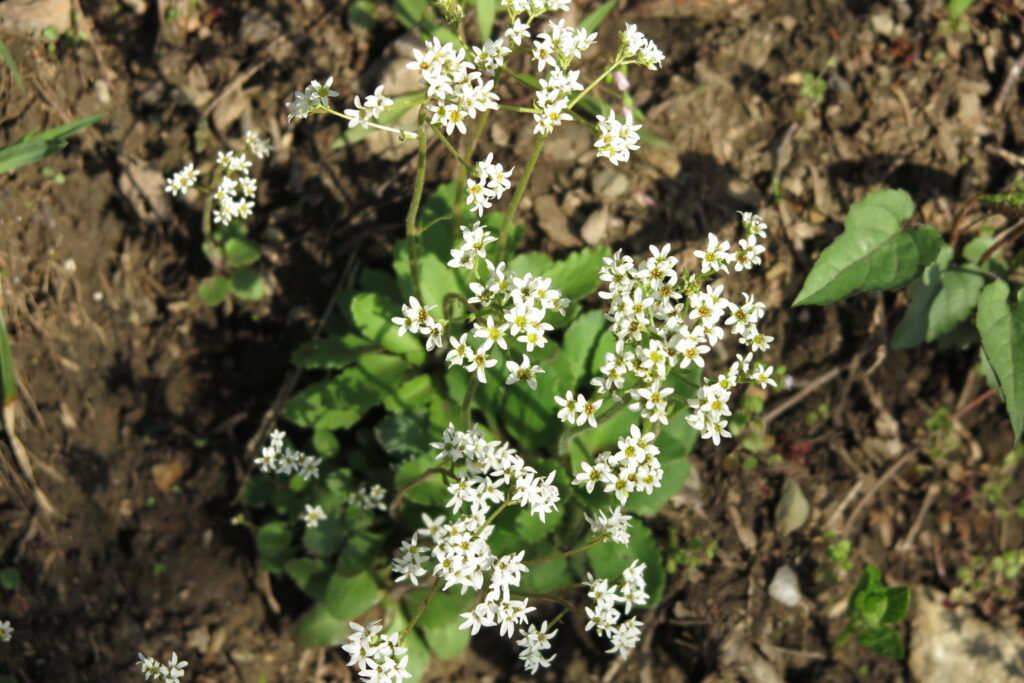
Early Saxifrage (Micranthes virginiensis): Identification, Growth, and Habitat Guide
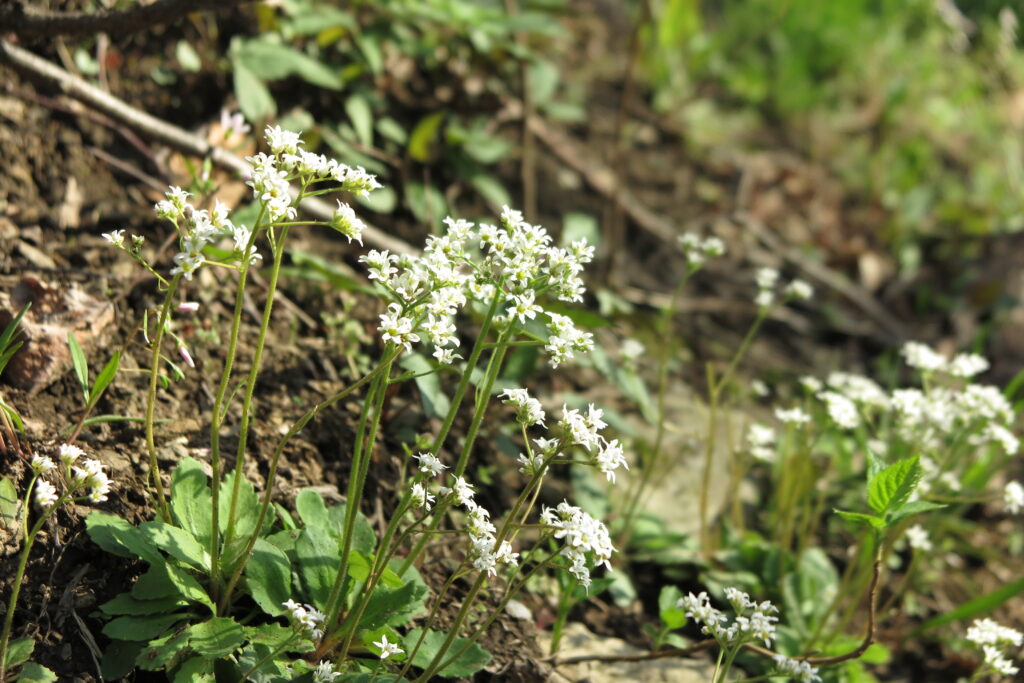
Quick Facts
Scientific Name: Micranthes virginiensis
Common Name: Early Saxifrage
Plant Type: Perennial
Average Height: 6–12 inches
Spread Width: 6–10 inches
Leaf Type: Broadleaf
Growth Form: Clumping, Upright flowering stems
Bloom Color: White
Native Range: Eastern North America
Toxicity: Non-toxic to humans & pets (generally considered safe)
Location Observed: Pennsylvania
Early Saxifrage (Micranthes virginiensis) is a delicate perennial wildflower recognized for its small white blooms and low-growing rosette of leaves. Emerging early in the growing season, it stands out among the first wave of spring vegetation, offering a subtle yet intricate display that often goes unnoticed unless closely observed.
This species is native to eastern North America, where it naturally occurs across a wide range of regions. It is commonly encountered in natural landscapes that experience seasonal changes, adapting to environments where early-season growth gives it a brief but important window to thrive before surrounding vegetation becomes dense.
Seen in early spring, clusters of slender stems rise gently from the forest floor, each tipped with tiny white flowers. In quiet woodland settings or along open slopes, the plant creates a soft, airy presence, blending into the landscape while rewarding closer inspection with intricate floral detail.
Early Saxifrage Overview and Identification
Early Saxifrage presents a compact yet refined structure, beginning with a basal rosette of rounded, scalloped leaves that hug the ground. These leaves form a stable foundation from which thin, upright stems emerge, creating a contrast between the dense base and the open flowering structure above.
The plant’s overall form is light and elevated. Slender stems branch outward, supporting clusters of small flowers that appear loosely arranged rather than tightly packed. This gives the plant a floating, almost delicate appearance when viewed from a distance, especially in groups.
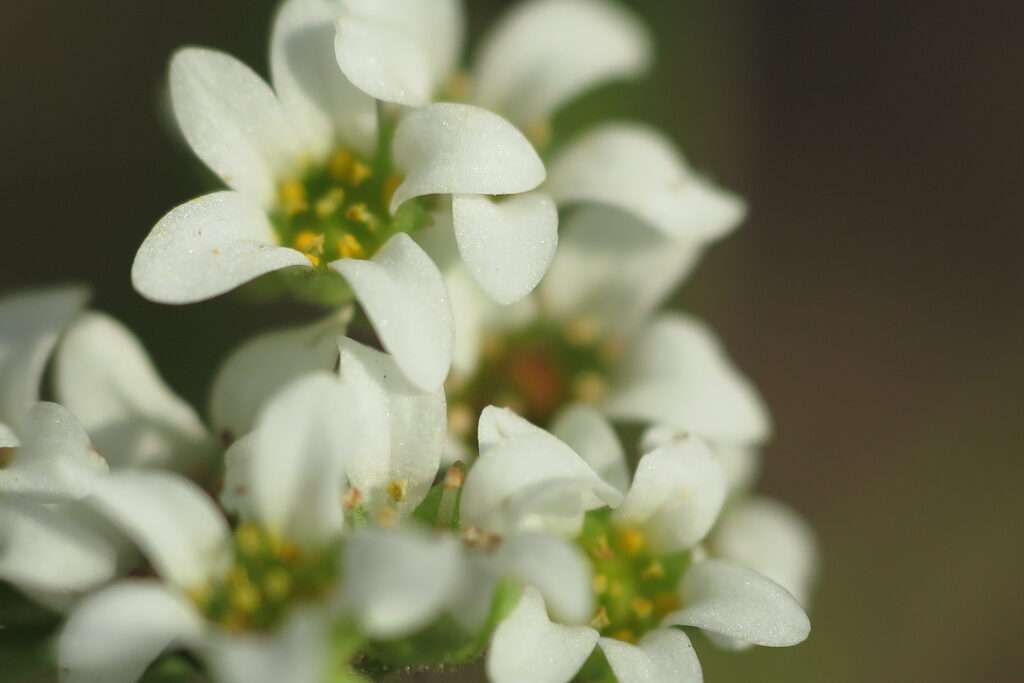
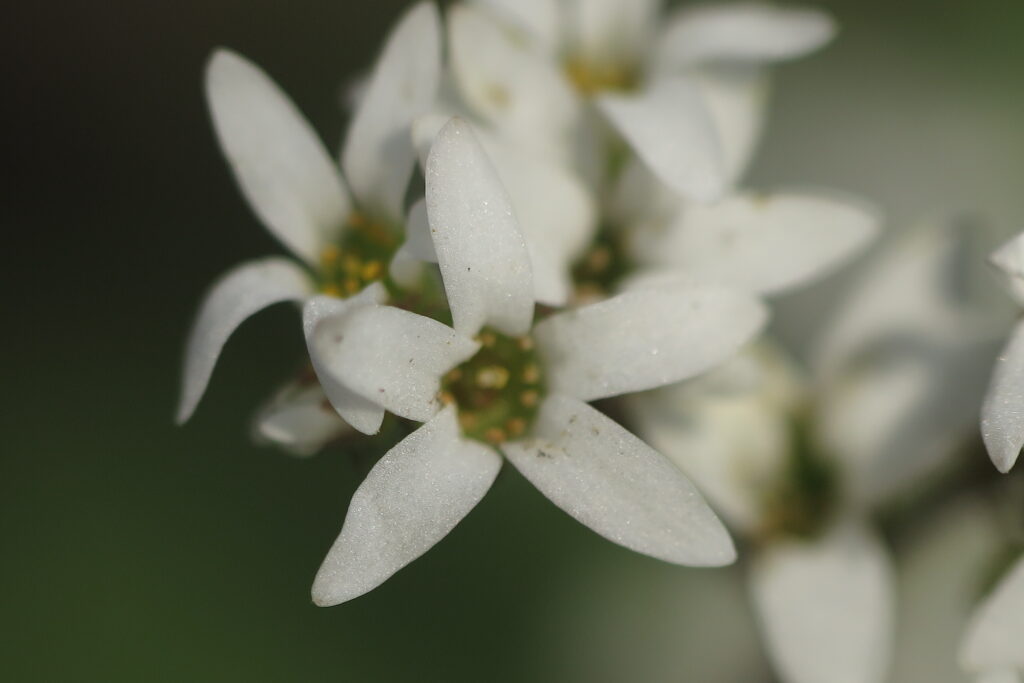
Each flower is composed of five narrow white petals surrounding a central cluster of yellow-tipped reproductive structures. Though small, the flowers are numerous, creating a noticeable visual effect when the plant is in full bloom. The petals often appear slightly uneven or spaced, adding to the plant’s subtle character.
Adaptability is a key feature of this species. Early Saxifrage thrives in a range of conditions within its native range, showing resilience in varied terrain. Its growth strategy allows it to take advantage of early-season light and reduced competition, making it a reliable presence in spring plant communities.
Growth & Behavior of Early Saxifrage
The growth pattern of Early Saxifrage begins with its low-lying leaf rosette, which develops close to the ground before flowering stems appear. As temperatures rise in early spring, these stems elongate rapidly, lifting the plant’s flowers above surrounding ground cover.
Growth rate is moderate, with the plant focusing its energy on a short but effective seasonal display. Rather than spreading aggressively, it maintains a contained form, expanding gradually over time through natural processes.
Reproduction occurs primarily through seed production. After flowering, the plant forms small seed capsules that release seeds into the surrounding area. This allows new plants to establish nearby, contributing to localized populations without overwhelming the environment.
Sunlight response is balanced, with the plant capable of developing under varying light levels during its active season. Water needs remain moderate, with the plant utilizing available moisture efficiently. Over time, it follows a seasonal cycle—emerging, flowering, and eventually fading back as the growing season progresses.
Early Saxifrage Habitat and Environment
Early Saxifrage is most often found in environments that offer a mix of openness and seasonal change. It commonly appears in forested areas, rocky slopes, and transitional landscapes where sunlight can reach the ground during early spring.
The plant favors soils that provide stability while allowing for root development. These soils are typically well-structured and capable of holding moisture without becoming overly saturated. This balance supports consistent growth during the plant’s active period.
Climate plays an important role in its distribution. As a species adapted to temperate regions, Early Saxifrage thrives in environments with distinct seasonal variation. It is well-suited to areas that experience cold winters followed by gradual warming in spring.
Light availability is another key factor. The plant benefits from early-season sunlight before tree canopies fully develop. This timing allows it to complete much of its life cycle before heavier shade conditions take over, ensuring its continued presence in these ecosystems year after year.