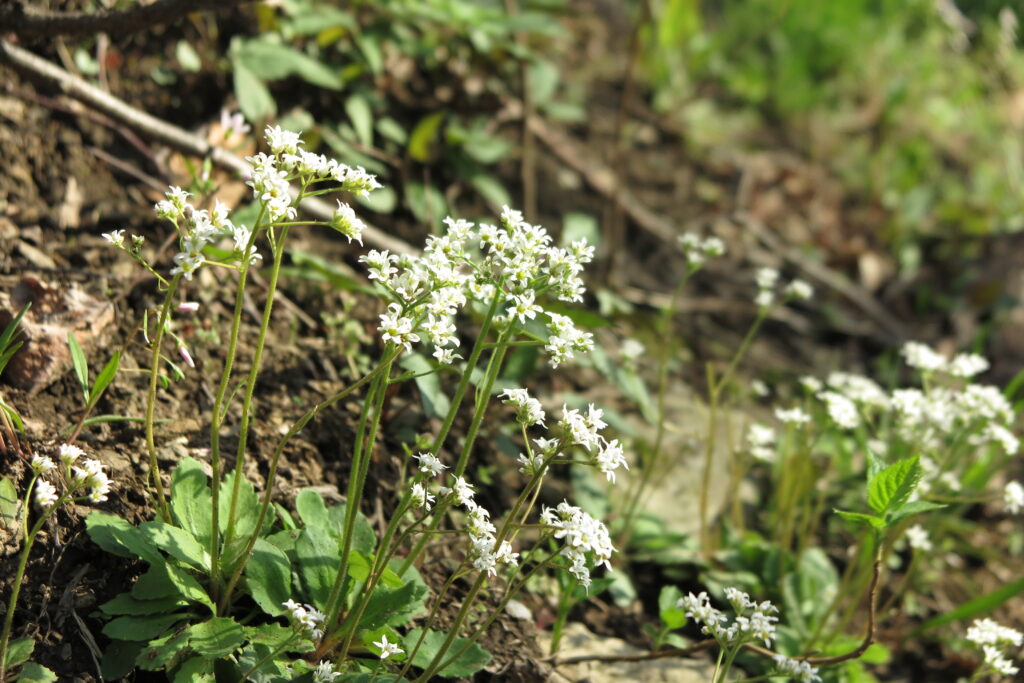
Early Saxifrage (Micranthes virginiensis) Flower and Structure Guide: Identification, Features, and Adaptations
Quick Facts
Flower Type: Cluster (branched cluster / loose panicle)
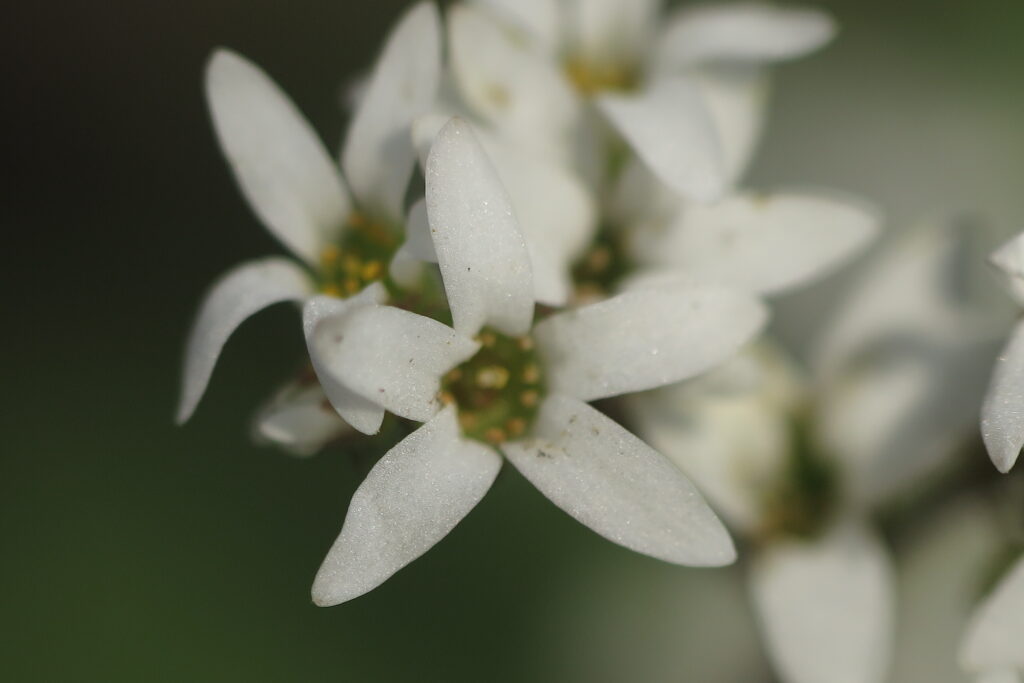
Flower Shape: Star-shaped (5-petaled)
Bloom Time: Early spring
Bloom Duration: Short-lived (a few weeks)
Flower Color Variations: White (occasionally faint greenish or creamy tones)
Fragrance: None to very mild
Pollinator Attraction: Small bees, flies, early-season insects
Reproductive Role: Seed production through insect pollination
Location Observed: Pennsylvania
Early Saxifrage (Micranthes virginiensis) is a delicate spring wildflower recognized for its airy clusters of small white blooms and minimalistic structure. It appears briefly, standing out against early-season landscapes with its fine, almost weightless floral display.
Native to eastern North America, this species is widely distributed across temperate regions, where it emerges during the transitional period between winter and full spring growth. It is often encountered in open ground, where its subtle form becomes noticeable upon closer inspection.
At first glance, the plant seems simple—thin stems, tiny flowers, and a low base of leaves. But up close, its structure reveals intricate details, from the precise arrangement of petals to the fine textures that define its form.
Early Saxifrage Structural Overview and Physical Form
Early Saxifrage presents a clean and refined structure built for efficiency rather than bulk. Its overall form consists of a low basal leaf cluster paired with slender vertical stems that elevate its flowers above the ground.
The plant’s shape is open and lightly branched. Stems extend upward in thin lines, branching near the top to form clusters of small blossoms. This branching creates a loose, airy appearance, allowing each flower to remain distinct rather than densely packed.
Leaves remain close to the base, forming a compact rosette. These leaves are broad and slightly rounded, with a textured surface that contrasts with the smooth, narrow stems above. This separation between foliage and flowers gives the plant a layered structure.
The flowers themselves are small but striking in design. Each bloom features five petals arranged in a star-like pattern, creating a symmetrical and balanced appearance. Despite their size, the number of flowers in each cluster gives the plant a noticeable presence.
Early Saxifrage Structure and Identifying Features
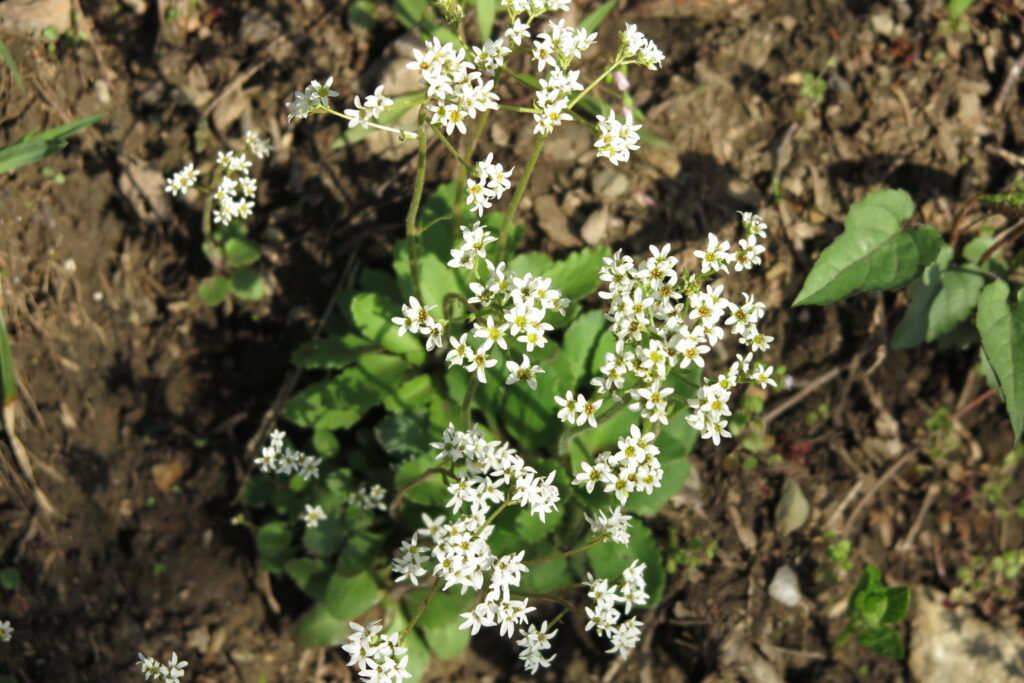
The defining feature of Early Saxifrage lies in its floral clusters. Rather than a single bloom or tightly packed spike, the plant produces a branched cluster where multiple flowers spread outward from a central stem. This structure creates a delicate, scattered arrangement.
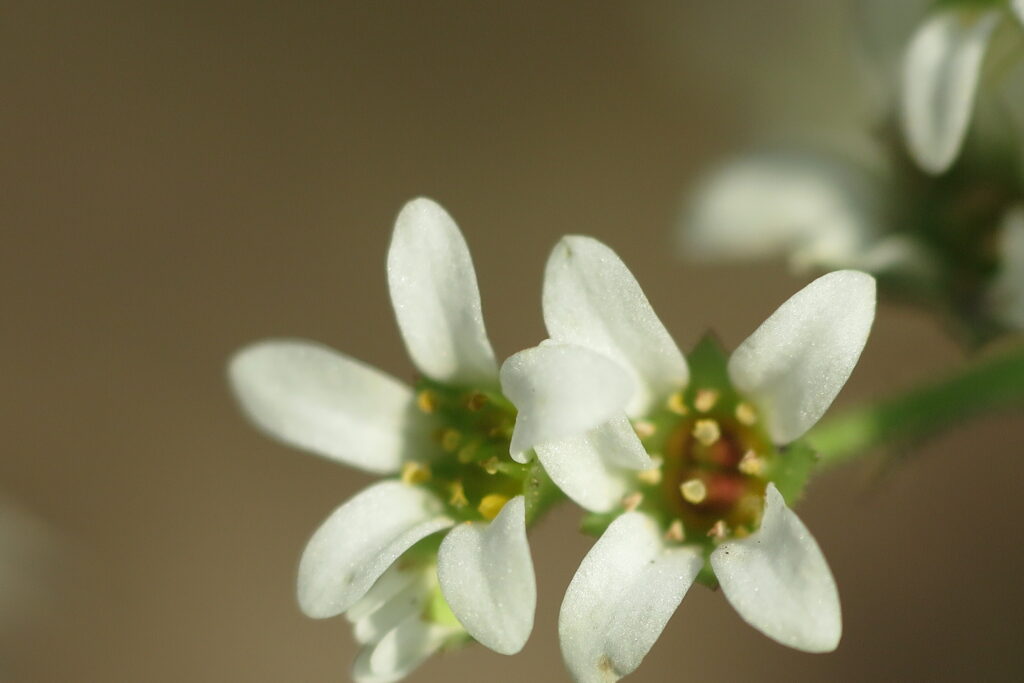
Each flower is composed of five individual petals, clearly separated and slightly rounded. The petals form a star shape, often appearing evenly spaced with a subtle openness between them. At the center, small reproductive structures are visible, adding detail to the otherwise simple form.
The stems are thin, upright, and often lightly hairy. This fine texture can give them a slightly rough or soft appearance depending on lighting. In some cases, the stems may show faint reddish tones, especially near the base or nodes.
At ground level, the leaf rosette provides a strong visual anchor. Leaves are broad, with gently toothed or scalloped edges, and sit low against the soil. This base structure contrasts with the elevated flower clusters, making the plant easy to recognize when both features are visible together.
Early Saxifrage Structural Adaptations and Function
Every part of Early Saxifrage’s structure serves a purpose tied to efficiency and survival. The elevated flower stems lift the blooms into open air, increasing visibility to pollinators while reducing obstruction from surrounding ground cover.
The star-shaped petals are simple yet effective. Their open arrangement allows easy access to the center of the flower, making it accessible to small insects that are active early in the season. This design supports quick and efficient pollination.
The basal leaf rosette plays a stabilizing role. Positioned close to the ground, it collects and directs resources upward while maintaining a secure base. This low profile also reduces exposure to environmental stress, protecting the plant during early growth stages.
Fine hairs along the stems may provide subtle protection, helping reduce moisture loss and offering slight defense against environmental exposure. Combined with the plant’s lightweight structure, these features create a system that balances fragility with resilience.
Together, these adaptations allow Early Saxifrage to operate as a highly specialized early-season plant. Its structure is not built for dominance, but for precision—appearing, functioning, and completing its role within a narrow window of opportunity.