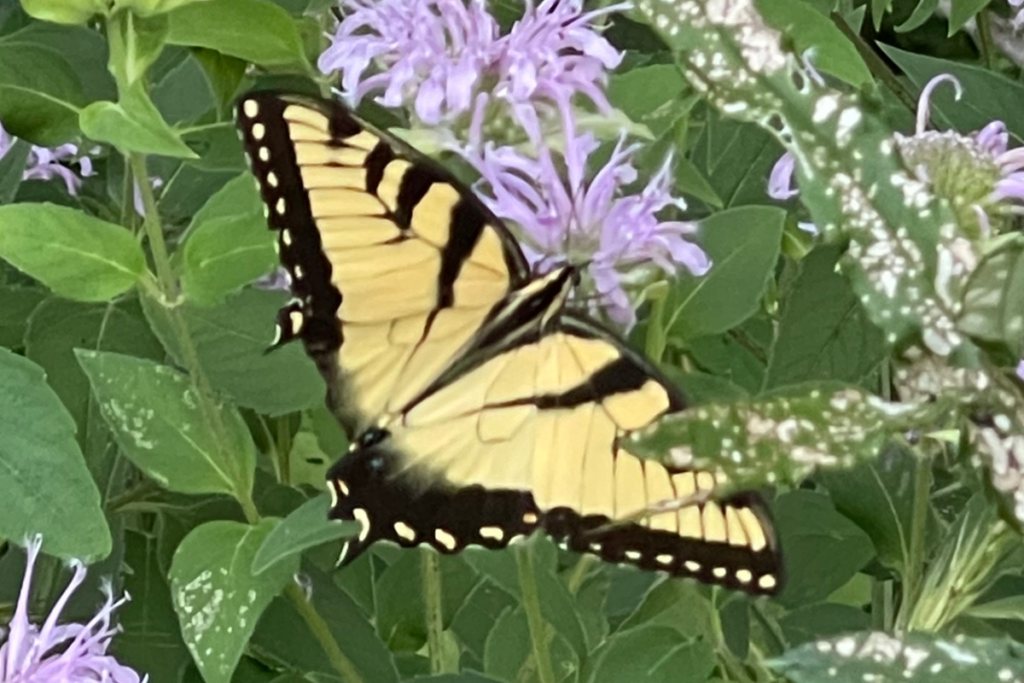
Eastern Tiger Swallowtail Habitat – Where Papilio glaucus Lives and Thrives
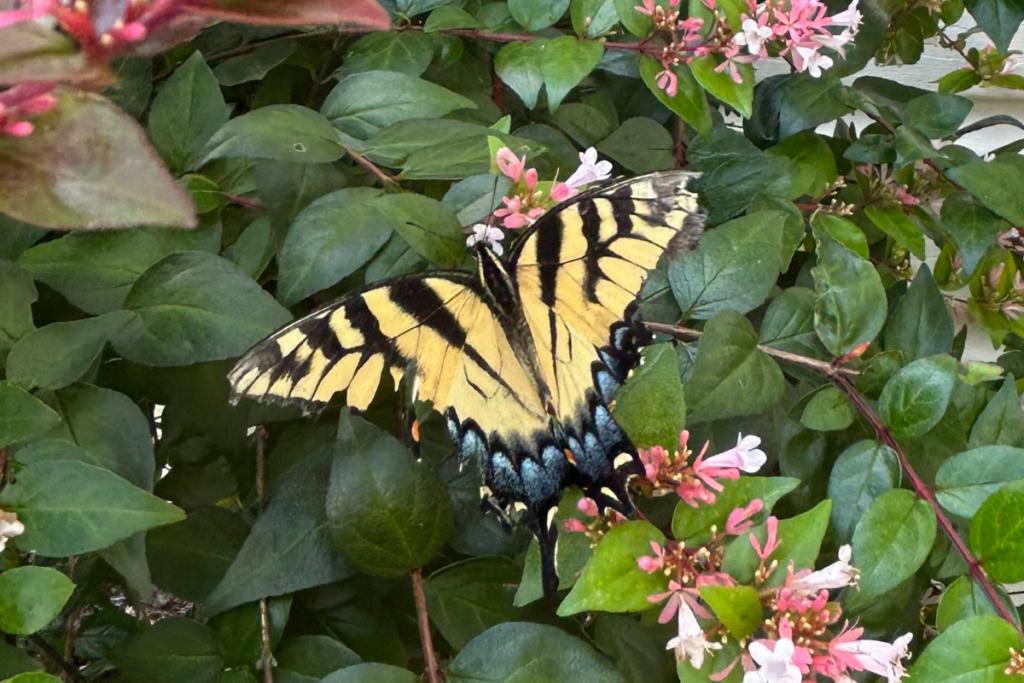
Quick Facts
Primary Habitat: Deciduous forests and woodland edges
Secondary Habitat: Gardens, suburban landscapes, open fields, and river corridors
Climate Preference: Temperate to warm climates with seasonal variation
Environment Type: Mixed vegetation zones with access to sunlight and plant diversity
Elevation / Depth Range: Sea level to moderate elevations (up to ~6,000 feet in some regions)
Geographic Distribution: Eastern United States, southern Canada, and parts of northern Mexico
The Eastern Tiger Swallowtail (Papilio glaucus) is a widespread butterfly species found throughout much of eastern North America. Its range extends from southern Canada through the eastern United States and into portions of northern Mexico. This broad distribution places it in a variety of landscapes shaped by changing climates, terrain, and vegetation patterns.
Across this range, the butterfly is commonly encountered in areas where plant life is abundant and seasonal changes are pronounced. It is often seen in regions that experience warm summers and cooler winters, creating a yearly cycle that influences the appearance of many insects and plants. These environments provide a dynamic backdrop that supports a wide range of species, including this butterfly.
When visualizing its presence, it is often associated with places where sunlight filters through layered vegetation or where open space meets denser plant growth. These transitional areas create visually rich environments that support diverse plant communities. The butterfly’s presence adds movement and color to these spaces, making it a familiar sight in many outdoor settings.
Rather than being confined to a single type of landscape, the Eastern Tiger Swallowtail exists across a broad environmental spectrum. Its range reflects an ability to exist in both natural and human-influenced areas. This wide geographic presence makes it one of the more commonly observed large butterflies throughout its region.
Eastern Tiger Swallowtail Habitat Overview Across Its Range
The Eastern Tiger Swallowtail occupies a wide range of environments across its distribution, making it one of the more adaptable butterfly species in North America. It is found in landscapes that vary from heavily wooded regions to more open areas with scattered vegetation. This flexibility allows it to maintain a presence across regions that differ significantly in structure and appearance.
In many parts of its range, it is associated with areas where different types of vegetation meet. These transitional zones, often referred to as edges, create a mix of light and shade that supports a variety of plant life. Compared to more specialized butterfly species that are limited to narrow environments, this species is able to use a broader range of spaces.
Its adaptability can be compared to that of common songbirds that thrive in both forests and suburban areas. Just as those birds move between natural and human-altered environments, the Eastern Tiger Swallowtail is able to exist in landscapes that combine elements of both. This ability allows it to remain widespread even as environments change over time.
Although it is highly adaptable, it is still more frequently observed in areas where vegetation is layered and diverse. These environments tend to provide the visual complexity and plant variety that support its presence. Across its range, it consistently appears in places where plant growth is dense enough to create a structured, multi-level environment.
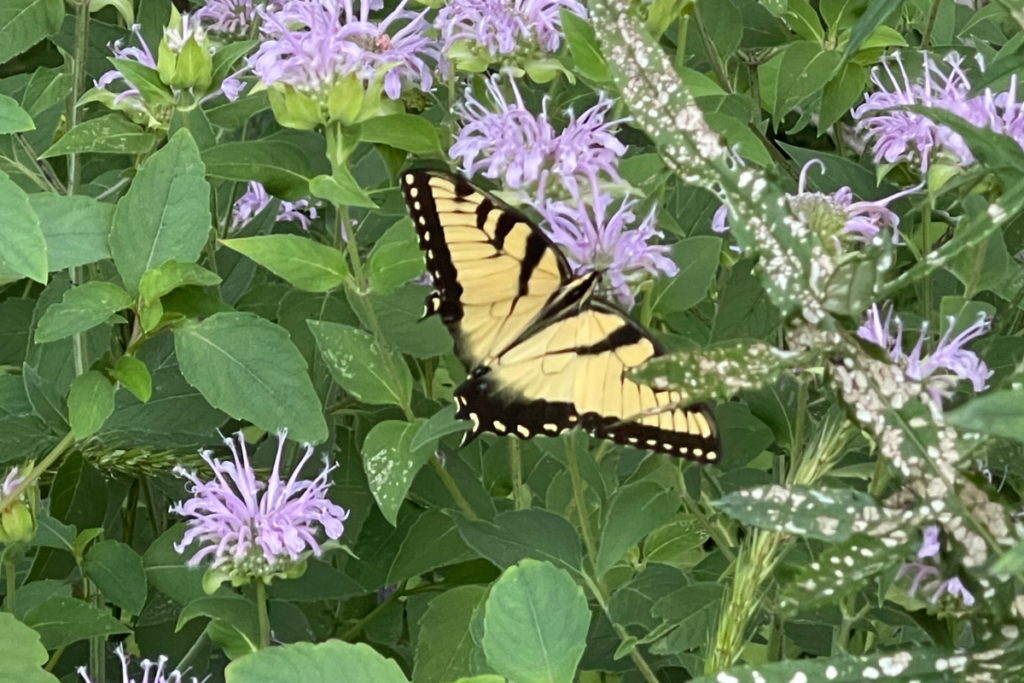
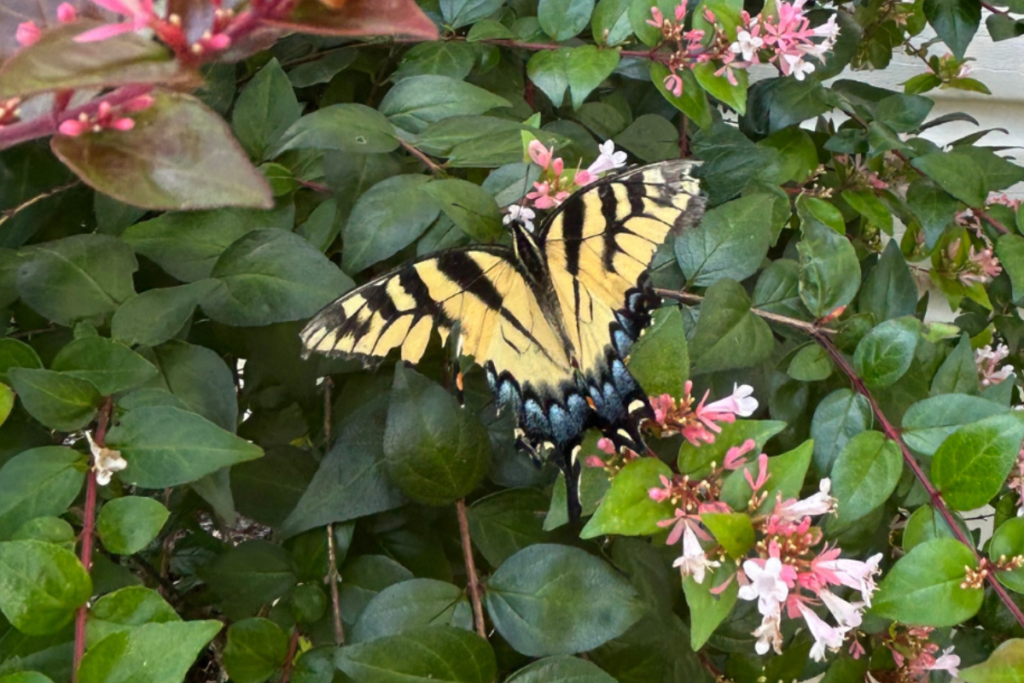
Eastern Tiger Swallowtail Habitat Types and Landscape Use
The Eastern Tiger Swallowtail is commonly found in deciduous forests, where broadleaf trees create a seasonal canopy. These environments provide a structured landscape with varying levels of light and shade. Within these forests, the butterfly is often seen near openings rather than deep interior areas, where sunlight is more limited.
It is also present in open fields and meadows, particularly those bordered by trees or shrubs. These areas create a balance between open space and nearby vegetation, forming a transition zone that supports a wide range of plant species. The butterfly’s presence in these spaces adds movement across otherwise still landscapes.
Suburban and residential environments serve as another important habitat type for this species. Gardens, yards, and landscaped areas often contain a variety of flowering plants and ornamental trees. These human-managed spaces can closely resemble natural edge environments, making them suitable for the butterfly’s continued presence.
River corridors and stream edges provide additional habitat opportunities, particularly where vegetation grows densely along the water’s edge. These areas often contain a mix of plant types and create natural pathways through the landscape. The butterfly can be seen moving along these corridors, which connect different habitat types across a region.
Environmental Conditions Supporting Eastern Tiger Swallowtail Presence
The Eastern Tiger Swallowtail thrives in climates that experience warm summers and moderate seasonal changes. These conditions support the growth of diverse plant life, which in turn shapes the environments where the butterfly is found. Regions with consistent seasonal cycles provide a predictable structure that supports its presence year after year.
Temperature plays a significant role in shaping these environments, with the butterfly most commonly found in areas that experience extended warm periods. These warmer conditions allow plant communities to flourish, creating dense vegetation and layered growth. In cooler regions, its presence may be more seasonal, appearing during warmer months when conditions are favorable.
Humidity and rainfall also influence the environments it occupies. Areas with moderate moisture levels tend to support richer plant growth, resulting in thicker vegetation and more complex landscapes. These conditions can be compared to a well-maintained garden, where consistent moisture allows plants to grow densely and create a structured environment.
Terrain variation adds another layer to its habitat conditions, with the butterfly found in both flat landscapes and gently rolling areas. It is less dependent on elevation than some species, allowing it to exist across a wide vertical range. As long as vegetation remains abundant and environmental conditions are stable, it can maintain a presence across diverse terrains.