
Common Plumose Anemone Identification Guide: How to Identify a Common Plumose Anemone
Quick Facts
Identification Difficulty: Easy to Moderate
Primary Colors: White, Cream, Orange, Pink, Brown, and Gray
Most Distinctive Feature: Dense Feathery Tentacle Crown
Body Shape: Tall Cylindrical Column with Rounded Oral Disc
Average Size: 4–12 Inches (10–30 cm) Tall
Common Look-Alikes: Giant Plumose Anemone and Other Sea Anemones
Introduction to Common Plumose Anemone Identification
The Common Plumose Anemone (Metridium senile) is one of the most recognizable sea anemones found in temperate marine waters. Its distinctive appearance makes it a favorite among divers, marine naturalists, and aquarium visitors. Although many sea anemones can appear similar at first glance, the Common Plumose Anemone possesses several features that allow reliable identification.
This species occurs throughout portions of the North Atlantic and North Pacific Oceans, where it can often be observed attached to submerged surfaces. In coastal waters, groups of individuals frequently form impressive colonies that stand out against surrounding marine structures. Their flower-like appearance often catches attention long before their identity is known.
At a distance, Common Plumose Anemones resemble underwater blossoms emerging from rocks, docks, or pilings. Their feathery crowns create a soft, decorative appearance that contrasts sharply with the harder surfaces to which they are attached. This unusual form makes them among the most visually distinctive marine invertebrates.
Fortunately for beginners, identifying this species does not require expert-level knowledge. Several obvious physical characteristics separate it from most other sea anemones. By focusing on tentacle structure, body shape, coloration, and colony appearance, observers can confidently recognize the Common Plumose Anemone in many situations.
Common Plumose Anemone Appearance and Color Identification
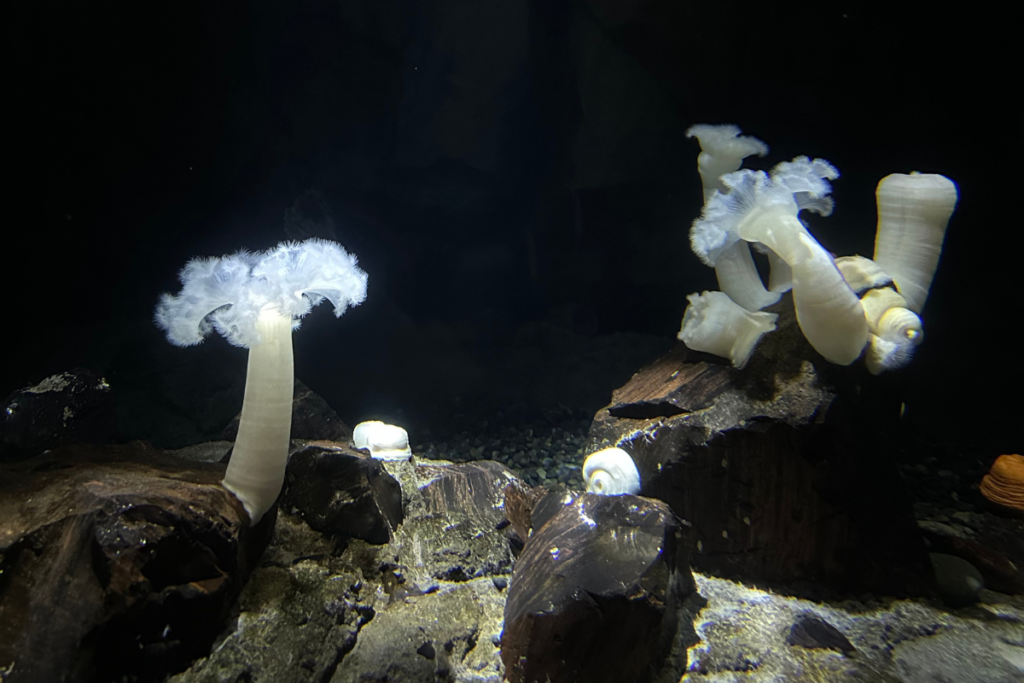
The most obvious identification feature is the dense crown of fine tentacles covering the top of the animal. Unlike many sea anemones that possess thicker, individually visible tentacles, the Common Plumose Anemone develops hundreds of delicate structures packed tightly together. This arrangement creates a soft, fluffy appearance resembling a feather duster.
Color varies considerably across the species’ range. White individuals are among the most frequently observed and often appear almost ghost-like underwater. However, specimens may also display cream, orange, tan, pink, gray, or light brown coloration depending on local populations and environmental influences.
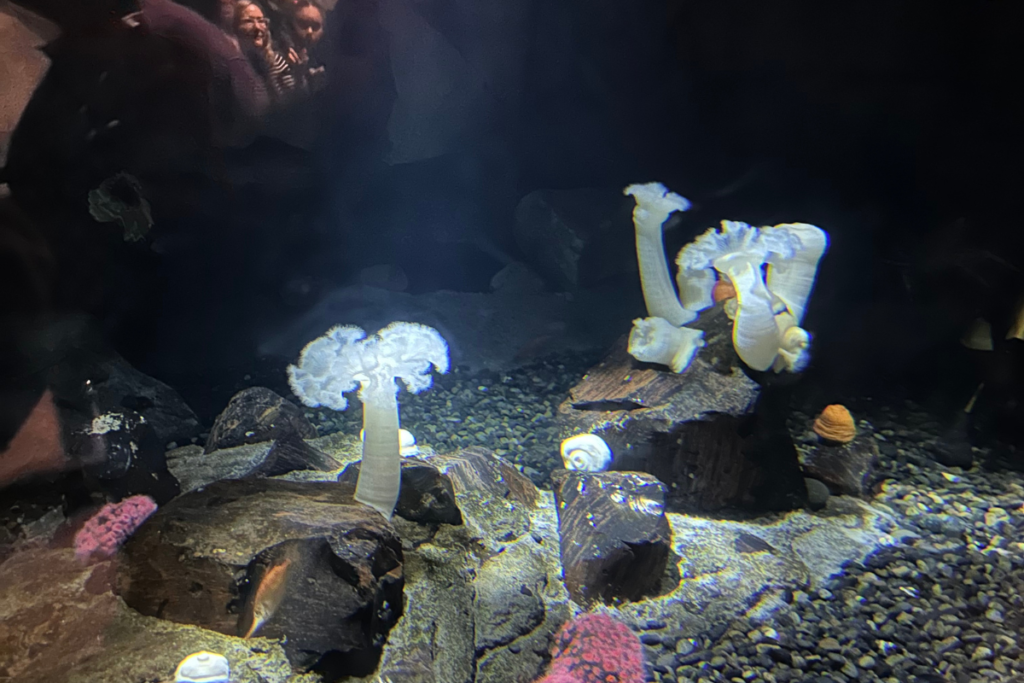
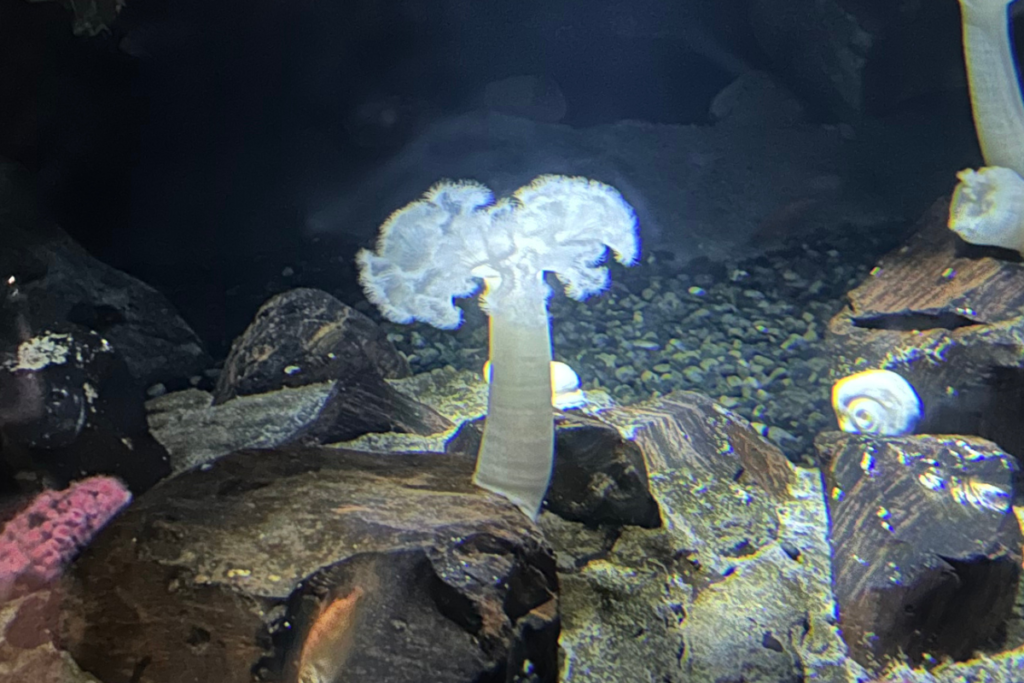
The tentacle crown forms a nearly circular plume when fully expanded. Viewed from the side, it resembles a decorative pom-pom attached to a narrow stalk. When viewed from above, the tentacles create a dense textured surface that differs noticeably from the more open arrangement seen in many other sea anemones.
Lighting conditions can influence how colors appear underwater. White specimens may glow against darker backgrounds, while orange or pink forms often stand out dramatically among surrounding marine life. Regardless of color variation, the characteristic feathery tentacle structure remains one of the most dependable identification clues.
Observers frequently describe the species as looking more like a flower than an animal. This impression results from the combination of its delicate tentacles and symmetrical shape. Few marine invertebrates display such an ornamental appearance while maintaining a consistent and recognizable form.
Common Plumose Anemone Body Structure and Key Features
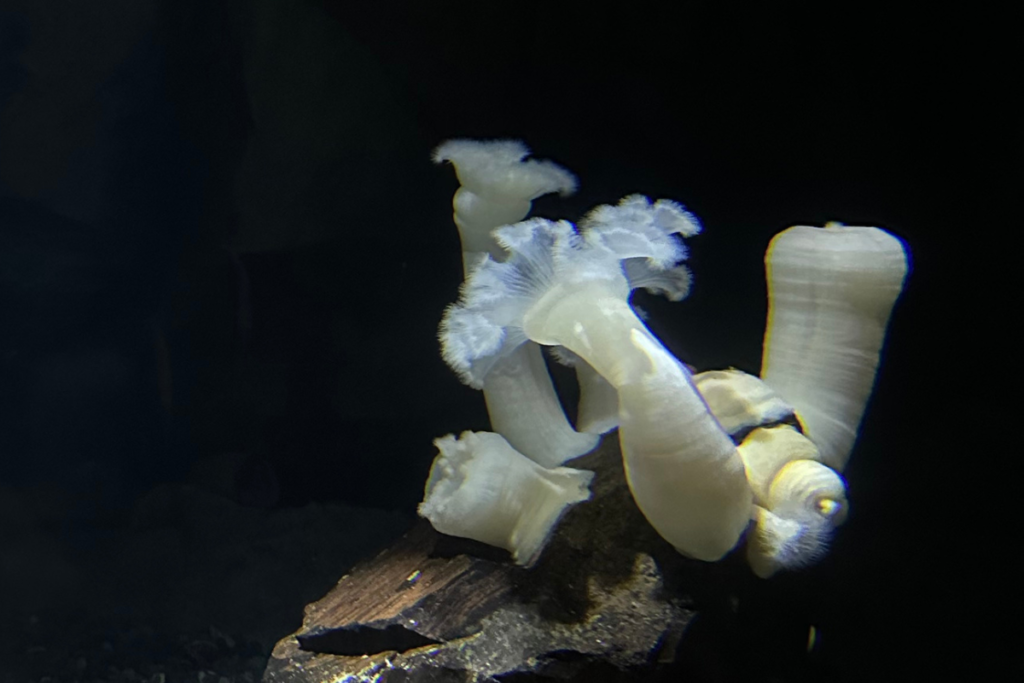
The body of the Common Plumose Anemone consists of a smooth cylindrical column supporting the tentacle crown above. This column is typically taller than it is wide, giving the animal an upright appearance. The simple shape helps distinguish it from species with shorter or more irregular body forms.
Size provides another useful identification characteristic. Most individuals range from approximately 4 to 12 inches in height, although larger specimens occasionally occur. A mature anemone is often comparable in height to a coffee mug, water bottle, or small drinking glass.
The oral disc, located beneath the tentacle crown, is usually hidden when the animal is fully expanded. This creates the illusion that the tentacles emerge directly from the top of the column. The effect contributes to the species’ distinctive plume-like appearance.
One unusual characteristic is the proportion between the body and the tentacle crown. In many sea anemones, tentacles occupy a relatively modest area compared to the body. In Common Plumose Anemones, the tentacle crown often appears dramatically larger, creating a top-heavy profile that is immediately recognizable.
Colonies offer additional identification clues. Large numbers of individuals frequently occur together on the same surface, producing dense clusters of feathery crowns. These groupings can transform a rock face or dock piling into what appears to be an underwater garden of white or colored plumes.
Common Plumose Anemone Look-Alikes and Identification Tips
The species most commonly confused with the Common Plumose Anemone is the Giant Plumose Anemone (Metridium farcimen). Both possess feathery tentacles and similar overall forms. However, Giant Plumose Anemones generally grow much larger and are more commonly associated with portions of the Pacific coast.
Other sea anemones often display thicker, more widely spaced tentacles. Species such as beadlet anemones or aggregating anemones may share certain similarities but lack the dense plume-like crown that defines Metridium senile. Tentacle density is often the quickest way to separate the Common Plumose Anemone from these species.
A useful comparison is to imagine the difference between a feather duster and a sunflower. The Common Plumose Anemone resembles the feather duster because of its countless fine tentacles, while many other sea anemones resemble flowers with larger, more distinct petals. This visual distinction becomes obvious once observers know what to look for.
Color alone should never be used as the sole identification feature. Because the species exhibits multiple color forms, relying only on pigmentation can lead to mistakes. Structural characteristics such as tentacle arrangement and body shape provide far more reliable identification clues.
For most observers, successful identification comes down to three key features: a tall smooth column, a dense feathery crown, and a flower-like overall appearance. When these characteristics occur together, the species is very likely the Common Plumose Anemone. These unmistakable traits have made it one of the easiest and most rewarding marine invertebrates to identify throughout temperate coastal waters.
Popular Searches About Plumose Anemones
Explore Plumose Anemone Guide
Explore More Exhibits

Support Encounters World
Help support wildlife photography and get behind the scenes discoveries on Patreon.